
Last updated: · By Claire Dawson
Chocolate chip cookies go flat when the dough spreads too far in the oven before the structure sets. The fix usually comes down to three things: the leavening in your dough, the temperature and fat content of the dough, and how long you chill it before baking. This guide explains what drives spread and gives you a practical method for thicker, chewier chocolate chip cookies every time.
Key Takeaways
- Baking soda needs an acid in the dough to react and produce the carbon dioxide that lifts cookies, so a recipe with no acid source may not rise as expected.
- In a University of British Columbia study of 13 batches chilled from 0 to 240 minutes, longer-chilled dough produced statistically smaller cookie diameters.
- Melted or overly soft butter makes dough spread more, so start with butter that is softened but still cool enough to hold its shape.
- Weighing your flour instead of scooping it helps you avoid a dry, dense dough or a loose, spreading one.
- Airtight containers keep baked cookies fresh for about five days at room temperature, and portioned dough can be frozen for up to two months.
Why Do Chocolate Chip Cookies Go Flat?
Cookies go flat when the dough melts and spreads faster than the flour, egg, and leavening can set it into shape. Spread is a race between the fat melting and the structure forming. Anything that makes the dough softer or gives the cookies extra lift in the wrong direction can tip that race toward flat cookies.
What role does baking soda play in cookie spread?
Baking soda is a base, and it needs an acid to react. According to a Michigan.gov lab activity on cookies, baking soda needs an acid in the dough to produce the carbon dioxide that makes cookies rise. Food scientist Harold McGee has explained to NPR that baking powder is baking soda combined with an acid, so baking soda alone is only half of a leavening system.
Brown sugar and other slightly acidic ingredients can supply the acid that baking soda needs. If your recipe uses baking soda with no acidic ingredient, the cookies may not rise as much as you expect, and they may spread more before they set. Check that your leavening matches the rest of the recipe. For a deeper look at common causes, read this guide to why chocolate chip cookies turn out flat and how to fix them.
How does butter temperature affect spread?
Butter temperature has a large effect on how far dough spreads. Softened butter should give slightly when pressed but still hold its shape. Melted butter loosens the dough, so the cookies flatten quickly in the oven. Butter that is too cold makes the dough hard to cream and can leave pockets of unmixed fat.
Cream the butter and sugars for about 2 to 3 minutes until the mixture is light and fluffy. This traps air that helps the cookies hold some lift. If your kitchen is warm and the dough feels greasy, chill the scooped dough before baking rather than adding more flour.
Which Ingredients Control Cookie Thickness?
Flour, fat, sugar, and leavening all shape how a cookie spreads, so balance matters more than any single ingredient. Start with a standard recipe and change one variable at a time. This makes it easier to see which change produced thicker cookies.
How much flour should you use?
Flour is the most common cause of inaccurate cookie dough because cups vary widely in weight. Scooping directly from the bag can pack in far more flour than spooning it into the cup and leveling it off. Weighing your flour is the most reliable method. Recipes often list all-purpose flour at roughly 120 to 135 grams per cup, depending on how it is measured.
Too little flour produces thin, greasy cookies that spread. Too much produces dry, dense cookies that do not spread enough and may crack. If your dough seems sticky, check your measurement before adding more flour, since a small change can make a big difference.
Does cornstarch help cookies stay thick?
Some bakers add a small amount of cornstarch to all-purpose flour to produce a softer, more tender cookie with less spread. Cornstarch has less protein than flour, so it changes the structure of the dough. Use it in small amounts, such as a tablespoon or two per batch, rather than replacing a large share of the flour.
Do not expect cornstarch to fix a dough that is too warm or too wet. It works best as a supporting ingredient alongside correct flour measurement and properly softened butter.
How do brown and white sugar change the cookies?
Brown sugar contains molasses, which adds moisture and a chewier texture. Granulated sugar adds crispness and helps the cookies spread more in the oven. A higher ratio of brown sugar usually gives a softer, chewier cookie that holds its shape better than one made mostly with white sugar. For a detailed comparison, see this breakdown of light versus dark brown sugar in chocolate chip cookies.
How Do You Mix Chocolate Chip Cookie Dough the Right Way?
Mix the dough by creaming the butter and sugars, adding the eggs and vanilla, then folding in the dry ingredients just until combined. Overmixing after the flour goes in develops gluten and can make cookies tough. Stir the chocolate chips in last so they distribute evenly without being crushed.
- Cream softened butter with brown and granulated sugars for 2 to 3 minutes until light and fluffy.
- Beat in the eggs one at a time, then add vanilla extract and mix until smooth.
- In a separate bowl, whisk the flour, baking soda, and salt so the leavening spreads evenly.
- Add the dry ingredients to the wet mixture in two additions, mixing on low just until no dry streaks remain.
- Fold in chocolate chips with a spatula, then scoop the dough into uniform balls.
- Cover the dough and chill it before baking.
Why should you mix the dry ingredients separately?
Whisking the flour, baking soda, and salt together distributes the leavening evenly, so one spot of dough does not rise or spread more than another. It also makes it easier to see that you have measured everything. This is a small step that improves consistency from batch to batch.
Why use a cookie scoop?
A cookie scoop makes dough balls of the same size, and uniform balls bake at the same rate. Small cookies can burn while large ones stay underdone. A scoop also helps you chill and freeze dough in consistent portions.
How Long Should You Chill Cookie Dough Before Baking?
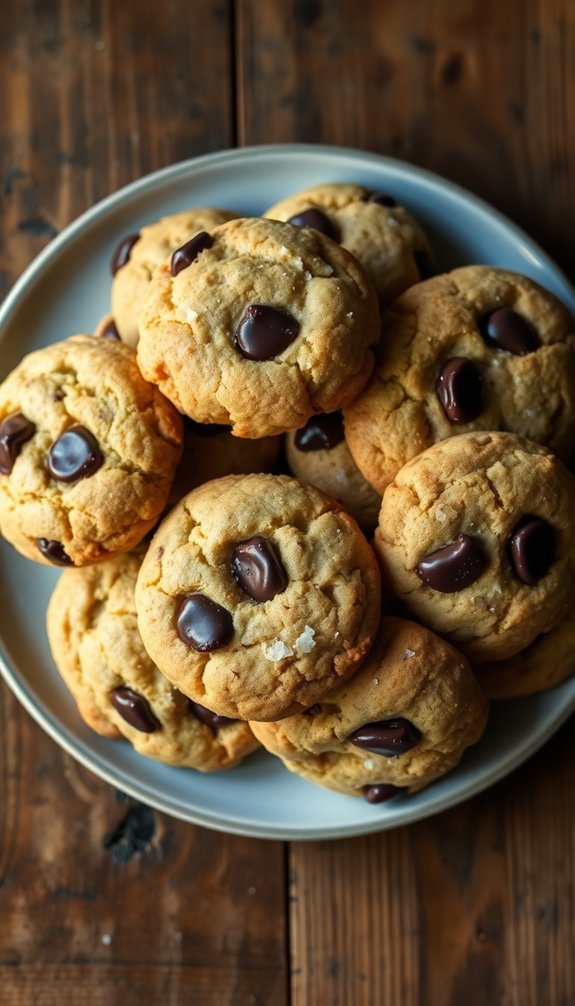
Chilling cookie dough before baking reduces spread, and longer chilling generally produces thicker cookies. In a University of British Columbia study published in the journal Expedition, researchers chilled 13 batches of dough from 0 to 240 minutes and found that longer-chilled dough produced statistically smaller cookie diameters, meaning less spreading in the oven. Chilling for at least 30 minutes is a practical minimum, and an hour or overnight is a reliable choice if you want thicker results.
Should you chill the whole batch or scooped balls?
Chilling scooped balls is often easier and gives you more control. The smaller pieces cool faster and firm up more evenly than a large bowl of dough. Place the balls on a tray or plate, cover them loosely, and refrigerate until firm.
Does removing moisture from dough reduce spread?
A PubMed-indexed study of cookie dough that was partly dehydrated before baking found that every sample baked at 120 to 180°C had a lower spread ratio than the non-dehydrated control baked at 180°C. The result shows that moisture in the dough drives spread. Dehydrating dough is a lab technique rather than a standard home step, but it supports the idea that drier, firmer dough holds its shape better.
What Temperature Should You Bake Chocolate Chip Cookies At?
Most chocolate chip cookies bake well between 350°F and 375°F, and a slightly hotter oven sets the edges faster and limits spread. Many recipes use 375°F for a shorter time to help the cookies set before they flatten. Bake one tray at a time when possible, and place dough balls at least two inches apart.
| Oven setting | Typical effect on spread | Best for |
|---|---|---|
| 350°F | Slower set, more time to spread | Softer, more evenly browned cookies when you bake a bit longer |
| 365 to 375°F | Faster set, less spread | Thicker cookies with set edges and soft centers |
- Preheat the oven fully before baking, and place the rack in the center.
- Line the baking sheet with parchment or a silicone mat to help cookies release evenly.
- Bake for about 9 to 12 minutes, depending on dough ball size.
- Pull the cookies when the edges look set and the centers look slightly underdone.
- Cool on the sheet for about 5 minutes, then move them to a wire rack.
Use an oven thermometer if your oven runs hot or cold, since a 25-degree difference can change how much your cookies spread.
How Should You Store and Freeze Chocolate Chip Cookies?
Store baked cookies in an airtight container at room temperature for up to five days, and freeze dough or baked cookies for up to two months. Cool cookies completely before storing them so condensation does not make them soggy. Label every container with the date and type of dough.
How do you freeze cookie dough?
Roll the dough into balls, place them on a baking sheet, and freeze them for about an hour until firm. Transfer the frozen balls to a freezer bag or airtight container. When you are ready, bake them directly from frozen and add about one extra minute to the baking time.
How do you keep baked cookies soft?
Store cookies in a sealed container and add a slice of plain bread to the container to help them stay soft. Replace the bread when it dries out. Keeping the container closed tightly limits exposure to air, which is the main cause of stale cookies.
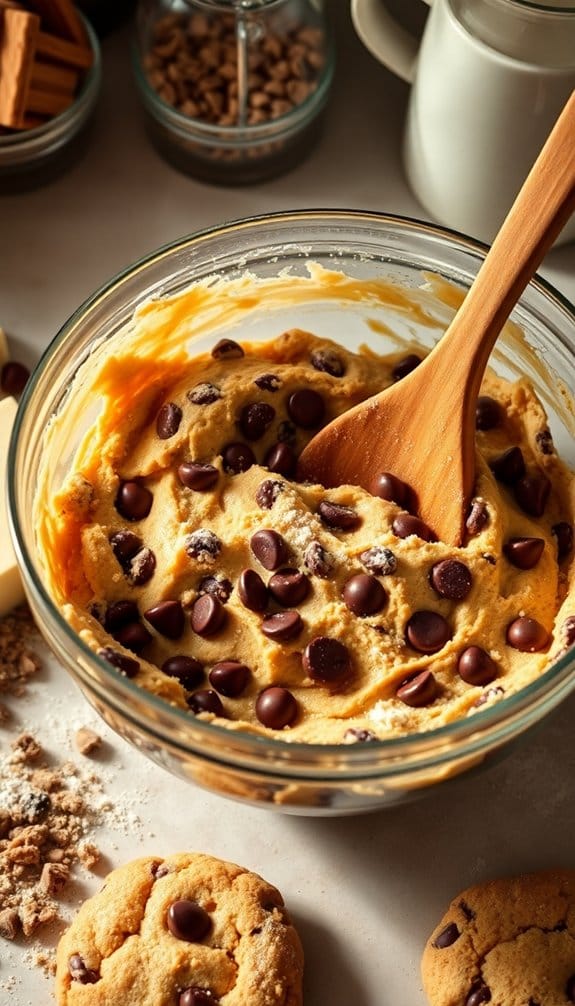
What Variations Work Well in Chocolate Chip Cookies?
Nuts, different chocolate types, and warm spices are the easiest ways to change chocolate chip cookies without disrupting the dough. Add mix-ins after the chocolate chips so you do not overmix the dough. Keep the total volume of add-ins reasonable so the dough still holds its shape.
- Nuts: Chopped walnuts or pecans add crunch and pair well with chewy dough.
- Chocolate: Semisweet, dark, or white chocolate each shift the flavor, and chopped bars melt into pools.
- Spices: A pinch of cinnamon or nutmeg adds warmth without changing the structure.
- Nut butters: A spoonful of peanut butter adds richness, but too much can make the dough greasy and spread more.
For a broader look at the cookie that started it all, read this history of chocolate chip cookies from invention to icon. If you want to troubleshoot a batch that did not turn out right, this list of common chocolate chip cookie mistakes covers the most frequent problems.
Frequently Asked Questions
Why did my cookies spread too much?
Cookies usually spread too much because the dough was too warm, the butter was melted, or the flour was under-measured. Chilling the dough and weighing your flour are the two most effective fixes. Check that your leavening matches the recipe as well.
Can I use melted butter in chocolate chip cookies?
You can use melted butter in some recipes, but it usually produces flatter, chewier cookies. If your recipe calls for softened butter, do not substitute melted butter without adjusting the flour and chilling time. Let melted butter cool before mixing so it does not cook the eggs.
Does chilling dough really make a difference?
Yes. In a UBC study of 13 batches, longer-chilled dough spread less, producing statistically smaller diameters. Chilling is one of the simplest changes you can make to get thicker cookies.
Can I bake chocolate chip cookies from frozen dough?
Yes. Bake frozen dough balls directly without thawing and add about one extra minute to the baking time. Baking from frozen helps the cookies hold their shape while the centers cook through.
Does baking soda make cookies flat?
Baking soda does not make cookies flat by itself. It needs an acid to react and produce carbon dioxide that lifts the dough. Too much baking soda or a recipe with no acid can lead to uneven spread and a flat, bitter cookie.
Conclusion
Thick, chewy chocolate chip cookies come from balanced dough, properly softened butter, accurately measured flour, and enough chilling time. Use the right leavening, mix gently, and bake at a temperature that sets the edges before the centers flatten. Once you have these basics down, you can add variations with confidence and store your cookies to keep them fresh longer.
More on Chocolate Chip Cookies
- Binging With Babish Ultimate Chocolate Chip Cookies Recipe and Variations
- Chewy or Crispy? The Secret to the Perfect King Arthur Chocolate Chip Cookies
- Cocoa Nibs: How to Use These Flavorful Powerhouses in Your Baking
- Half Chocolate, Half Vanilla Cookies — Black and White Perfection
- How Many Calories in a Homemade Chocolate Chip Cookie Breaking Down the Numbers
- Light vs. Dark Brown Sugar in Chocolate Chip Cookies
- Macadamia Chocolate Chip Cookies: A Buttery, Crunchy Treat
- The Ghirardelli Chocolate Chip Cookie Recipe You Need in Your Life
- The History of Chocolate Chip Cookies: From Invention to Icon
- The Magic of Million Dollar Cookies: A Recipe Worth Its Weight in Gold
- The Ultimate M&M Cookie Recipe: The One on the Back of the Bag
Related guides: 25 Easy Cookie Recipes That Never Fail (Beginner Friendly) · What’s Wrong With My Chocolate Chip Cookies? 10 Common Mistakes · Wilton Sugar Cookie Recipe: The Secret to Perfect Cut-Out Cookies
Free tools: Baking Cups to Grams Converter (Free)