

You can definitely make delicious chocolate chip cookies without brown sugar! Just use granulated sugar for sweetness and crispness. To mimic the moisture of brown sugar, add a bit of molasses or increase your butter content. Adjust your baking time—shorter for chewy and longer for crispy. Remember, keeping an eye on oven temperature and mixing just until combined will help prevent tough cookies. Stick around for more tips on achieving that perfect texture!
Understanding the Role of Sugar in Cookies
When you bake chocolate chip cookies, understanding sugar’s role is essential for achieving that perfect balance of sweetness and texture.
Different sugar types can drastically affect your cookies. Granulated sugar adds crispness and promotes spreading, while brown sugar contributes moisture and chewiness, thanks to its molasses content. This is because brown sugar’s moisture content helps retain the cookie’s softness even after baking. Additionally, adjusting baking times can help you achieve the desired texture for your cookies.
If you decide to skip brown sugar, consider using a mix of granulated and other sweeteners to maintain that softness. You want to find the right sweetness balance; too much sugar can lead to overly sweet cookies, while too little can result in a bland taste.
Accurate baking times ensure a gooey center in your cookies, enhancing their overall appeal.
Experimenting with sugar types allows you to customize your cookie experience, ensuring they’re just the way you love them. Enjoy the process and happy baking!
Best Brown Sugar Substitutes for Baking
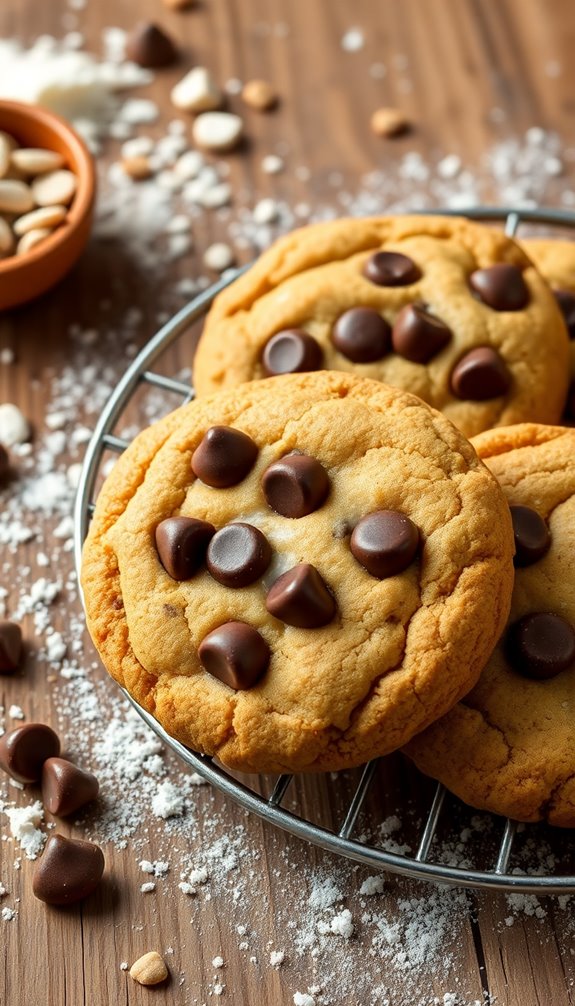
Here are some great options to evaluate:
Explore these delightful substitutes for brown sugar to enhance your baking experience.
- Coconut sugar: This has a similar texture and caramel flavor. Use it in a 1:1 ratio for brown sugar. It also contains essential minerals that enhance its nutritional profile compared to white sugar, making it a healthier choice for baking.
- Maple syrup: A delicious honey alternative, it adds moisture. Reduce other liquids in your recipe slightly to maintain the desired consistency and prevent overly wet dough.
- Date sugar: Made from dried dates, it’s a nutritious option, but it may change the texture slightly. This can affect the texture and rise of your cookies if not balanced properly.
You can also use granulated sugar if needed, but it won’t provide the same depth of flavor. If you have agave nectar on hand, that works as well—just adjust other liquids accordingly! Additionally, opting for healthier sweetening options can enhance the nutritional value of your baked goods.
Key Ingredients for Perfect Chocolate Chip Cookies
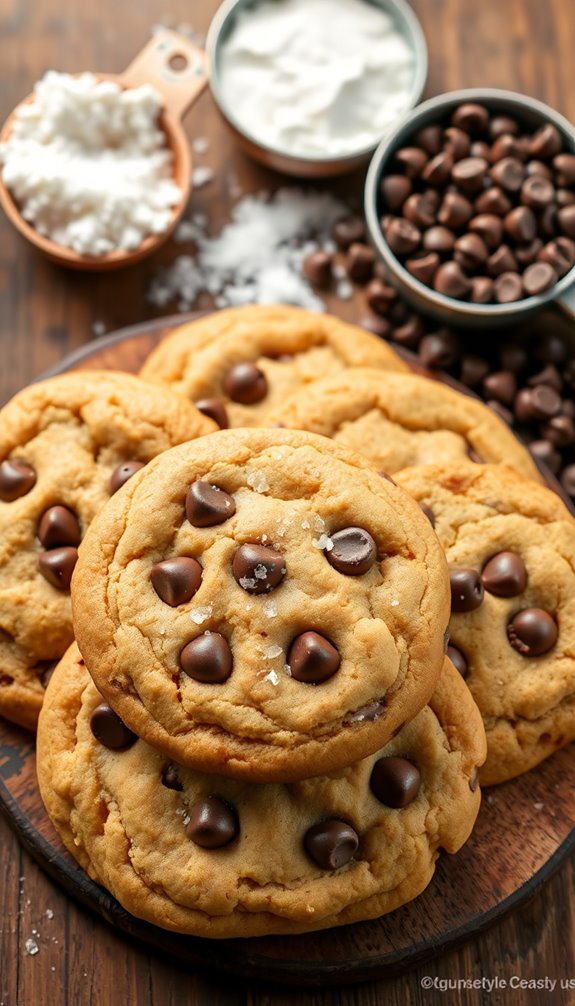
To bake perfect chocolate chip cookies, you need to focus on the key ingredients that make all the difference. Understanding how each component affects the flavor and texture will elevate your baking game. Let’s explore the essential ingredients and those texture-enhancing elements that create that irresistible cookie you love. Additionally, using granulated sugar as your primary sweetener can significantly impact the cookie’s delightful texture. One essential ingredient that contributes to a rich flavor is browned butter, which adds a nutty depth to your cookies. Using a combination of light brown sugar and granulated sugar can create an ideal balance of chewiness and crispiness in your cookies.
Essential Ingredients Overview
While you might be tempted to throw any ingredients together for chocolate chip cookies, the right components truly make a difference in achieving that perfect balance of flavor and texture.
Choosing the right flour types can noticeably affect your cookie variations. For instance, all-purpose flour gives you a classic chewy cookie, while cake flour results in a softer texture.
Make sure to include:
- Butter: Use unsalted for better control over salt levels.
- Sugar: Granulated sugar is key for sweetness and crispness.
- Chocolate Chips: Experiment with semi-sweet, dark, or even milk chocolate for different flavors.
In addition to these essentials, consider adding molasses to granulated sugar to mimic the moisture and richness typically provided by brown sugar.
With these essential ingredients, your cookies will come out delicious every time!
Texture-Enhancing Components
Achieving the perfect texture in your chocolate chip cookies hinges on a few key components beyond the basics.
First, consider your flour choice. All-purpose flour provides a balanced structure, while cake flour can create a softer bite.
Next, the type of fat matters—using melted butter promotes a chewier cookie due to its moisture content, while softened butter gives a fluffier texture.
Don’t forget about the importance of eggs; using an extra yolk enhances richness and moisture.
Finally, pay attention to the sugar; granulated sugar contributes to crispiness, allowing for texture variations that can elevate your cookies.
Embrace the cookie science behind these ingredients, and you’ll be well on your way to achieving that perfect cookie texture!
Step-by-Step Guide to Making Cookies Without Brown Sugar
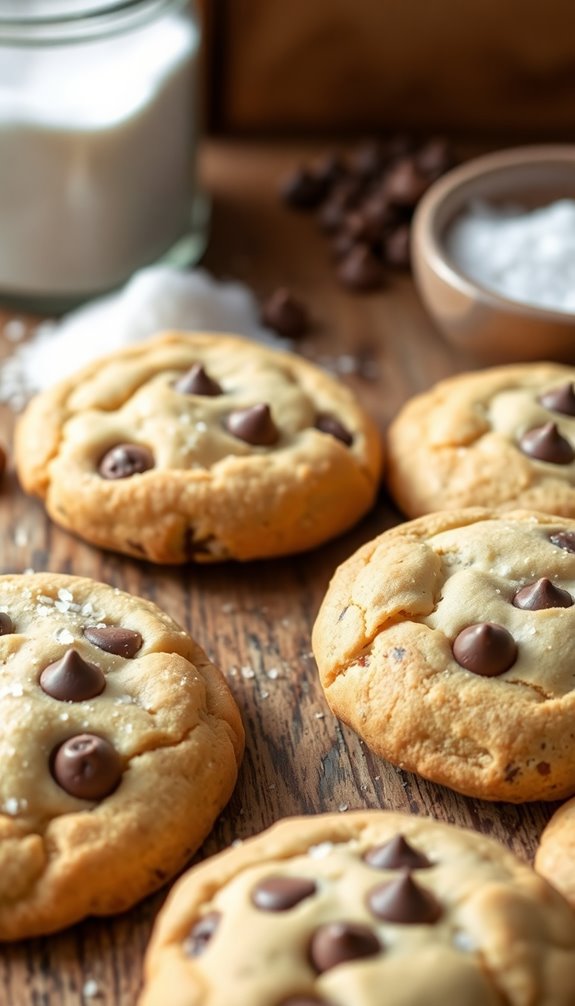
Even if you don’t have brown sugar on hand, you can still whip up delicious chocolate chip cookies that are sure to satisfy your sweet tooth. Here’s a simple step-by-step guide to get you started:
No brown sugar? No problem! You can still make delightful chocolate chip cookies that will satisfy your cravings.
- Gather your ingredients: Use white sugar instead of brown, along with butter, flour, baking soda, and chocolate chips.
- Mix wet and dry: Cream the butter and sugar, then gradually add the dry ingredients.
- Bake: Scoop the dough onto a baking sheet and bake until golden.
Feel free to experiment with cookie variations by adding nuts or using different types of chocolate.
Tips for Achieving Chewy vs. Crispy Texture
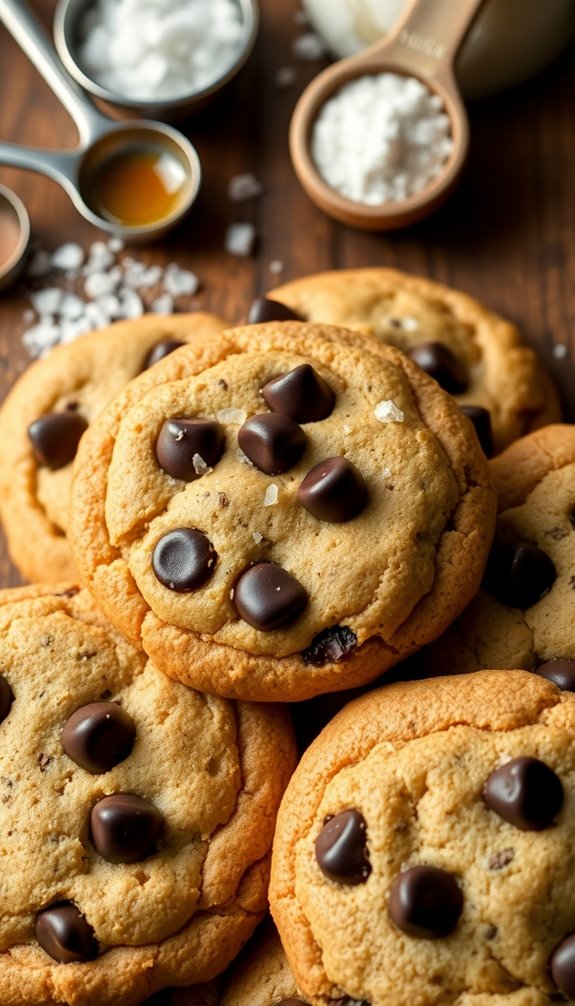
If you want your cookies to be chewy or crispy, pay attention to your ingredient ratios and baking times.
Adjusting the amount of flour and fat can make a big difference in texture. Also, a slight tweak in baking time can turn a soft center into a satisfying crunch.
Ingredient Ratios Matter
When it comes to baking chocolate chip cookies, the right ingredient ratios can make all the difference between a chewy treat and a crispy delight.
Understanding ingredient proportions is key; for chewy cookies, increase the fat and decrease the flour. For crispiness, boost the flour and reduce the fat.
Here are some tips to achieve your desired texture:
- Fat Content: Use more butter for chewiness; less for crispiness.
- Sugar Types: Granulated sugar enhances crispiness, while adding moisture for chewiness.
- Eggs: More eggs yield a chewier texture, while fewer can contribute to a crisper cookie.
Balancing sweetness and flavor enhancement will also play a significant role in achieving the perfect texture variation.
Baking Time Adjustments
To achieve the perfect chocolate chip cookie texture, adjusting your baking time is essential. If you want chewy cookies, bake them for a shorter time—around 8 to 10 minutes. This keeps the centers soft and gooey.
For crispy cookies, extend the baking time to about 12 to 14 minutes, ensuring the edges turn golden brown. Remember, baking temperature adjustments can also impact texture; a slightly lower temperature can help cookies spread more and achieve a chewier bite.
Additionally, cookie size variations play a role—larger cookies may need a bit more time, while smaller ones will bake faster. Keep an eye on them, and trust your instincts for that perfect balance!
Common Mistakes to Avoid When Baking Cookies
Even seasoned bakers can stumble upon common pitfalls when whipping up a batch of chocolate chip cookies. To guarantee your cookies turn out perfectly, keep these mistakes in mind:
Even experienced bakers face challenges; avoid common mistakes to ensure your chocolate chip cookies are a hit every time.
- Ignoring baking temperature: Always preheat your oven. A too-hot oven can lead to burnt edges, while a too-cool one results in flat cookies.
- Neglecting cookie shapes: If you don’t shape your dough properly, your cookies may spread unevenly. Use a cookie scoop for consistent sizes.
- Poor mixing techniques: Overmixing can create tough cookies. Mix just until ingredients are combined, especially when using ingredient substitutions.
Storing and Enjoying Your Perfect Cookies
After perfecting your chocolate chip cookies, knowing how to store and enjoy them will elevate your baking game.
For ideal cookie storage, place them in an airtight container at room temperature to maintain freshness. If you want to enjoy them later, consider freezing tips—wrap cookies individually and store them in a freezer bag. When you’re ready to indulge, use reheating methods like a quick warm-up in the oven for that fresh-baked taste.
For flavor enhancement, try pairing your cookies with milk or coffee. You can elevate your serving suggestions by adding a scoop of ice cream on top.
Don’t forget, these cookies make great gifts; package them nicely for cookie gifting that friends and family will love!
Conclusion
To summarize, baking chocolate chip cookies without brown sugar can yield delicious results when you know how to adjust your ingredients. Did you know that nearly 50% of Americans prefer cookies with a chewy texture? By following the right steps and using substitutes wisely, you can create the perfect treat tailored to your taste. So, grab your mixing bowl and start experimenting—your ideal cookie is just a batch away! Enjoy every bite!