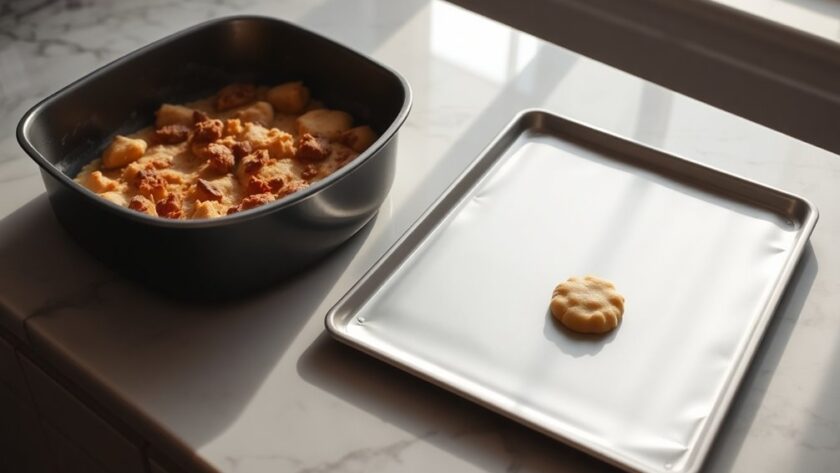
When deciding between a cookie sheet and a baking pan, consider what you’re making. You’ll want to use a cookie sheet for cookies and roasting veggies, thanks to its flat, rimless design that promotes even baking. Opt for a baking pan when you’re cooking casseroles or brownies, as its sides contain liquids. Each has its unique benefits, so knowing when to use which can elevate your baking. Keep going to pick up helpful tips for your kitchen!
Understanding Cookie Sheets: Features and Uses
When you think about baking cookies, a cookie sheet is often the go-to choice for many bakers. These sheets come in various cookie sheet designs, each tailored for specific needs. Some feature rims, while others are completely flat, allowing for easy cookie transfer.
The baking surface texture also plays a big role in your results; non-stick surfaces help prevent sticking, while aluminum sheets promote even baking. Using the right cookie sheet can also help manage ingredient temperature, which is crucial for achieving the perfect cookie spread. Proper baking techniques, such as using coffee syrup, can enhance the flavor and texture of your baked goods.
The texture of your baking surface is crucial; non-stick sheets prevent sticking while aluminum ensures even baking.
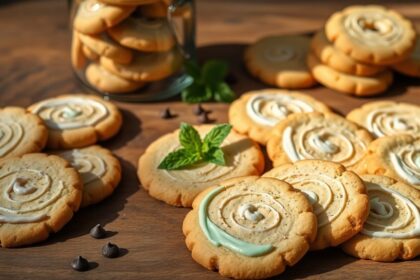
Choosing the right cookie sheet can make a difference in your baking experience. It’s essential to take into account how the design and texture will affect your cookies. For example, using a non-stick surface can be particularly beneficial when baking delicate treats like Peppermint Meringues.
Whether you’re making classic chocolate chip or delicate meringues, using the right cookie sheet can elevate your results and make baking even more enjoyable.
Baking Pans Explained: Types and Applications
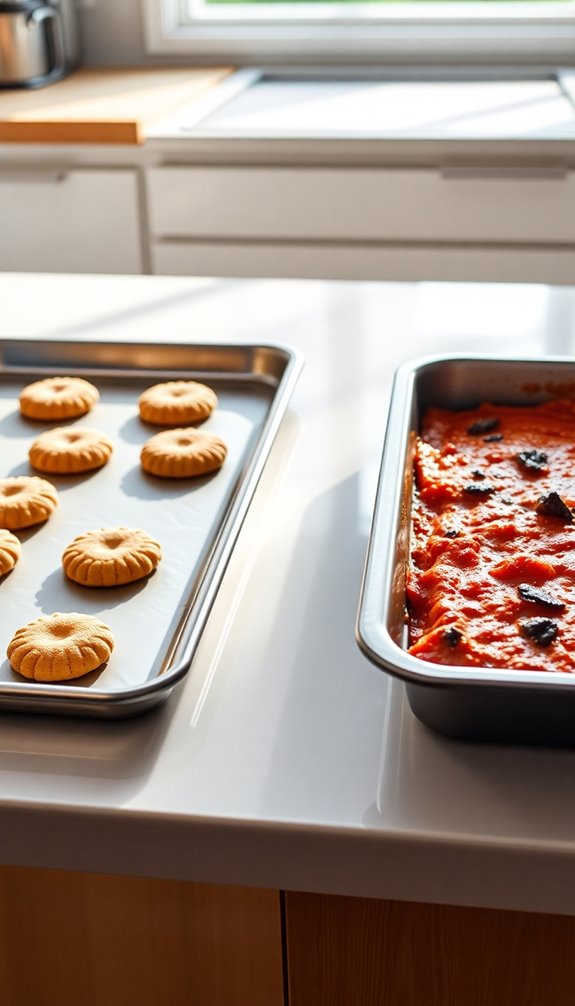
When it comes to baking pans, knowing the types and materials can make all the difference in your results.
You’ll find various options like metal, glass, and silicone, each suited for specific tasks. Greased baking sheets are a popular choice for achieving a non-stick surface without the need for parchment paper. Using different types of sugar can also impact the texture of your baked goods, making it essential to choose the right ingredients depending on your recipe. Additionally, using a bundt pan can enhance the presentation of cakes, offering a unique shape that elevates your dessert.
Let’s explore which pan works best for your baking needs.
Types Of Baking Pans
Baking pans come in various shapes and sizes, each designed for specific culinary tasks. If you’re baking bread, loaf pans are essential, providing the perfect shape for delicious loaves. Additionally, using gluten-free flour blends can contribute to a better texture in your baked goods. Incorporating protein-packed snacks into your diet can also enhance your overall nutrition.
For cheesecakes or delicate desserts, springform pans allow you to release your creations easily. Muffin tins are great for individual portions, while tart pans help you craft stunning tarts with crisp edges.
If you’re cooking pizza, a pizza stone guarantees a crispy crust. Don’t forget glass dishes, which are excellent for casseroles, and silicone molds, perfect for easy release of intricate shapes.
Finally, roasting pans are a must for meats and veggies, providing ample space for even cooking. Choose wisely based on your baking needs! Additionally, using the right gluten-free flour blend can significantly enhance the texture and taste of your baked goods.
Material Differences Explained
Understanding the material differences in baking pans can make a significant impact on your culinary results.
Aluminum pans offer numerous advantages, including excellent heat distribution, which helps your baked goods cook evenly. They’re lightweight and affordable, making them a popular choice.
On the other hand, nonstick surfaces simplify cleanup but may require careful maintenance to avoid scratching.
Durability differences come into play too; while aluminum is prone to warping, heavier materials like stainless steel can withstand more wear.
Consider weight when choosing your pan, especially if you’ll be lifting it frequently.
Ultimately, specialty options like cast iron or ceramic provide unique benefits, but often come with higher cost comparisons. Proper storage methods can also enhance the longevity of your baked goods.
Choose wisely based on your baking style!
Best Uses For Each
While you might think all pans are created equal, each type serves a specific purpose that can greatly influence your baking outcomes. Understanding the best uses for each can enhance your culinary results.
- Cookie Sheet Advantages: Ideal for cookies, they allow for even heat distribution and easy access to multiple trays without obstruction.
- Baking Pan Versatility: Perfect for casseroles, brownies, or lasagna, they handle various recipes and often come in different depths for your needs.
- Material-Specific Uses: While metal pans heat quickly, glass pans are excellent for monitoring browning.
- Shape Matters: Rectangular pans are great for sheet cakes, while round ones shine in layer cakes.
Choose wisely to maximize your baking success!
Key Differences Between Cookie Sheets and Baking Pans
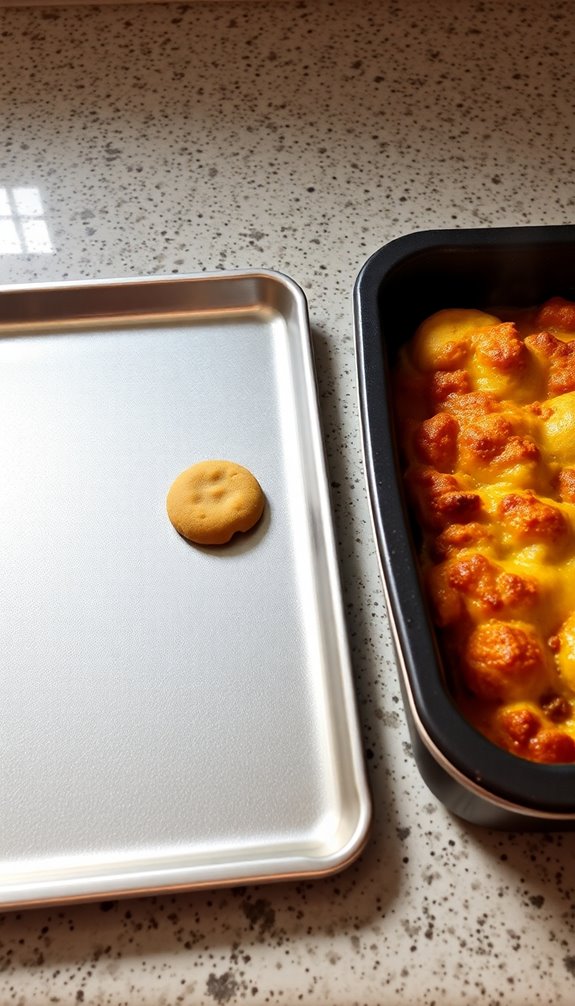
Although both cookie sheets and baking pans serve essential roles in the kitchen, they’ve distinct characteristics that affect your baking results.
Cookie sheets typically have a flat, rimless design, allowing for even airflow and quicker baking, which is a key factor in achieving perfectly crispy cookies. Their lightweight nature also makes them easy to handle, offering several cookie sheet advantages.
On the other hand, baking pans come with sides, giving you greater versatility for various recipes like casseroles or brownies. The higher edges contain liquids and prevent spills, making them ideal for roasting vegetables or baking lasagna.
Understanding these differences helps you choose the right tool for your specific baking needs.
When to Use a Cookie Sheet vs. a Baking Pan?
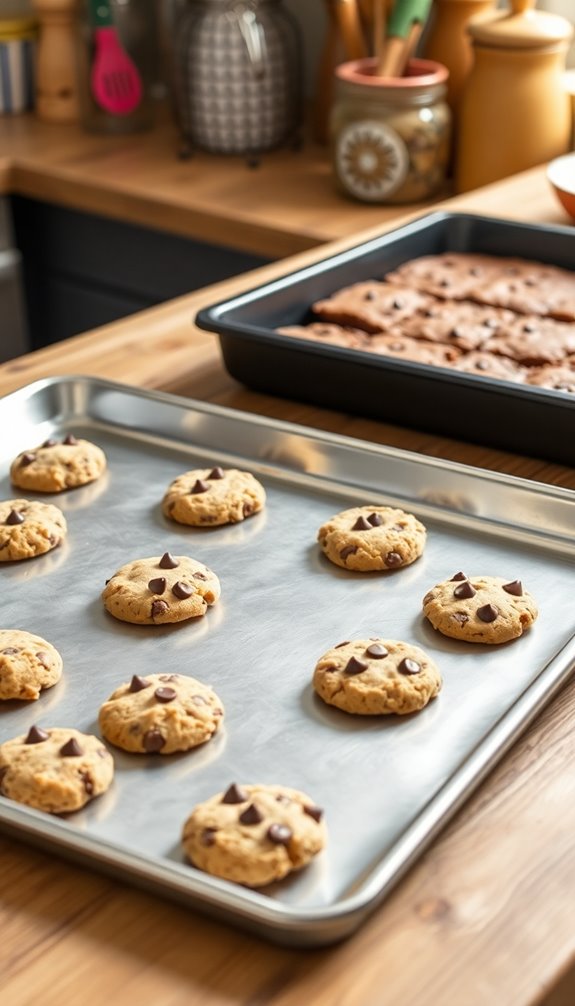
Choosing between a cookie sheet and a baking pan depends on what you’re making. Each option serves its purpose, so knowing when to use each can elevate your baking game. Here are some key points to take into account:
- Cookie Sheet Advantages: Use it for cookies, as its flat surface allows for even baking and easy cooling.
- Baking Pan Versatility: Opt for a baking pan when making casseroles or lasagna, thanks to its higher sides that contain liquids.
- Roasting Vegetables: A cookie sheet works well for roasting veggies, allowing for maximum caramelization.
- Sheet Cakes: A baking pan is ideal for sheet cakes, providing enough depth for batter to rise.
With these tips, you’ll make the right choice every time!
Tips for Choosing the Right Baking Equipment
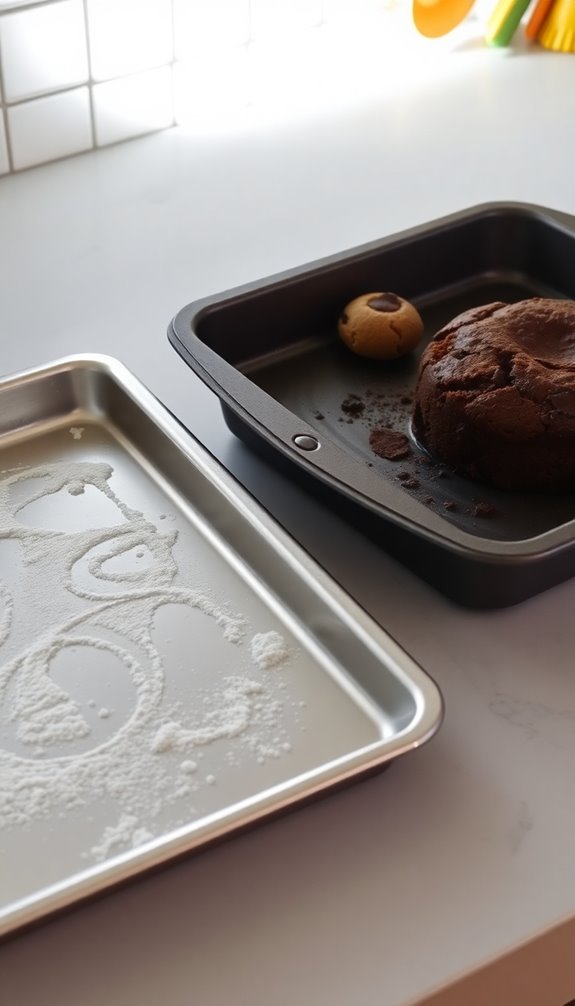
Selecting the right baking equipment can make a significant difference in your culinary results.
First, consider the type of dish you’re making. For cookies, a cookie sheet is ideal, while cakes and casseroles benefit from a deeper baking pan.
Think about the material, too; non-stick surfaces help with easy release, while metal conducts heat better.
Evaluate the size: confirm your equipment fits in your oven and accommodates your recipe.
Finally, assess the durability; investing in high-quality baking equipment saves you money over time.
By keeping these selection criteria in mind, you’ll enhance your baking experience and achieve delicious results.
Choose wisely, and your baked goods will shine!
Common Baking Mistakes With Cookie Sheets and Baking Pans
When you’re baking, small mistakes with cookie sheets and baking pans can lead to disappointing results. Here are four common pitfalls to avoid:
- Ignoring Baking Temperature Adjustments: Always adjust temperatures based on your pan type; metal pans conduct heat differently than glass.
- Choosing Incorrect Cookie Sheet Sizes: Using the wrong size can affect baking time and cookie shape, impacting recipe compatibility.
- Neglecting Oven Rack Positioning: Placing your pan on the wrong rack can lead to uneven baking; the middle rack is usually best.
- Underestimating Cooling Time Impact: Let your baked goods cool properly to avoid sogginess; cooling times vary based on pan material effects.
Conclusion
When you choose between a cookie sheet and a baking pan, it’s not just about the shape; it’s about the outcome. Each tool has its purpose, and using the right one can elevate your baking game. Remember, the right equipment can prevent common mistakes and enhance flavors. So, next time you’re in the kitchen, trust your instincts and pick wisely. The truth is, the right choice can make all the difference in your baking journey.