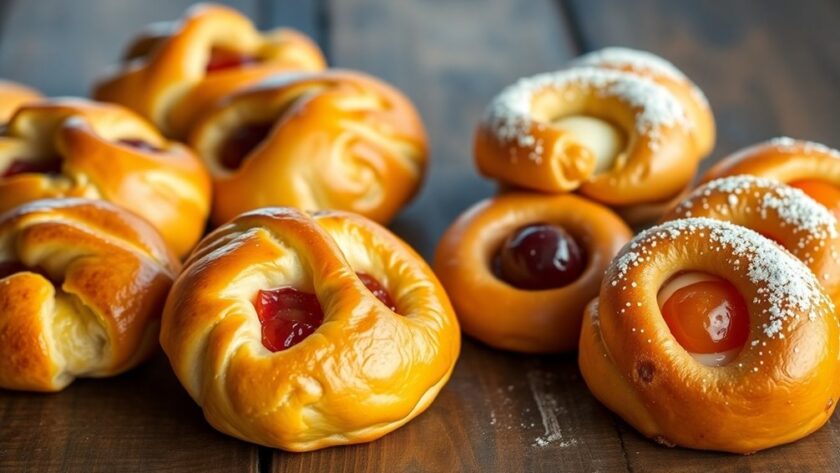
Kolaches and Danish pastries both offer unique treats, but they come from different traditions. Kolaches are soft, slightly sweet, and often filled with fruit or cheese, highlighting Czech heritage. In contrast, Danish pastries use flaky laminated dough, featuring rich fillings like almond paste or custard. Kolaches suit casual gatherings, while Danishes are perfect for more formal occasions. Each brings its own charm and flavor to the table, and there’s so much more to explore about these delightful pastries.
The Origins of Kolaches and Danish Pastries
When you explore the origins of kolaches and Danish pastries, you’ll discover a rich tapestry of cultural influences. Kolaches trace back to Czech immigrants, who brought their beloved pastries to America, blending traditions with local ingredients. These sweet treats often feature fruit or cheese fillings, reflecting the agricultural bounty of their new home. Additionally, kolaches are celebrated at the annual Kolache Festival, which emphasizes community bonding and cultural heritage. The preparation of kolaches often involves using high-quality ingredients, showcasing Czech culinary traditions that have been passed down through generations. Potica, another traditional pastry, also highlights the significance of cultural heritage in culinary practices.
On the other hand, Danish pastries originated in Denmark, influenced by Austrian baking techniques. The historical context reveals how migration and trade shaped these delightful confections, leading to unique adaptations. Both pastries showcase a fusion of cultures, highlighting the creativity of bakers who transformed simple dough into beloved culinary treasures. Understanding these origins enriches your appreciation of each pastry’s unique story.
Key Differences in Dough and Texture
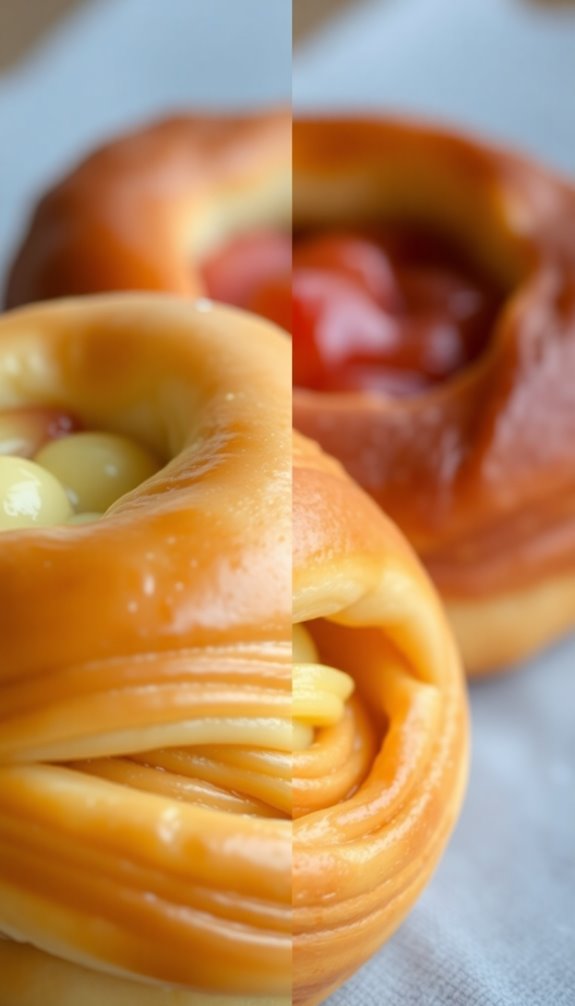
While both kolaches and Danish pastries are delightful treats, their dough and texture set them apart distinctly.
Kolache dough characteristics lean towards a soft, slightly sweet bread-like consistency that’s easy to pull apart. It’s typically made with a yeast dough, resulting in a light and fluffy interior, which is often complemented by a rich buttery aroma that enhances the overall experience.
On the other hand, Danish pastries feature a laminated dough that incorporates layers of butter, creating a flaky texture. This dough undergoes a process similar to puff pastry, giving it a crispy outer layer with a tender bite inside.
You’ll notice these texture variations immediately: kolaches offer a comforting chewiness, while Danish pastries provide a satisfying crunch. Additionally, kolaches are often filled with traditional fillings such as fruit or cheese, enhancing their flavor profile.
Both are delicious, but their unique doughs make each a distinct experience.
Popular Fillings and Flavor Profiles
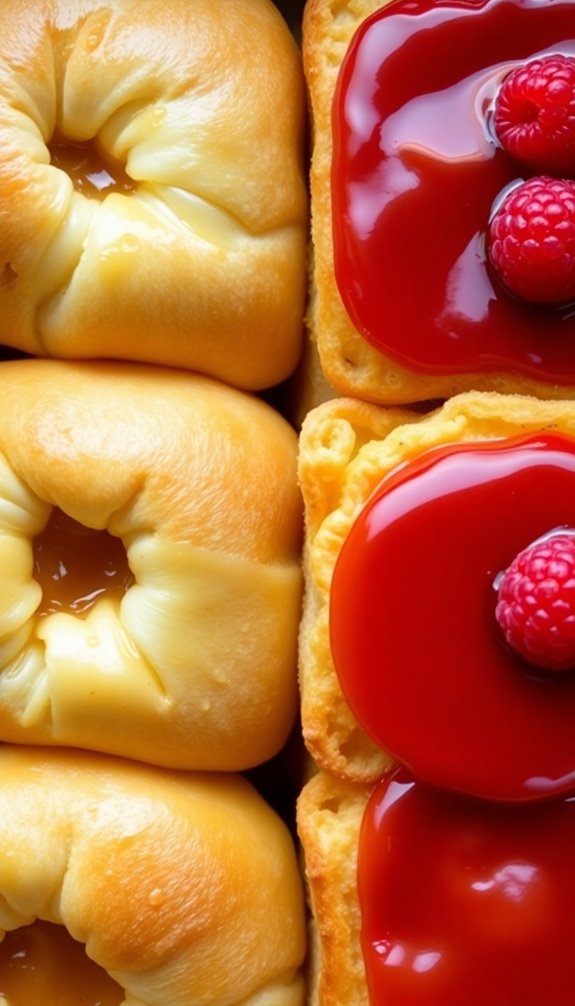
Although both kolaches and Danish pastries boast a variety of fillings, their flavor profiles often reflect their cultural origins.
Kolaches typically feature sweet fillings like fruit preserves, cream cheese, or poppy seeds, embracing a comforting, homey vibe. You might also find savory options such as sausage or cheese, showcasing their Czech roots. The use of local ingredients in kolaches mirrors the tradition of utilizing what is readily available, much like the Sicilian cassata.
On the other hand, Danish pastries often lean towards rich, buttery flavors, filled with sweet fillings like almond paste, custard, or fresh fruit. You’ll notice the flaky layers in Danish complement the sweetness beautifully, creating a delightful contrast.
Whether you crave the traditional sweetness of kolaches or the decadent variety of Danish pastries, both treats offer something special to satisfy your taste buds. Additionally, the versatility of gluten-free variations allows everyone to enjoy these delightful pastries, regardless of dietary restrictions.
Cultural Significance and Traditions Surrounding Each Pastry
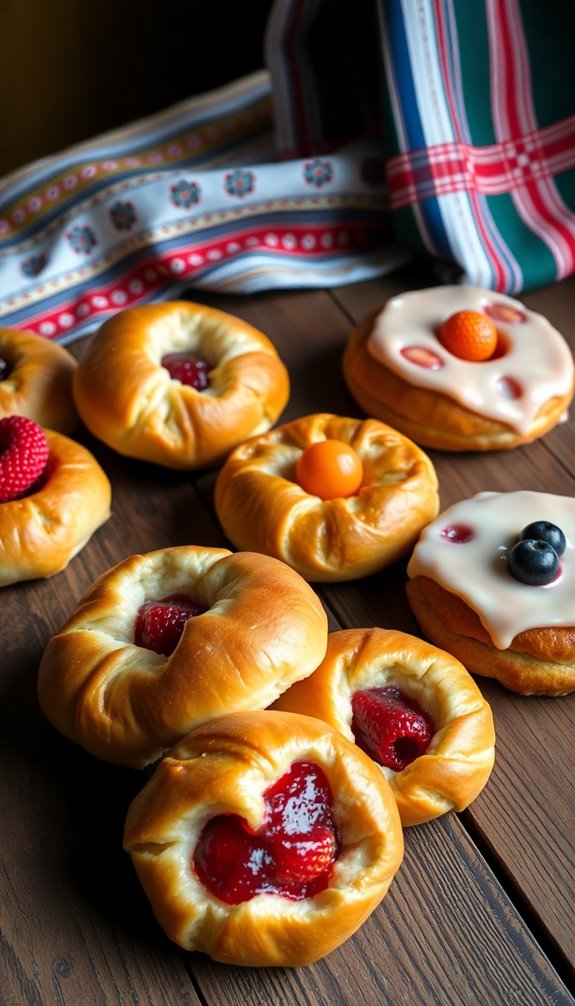
Kolaches and Danish pastries aren’t just delicious treats; they carry rich cultural significance and are often tied to traditions. In many Czech communities, kolache celebrations mark special occasions, from weddings to festivals, where families gather to share these beloved pastries. You’ll often find them served alongside stories of heritage and pride, connecting generations through shared recipes. The tradition of serving kolaches at gatherings reflects hospitality and community, enhancing the warmth of these cultural celebrations. On the other hand, Danish customs involve a deep appreciation for craftsmanship. Many families have their own unique methods of making Danish pastries, often passed down through generations. Celebrating holidays with these pastries, like Christmas or Easter, brings people together, enhancing the joy of the season. Both pastries symbolize community, culture, and a love for baking that transcends time and place. Additionally, the tradition of making Julekake bread during the holidays reflects a similar bond among families, emphasizing the importance of shared culinary experiences and the hospitality that is integral to festive gatherings.
Which Pastry Should You Choose for Your Next Treat?
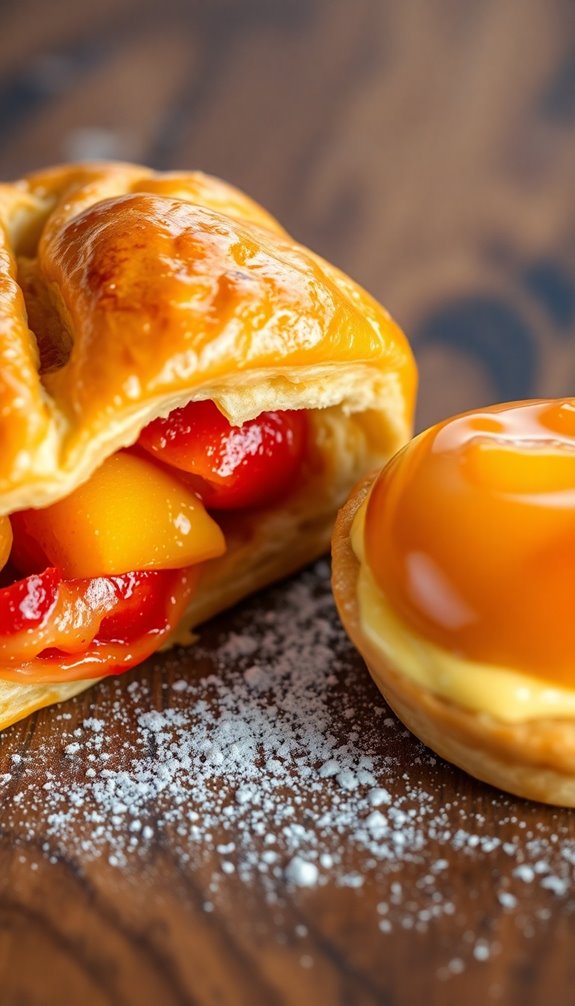
When deciding which pastry to indulge in, think about what flavors and textures you’re in the mood for.
Both kolaches and Danishes offer unique sweet indulgences that cater to different pastry preferences. Here are some factors to reflect on:
Both kolaches and Danishes provide distinct sweet experiences, appealing to various tastes and preferences.
- Flavor Profiles: Kolaches typically have fruit fillings, while Danishes can be filled with cream cheese or custard.
- Texture: Kolaches are soft and doughy, whereas Danishes are flaky and buttery.
- Serving Occasion: Kolaches often fit well in casual settings, while Danishes might suit more formal gatherings.
- Customization: If you love experimenting, Danishes offer more topping options compared to the classic kolache.
Choose wisely, and enjoy the delightful experience each pastry brings!
Conclusion
In the end, whether you crave a kolache or a Danish, both pastries offer unique flavors and textures that reflect their rich histories. Did you know that kolaches originated from Czech immigrants, making them a beloved treat in Texas, where over 20 million kolaches are consumed each year? So, next time you’re deciding between the two, remember their cultural significance and indulge in the one that calls to you. Enjoy your tasty adventure!