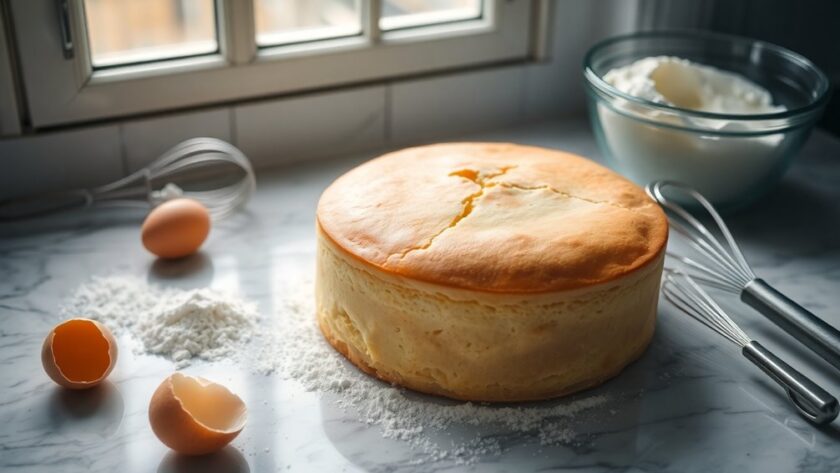
Baking a cake is all about the balance of ingredients and techniques. You need the right leavening agents, like baking powder or soda, to create air pockets that help your cake rise. Mixing matters too; over-mixing can lead to a dense texture. Ingredient temperature plays a role as well, affecting how well they blend. If your cake doesn’t rise, factors like old ingredients or incorrect oven temperatures could be at fault. Discover more tips for baking success ahead!
What Happens When You Bake a Cake?

When you bake a cake, a fascinating transformation occurs as the ingredients come together under heat. This process, often termed cake chemistry, involves a series of reactions that convert your batter into a fluffy dessert.
As the heat distributes throughout the pan, it causes the proteins in flour and eggs to denature, creating a structure that holds air pockets. The sugars caramelize, adding flavor and color, while the fats melt, contributing to moisture. Each component plays an essential role in achieving the desired texture and taste. If the heat distribution is uneven, you might end up with a cake that’s dense or unevenly cooked, highlighting how critical proper baking techniques are for success. Understanding ingredient selection is vital for achieving the best results in baking. For instance, using almond flour can enhance texture and flavor in gluten-free recipes, contributing to a successful baking outcome. Additionally, the quality of ingredients can significantly affect the final product, ensuring richness and depth in flavor.
The Role of Leavening Agents in Baking
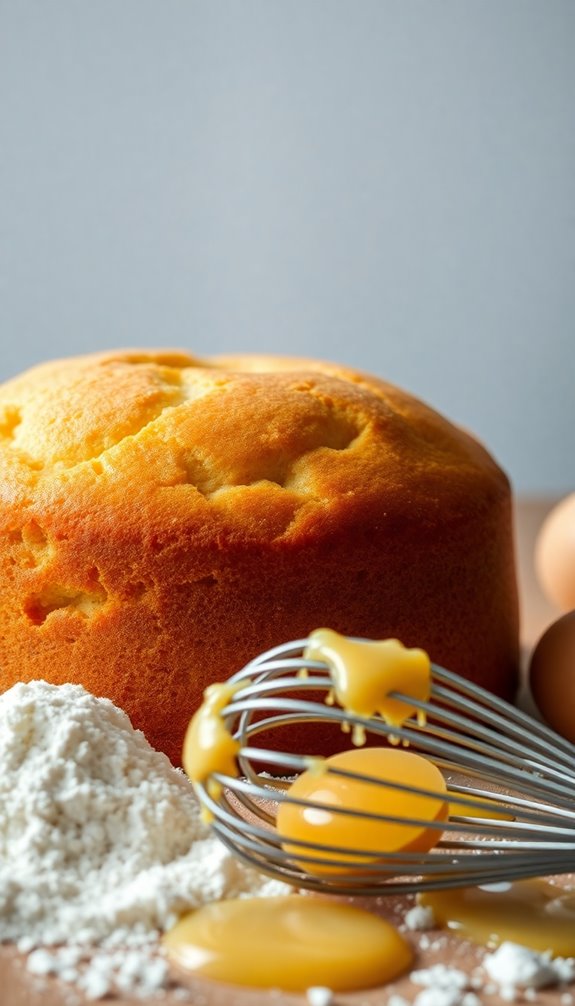
Leavening agents are essential for giving your baked goods that light and airy texture you love. You’ll find different types, each creating unique chemical reactions that help your cakes and breads rise. For instance, understanding the role of brown sugar in your recipes can enhance the overall texture and flavor of your baked goods. Additionally, the moisture from brown sugar can contribute to a denser, more tender crumb. Incorporating ingredients like Greek Yogurt can also add moisture, ensuring your baking turns out perfectly every time.
Types Of Leavening Agents
While baking, understanding the types of leavening agents is essential for achieving the perfect rise in your baked goods. You’ll encounter three main categories: yeast fermentation, chemical leaveners, and natural leavening.
Yeast fermentation is a classic choice, where yeast consumes sugars, releasing carbon dioxide that causes dough to rise. This process can be enhanced by using natural sweeteners that provide the necessary sugars for fermentation.
Chemical leaveners, like baking soda and baking powder, react with moisture and acids, producing gas quickly.
Ultimately, natural leavening relies on air incorporation, achieved through techniques like creaming butter and sugar together. Properly mixed dry ingredients are vital for desired texture and rise in your baked creations.
Each type plays a unique role in creating the desired texture and height in your cakes and breads. Knowing how to use them effectively can transform your baking results!
Chemical Reactions Explained
Understanding the science behind chemical reactions can deepen your appreciation for how leavening agents work in baking. When you combine ingredients like baking soda or baking powder with an acid, a chemical reaction occurs, releasing carbon dioxide gas. This gas creates bubbles, causing your batter to rise. Additionally, achieving the right balance of sugar types is crucial, as it affects the overall texture and flavor of your baked goods.
Achieving the right chemical balance is essential; too much or too little leavening agent can lead to dense or overly airy cakes. Temperature control also plays a significant role. If your oven is too hot, the gas expands too quickly, leading to a collapse. Conversely, if it’s too cool, the leavening agents may not activate properly.
Mastering these factors guarantees your baked goods turn out perfectly risen and delicious. Additionally, using browned butter can enhance the flavor profile of your baked goods, providing a nutty depth that complements the leavening process.
Proper Measurement Techniques
When you measure ingredients accurately, you set the foundation for successful baking, especially with leavening agents.
Using the right measurement tools is essential; a kitchen scale is your best bet for weighing ingredients precisely. While measuring cups work for dry ingredients, they can lead to inconsistencies if not used correctly. Always confirm you’re leveling off your cups to maintain accurate ingredient ratios.
For precision baking, even slight deviations can affect how leavening agents perform, impacting your cake’s rise. Scale usage allows for more dependable results, confirming you’re adding exactly what you need.
How Baking Powder and Baking Soda Work
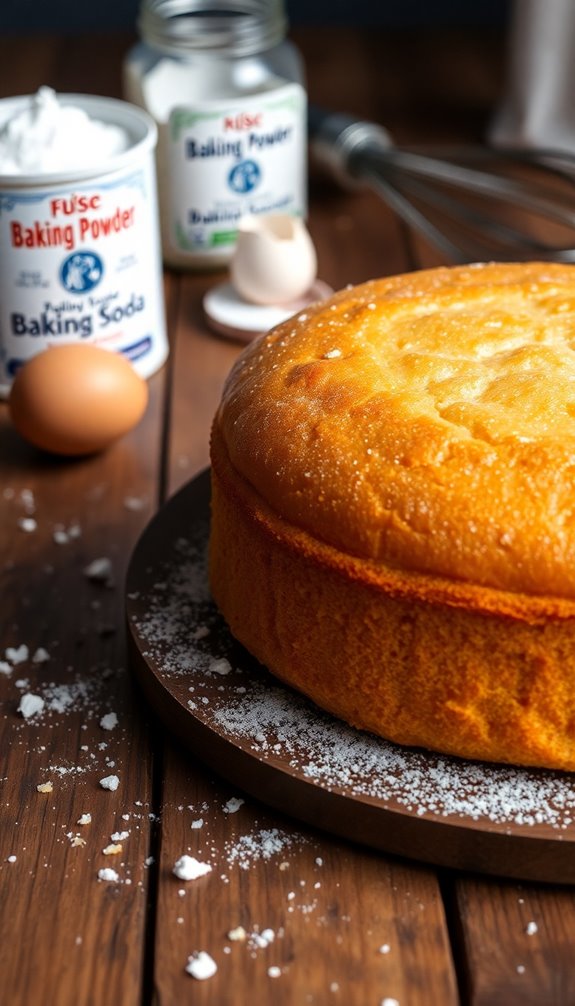
Baking powder and baking soda are essential leavening agents that help your baked goods rise and achieve that light, fluffy texture.
Baking soda needs an acidic component to activate, such as buttermilk or vinegar. When it interacts with this acid, it produces carbon dioxide gas, which creates bubbles in your batter. This leavening agent interaction is vital for achieving lift in recipes.
On the other hand, baking powder already contains an acidic component, usually cream of tartar. When moisture and heat are applied, it releases carbon dioxide gas as well.
Understanding how these agents work empowers you to manipulate recipes effectively, ensuring your cakes rise perfectly every time.
The Importance of Ingredient Temperature

When you bake, the temperature of your ingredients can make or break your recipe.
Using room temperature items helps everything mix smoothly, while cold ingredients can lead to disappointing results.
Pay attention to this detail, and you’ll set yourself up for success in the kitchen.
Room Temperature Ingredients Matter
Although it might seem trivial, using room temperature ingredients can greatly impact your baking results. When you mix butter, eggs, and other components at room temperature, they blend more easily, enhancing ingredient compatibility.
This guarantees a uniform texture, vital for that perfect rise. Cold ingredients can disrupt the chemical reactions necessary for leavening, especially with temperature sensitivity in baking.
For instance, when butter and sugar are creamed together, the warmth allows air to incorporate, creating a light batter. If your ingredients are too cold, that process stalls, leading to dense or uneven results.
Cold Ingredients Can Fail
Using cold ingredients can throw a wrench in your baking plans, leading to disappointing results.
When you bake, ingredient interaction is essential, and temperature effects can make or break your dish. Here’s why you should warm things up:
- Butter: Cold butter doesn’t cream well, resulting in dense baked goods.
- Eggs: Cold eggs can cause uneven mixing, affecting rise and texture.
- Milk: Cold milk can hinder the activation of baking soda or powder.
- Flour: Using flour straight from the fridge can lead to clumping and uneven dough.
Why Mixing Techniques Matter for Cake Rise

Mixing techniques play an essential role in how your cake rises, impacting its texture and overall success. Different mixing methods, like creaming and folding, affect how air gets incorporated into your batter.
When you cream butter and sugar, you create tiny air pockets that help your cake rise. On the other hand, over-mixing can lead to a dense texture, as it develops gluten too much.
Proper ingredient integration is vital; you want to blend dry and wet ingredients just until combined. This balance guarantees your cake has the right structure while still being light and fluffy.
Understanding the Role of Eggs in Baking
Eggs play an essential role in baking, impacting everything from structure to texture.
When you whip eggs, you’re not just adding moisture; you’re introducing air that gives your baked goods volume.
Understanding how eggs function can elevate your baking game considerably.
Egg Structure and Function
In baking, the humble egg plays a pivotal role, acting as a versatile ingredient that contributes to both structure and flavor. Understanding how eggs function can elevate your baking game.
Here are some key aspects to contemplate:
- Egg Types: Different egg types (e.g., large, medium) affect your recipe’s outcome.
- Egg Temperature: Using room-temperature eggs guarantees better mixing and whipping.
- Egg Freshness: Fresher eggs improve texture and flavor, making your baked goods more delightful.
- Egg Nutrition: Eggs add protein, vitamins, and fats, enriching your baked treats.
Emulsification and Texture
While understanding the structure and function of eggs lays a foundation for great baking, their role in emulsification and texture is where the magic truly happens.
Eggs act as a natural emulsifier, binding water and fat together through emulsification techniques. This process creates a smooth, cohesive batter that helps prevent separation, ensuring your cake has a uniform texture.
When you beat eggs into your mix, you’re not just adding moisture; you’re enhancing the overall texture. The proteins in eggs coagulate during baking, contributing to structure and stability while also providing a tender crumb.
Whipping for Volume
Whipping egg whites brings a delightful lightness to your baked goods, transforming them into airy masterpieces. The key lies in mastering the right whipping techniques to achieve those impressive volume differences. Here’s what you need to know:
- Start with Clean Tools: Confirm your mixing bowl and beaters are grease-free for maximum volume.
- Room Temperature Eggs: Using room temperature eggs helps achieve better aeration.
- Gradual Sugar Addition: Adding sugar slowly stabilizes the foam and enhances volume.
- Watch for Stiff Peaks: Whip until stiff peaks form, which indicates the egg whites are ready for incorporation.
Sugar: More Than Just Sweetness
Although sugar is often celebrated for its sweetness, it’s far more complex than just a flavor enhancer. Different sugar types, like granulated, brown, and powdered, each play unique roles in baking. They contribute to sugar caramelization and sugar browning, adding depth to your cake’s flavor.
When you use sugar substitutes, you can still achieve similar effects, though they may alter texture. Sugar also aids in fermentation, helping yeast to produce carbon dioxide for rise.
Don’t forget sugar’s role in hydration; it attracts moisture, keeping your cake tender. While considering sugar health, moderation is key, but don’t underestimate how it enhances flavoring, making every bite delightful.
Understanding these aspects elevates your baking game.
The Impact of Flour Types on Cake Texture
Flour is the backbone of any cake, influencing its texture and structure in significant ways. Choosing the right flour can change everything. Here’s how different types impact your cake:
- Cake Flour: Low protein levels mean less gluten, resulting in a tender texture and lighter cake density.
- All Purpose Flour: Higher protein levels create more gluten, offering a firmer structure but can lead to a denser cake if over-mixed.
- Moisture Retention: Cake flour holds moisture better, keeping your cake soft.
- Flour Substitutes: Experimenting with alternatives can yield surprising results, but storage and freshness matter for peak performance.
Understanding these factors helps you create cakes that rise beautifully and taste incredible!
How Fat Affects Cake Structure
When baking a cake, the type of fat you choose can greatly impact its structure.
Fats like butter, oil, and shortening each contribute differently to flavor and leavening, helping your cake rise and achieve the perfect texture.
Understanding these roles will elevate your baking game and lead to delicious results.
Types of Fats Used
Understanding the types of fats used in baking can greatly influence your cake’s structure and texture. Different fats provide unique properties, so choosing wisely is key.
Here are four common types of fats and their effects:
- Butter: Rich flavor and creates a tender crumb, but can lead to a denser cake if overmixed.
- Margarine: Similar to butter, but often includes water, which can affect moisture levels and crumb structure.
- Vegetable Oil: Helps cakes stay moist and can produce a lighter texture, but lacks the buttery flavor.
- Coconut Oil: Adds a hint of flavor and creates a dense, moist cake, perfect for certain recipes.
Fat’s Role in Leavening
Fats do more than just contribute flavor; they also play a significant role in leavening, affecting how your cake rises and its overall structure.
The type of fat you choose, like butter or oil, impacts the cake’s texture and moisture. Using the right fat temperature is essential; softened butter, for example, aids in proper emulsification, trapping air for a lighter cake.
Accurate fat measurement guarantees you maintain the correct fat ratios, balancing richness with leavening ability.
If you’re considering fat substitution, remember that not all fats behave the same way. Each fat type can alter the cake’s final flavor and texture, so choose wisely for the best results.
What Happens During the Baking Process?
As you place your dough in the oven, a fascinating transformation begins. The baking process is essential for achieving the perfect cake. Here’s what happens:
- Expansion: Gases from leavening agents expand, causing your cake to rise.
- Protein Coagulation: Eggs and flour proteins solidify, giving structure to your cake.
- Sugar Caramelization: Sugars break down, enhancing flavor and color.
- Moisture Evaporation: Excess moisture evaporates, impacting cake texture variations.
Baking temperature effects play an important role; too high, and your cake might burn before rising, too low, and it may not rise at all.
Understanding these changes helps you create the perfect balance for a delicious, fluffy cake every time!
Common Mistakes That Cause Cakes to Sink
Even the most experienced bakers can face the disappointment of a sinking cake, often caused by common mistakes during preparation or baking.
One major culprit is overmixing batter, which can incorporate too much air and cause instability. Using the wrong pan size or material can also lead to cake sinking, as it affects heat distribution.
If your oven temperature is incorrect, it mightn’t bake evenly, resulting in underbaking issues. Additionally, improper cooling can make your cake collapse if you remove it too soon.
Ingredient substitutions can alter the cake’s structure, while altitude effects can complicate matters further.
How to Adjust Your Recipe for Different Elevations?
When baking at high elevations, you might find that your usual recipes don’t yield the same results, and adjustments are essential for success.
Here are some key elevation adjustments to take into account:
- Reduce baking powder: At higher altitudes, you need less leavening agent to prevent over-rising.
- Increase liquid: Higher elevations can cause quicker evaporation, so add a bit more liquid to your batter.
- Adjust oven temperature: Increase your oven temperature by 15-25°F to help set the structure faster.
- Take into account humidity effects: In humid areas, you may need to decrease sugar and flour slightly to maintain the right consistency.
The Science Behind Cake Density
Understanding cake density involves grasping how ingredients interact during baking. The balance of ingredient ratios plays a vital role in achieving the desired texture. If you use too much flour, your cake may become dense and dry, while too much sugar can lead to excess moisture, making it overly soft.
Cake moisture is essential; it not only affects density but also influences flavor and shelf life.
For a light, airy cake, you’ll want to maintain the right balance between wet and dry ingredients. Eggs and fats contribute to moisture, while leaveners help create that perfect rise.
Troubleshooting: Why Your Cake Didn’t Rise?
If your cake didn’t rise, it can be frustrating, but pinpointing the issue is key. Here are four common culprits to evaluate:
- Oven Temperature: If it’s too low, your cake won’t rise properly.
- Ingredient Freshness: Old baking powder or flour can lead to poor leavening.
- Mixing Order: Not following the correct mixing order can affect batter consistency, impacting how well your cake rises.
- Baking Altitude: Higher altitudes can change how your cake behaves, sometimes requiring recipe adjustments for proper rise.
Keep an eye on these factors, and you’ll be well on your way to understanding why your cake didn’t achieve that perfect height.
Tips for Achieving the Perfect Cake Every Time
To achieve the perfect cake every time, it’s essential to pay attention to detail in your baking process. Start by measuring your ingredients accurately; even a small deviation can affect your cake flavor.
Confirm your oven is preheated to the right temperature, as this impacts how your cake rises. When mixing, cream your butter and sugar until fluffy for the best texture. Experiment with different cake flavors by adding extracts, spices, or citrus zest.
Once your cake is baked and cooled, master your frosting techniques—using a crumb coat before the final layer helps achieve a smooth finish.
Finally, let your cake rest before serving; this allows the flavors to meld beautifully, making every bite irresistible.
Conclusion
Now that you know the science behind cake rising, you can ditch the notion of a cake being just a simple mix of ingredients. By understanding leavening agents, ingredient temperatures, and mixing techniques, you’re set to bake like a pro. Remember, even if your cake doesn’t rise, it’s not the end of the world—just think of it as a “flat” adventure in the kitchen! So, grab your apron and bake with confidence!