
Flat chocolate chip cookies usually happen due to soft butter, excess sugar, or inaccurate flour measurements. When butter’s too warm, cookies spread too much; use chilled or room-temperature butter for better control. Too much sugar also leads to flattening, so balance your ratios. Make sure to measure flour accurately, as it’s essential for structure. Chilling your dough can help improve consistency. There’s more to uncover about achieving that perfect cookie texture!
Understanding the Science of Cookie Texture
When you bake cookies, the texture can make or break the experience, especially if you’re aiming for that perfect flat chocolate chip cookie. Understanding cookie chemistry is essential. The interaction between ingredients affects dough consistency and ultimately the final texture.
For instance, fat content and dough hydration play significant roles in achieving that desired flatness. Chilling the dough before baking can also enhance flavor and maintain shape, influencing the final outcome. Properly creaming butter and sugar can help create a light texture, which is crucial for the overall success of your cookies. Temperature effects during mixing and baking can also influence gluten development, leading to texture variation. Additionally, incorrect flour measurement can drastically alter the final product, leading to undesired spreading.
Mixing techniques matter too; overmixing can create excess gluten, while undermixing may not develop it enough. By mastering these baking fundamentals, you can control the balance between crispiness and chewiness, ensuring your cookies turn out just the way you like them.
Common Reasons for Flat Chocolate Chip Cookies

Achieving the perfect flat chocolate chip cookie can often feel elusive, but several common factors contribute to the issue. One major culprit is using too much sugar, which can lead to a cookie shape that spreads too much during baking.
If your butter’s too soft, it can also cause texture variations, resulting in a flatter cookie. Additionally, not measuring your flour accurately can throw off the balance, leading to excess spread. Using self-rising flour can simplify the recipe and help maintain proper structure. Ensuring your butter is at room temperature but not melted is crucial for achieving the right dough consistency.
Overmixing the dough can incorporate too much air, while baking at a low temperature can prevent the cookies from setting up properly. Keep these factors in mind, and you’ll be well on your way to mastering that ideal cookie shape and texture! Using browned butter can also enhance flavor and help maintain cookie structure.
The Role of Butter Temperature in Cookie Spread

Although many factors contribute to cookie spread, butter temperature plays a crucial role in determining the final texture. When you use cold butter, it can lead to a firmer dough that doesn’t spread much while baking. On the other hand, softened butter creates a more pliable dough, allowing for greater spread and a chewier cookie. The consistency of your butter matters, too; if it’s too melted, your cookies might spread too thin and become flat. Additionally, the type of butter you choose—whether unsalted, salted, or even a plant-based alternative—can affect the outcome as well. To achieve the perfect cookie, aim for room-temperature butter that’s creamy but not overly soft. This balance helps create cookies that hold their shape yet remain deliciously chewy, similar to achieving a silky texture in desserts like crème brûlée. Furthermore, using brown sugar in your recipe can enhance chewiness and moisture retention, contributing to a more satisfying cookie texture. Using granulated sugar instead can still yield cookies with a delightful texture, providing a balance of crisp edges and a soft center.
How Sugar Types Affect Cookie Shape

The type of sugar you choose can greatly impact your cookies’ shape and texture. Granulated sugar creates a crispier texture, helping cookies spread more, while brown sugar adds moisture and chewiness, affecting the cookie structure.
By adjusting sugar ratios, you can achieve your desired sweetness balance and texture variations. If you use mostly brown sugar, your cookies may be thicker and denser, thanks to the added molasses. Conversely, a higher ratio of granulated sugar leads to a flatter, crisper cookie.
It’s also important to take into account the flavor profile; brown sugar offers deeper, caramel notes, while granulated sugar provides straightforward sweetness. Mixing in a tablespoon of molasses can help replicate the moisture and flavor of brown sugar in your cookies.
Experimenting with different sugar types can transform your cookies into the perfect treat you envision.
Measuring Ingredients Accurately: Why It Matters
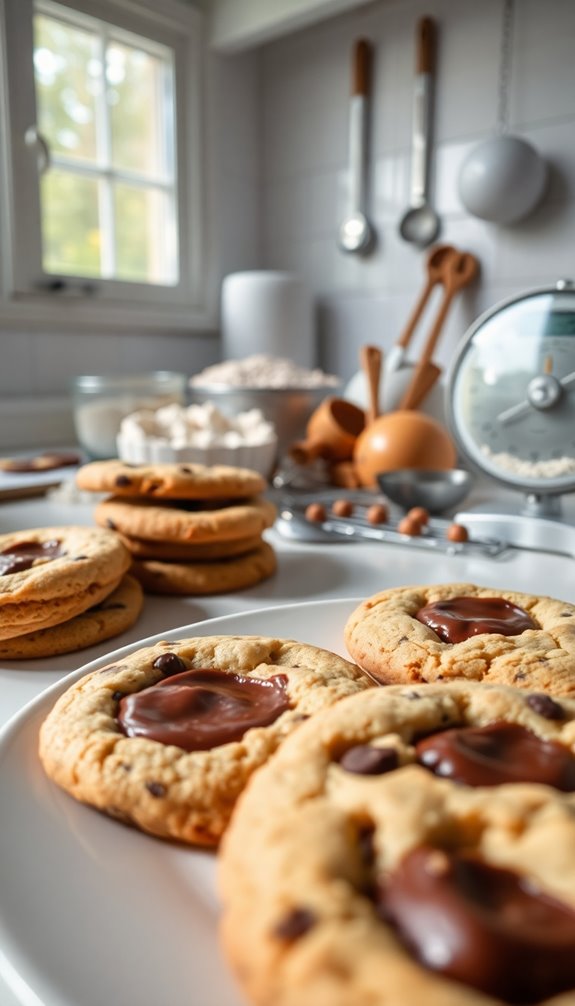
Measuring ingredients accurately is essential for baking success, especially when you want those flat chocolate chip cookies to turn out just right.
Common mistakes can lead to cookies that spread too much or not enough, ruining your effort. Using the right tools guarantees you get the precision needed for perfect results every time.
Importance Of Precision
While baking might seem like an art, precision in measuring ingredients is crucial for achieving those perfect flat chocolate chip cookies.
Using effective precision techniques and accurate measurement methods guarantees you get the right ingredient ratios every time. This consistency is essential for baking success.
When you weigh your ingredients with a scale, you can make precise weight conversions, leading to better results. Rely on accuracy tools like measuring cups and spoons for dry and liquid ingredients alike.
If you need to make recipe adjustments, having precise measurements helps maintain balance.
Ultimately, focusing on these details will enhance your baking consistency and elevate your cookie game, making certain your treats come out just the way you want them.
Common Measuring Mistakes
Even with the right tools, common measuring mistakes can throw off your baking game. One of the biggest pitfalls is using incorrect measuring techniques. If you scoop flour directly from the bag, you might pack it down, leading to too much weight.
Instead, spoon the flour into your measuring cup and level it off with a knife. Additionally, ignoring ingredient weights can cause serious inconsistencies. For example, a cup of sugar weighs differently than a cup of flour.
Using a kitchen scale guarantees accuracy, especially for ingredients that vary in density. By paying attention to these details, you can avoid flat chocolate chip cookies and achieve the perfect texture every time.
Your baking deserves that precision!
Tools For Accuracy
Accurate measurement is essential for baking success, and having the right tools can make all the difference. Start with measuring cups for dry ingredients, but don’t underestimate the precision of digital scales, especially for ingredient ratios.
Accurate weights guarantee your cookies turn out just right. Use kitchen thermometers to check your butter temperature, and oven thermometers to confirm your baking environment is spot-on. They help prevent flat cookies by making sure everything bakes evenly.
Also, pay attention to your mixing techniques; overmixing can lead to excess spread. Finally, if you find your cookies still flattening, consider recipe adjustments, like tweaking the flour or sugar ratios.
With the right tools, you’ll achieve perfect cookies every time.
The Importance of Flour: Choosing the Right Type
Choosing the right type of flour can make all the difference in your flat chocolate chip cookies. Different flour types have varying gluten content, which impacts your cookie’s texture and structure.
Choosing the right flour is crucial; different gluten levels affect the texture and structure of your cookies.
For a chewier cookie, go for all-purpose flour, as it strikes a balance between protein and starch. If you want a fluffier result, consider cake flour, which has lower gluten content. Conversely, bread flour can lead to denser cookies due to its higher gluten levels.
Experimenting with these flours can help you achieve the perfect balance. Remember, the key is selecting a flour that complements your desired cookie outcome, ensuring your treats rise beautifully rather than flattening out.
Happy baking!
How Baking Soda and Baking Powder Impact Cookies
When you bake cookies, the choice between baking soda and baking powder can change everything.
These leavening agents not only affect how fluffy your cookies turn out but also influence their flavor through pH balance.
Accurate measuring is key, so getting these ingredients right will make a noticeable difference in your cookie results.
Role of Leavening Agents
Understanding the role of leavening agents like baking soda and baking powder is essential for achieving the perfect flat chocolate chip cookie.
These leavening agents trigger baking reactions that create gas production, which helps lift your dough. The right ingredient interactions can enhance your cookie’s texture, balancing the acid and alkaline components in the recipe.
If your dough consistency is off, you might end up with cookies that spread too much in the oven environment. Adjusting these variables through recipe variations allows you to find the ideal balance for fluffy cookies.
pH Balance Effects
The pH balance in your cookie dough greatly impacts the final product, especially when it comes to baking soda and baking powder. These rising agents interact with other ingredients, affecting pH levels and the acidity balance.
In baking chemistry, the right pH is essential for ideal flavor development and dough consistency. A higher acidity can lead to a drier texture variance, while lower pH can result in cookies that spread too much.
Proper moisture control is key; it influences both texture and overall flavor profile. If you’re making baking modifications or ingredient substitutions, be mindful of how these changes affect pH balance.
Ultimately, mastering this balance can elevate your cookies from flat to fluffy.
Measuring Ingredients Accurately
Accurate measurement of ingredients is essential for achieving the perfect flat chocolate chip cookies, especially when it comes to baking soda and baking powder.
Use effective measuring techniques to guarantee precision baking. Opt for weight vs volume measurements; digital scales provide the most accurate results.
When measuring flour, avoid packing it down, and always use accurate spoons for baking soda and powder. If you’re making ingredient substitutions, adjust measurements accordingly to maintain balance.
For liquids, use measuring tools designed for accuracy, ensuring you pour to the correct line.
Oven Temperature: Are You Baking at the Right Heat?
Have you ever wondered why your chocolate chip cookies turn out flat instead of fluffy? One common culprit could be your oven temperature. If it’s not calibrated correctly, you might be baking at the wrong heat.
Proper heat distribution is essential for achieving that perfect cookie rise.
Here are some tips to guarantee your oven is baking at the right heat:
- Check oven calibration: Use an oven thermometer to verify the temperature.
- Preheat adequately: Always preheat your oven for even baking.
- Rotate baking sheets: This helps with heat distribution for uniform results.
- Avoid overcrowding: Give cookies enough space to rise and spread correctly.
Adjusting these factors can help you achieve those delicious, fluffy cookies you crave!
The Effect of Humidity on Cookie Texture
When baking cookies, you mightn’t realize that humidity plays a significant role in their texture. High humidity can mess with your moisture balance, causing your cookies to spread too much and turn flat.
When it’s humid, the extra moisture in the air can affect flour absorption, leading to a dough that’s too wet.
Humidity can alter flour absorption, resulting in overly wet dough and impacting your cookie’s texture.
For successful seasonal baking, consider climate considerations before you start. If you live in a humid area, you might need to adjust your ingredients or baking method.
Try adding a bit more flour or reducing liquid ingredients to combat the humidity effects. By understanding how moisture impacts your cookies, you can achieve that perfect chewy texture, regardless of the weather outside.
Chilling Your Dough: Does It Really Help?
Why does chilling your cookie dough make such a difference? The dough temperature plays a vital role in achieving that perfect cookie consistency.
When you allow your dough a resting period, you enhance several key factors:
- Dough hydration: It helps flour absorb moisture, leading to a better texture.
- Flavor development: A longer resting time allows flavors to deepen and integrate.
- Dough elasticity: Chilling firms the butter, making it easier to shape.
- Resting benefits: The colder dough spreads less during baking, giving you thicker cookies.
The Impact of Baking Sheets and Parchment Paper
Choosing the right baking sheet and parchment paper can greatly affect your cookie’s outcome. Different baking sheet materials, like aluminum or stainless steel, influence heat distribution, impacting how evenly your cookies bake.
A non-stick option can help prevent sticking, but be cautious, as it might lead to flatter cookies if not monitored. Parchment paper offers several benefits, such as creating a smooth surface texture and aiding in easy cookie removal.
For ideal cookie placement, make sure there’s enough space between each one to allow for spreading. After baking, using a cooling rack helps maintain your cookies’ shape by allowing air circulation.
Tips for Adjusting Your Recipe for Perfect Cookies
To perfect your flat chocolate chip cookies, tweaking the flour ratio can make a big difference in texture.
Additionally, choosing the right type of butter will enhance flavor and consistency.
Let’s explore how these adjustments can elevate your cookie game.
Adjusting Flour Ratio
Adjusting the flour ratio can make a significant difference in achieving the perfect flat chocolate chip cookies you crave. To get it right, consider the following tips:
- Choose the right flour types; all-purpose flour works well, but you can experiment with bread or cake flour for different textures.
- Pay attention to flour measurement; use the spoon-and-level method or a kitchen scale for accuracy.
- Store your flour properly to maintain its quality; keep it in an airtight container in a cool, dry place.
- Blend different flour brands or incorporate flour substitutes to adjust hydration and protein levels, enhancing your cookie’s structure.
Choosing the Right Butter
While the type of butter you use may seem like a small detail, it can dramatically impact the texture and flavor of your flat chocolate chip cookies.
First, consider butter types; stick with unsalted for better control over sweetness. If you prefer salted, adjust your other ingredients accordingly.
Butter temperature is essential—softened butter creams better, resulting in a lighter texture. Organic butter often has a richer flavor, enhancing your cookies.
If you’re looking for alternatives, coconut oil or vegan butters can work, but they may alter the final taste and texture.
Experiment with these options to discover what suits your palate, and you’ll be on your way to perfecting those cookies!
Troubleshooting: What to Do If Cookies Still Flatten?
Even if you’ve followed the recipe to a tee, cookies can still flatten unexpectedly. When troubleshooting, consider these factors that might affect your cookie consistency:
- Check ingredient ratios: Verify flour isn’t short; it’s essential for the dough texture.
- Review mixing techniques: Overmixing can lead to excess air, causing cookies to spread.
- Adjust baking times: Underbaking can lead to a soft center, resulting in flattening.
- Examine oven placement: Positioning your baking sheet too low can affect heat distribution.
Conclusion
In the quest for the perfect chocolate chip cookie, you’ve got the power to turn your dough from pancake flat to a delightful treat. By understanding the science behind cookie texture and making simple adjustments—like checking your butter temperature and chilling your dough—you can achieve that ideal rise. Think of it as tuning a vintage guitar; with the right tweaks, you can create a sweet melody of flavors and textures in every bite. Happy baking!