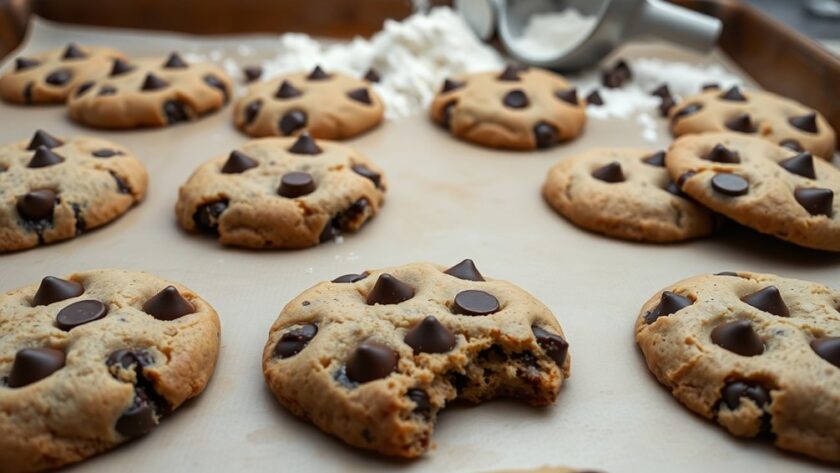
If your chocolate chip cookies are flat or dense, you might be using stale leavening agents, mismeasuring ingredients, or not chilling your dough. The type and temperature of the butter can also affect the cookies’ spread. Overmixing can lead to tough cookies, while the wrong flour type may impact texture. Plus, the baking sheet and oven temperature play vital roles too. You can discover more about these common mistakes and how to fix them as you go on.
Why Are My Cookies Too Flat?
If your cookies spread out too much during baking, it could be due to several factors. One major reason is cookie thickness; if your dough isn’t thick enough, it can easily lose its shape. Make sure you’re using the right measurements for flour and fat, as too much butter can lead to a gooey, flat result. Additionally, dough consistency plays a significant role. If your dough is too soft, it won’t hold its shape in the oven. Chilling the dough for at least 30 minutes can help solidify the fats, giving your cookies a better structure. Keep an eye on your mixing process, too—overmixing can also affect how your cookies rise and spread. Using the right flour measurement is crucial to avoid excessive spreading. To further enhance your baking, ensure that you’re aware of the storage duration of your ingredients, as stale flour can negatively impact cookie texture. For optimal freshness, consider proper storage methods for your ingredients, as this can significantly influence the performance of your dough.
Is My Baking Soda or Baking Powder Fresh?
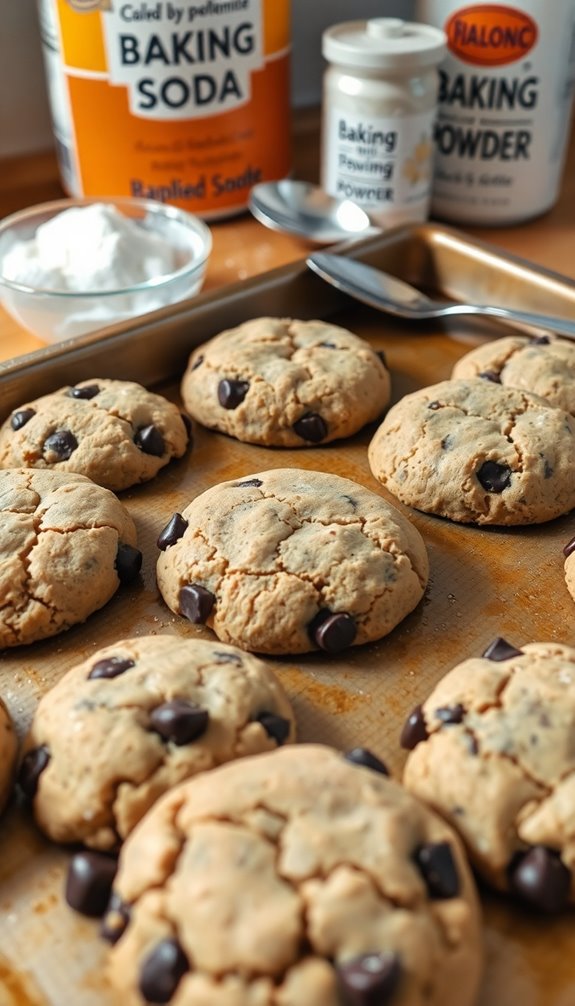
Wondering whether your baking soda or baking powder is still fresh? Both leavening agents have a limited shelf life, typically around six months to a year. If they’re past this timeframe, your cookies may not rise properly.
To check baking soda, pour a little vinegar over it; if it fizzes, it’s good. For baking powder, mix it with water; if it bubbles, it’s still effective. Properly mixed dry ingredients are vital for desired texture and rise, so ensuring your leavening agents are fresh is crucial. Brown sugar’s moisture content can also help improve the overall texture of your cookies, making them chewier.
Proper storage conditions are essential—keep these ingredients in a cool, dry place to prevent moisture absorption, which can reduce ingredient freshness. Stale leavening agents can lead to disappointing baking performance, leaving you with flat, dense cookies. Always check their freshness to guarantee your chocolate chip cookies turn out perfectly! Additionally, consider using baking soda substitutes to help achieve the ideal cookie texture if your supply is questionable.
Am I Using the Right Flour Type?
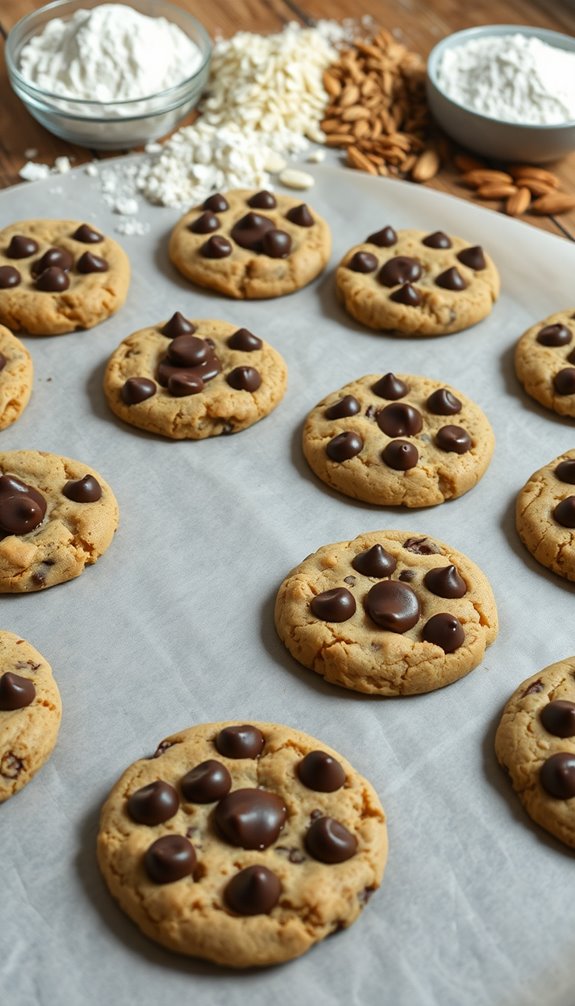
Using the right flour type can make a big difference in your chocolate chip cookies. Different flours have varying protein levels, which affects the texture and structure of your cookies. Here’s what to take into account:
Using the right flour type significantly impacts the texture and structure of your chocolate chip cookies. Choose wisely for the best results!
- All-Purpose Flour: Ideal for a balanced cookie, it has moderate flour protein, creating a chewy texture without being too dense. This flour type is often preferred for classic cookie recipes. Additionally, a proper measure of flour is crucial to avoid dense cookies.
- Bread Flour: Higher in protein, this flour yields a sturdier and chewier cookie, perfect for those who love a bit of bite. Using bread flour can enhance the cookie’s structure, resulting in a more satisfying chew.
- Cake Flour: Low in protein, it produces a softer, more tender cookie but may spread too much if used alone. Combining cake flour with other types can help achieve a desirable balance of softness and structure.
Choosing the right flour texture is essential for achieving your desired cookie outcome. Make sure to pick wisely! Additionally, using a combination of light brown sugar and granulated sugar can enhance the chewiness of your cookies.
How Does Butter Temperature Affect My Cookies?
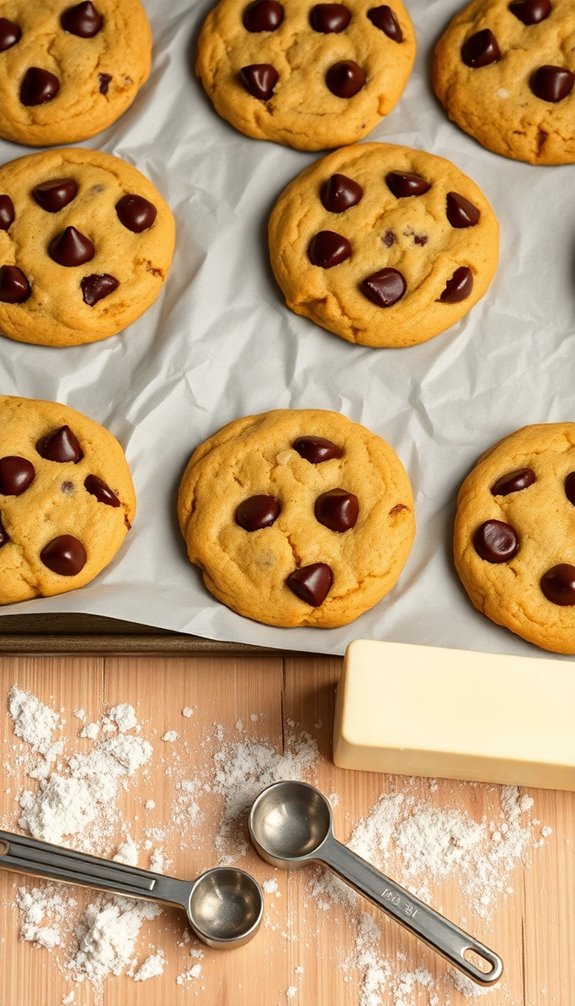
Butter temperature plays an essential role in the outcome of your chocolate chip cookies, as it influences texture and spread. When you use softened butter, it creates a creamy consistency that helps incorporate air, resulting in fluffy cookies.
If your butter’s too warm, your cookies might spread too much, leading to thin, crispy results. Conversely, cold butter can make your dough crumbly and hard to mix.
If you’re considering butter substitutions, like margarine or coconut oil, remember that these can also affect your cookies’ texture. Margarine may lead to a softer cookie, while coconut oil could create a denser texture. Additionally, starting with melted butter can enhance the rich flavor of your cookies.
Pay attention to butter consistency, and you’ll be well on your way to perfecting your cookie recipe!
Did I Measure Ingredients Accurately?
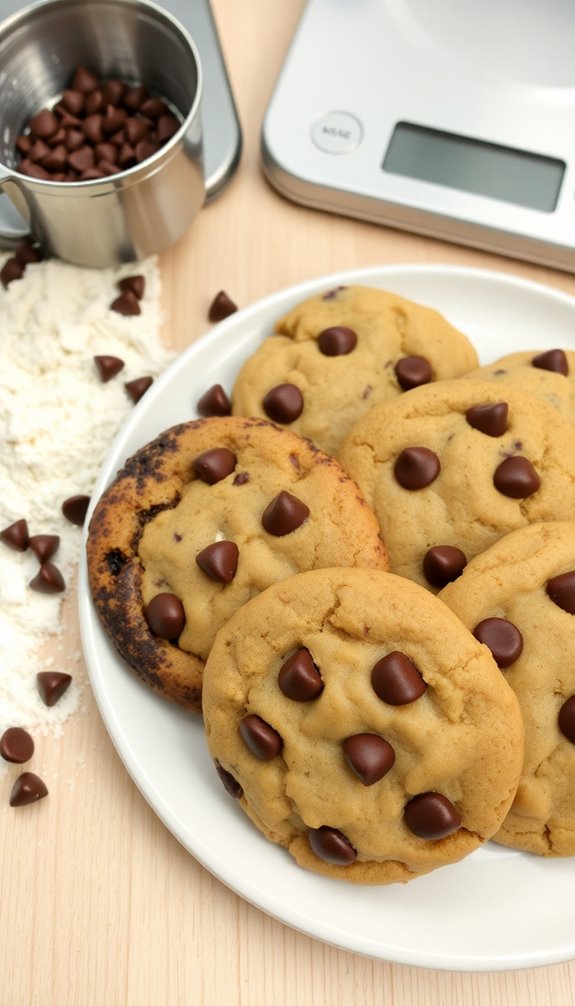
Have you ever considered how essential accurate ingredient measurement is for your chocolate chip cookies? Precision makes all the difference.
Accurate ingredient measurement is crucial for perfect chocolate chip cookies; precision truly makes all the difference.
Here’s how to guarantee you measure correctly:
- Use an ingredient scale for dry ingredients to avoid inaccuracies with measuring cups. Weight conversions can save your cookies from being too dense or crumbly.
- Invest in accurate spoons for measuring smaller quantities like baking soda or salt. Small miscalculations can throw off your recipe ratios.
- Check your wet ingredients with a kitchen thermometer if needed. The right temperature can affect how well they incorporate with dry ingredients.
Should I Chill My Dough Before Baking?
Why should you consider chilling your dough before baking? Chilling your dough can greatly improve dough consistency, making it easier to handle and shape.
When you chill the dough, the fats firm up, which helps prevent spreading during baking. This means you’ll get thicker, chewier cookies that hold their shape better.
Additionally, chilling enhances the flavor by allowing the ingredients to meld together. The longer you chill, the more pronounced the flavors become.
You’ll also benefit from a more uniform texture, as the cold dough bakes more evenly.
What Happens If I Overmix the Dough?
Chilling your dough sets the stage for ideal texture, but if you overmix it afterward, you might run into trouble.
Overmixing can lead to unwanted gluten development, which affects your cookies negatively. Here’s what can happen:
- Tough Cookies: The more you mix, the more gluten develops, resulting in a chewy instead of a tender texture.
- Flat Appearance: Overmixed dough can spread excessively while baking, leading to flat cookies instead of the desired thickness.
- Crumbly Texture: Excessive mixing can also introduce air, creating a crumbly texture that’s less enjoyable to eat.
To achieve the perfect chocolate chip cookie, mix just until combined. Trust the process, and you’ll enjoy a delightful treat!
How Can I Enhance the Flavor of My Cookies?
If you want to elevate the flavor of your chocolate chip cookies, it’s time to get creative.
Try experimenting with different extracts, like vanilla or almond, and don’t forget to sprinkle in a bit of sea salt for that perfect balance.
Finally, using high-quality chocolate can make a world of difference in taste.
Experiment With Extracts
To elevate the flavor of your chocolate chip cookies, experimenting with different extracts can make a world of difference. Achieving the right flavor balance is key, and the right extract types can enhance your cookies beautifully.
Here are three extracts to try:
- Vanilla Extract: A classic choice that deepens sweetness and rounds out flavors.
- Almond Extract: Adds a nutty depth, giving your cookies a unique twist.
- Coffee Extract: Enhances chocolate flavors and adds a subtle richness.
Feel free to mix and match, but remember to start with small amounts; a little goes a long way.
With these extracts, you’ll create cookies bursting with flavor that stand out from the crowd!
Incorporate Sea Salt
Adding extracts can certainly enhance the flavor of your cookies, but don’t overlook the power of sea salt. It’s a game-changer for achieving a perfect flavor balance.
Different sea salt types, like flaky or coarse, can add a delightful crunch and burst of flavor. When you sprinkle a touch of sea salt on top of your cookie dough before baking, it not only elevates the sweetness but also highlights the chocolate’s richness.
Just remember, a little goes a long way; you want to enhance, not overpower. Experiment with different sea salt types to find what best complements your cookie recipe.
This simple addition can make your cookies truly irresistible and elevate them from ordinary to extraordinary.
Use Quality Chocolate
Quality chocolate is essential for elevating your chocolate chip cookies. When you choose the right chocolate varieties, you’ll notice a significant difference in flavor.
Here are three tips to enhance your cookies:
- Select High-Quality Chocolate: Opt for chocolate with a high cocoa content. Dark chocolate or gourmet brands can make your cookies extraordinary.
- Experiment with Varieties: Mix and match chocolate varieties—try semi-sweet, milk, or even white chocolate chips for a unique taste.
- Perfect Your Melting Techniques: If you’re melting chocolate, use a double boiler or microwave in short bursts to prevent burning. This guarantees a smooth, rich addition to your dough.
Am I Using the Correct Baking Sheet?
How essential is the choice of baking sheet when it comes to perfecting your chocolate chip cookies? It can make a significant difference!
Start by considering baking sheet materials. Light-colored aluminum sheets reflect heat, promoting even baking, while dark sheets absorb heat, often leading to overbrowning. Choose a material that suits your preference and cookie style.
Next, think about cookie sheet sizes. Standard sheets usually fit 12 to 15 cookies, but if you’re baking a larger batch, you might need a bigger size.
Avoid overcrowding the pan; it can result in uneven baking. Ultimately, selecting the right baking sheet helps guarantee your cookies come out just right—golden, chewy, and delicious!
How Does Oven Temperature Impact My Cookies?
While you might think baking cookies is straightforward, your oven temperature plays a crucial role in the final outcome. If your oven isn’t properly calibrated, you could face unexpected temperature variations that affect your cookies.
Here are three key ways oven temperature impacts your cookies:
- Spread: Too high a temperature can cause cookies to spread too quickly, resulting in thin, crispy treats.
- Texture: A lower temperature may lead to undercooked centers, leaving you with a doughy texture instead of a chewy bite.
- Color: Inconsistent heat can result in uneven browning, making some cookies look unappetizing.
Keeping an eye on your oven’s calibration can help you achieve the perfect batch every time!
Conclusion
So, if your chocolate chip cookies aren’t quite hitting the sweet spot, don’t fret! With a little detective work, you can uncover the sneaky culprits behind your cookie conundrums. Whether it’s the freshness of your baking soda or the sly temperature of your butter, small tweaks can lead to delightful transformations. Embrace the journey of cookie crafting, and soon enough, you’ll be savoring deliciously perfect treats that melt in your mouth and warm the heart. Happy baking!