
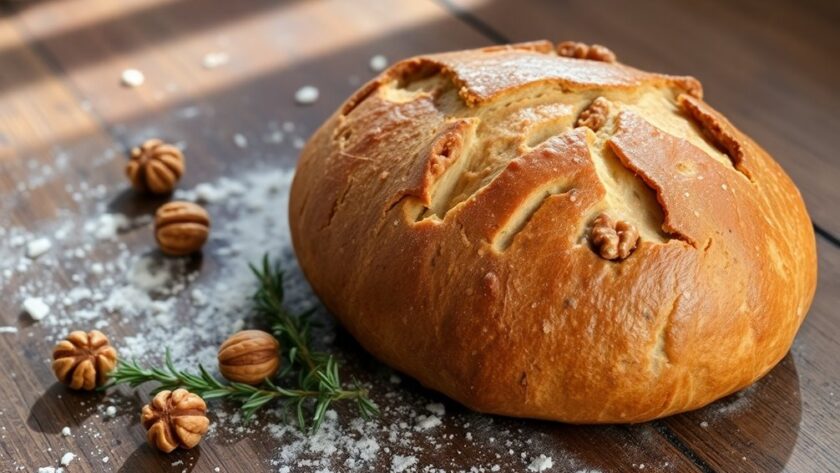
If you’re looking for a moist and hearty walnut bread, you’re in for a treat! Start by mixing high-quality flour, yeast, and toasted walnuts for that rich, nutty flavor. Knead the dough until smooth, let it rise, shape it, and bake until golden. This bread pairs beautifully with cream cheese or mashed avocado. For more tips on perfecting your walnut bread, including serving ideas and troubleshooting, you won’t want to miss the exciting details ahead.
Why Choose Walnut Bread for Your Baking Adventure
When you’re looking to elevate your baking game, walnut bread stands out as a delightful choice. Its rich, nutty flavor adds depth to your creations, making each slice a treat.
Walnut bread isn’t just tasty; it also connects you to age-old baking traditions. Many cultures incorporate nuts into their bread recipes, celebrating the unique textures and flavors they bring. Additionally, butter cookies showcase the versatility of incorporating nuts into baked goods, enhancing flavor profiles and textures. By choosing walnut bread, you’re not only honing your skills but also embracing a time-honored practice that’s been passed down through generations. Plus, the versatility of walnut bread means it pairs beautifully with both sweet and savory dishes. Additionally, incorporating nuts into your baking can enhance nutrient absorption, providing a healthful twist to your culinary creations. These nutrients can help boost overall health, making walnut bread a nourishing addition to your diet.
The Health Benefits of Walnuts in Bread
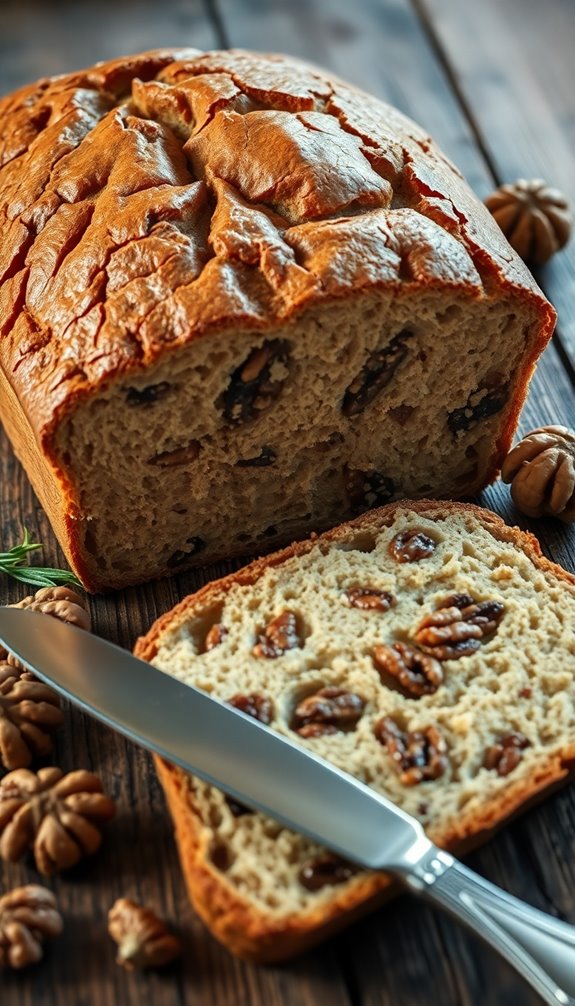
Here are some key nutritional benefits:
- Heart Health: Walnuts improve cholesterol levels and reduce inflammation, promoting cardiovascular wellness. Additionally, walnuts are a great source of protein-packed snacks that can support overall health. Incorporating low-sugar alternatives into your diet can enhance the heart-healthy benefits of walnut bread.
- Brain Function: Rich in antioxidants, walnuts support cognitive health, potentially enhancing memory and mood.
- Weight Management: The healthy fats in walnuts provide an energy boost, helping you feel full longer.
Incorporating walnut bread into your diet can also aid digestive health and contribute to overall wellness. Additionally, using light molasses in your walnut bread recipe can enhance flavor while adding beneficial nutrients.
Essential Ingredients for Moist Walnut Bread
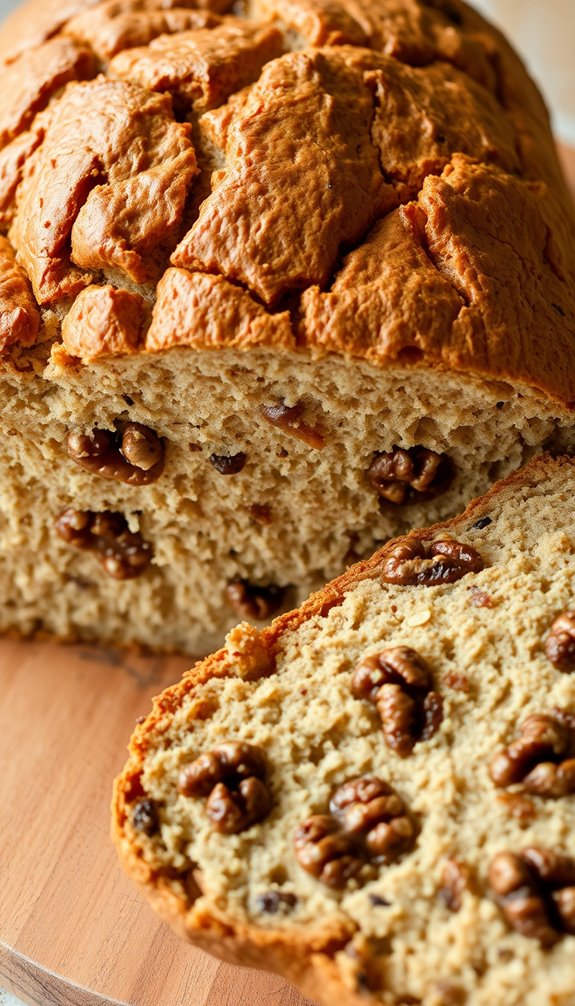
To create a moist and flavorful walnut bread, you’ll need to focus on the right combination of ingredients. Start with high-quality flour, preferably bread flour, to enhance the bread texture. Additionally, consider using spelt flour for added nuttiness and nutrition, similar to its role in enhancing flavors in pumpkin bread.
Then, choose your walnut varieties; English walnuts offer a milder flavor, while black walnuts provide a richer taste. Don’t forget about the liquid component—use milk or water, but adding a bit of yogurt can increase moisture and tenderness. Incorporating sugar pumpkins can also improve flavor in your baking.
Incorporate a sweetener like honey or brown sugar to balance the nutty flavor. Finally, a pinch of salt is essential for enhancing all the flavors. Additionally, using fresh ingredients can significantly impact the overall taste and texture of your walnut bread.
With these ingredients, you’ll set the foundation for a delicious walnut bread that’s irresistibly moist and hearty.
Step-by-Step Instructions for Making Walnut Bread
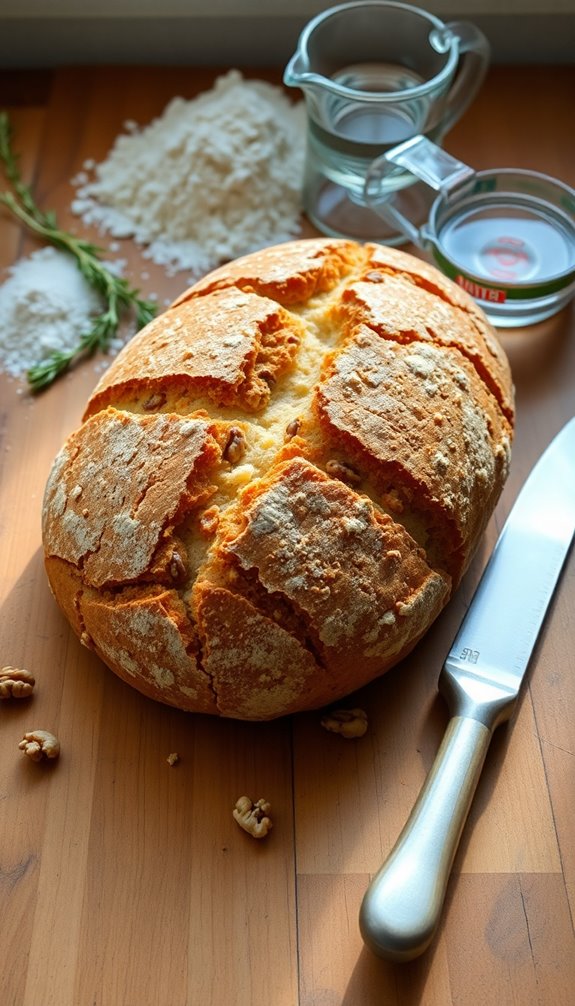
Get ready to bring your walnut bread to life with these easy step-by-step instructions. Follow along, and you’ll soon have delicious, homemade bread that’s perfect for any occasion!
- Gather your baking tools: mixing bowl, measuring cups, whisk, and baking pan.
- Mix the ingredients: Combine flour, yeast, salt, and water in your mixing bowl. Stir until it forms a dough.
- Kneading techniques: Turn the dough onto a floured surface and knead for about 10 minutes, or until smooth and elastic. Properly mixed dry ingredients are vital for desired texture and rise.
Once you’ve kneaded the dough, let it rise in a warm place until doubled in size.
Shape it, let it rise again, and then bake! Your walnut bread is just moments away from being enjoyed.
Tips for Perfectly Toasting Walnuts
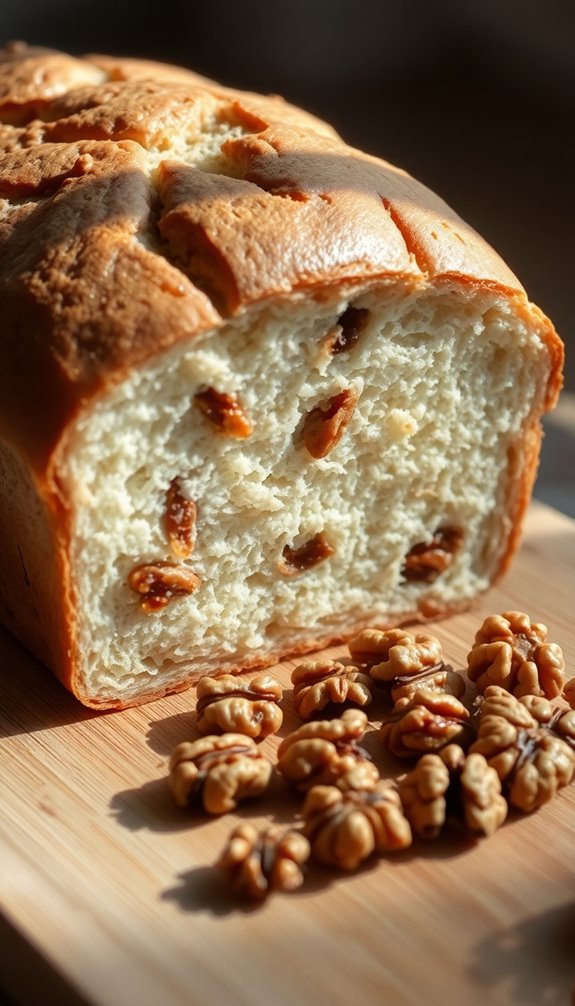
Toasting walnuts can elevate their flavor and add a delightful crunch to your walnut bread. Start with fresh walnut varieties, as their natural oils enhance the taste.
Use simple toasting techniques, like spreading them in a single layer on a baking sheet. Preheat your oven to 350°F (175°C) and toast for about 8-10 minutes, stirring halfway through to guarantee even browning.
Spread walnuts in a single layer on a baking sheet, toast at 350°F for 8-10 minutes, stirring halfway for even browning.
Alternatively, you can toast them in a skillet over medium heat, tossing frequently to prevent burning. Keep a close eye on them, as they can go from perfect to burnt quickly.
Once toasted, let them cool before adding to your dough for that extra flavor boost. Enjoy the rich, nutty taste in every bite!
How to Achieve the Right Dough Consistency
Achieving the right dough consistency is essential for a successful walnut bread, as it directly affects the texture and rise. To get it just right, pay close attention to the following:
- Dough hydration: Aim for a hydration level around 65-70% for a moist crumb. Adjust water based on the flour type you use.
- Flour type: Use bread flour for better structure, but you can mix in whole wheat for added flavor and nutrition.
- Kneading time: Knead until the dough is smooth and elastic, which typically takes about 8-10 minutes by hand.
Common Mistakes to Avoid When Baking Walnut Bread
When baking walnut bread, it’s easy to make a couple of common mistakes that can affect the outcome.
Overmixing the dough can lead to a dense texture, while improper walnut preparation might leave you with uneven flavors.
Let’s tackle these pitfalls to guarantee your bread turns out perfectly every time.
Overmixing The Dough
- Mix just until combined: Stop mixing as soon as you see no dry flour.
- Use gentle motions: Fold the dough instead of stirring vigorously to maintain airiness.
- Don’t rush: Take your time; letting the dough rest can improve the final result.
Wrong Walnut Preparation
Overmixing the dough can lead to a dense loaf, but improper walnut preparation can ruin your walnut bread even more.
First, always choose high-quality walnuts; use walnut sourcing tips to find fresh, organic options. Stale or rancid nuts can spoil the flavor of your bread.
Next, consider how you store them. Proper walnut storage methods, like keeping them in an airtight container in a cool, dark place, can prolong their freshness.
Toasting walnuts adds a rich, nutty flavor, but be careful not to burn them, as that can create bitterness.
Finally, chop or crush them to your desired consistency. Avoid these common mistakes, and you’ll elevate your walnut bread to a whole new level.
Variations to Elevate Your Walnut Bread Recipe
While you might love the classic walnut bread recipe, experimenting with variations can take your baking to new heights.
Here are some ideas to enhance both flavor and texture:
- Herb Infusions: Add fresh rosemary or thyme for a savory twist that complements the nuts beautifully.
- Dried Fruits: Incorporate cranberries or figs for a sweet touch, adding moisture and a delightful contrast in texture.
- Nut Mix: Mix in hazelnuts or pecans for added crunch and a unique flavor profile that elevates your bread.
These flavor infusions and texture variations won’t only make your walnut bread more exciting but will also impress your family and friends.
Get creative, and enjoy the process of making your own delicious twists!
Creative Ways to Serve Walnut Bread
When it comes to serving walnut bread, the possibilities are endless.
You can toast slices and pair them with delicious toppings or create hearty sandwiches with your favorite spreads.
Let’s explore some creative ways to enjoy this nutty delight!
Toasted With Toppings
Toasted to perfection, walnut bread offers a delightful canvas for your favorite toppings.
Experimenting with toasted variations brings out unique flavors and textures, making each bite a treat. Here are some delicious topping combinations you can try:
- Cream cheese and honey: Spread creamy goodness and drizzle honey for a sweet contrast.
- Avocado and chili flakes: Mash ripe avocado, sprinkle with chili flakes, and enjoy a spicy kick.
- Goat cheese and figs: Top with tangy goat cheese and sliced figs for a sophisticated touch.
These combinations elevate your walnut bread, making it perfect for breakfast or a snack.
Sandwiches and Spreads
There’s something special about using walnut bread for sandwiches that elevates your lunch game. The rich, nutty flavor pairs beautifully with a variety of fillings.
For delicious sandwich ideas, try layering slices of turkey, cranberry sauce, and arugula for a festive twist. If you’re craving something vegetarian, load up on roasted veggies and a smear of hummus.
When it comes to spread options, cream cheese mixed with herbs makes a delightful base, while a simple avocado smash adds creaminess and healthy fats.
Don’t shy away from experimenting—walnut bread invites creativity! Whether you’re crafting a classic or trying something new, your sandwiches will shine with this hearty bread.
Enjoy your lunchtime masterpiece!
Storing and Freezing Walnut Bread for Freshness
Properly storing and freezing walnut bread can extend its freshness for weeks. To keep your bread moist and flavorful, follow these freshness tips and storage methods:
- Cool Completely: Let the bread cool entirely before wrapping it to prevent moisture buildup.
- Wrap Well: Use plastic wrap or aluminum foil for short-term storage, and for long-term freezing, opt for freezer bags to seal out air.
- Slice Before Freezing: Slice the bread before freezing, so you can easily grab just what you need without thawing the entire loaf.
Pairing Walnut Bread With Spreads and Toppings
After ensuring your walnut bread stays fresh through proper storage, it’s time to enjoy it with delicious spreads and toppings.
After properly storing your walnut bread, indulge in it with delightful spreads and toppings for a truly satisfying experience.
The nutty pairings of walnut bread complement a variety of flavors, enhancing your snacking experience. You might try spreading a layer of creamy goat cheese for a tangy contrast, or a rich, buttery spread for a satisfying texture.
For a sweet twist, a drizzle of honey or a smear of fig jam creates delightful flavor contrasts that highlight the bread’s natural nuttiness.
Don’t forget to experiment with fresh herbs or a sprinkle of sea salt to elevate the taste. Each combination offers a unique way to savor your walnut bread, making every bite a delicious adventure.
How to Incorporate Other Nuts and Seeds
If you’re looking to elevate your walnut bread, incorporating other nuts and seeds can add delightful textures and flavors. Here are some ideas to get you started:
- Nut alternatives: Try hazelnuts or pecans for a unique twist.
- Seed choices: Flaxseeds or sunflower seeds offer a nutritious crunch.
- Texture variations: Combine chopped nuts with seeds for added depth.
These ingredient substitutions can enhance flavor and accommodate those with nut allergies.
Experiment with different baking techniques, like toasting nuts beforehand, to deepen their flavor.
You can also draw inspiration from regional recipes that feature various nuts and seeds.
Your walnut bread won’t only be heartier but also beautifully diverse!
Troubleshooting: What to Do If Your Bread Doesn’t Rise?
If your bread doesn’t rise, there are a few common culprits to check.
You might’ve issues with yeast activation, the dough temperature could be off, or you may not have kneaded it long enough.
Let’s explore these factors to help you get that perfect rise.
Yeast Activation Issues
When your bread doesn’t rise, it can be frustrating, especially if you’ve followed the recipe closely.
Yeast activation issues can often be the culprit, so let’s troubleshoot. Here are a few things to check:
- Yeast Types: Verify you’re using the correct yeast for your recipe—active dry, instant, or fresh yeast all have different properties.
- Activation Temperature: Yeast thrives between 100°F and 110°F (37°C to 43°C). If your liquid’s too hot or too cold, it can kill the yeast or prevent activation.
- Freshness: Always check the expiration date on your yeast. Old yeast won’t rise properly, no matter how well you follow the other steps.
Address these points, and you’ll be on your way to a beautifully risen loaf!
Incorrect Dough Temperature
While it might seem surprising, incorrect dough temperature can greatly impact your bread’s rise. If your dough is too cold, yeast performance slows down, leading to a dense loaf.
On the flip side, overly warm dough can cause the yeast to overactive, resulting in a rapid rise that collapses. Aim for a dough temperature around 75-78°F (24-26°C) for peak yeast activity.
To achieve this, check the water temperature before mixing; it should feel warm but not hot to the touch.
If your dough isn’t rising, consider its environment. A warm, draft-free spot is ideal. You might even use an oven with the light on or a proofing box to maintain that perfect dough temperature for successful rising.
Insufficient Kneading Time
- Practice effective kneading techniques: Use your palms to push and fold the dough, ensuring it develops the right texture.
- Check for dough elasticity: The dough should spring back when you poke it. If it doesn’t, it likely needs more kneading.
- Knead until smooth: Aim for a silky texture, which indicates that gluten has formed adequately.
Frequently Asked Questions About Walnut Bread Baking
What questions do you have about baking walnut bread? You might wonder about its rich history, which dates back centuries, with roots in various cultures appreciating its hearty texture and flavor.
When it comes to baking techniques, start with high-quality ingredients to enhance the taste. Make sure to properly toast your walnuts to release their oils and deepen their flavor.
Start your walnut bread journey with high-quality ingredients and toasted walnuts to elevate flavor and richness.
Kneading is essential; it develops gluten for that perfect chewy texture. If your dough feels too sticky, don’t hesitate to add a bit more flour.
Finally, let your bread cool completely before slicing—it makes a big difference in texture. With these tips in mind, you’ll create a deliciously moist walnut bread that’s sure to impress!
Conclusion
In the grand tapestry of baking, walnut bread stands as a delightful stitch, weaving together health and flavor. You’ve crafted something truly special, embracing the warmth of home and the joy of creativity. So, whether you savor a slice with a drizzle of honey or share it with loved ones, remember: every loaf tells a story. Keep experimenting, and let your kitchen be a canvas for culinary art. Happy baking, and may your bread always rise to the occasion!