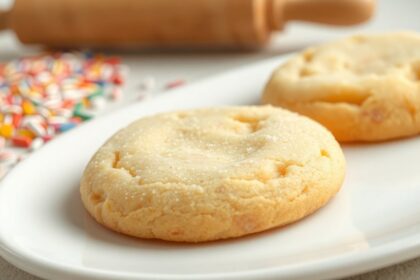

Butter cookies and shortbread each have unique histories and textures. Shortbread hails from Scotland, known for its crumbly texture and high butter content. In contrast, butter cookies, with roots in various European traditions, incorporate eggs for a firmer bite. While shortbread is simple and tender, butter cookies shine with decorative potential and sweeter flavors. If you’re curious about their baking techniques and tips for making them at home, there’s much more to uncover about these delightful treats!
History of Shortbread
Shortbread cookies have a rich history that dates back to 12th-century Scotland, where they emerged as a delightful evolution of leftover yeasted bread dough.
The traditional recipe calls for just three simple ingredients: butter, sugar, and flour, focusing on the high fat content that makes shortbread so irresistible.
With just three ingredients—butter, sugar, and flour—shortbread highlights the irresistible allure of high fat content.
By the 16th century, shortbread gained popularity, particularly associated with Mary, Queen of Scots, who reportedly favored this treat.
You’d find shortbread served during holidays and special occasions, solidifying its place in Scottish culinary traditions.
The name “shortbread” stems from its high amount of shortening, primarily butter, giving it that tender, crumbly texture you love.
This delectable cookie has truly stood the test of time, and gluten-free options have emerged to cater to modern dietary needs.
History of Butter Cookies
While the exact origins of butter cookies aren’t well-documented, they likely arose from a blend of English, Scottish, and Dutch baking traditions brought to America by early settlers.
These delightful treats gained popularity in the 19th century, particularly in Denmark, where they were refined and mass-produced. The Royal Dansk bakery, famous for its iconic blue tins, played a significant role in spreading the love for butter cookies worldwide.
Unlike shortbread cookies, which have medieval Scottish roots, butter cookies emerged as a distinct type in the late 1800s.
You’ll often find them associated with holiday baking, celebrated for their versatility in shape and decoration, making them a favorite among cookie enthusiasts everywhere. The chocolate chip cookie invention represents a significant milestone in American baking history, showcasing the potential for innovation in the cookie realm.
Key Ingredients and Their Roles

When you compare butter cookies and shortbread, the core ingredients play a vital role in defining each cookie’s unique character.
The ratios of butter, sugar, and flour not only impact flavor but also affect the texture you experience with each bite. Understanding these differences will help you appreciate why one cookie might be sweeter and more stable, while the other is rich and crumbly. Additionally, incorporating gluten-free ingredients can elevate the baking experience for those with dietary restrictions.
Core Ingredients Comparison
The core ingredients of butter cookies and shortbread play essential roles in defining their textures and flavors.
Shortbread boasts the highest butter-to-flour ratio among all cookie types, using just butter, flour, and sugar. This rich butter content gives shortbread its signature crumbliness and melt-in-your-mouth consistency.
In contrast, butter cookies include eggs, creating a firmer texture that’s perfect for shaping and decorating. While both cookies share that delightful buttery richness, butter cookies’ higher sugar content enhances their sweetness, making them more flavorful.
The absence of eggs in shortbread results in a denser, crumblier treat, setting it apart from the softer, sturdier butter cookies that can hold their shape during baking.
Butter vs. Sugar Ratios
Understanding the difference in butter and sugar ratios between butter cookies and shortbread helps clarify their distinct characteristics.
Butter cookies feature a higher sugar content, enhancing their sweetness and allowing them to maintain their shape during baking. This sugar-to-butter ratio contributes to a firmer texture, making them perfect for decorative shapes.
In contrast, shortbread boasts the highest ratio of butter to flour, resulting in a rich, melt-in-your-mouth experience with a more delicate, crumbly consistency. It uses less sugar, which means it focuses more on the buttery flavor rather than sweetness.
While both types rely heavily on butter, the unique balance of sugar and butter is what sets these two cookie favorites apart.
Flour’s Role in Texture
Flour plays an essential role in shaping the texture of both butter cookies and shortbread.
In butter cookies, the higher proportion of flour to butter creates a firmer structure, allowing them to hold shapes better during baking. This results in a sturdier, snappier texture that’s perfect for decorative designs.
Conversely, shortbread has a higher butter-to-flour ratio, giving it a melt-in-the-mouth consistency and a more crumbly texture. The delicate balance of these ingredients means that shortbread requires lower baking temperatures to maintain that light texture.
Ultimately, the differences in flour ratios not only define their textures but also influence their visual appeal, making butter cookies more suitable for decoration compared to the simpler presentation of shortbread.
Textural Differences Between Shortbread and Butter Cookies
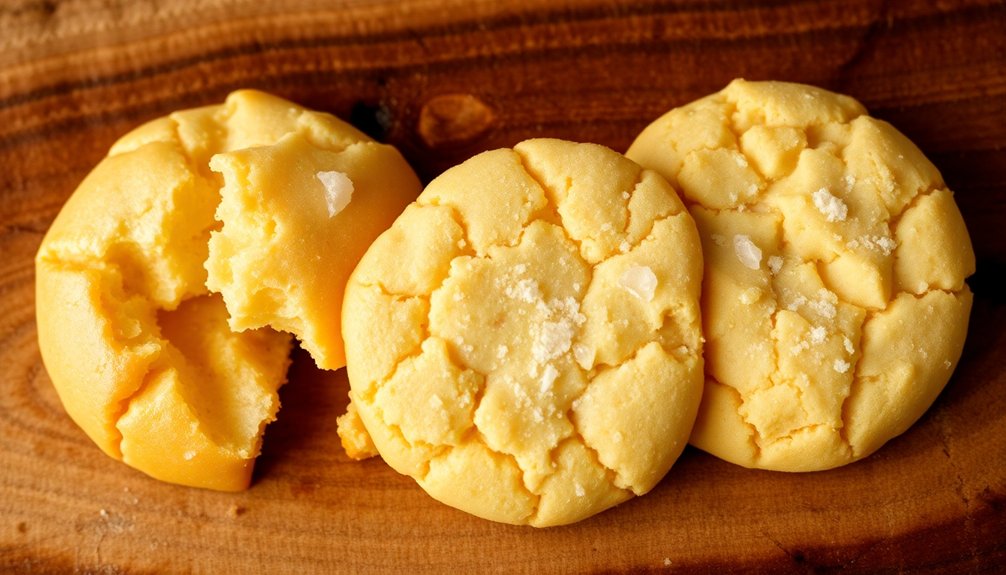
While both shortbread and butter cookies are delightful treats, their textures set them apart considerably.
Shortbread cookies have a higher butter-to-flour ratio, giving them a crumbly, tender texture that melts in your mouth. In contrast, butter cookies are firmer due to a greater proportion of flour and sugar, allowing them to hold their shape better during baking.
Shortbread’s lack of eggs contributes to its sandy consistency, while butter cookies can be piped into various shapes thanks to their richer dough.
When you try these cookie recipes, you’ll notice that shortbread tends to easily break apart, while butter cookies are sturdier, making them ideal for decoration and diverse presentations. Additionally, the texture differences between these cookies can influence how they pair with various flavors, such as almond or coconut in gluten-free oatmeal twists.
Enjoy the unique textures each cookie type offers!
Baking Techniques for Each Cookie Type
When it comes to baking shortbread and butter cookies, the techniques you use can greatly impact the final result.
Shortbread relies on a low baking temperature, preserving its light color and achieving that delicate, crumbly texture. You won’t need baking powder here, as the high proportion of butter provides the right consistency.
Shortbread requires low baking temperatures for a light color and crumbly texture, with no baking powder needed due to the butter’s consistency.
For butter cookies, however, you’ll want to bake at a higher temperature to enhance caramelization, resulting in a firmer structure and richer flavor. Butter cookies excel in cutting into shapes; you can roll the dough or even pipe it onto a baking sheet for intricate designs. Additionally, using gluten-free flour can offer a delightful alternative while maintaining texture and flavor in your cookies.
Just remember, whether you’re making shortbread or butter cookies, handle the dough gently to avoid toughness.
Aesthetic Presentation and Decoration
How can you make your cookies stand out visually? When it comes to aesthetic presentation and decoration, butter cookies shine. Their ability to hold shapes means you can use cookie cutters or pipe them into creative designs, giving you endless possibilities for decoration.
In contrast, shortbread tends to crumble and usually appears plain or just lightly dusted with powdered sugar. Butter cookies, with their uniform appearance and polished look, elevate your dessert game. You can ice them with colorful frostings or sprinkle edible decorations to enhance their visual appeal. Additionally, experimenting with royal icing consistency allows for intricate designs that further enhance the visual charm of butter cookies.
Plus, beautifully packaged butter cookies in gift tins make a stunning presentation for any occasion, showcasing their charm and creativity far beyond shortbread’s rustic simplicity.
Popularity and Recommendations
When you think about cookie favorites, butter cookies often top the list for their irresistible flavor and eye-catching designs.
Their versatility makes them a perfect choice for gifting on special occasions, while shortbread cookies, though tasty, just don’t match that appeal.
If you’re looking for a crowd-pleaser, butter cookies are your go-to option! Additionally, their chewy texture is reminiscent of other beloved desserts, making them a delightful choice for any gathering.
Bestselling Cookie Varieties
Butter cookies and shortbread each have their own charm, but butter cookies often steal the spotlight as the bestselling variety. At Muddys, their rich flavor and eye-catching shapes make them a top choice for gift-giving and celebrations.
You can easily decorate butter cookies, enhancing their visual appeal and making them perfect for any occasion. In contrast, shortbread cookies, while beloved for their buttery taste and crumbly texture, don’t ship as well, making them less popular for long-distance gifting.
If you’re looking for a treat that’s both delicious and visually pleasing, butter cookies are highly recommended. During the holidays, they’re typically more sought after due to their festive shapes and ability to elevate your dessert table.
Flavor and Aesthetics
Cookies come in many varieties, but few can match the visual and flavor appeal of butter cookies. The difference lies in their ability to be rolled, cut, and decorated, making them a favorite for any occasion.
Here are three reasons why butter cookies stand out:
- Aesthetic Versatility: They hold their shape better during baking, allowing for creative designs that catch the eye.
- Flavor Profile: Rich and buttery, they offer a delightful taste that pairs well with various toppings and decorations.
- Popularity: Their attractive presentation makes them bestsellers at bakeries, perfect for celebrations and gifting.
While shortbread cookies are delicious, they can’t compete with the visual charm and flavor variety of butter cookies.
Gift-Giving Recommendations
If you’re looking for the perfect gift, butter cookies should be at the top of your list. Their rich flavor and appealing aesthetics make them a bestseller for gift-giving. You can easily ship butter cookies, ensuring they arrive intact and delightful for any occasion.
In contrast, shortbread cookies, with their delicate nature, are better suited for in-person gifting, as they may crumble during transit. The versatility of butter cookies allows for beautiful decorations, enhancing their visual appeal for themed presentations.
Muddys’ specialty in butter cookies highlights their popularity, encouraging you to explore these indulgent treats for your next gift. Whether for birthdays, holidays, or just because, butter cookies are a delicious choice that’s sure to impress.
Tips for New Bakers
Starting your baking journey can be exciting, especially when you choose simple recipes like shortbread or butter cookies.
Here are some tips to help you succeed:
- Use the Right Ratio: Pay attention to the ratio of butter, flour, and sugar. This balance is essential for both cookie types.
- Keep Ingredients Room Temperature: Make sure all your ingredients are at room temperature for better mixing and texture.
- Bake at the Correct Temperature: Remember to bake shortbread at a lower temperature to maintain that delicate color and crumbly texture, while butter cookies can handle higher heat for caramelization.
- Incorporate Cream Cheese: For added richness, consider cream cheese frosting as a delightful topping option for your cookies.
With these tips, you’ll be ready to cut into shapes and create delicious cookies that impress!
Conclusion
In the battle of butter cookies versus shortbread, both offer unique delights that cater to different tastes and occasions. You might think shortbread is too simple, but its rich, buttery flavor and crumbly texture can elevate any dessert table. Whether you’re baking for a special event or just indulging yourself, each cookie has its charm. So, grab your ingredients and experiment—after all, there’s no wrong way to enjoy these timeless treats!