Last updated: · By Claire Dawson
The best white chocolate brands for baking, melting and snacking include Ghirardelli, Guittard, Valrhona and Callebaut, and all are widely available in the United States. For most home bakers, a white chocolate baking bar or feves will melt more smoothly than white chocolate chips, and reading the ingredient label matters more than the brand name. This guide explains what white chocolate is, how to choose a good product, which brands suit each job, and how to melt it without seizing.
Key Takeaways
- Under the FDA standard of identity, white chocolate must contain at least 20% cocoa butter, at least 14% total milk solids and at least 3.5% milkfat.
- The same FDA standard limits nutritive carbohydrate sweeteners to no more than 55% of the product.
- The FDA defined white chocolate in a final rule published on October 4, 2002, which specifies that it contains no nonfat cacao solids.
- Because white chocolate has no nonfat cocoa solids, it is near-white in color and tastes milky and buttery rather than like cocoa.
- For baking and melting, a bar or feves usually works better than white chips, which are often formulated to hold their shape in the oven.
What Is White Chocolate, and How Is It Made?
White chocolate is a confection made from cocoa butter, milk solids, sugar and flavorings, without the cocoa solids found in dark and milk chocolate. Cocoa butter is the natural fat pressed from cacao beans, and it gives white chocolate its smooth melt. The FDA final rule of October 4, 2002 established the federal definition, which requires that white chocolate contain no nonfat cacao solids.
Because the cocoa solids are missing, white chocolate lacks the bitterness of darker chocolate. Its color ranges from ivory to pale yellow, and its flavor comes mainly from milk fat, sugar and vanilla. A ScienceDirect overview of white chocolate notes that its milk solids and milk fat explain both its mild dairy flavor and its near-white color.
What Does the FDA Require in White Chocolate?
The FDA sets minimum and maximum levels for the main ingredients in products labeled white chocolate. The FDA small entity compliance guide on the standard of identity for white chocolate lists these limits. Products that fall outside them cannot be sold under the white chocolate name.
| Ingredient | FDA requirement | What it means for you |
|---|---|---|
| Cocoa butter | At least 20% | Higher levels generally melt more smoothly |
| Total milk solids | At least 14% | Provides the creamy, milky flavor |
| Milkfat | At least 3.5% | Adds richness and softens the bite |
| Nutritive carbohydrate sweeteners | No more than 55% | Sets the sweetness level |
These are minimums and maximums, not targets. Many premium bars contain more cocoa butter than the floor, which is why labels with a higher cocoa butter share often perform better for ganache and candy.
How Do You Choose White Chocolate for Baking?
Choose a white chocolate bar, couverture-style bar or feves with cocoa butter listed prominently near the top of the ingredient list. Avoid products where vegetable oils replace cocoa butter, since these may be coatings rather than white chocolate. Use the checklist below when comparing labels.
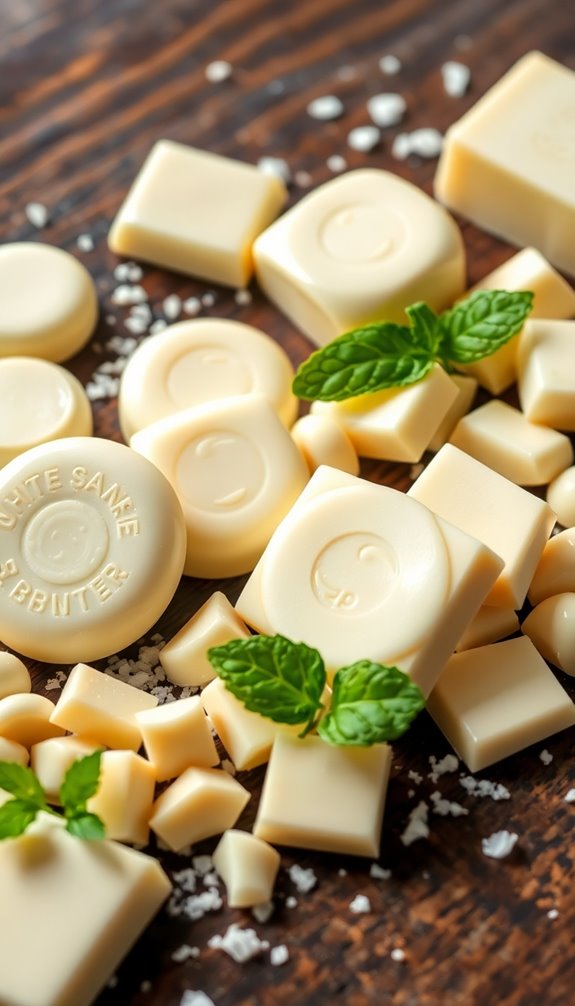
- Cocoa butter is listed as an ingredient, ideally near the top after sugar.
- Milk, milk fat or milk solids appear on the label, which supports a creamy flavor.
- Vanilla or vanilla flavor is present, with few added flavorings.
- The product is sold as a bar, block or feves for melting, not only as chips.
- The color is ivory or pale yellow, not bright white or grayish.
- The package lists a best-by date, and the packaging is intact and sealed.
Read labels each time you buy, because brands can change their formulas. The percentages on a package are the most reliable guide to how the product will behave in your kitchen.
Which Are the Best White Chocolate Brands for Baking, Melting and Snacking?
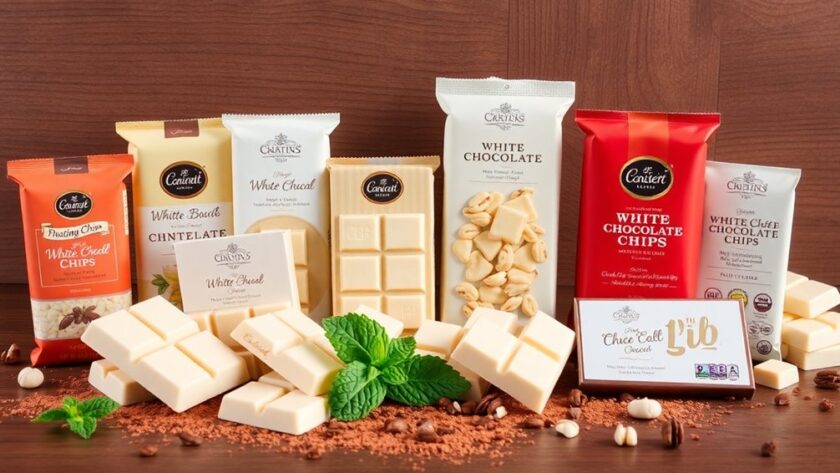
The best white chocolate brands for baking include Ghirardelli, Guittard, Valrhona and Callebaut, with Nestlé Toll House and Baker’s offering easy-to-find options for cookies and candy. Each brand has a different strength, so match the product to your project rather than choosing one brand for everything. The table below summarizes common choices.
| Product type | Best for | What to check on the label |
|---|---|---|
| Ghirardelli white chocolate chips and baking bars | Cookies, blondies, bark | Chips are designed to hold their shape; use a bar for smooth melting |
| Guittard white chocolate chips and baking bars | Cookies and drizzles | Compare cocoa butter content between chip and bar versions |
| Valrhona Ivoire white chocolate | Ganache, mousse, plated desserts | Sold as a premium bar; check the cocoa butter percentage on the wrapper |
| Callebaut white chocolate feves | Ganache, fillings, tempering | Feves melt quickly and are easy to measure |
| Nestlé Toll House white morsels | Cookies and blondies | Designed for mix-ins; not ideal for melting or coating |
| Baker’s white chocolate baking bar | Candy, coating and melting | Check the ingredient list for cocoa butter, milk solids and vanilla |
What Is the Best White Chocolate for Cookies?
For cookies, a chip is convenient because it keeps its shape and distributes evenly through the dough. Ghirardelli and Nestlé Toll House white morsels are common choices for this purpose. If you want a melty, glossy pool of white chocolate in each bite, chop a bar into irregular chunks instead.
Bake a batch with chopped bar and another with chips to see which texture you prefer. Pairing white chocolate with macadamia nuts or cranberries is a classic combination that balances its sweetness.
What Is the Best White Chocolate for Melting and Candy?
For melting, ganache, mousse and dipping, choose a bar or feves with a higher cocoa butter share. Valrhona Ivoire and Callebaut feves are popular in professional and serious home kitchens because they melt fluidly. Baker’s white baking bar is a practical choice for candy and coating when you want a widely available option.
What Is the Best White Chocolate for Everyday Baking?
For everyday baking, Ghirardelli and Guittard are easy to find and perform well in cookies, bars and drizzles. Buy a baking bar when you need smooth melting and a chip when you need texture. Keep both on hand if you bake often.
Are White Chocolate Chips or Bars Better for Baking?
Bars and feves are better for melting, coating and smooth fillings, while chips are better for cookies and other recipes that need pieces to hold their shape. White chocolate chips often contain stabilizers that help them keep their form in the oven, and those same ingredients can make them clump or seize when melted. If you plan to melt the chocolate, buy a bar or feves.
- Use a bar or feves for ganache, mousse, dipping and bark.
- Use chips for cookies, blondies and muffins where pieces should keep their shape.
- Chop a bar into chunks for a melty texture in cookies without buying chips.
How Do You Melt White Chocolate Without Seizing?
Melt white chocolate slowly over gentle heat and keep all water away from it. Water or steam can cause the mixture to seize into a thick, grainy paste, and white chocolate is more prone to this than some darker chocolate because of its milk solids. Follow the steps below for a smooth result.
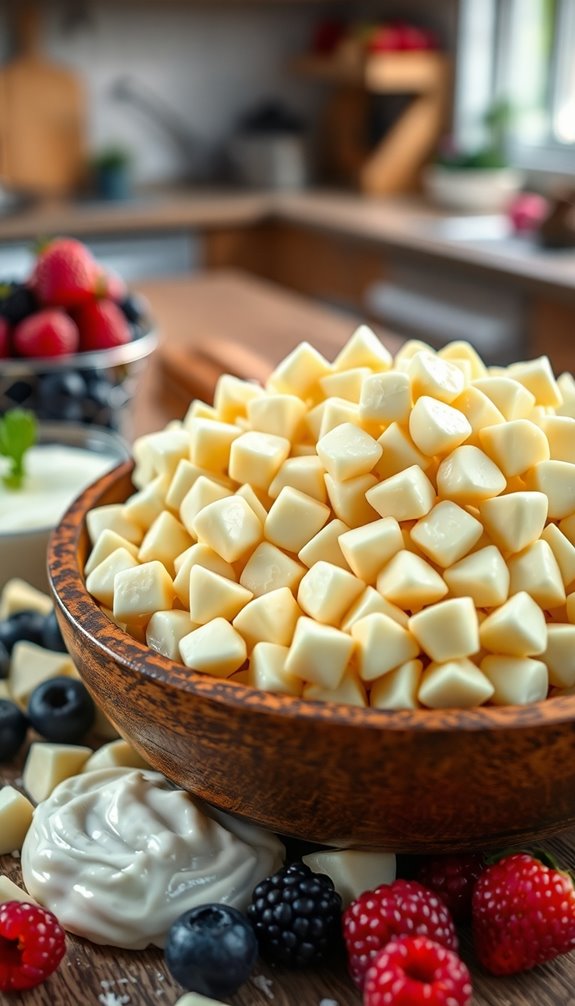
- Chop the bar into small, even pieces so it melts at a uniform rate.
- Set a heatproof bowl over a pot of barely simmering water, making sure the bottom of the bowl does not touch the water.
- Stir gently and often as the chocolate softens, removing the bowl from the heat once most pieces have melted.
- Stir the remaining pieces until smooth; the residual heat finishes the melting.
- If using a microwave, heat in 20- to 30-second bursts and stir between each one until smooth.
- Keep the bowl, spatula and any utensils completely dry.
If the chocolate thickens, stir in a teaspoon of neutral oil or melted cocoa butter a little at a time to loosen it. Once it seizes badly, it is usually best to start over with fresh chocolate, since fixing grainy texture is unreliable.
What Flavors Pair Well With White Chocolate?
White chocolate pairs best with tart fruit, warm spices and crunchy textures that balance its sweetness and creaminess. Tart berries, citrus zest, cinnamon and nuts are reliable choices. The combinations below work well for both baking and snacking.
Which Flavor Combinations Work Best?
- Raspberries, strawberries or lemon zest for a bright contrast.
- Cinnamon, cardamom or a pinch of sea salt for warmth and depth.
- Macadamia nuts, pistachios or toasted almonds for crunch.
- Vanilla, caramel or brown butter for a richer, dessert-style flavor.
How Can You Use White Chocolate for Snacking?
Melt bar white chocolate and spread it on parchment with dried cranberries, pistachios and a sprinkle of flaky salt, then chill until firm for an easy bark. You can also dip pretzels or popcorn in melted white chocolate and let them set on a rack. For a more formal dessert, try a no-bake white chocolate cheesecake recipe that uses melted white chocolate in the filling.
For a sweet treat that plays with contrast, a half chocolate, half vanilla cookies recipe shows how light and dark flavors can share one dough.
How Can You Save Money and Store White Chocolate?
You can save money by buying larger bars for melting and reserving chips for mix-ins, and by checking unit prices rather than package prices. Store-brand white chocolate may be cheaper, but compare ingredient lists before you buy, because cocoa butter content can vary. Prices change often, so compare current shelf prices before you buy.
- Store white chocolate in an airtight container in a cool, dry place away from strong-smelling foods, since it absorbs odors easily.
- Avoid the refrigerator unless the room is very warm, because condensation can cause sugar bloom and a grainy surface.
- Wrap leftover bars tightly and use them within the best-by window for the best flavor.
Frequently Asked Questions
Is white chocolate real chocolate?
White chocolate is a chocolate confection under the FDA standard, but it contains no nonfat cacao solids, which are the parts of the bean that give dark chocolate its cocoa flavor. Its base is cocoa butter, milk solids, sugar and flavorings. Some people call it a confection rather than chocolate for this reason.
Why does white chocolate seize when I melt it?
Seizing usually happens when water, steam or overheating causes the sugar and milk solids to clump together. Melt it over gentle heat, keep everything dry, and stir often. If it seizes, adding a small amount of neutral oil can sometimes smooth it.
Can you substitute white chips for a baking bar?
You can substitute chips for bars in cookies, muffins and similar recipes where the pieces are meant to stay whole. Chips are less reliable for ganache, candy and coatings because they may not melt smoothly. Chop a bar if you want a melted texture in a cookie.
Is Ghirardelli white chocolate good for baking?
Ghirardelli white chocolate is widely available and works well in cookies, bars and drizzles. Choose the baking bar when you want smooth melting and the chips when you want pieces that hold their shape. Always check the current label for cocoa butter content, since formulas can change.
Does white chocolate need to be refrigerated?
Most white chocolate keeps best at cool room temperature in an airtight container. Refrigeration can cause condensation that leads to sugar bloom, which makes the surface look dull and grainy. Only refrigerate it in a very warm kitchen, and wrap it well if you do.
Conclusion
The best white chocolate for baking and melting is usually a bar or feves with clearly listed cocoa butter, milk solids and vanilla, while chips work best for cookies. Ghirardelli, Guittard, Valrhona, Callebaut and Baker’s are good places to start, and the label should guide your final choice. Use the FDA standard and the melting steps above to get smooth, reliable results every time you bake or snack with white chocolate.