
Last updated: · By Claire Dawson
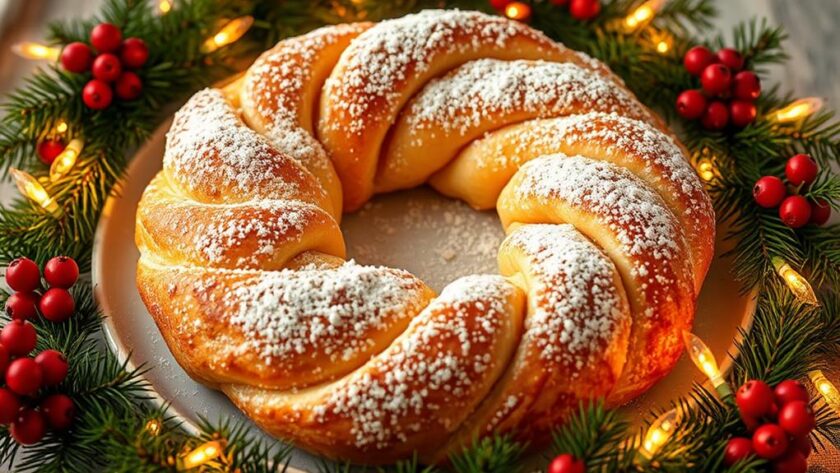
This traditional kringle recipe gives you a flaky Danish-style pastry with a cinnamon nut filling and a sweet glaze, and it serves 8 to 12 people. Bake it at 375°F for 25 to 30 minutes, and you will have a centerpiece for holiday gatherings. The method below uses a cream cheese and sour cream dough that needs no yeast, so you skip the long yeast rise that traditional Danish dough requires.
A kringle is a ring-shaped pastry in the Danish tradition, and it is a favorite around the winter holidays. Below you will find the key facts, the ingredient list, step-by-step instructions, filling ideas, storage tips, and answers to common questions.
Key Takeaways
- A traditional kringle serves 8 to 12 people and bakes at 375°F for 25 to 30 minutes until golden brown.
- In 2013 the Wisconsin state legislature named the kringle the state’s official pastry, one of only a few states with a state pastry.
- Puff pastry contains no yeast, while Danish pastry dough uses yeast as its leavening agent.
- Laminating means folding butter into dough several times so alternating layers of butter and dough melt into flaky sheets during baking.
- Chill the cream cheese dough for at least 2 hours, or overnight, before rolling so the butter stays cold.
What Is a Kringle?
A kringle is a Danish pastry shaped into a ring or oval, wrapped around a sweet filling and usually finished with a glaze. The pastry is closely tied to American holiday baking, and it has a strong following in Wisconsin. In 2013 the Wisconsin state legislature named the kringle the state’s official pastry, one of only a few states with a state pastry, according to WTTW’s report on the Wisconsin kringle.
Kringles are the kind of pastry that works well for sharing. A single kringle typically feeds 8 to 12 people, so it suits brunch, dessert tables, and holiday open houses. If you want a more detailed Danish-style version, read our festive Danish Christmas kringle recipe after you finish this guide.
Where Does the Kringle Come From?
The kringle traces its roots to Denmark, but American kringles developed their own traditions. In the United States, kringles are hand-rolled from Danish pastry dough, which is called wienerbrod, and the dough is rested overnight before it is shaped, filled, and baked, according to Wikipedia’s entry on kringle. That overnight rest is what gives the traditional version its structure and flakiness.
Kringle Dough: Yeast Danish or Cream Cheese?
Traditional kringle dough is a yeasted Danish dough, while many home bakers use a cream cheese or sour cream dough that skips yeast. Both create flaky layers by keeping cold butter in the dough. The cream cheese version is faster and easier to handle at home, so it is the one this recipe uses.
Laminated doughs get their layers from butter, not from yeast alone. A U.S. patent document explains that puff pastry contains no yeast, while Danish pastry dough uses yeast as its leavening agent, as described in this USPTO patent on butter in dough. Another USPTO patent describes laminating as flattening and folding butter into dough several times so alternating layers melt during baking into flaky sheets, as explained in this USPTO patent on lipid composition for bakery products.
| Feature | Yeasted Danish dough | Cream cheese dough (this recipe) |
|---|---|---|
| Leavening | Yeast | None; flakiness comes from cold butter layers |
| Rest time | Overnight, per traditional method | At least 2 hours, ideally overnight |
| Rise before baking | Yes, a proofing period is required | No; chill briefly, then bake |
If you want to compare laminated doughs more closely, see this rough puff and classic puff pastry comparison.
Ingredients for a Traditional Kringle Recipe
You need about 2 cups of flour, 1 cup of cold butter, cream cheese and sour cream for the dough, plus a simple nut filling and glaze. Use cold ingredients for the dough, and measure flour by weight if you have a kitchen scale for the most consistent results. This recipe makes one kringle.
Dough Ingredients
- 2 cups (250 g) all-purpose flour
- 1/2 teaspoon fine salt
- 1 cup (2 sticks, 226 g) cold unsalted butter, cubed
- 4 ounces cold cream cheese, cubed
- 1/4 cup cold sour cream
Filling and Glaze Ingredients
- 1 cup chopped walnuts or pecans
- 1/2 cup packed brown sugar
- 1 teaspoon ground cinnamon
- 2 tablespoons softened butter
- 1 egg beaten with 1 tablespoon water, for egg wash
- 1 cup powdered sugar, 1 to 2 tablespoons milk, and 1/2 teaspoon vanilla extract, for the glaze
You will also need a rolling pin, a pastry cutter or food processor, parchment paper, and a rimmed baking sheet.
Step-by-Step Traditional Kringle Recipe
To make a traditional kringle, cut cold butter into flour, add the cream cheese and sour cream, chill the dough, then fill, shape, and bake it at 375°F for 25 to 30 minutes. The dough should clump together without feeling sticky. Keep everything cold until the pastry goes into the oven.
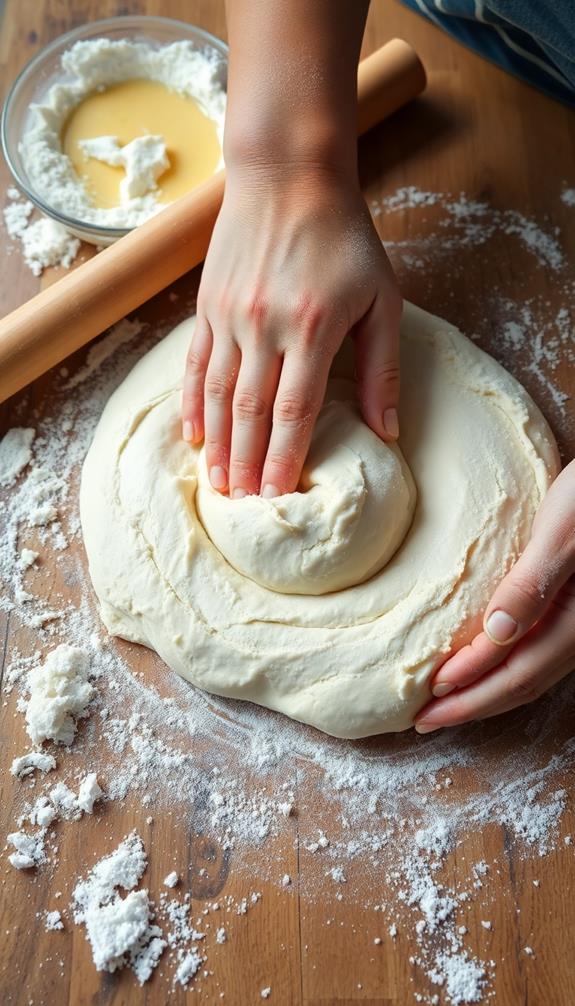
- Whisk the flour and salt in a large bowl. Cut in the cold butter with a pastry cutter or pulse in a food processor until the mixture looks like pea-sized crumbs.
- Add the cream cheese and sour cream. Mix or pulse just until the dough clumps together. Stop as soon as it holds together, because overworking warms the butter.
- Shape the dough into a flat block, wrap it in plastic, and refrigerate it for at least 2 hours or overnight.
- Stir together the brown sugar, cinnamon, chopped nuts, and softened butter until the filling is crumbly and evenly mixed.
- Roll the chilled dough on a lightly floured surface into a rectangle about 12 by 16 inches. If the dough softens, return it to the fridge for 10 to 15 minutes.
- Spread the filling down the center third of the rectangle, leaving a 1-inch margin at each end. Fold the long sides over the filling and pinch the seam closed.
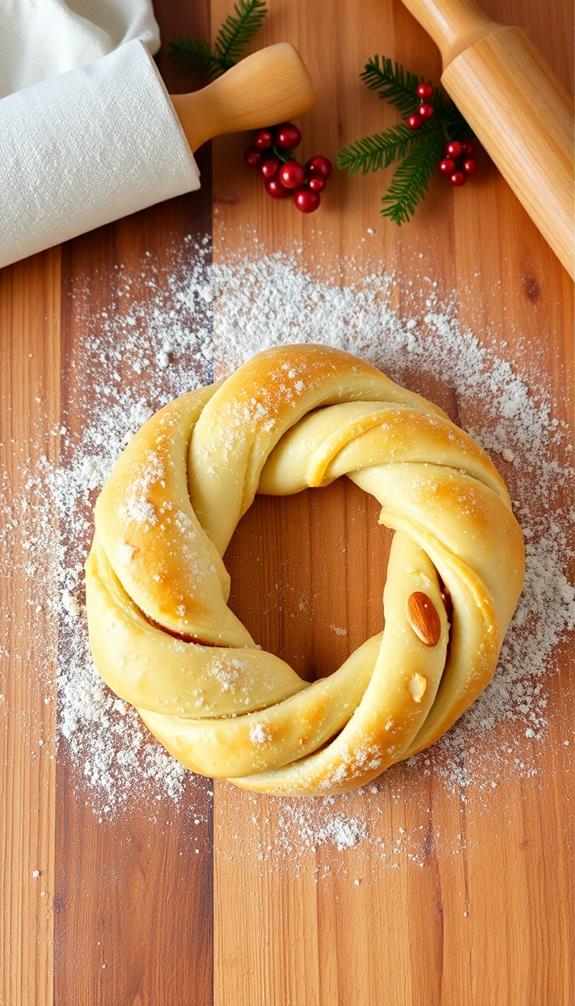
- Shape the log into a ring or oval, pinch the ends together, and transfer it seam side down to a parchment-lined baking sheet.
- Brush the top with egg wash and add sliced almonds or sugar if you like. Chill the shaped kringle for 15 minutes to firm the butter.
- Bake at 375°F for 25 to 30 minutes until golden brown. Cool on a wire rack before glazing.
Unlike yeasted Danish dough, this version does not need a proofing period. Skipping the rise keeps the timeline short, but it also means the butter must stay cold until the oven.
Filling Options and Personalization
The classic filling for a kringle is a brown sugar and cinnamon nut mixture, but you can use almond paste, fruit preserves, or cherry pie filling as well. Keep the total filling amount modest so the dough can seal. Overfilling is the most common reason a kringle leaks in the oven.
Classic Nut and Cinnamon Filling
Walnuts and pecans give a crunchy contrast to the soft, flaky dough. Toast the nuts in a dry skillet for 3 to 5 minutes before chopping to deepen their flavor. For a similar filling in a yeasted pastry, see this traditional kolache nut roll recipe.
Fruit and Almond Variations
Almond paste adds richness and pairs well with a thin layer of apricot or raspberry preserves. Use about 1/3 cup of preserves to avoid a soggy center. Raisins or finely chopped candied citrus peel add chew and brightness, and a pinch of cardamom or nutmeg adds warmth.
Glazing and Serving Suggestions
Glaze a kringle when it is cool or only slightly warm, so the icing sets into a thin, glossy layer. Whisk the powdered sugar with milk and vanilla until smooth, then drizzle it over the top. Add chopped nuts right after glazing so they stick.
Serve kringle at room temperature or warm it briefly in a 300°F oven to refresh the texture. Slice it with a serrated knife for clean pieces. A kringle is best within a day of baking, but it still tastes good for several days after that.
Storage and Freezing Tips
Store kringle in an airtight container at room temperature, where it keeps well for up to five days. For longer storage, freeze it. Wrap the cooled, unglazed kringle in two layers of plastic wrap, add one layer of aluminum foil, and freeze it for up to two months.
Thaw frozen kringle in the refrigerator overnight, then bring it to room temperature before glazing. Glazing a still-cold pastry can cause condensation and a soggy surface. Check stored kringle for off smells or staleness before serving, especially after the five-day window.
Troubleshooting Common Kringle Problems
Most kringle problems come from warm dough, overfilling, or a weak seal. Adjust the process at the step where things go wrong, and the next batch will be better.
- Butter melted into the dough: The dough was too warm or overworked. Chill longer and cut the butter in more coarsely.
- Filling leaked out: The filling was too wet or too thick, or the seams were not pinched. Use less filling and press the seams firmly.
- Bottom is pale: Bake on the lower-middle rack or use a heavier baking sheet.
- Dough is tough: The dough was overmixed. Mix only until it clumps.
Frequently Asked Questions
Is kringle the same as Danish pastry?
Kringle is a shape and style of Danish pastry rather than a separate dough. In the United States, kringles are typically made from Danish pastry dough. Home versions often use a cream cheese or sour cream dough instead, which is simpler to make.
Can I make kringle dough ahead?
Yes. Wrap the dough tightly and refrigerate it overnight, or freeze it for longer storage. Let it soften slightly at room temperature until it can be rolled without cracking.
Why did my kringle leak filling?
Leaks usually happen when the filling is too wet, too thick, or too generous for the dough. Seams that are not pinched firmly can also open during baking. Leave a 1-inch margin and press the edges closed before shaping.
Can I use puff pastry instead?
You can use store-bought puff pastry as a shortcut, but it will bake with a different texture than the cream cheese dough. Puff pastry contains no yeast, so it will not taste like a yeasted Danish. Follow the same shaping and baking steps, and check for golden color a few minutes early.
How long does kringle last?
Kringle keeps for up to five days in an airtight container at room temperature. Frozen kringle can be stored for up to two months when wrapped in plastic and foil. Thaw it overnight in the refrigerator before serving.
Conclusion
A traditional kringle recipe rewards careful, cold handling: keep the butter cool, seal the filling well, and bake until deeply golden. Start with the cream cheese dough for your first batch, then try the yeasted Danish approach as your skills grow. For more holiday ideas, browse these classic American desserts that never go out of style.


