Last updated: · By Claire Dawson
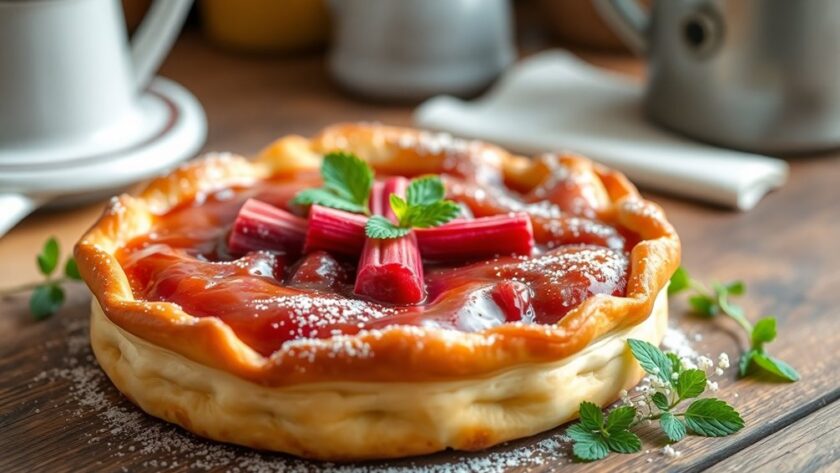
A rhubarb puff pastry tart is a golden, flaky pastry base topped with rhubarb that is cooked with sugar until tender and tart-sweet. To make one, bake the pastry until it puffs, add about 500 g (roughly 1 pound) of chopped rhubarb tossed with about 250 g (1 1/4 cups) of sugar, then bake until the edges are deep golden. Puff pastry is a laminated dough, built from many thin layers of dough and butter that separate and rise in the oven to create height and crunch. This guide covers ingredients, rhubarb safety, a step-by-step bake, serving ideas, storage, and variations.
Key Takeaways
- A basic rhubarb puff pastry tart uses about 500 g (roughly 1 pound) of chopped rhubarb and about 250 g (1 1/4 cups) of granulated sugar.
- Bake the pastry alone at 200°C (about 390°F) for 15 minutes, then add the rhubarb and bake 15 to 20 minutes more until the pastry is deep golden.
- Rhubarb stalks contain only a small amount of oxalic acid, but the leaves are high in it and should never be eaten.
- An in vitro digestion study published in ScienceDirect found that cooking rhubarb petioles with milk cut soluble oxalate in a standard serving of boiled rhubarb by about 70%.
- A baked rhubarb puff pastry tart keeps up to three days in the refrigerator and up to two months in the freezer when wrapped well.
What Ingredients Do You Need for a Rhubarb Puff Pastry Tart?
You need one sheet of puff pastry, about 500 g of rhubarb, and about 250 g of sugar to balance rhubarb’s sharp acidity. The sugar also draws juice out of the fruit and softens the stalks as they bake. Optional extras like nuts and an egg wash add crunch and shine.
- Puff pastry: One sheet of all-butter puff pastry works well. If you need a dairy-free or vegan version, check the label, since many commercial sheets contain butter.
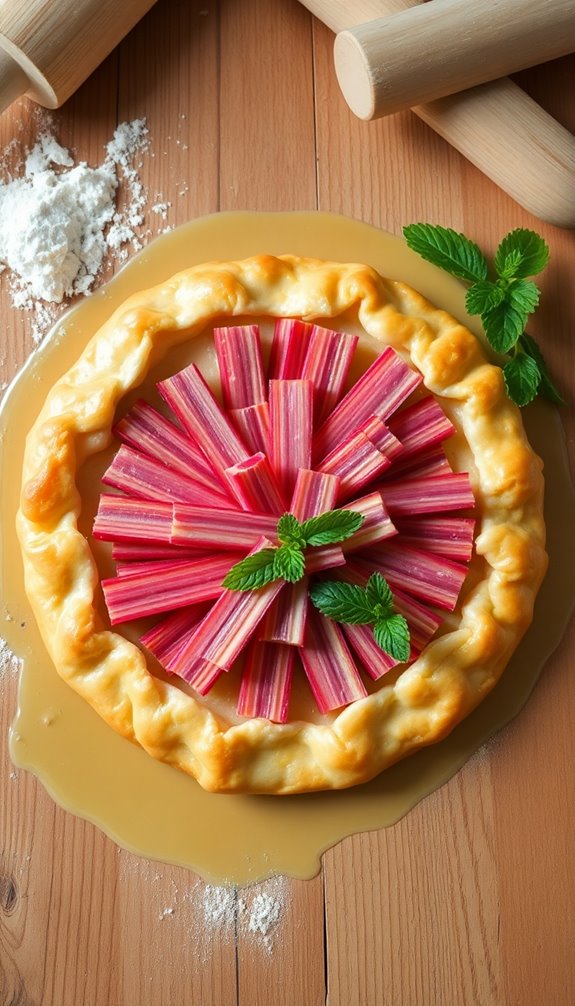
- Rhubarb: About 500 g of fresh stalks, trimmed and cut into 2 cm (about 3/4-inch) pieces, or left in 20 cm (8-inch) lengths if you lay the stalks whole across the tart.
- Sugar: About 250 g of granulated sugar. Use the lower end of that range if your rhubarb is very sweet or ripe.
- Nuts (optional): A small handful of chopped pistachios or walnuts adds crunch.
- Egg wash: One beaten egg with a splash of water or milk gives a golden finish. For a dairy-free option, brush with non-dairy milk; the shine will be lighter.
For more ideas that use puff pastry and seasonal fruit, browse our quick rhubarb puff pastry desserts for any occasion.
Is Rhubarb Safe to Eat in a Tart?
Yes, rhubarb stalks are safe to eat when cooked, but the leaves are not. South Dakota State University Extension notes that rhubarb is usually eaten cooked, that proper cooking or baking methods should prevent foodborne illness, and that the leaves must never be eaten because of their toxic oxalic acid. Always cut off and discard the leaves before you start.
North Dakota State University Extension explains in its column on whether rhubarb can become toxic that rhubarb stalks contain only a very small amount of oxalic acid, while the leaves are high in it. The same column notes that wartime advice to eat the leaves was a mistake. Keep leaves out of your kitchen scraps and away from children and pets.
How much oxalate is in rhubarb?
A review of oxalate in foods, indexed in PubMed Central from the NCBI and NLM, reports about 1,235 mg of total oxalate per 100 g of fresh rhubarb, which places it among high-oxalate foods. Oxalate matters most if you have a history of kidney stones or have been told to limit it. In an in vitro digestion study published by Elsevier on ScienceDirect, cooking rhubarb petioles with milk cut the soluble oxalate in a standard serving of boiled rhubarb by about 70%. That is a laboratory model, not a clinical trial, so talk with your doctor or dietitian before changing your diet for kidney stone risk.
How Do You Bake a Rhubarb Puff Pastry Tart, Step by Step?
Bake the pastry first until it puffs, then add the rhubarb and bake until the pastry is deep golden and the fruit is tender. The full bake takes about 30 to 35 minutes, and the two-stage method keeps the base crisp under the filling.
- Preheat the oven to 200°C (about 390°F), or 180°C fan. Set a rack in the middle and line a baking sheet with parchment.
- Unroll the puff pastry onto the sheet. With a knife, score a border about 2 cm (3/4 inch) in from the edge, cutting only partway through the dough so the border can rise. Prick the center with a fork.
- Trim the rhubarb ends and cut the stalks into 2 cm pieces or 20 cm lengths. Toss with the sugar and let it rest for 20 to 30 minutes so it releases juice. Drain off excess liquid before using.
- Brush the border with beaten egg and chill the pastry for 15 minutes while the oven heats fully. Cold butter produces better lift.
- Bake the pastry alone for 15 minutes, until the border puffs and begins to color.
- Remove the pastry and gently press down the center if it has risen too much. Arrange the drained rhubarb inside the border and sprinkle with nuts if using.
- Return to the oven and bake 15 to 20 minutes more, until the pastry is deep golden and the rhubarb is tender when pierced with a knife.
- Cool on a rack for about 10 minutes before slicing.
Can You Make Rough Puff Pastry for This Tart?
Yes, you can make rough puff pastry at home instead of buying a sheet. Rough puff uses cold butter cut into pieces rather than a solid block, so it takes less effort than classic puff but still produces layers.
Sift flour with a pinch of salt and rub in cold, cubed butter until the mixture looks like coarse crumbs with some pea-sized pieces. Add ice water a spoonful at a time until the dough just holds together. Chill it for about 20 minutes, roll it into a rectangle on a floured surface, fold it in thirds like a letter, and repeat the rolling and folding two more times, chilling between turns. Chilling matters because warm butter melts into the dough instead of forming separate layers.
To compare rough puff with the all-butter classic before you choose, read our guide to rough puff pastry versus classic puff pastry. You can make the dough a day ahead, wrap it tightly, and refrigerate it until you are ready to roll.
How Should You Serve a Rhubarb Puff Pastry Tart?
Serve the tart warm or at room temperature with something cold and creamy, such as vanilla ice cream, whipped cream, or custard. Let it cool for about 10 minutes first so the filling settles and the slices hold together.
- Vanilla ice cream or whipped cream: Their richness balances the sharp fruit.
- Warm custard: Spooning custard over one slice works well for a plated dessert.
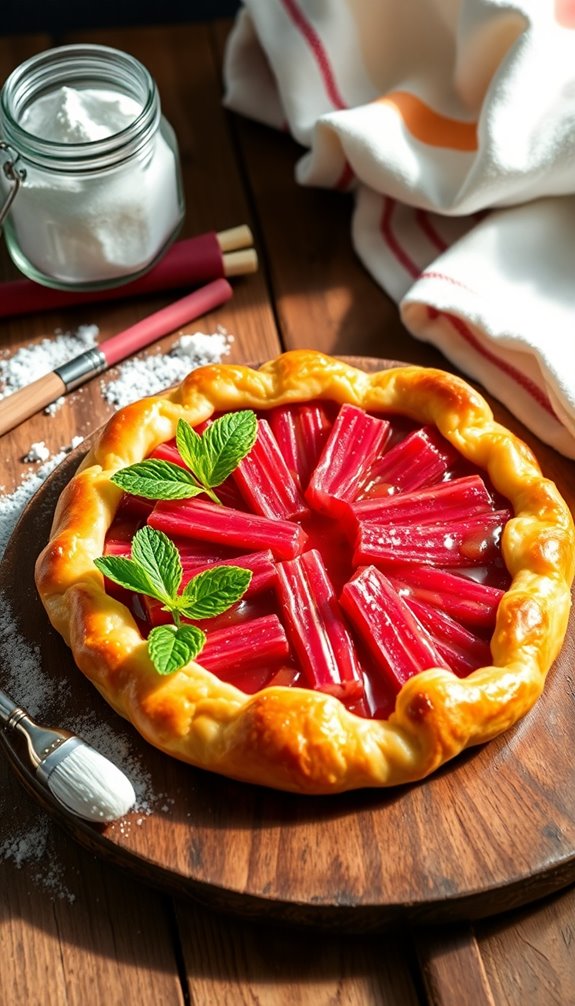
- Powdered sugar or fresh mint: A light dusting or a few mint leaves adds color without overpowering the rhubarb.
- Strawberries or raspberries: Berries add sweetness and color. For another way to pair the two fruits, try our raspberry rhubarb pie recipe.
How Do You Store and Freeze a Rhubarb Puff Pastry Tart?
Cool the tart completely, then refrigerate it in an airtight container for up to three days. Freezing keeps it for up to two months, and slicing before you freeze lets you thaw only what you need.
| Method | How long | Best practice |
|---|---|---|
| Room temperature | Same day | Keep covered and away from heat |
| Refrigerator | Up to 3 days | Cool fully, then store in an airtight container |
| Freezer, whole or sliced | Up to 2 months | Wrap tightly in plastic wrap and foil; slice first |
| Reheating | 5 to 8 minutes | Warm at about 180°C (350°F) to restore crispness |
To thaw frozen tart, move it to the refrigerator overnight. Then warm it in a preheated oven to bring back the crisp texture.
What Are Good Rhubarb Puff Pastry Tart Variations?
You can change the fruit, nuts, and flavorings without changing the method. Each variation uses the same two-stage bake.
- Mix the rhubarb with sliced strawberries for a sweeter, rosy filling.
- Add the zest of one lemon or 1/2 teaspoon of ground ginger to the rhubarb and sugar for brightness.
- Swap pistachios for almonds or walnuts to change the nutty flavor.
- For a dairy-free version, use dairy-free puff pastry and brush with non-dairy milk.
For a different seasonal combination, try our rhubarb cherry crisp recipe.
Frequently Asked Questions
Can you use frozen rhubarb in a rhubarb puff pastry tart?
Yes. Thaw frozen rhubarb in the refrigerator, drain off the liquid, and pat the pieces dry before tossing them with sugar. Excess moisture is the most common reason for a soggy base, so do not skip the draining.
Why did my puff pastry not rise?
The most common causes are warm butter, an oven that is not hot enough, and cut edges that were sealed shut. Chill the pastry before baking, preheat the oven fully, and score the border without cutting through the layers.
Is rhubarb poisonous?
Rhubarb stalks are safe to eat when cooked, but the leaves contain toxic oxalic acid and should never be eaten. Rhubarb is usually eaten cooked, so bake or cook the stalks rather than serving them raw. If you have a history of kidney stones, check with a doctor before adding high-oxalate foods to your diet.
Can you make a rhubarb puff pastry tart ahead of time?
Yes. You can bake it a few hours before serving, keep it at room temperature, and warm it briefly before serving. For longer storage, refrigerate or freeze it as described above. The pastry is crispest on the day it is baked.
Should you cook rhubarb before putting it in the tart?
You do not need to pre-cook it. Tossing the rhubarb with sugar, letting it rest, and draining the juice is usually enough, because the filling softens as it bakes. If your stalks are thick, cut them smaller so they cook through within the bake time.
Conclusion: Why a Rhubarb Puff Pastry Tart Is Worth Making
A rhubarb puff pastry tart is a practical way to use seasonal rhubarb: one sheet of flaky pastry, about 500 g of rhubarb, and about 250 g of sugar, baked in two stages until golden. Keep the leaves out of the recipe, cook the stalks, and chill the pastry well for the best rise. Serve it warm with something creamy, and store leftovers in the refrigerator or freezer.