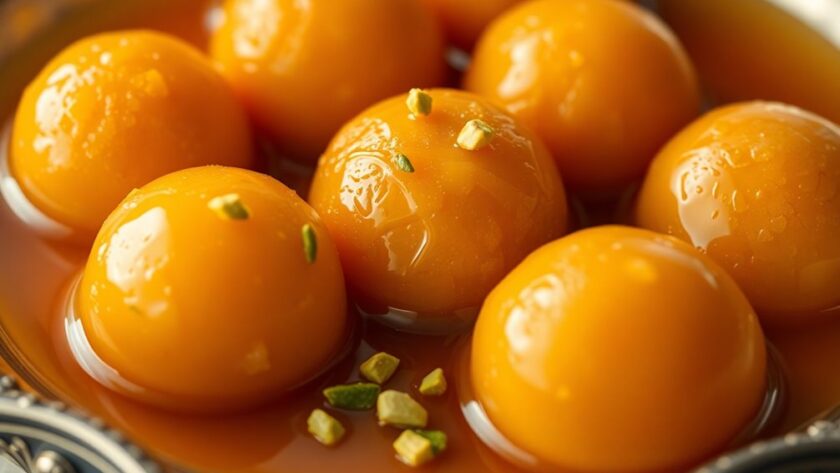
Indian Gulab Jamun’s soft, syrupy perfection is a treat you can’t resist. Made with quality milk, khoya, and a touch of cardamom and rose water, these sweet dumplings soak in rich sugar syrup for that melt-in-your-mouth experience. Fry them at the right temperature, and let them soak long enough for maximum flavor. They’re perfect for celebrations and pairing with other desserts. Want to learn about variations and tips for making them just right?
The History of Gulab Jamun: A Sweet Tradition

Gulab Jamun has a rich history that intertwines with various cultures, making it more than just a dessert; it’s a symbol of celebration. Originating in the Indian subcontinent, this sweet treat reflects a blend of cultural influences, from Persian to Mughal traditions.
As you explore its journey, you’ll find regional variations that showcase local ingredients and culinary techniques. In North India, for instance, you’ll enjoy a denser version, while in South India, it often features a unique twist with coconut. The nutritional benefits of regional ingredients further enhance the diversity of flavors found in this beloved dessert. Additionally, the dessert’s preparation often involves yeast fermentation, which contributes to its distinct texture and flavor profile.
Each variation tells a story, enriching your appreciation of this beloved dessert. Whether served during festivals or family gatherings, Gulab Jamun connects people, creating sweet memories that endure through generations. The dessert’s evolution mirrors the cultural influences that shaped its flavors and significance over time.
Key Ingredients for Authentic Gulab Jamun
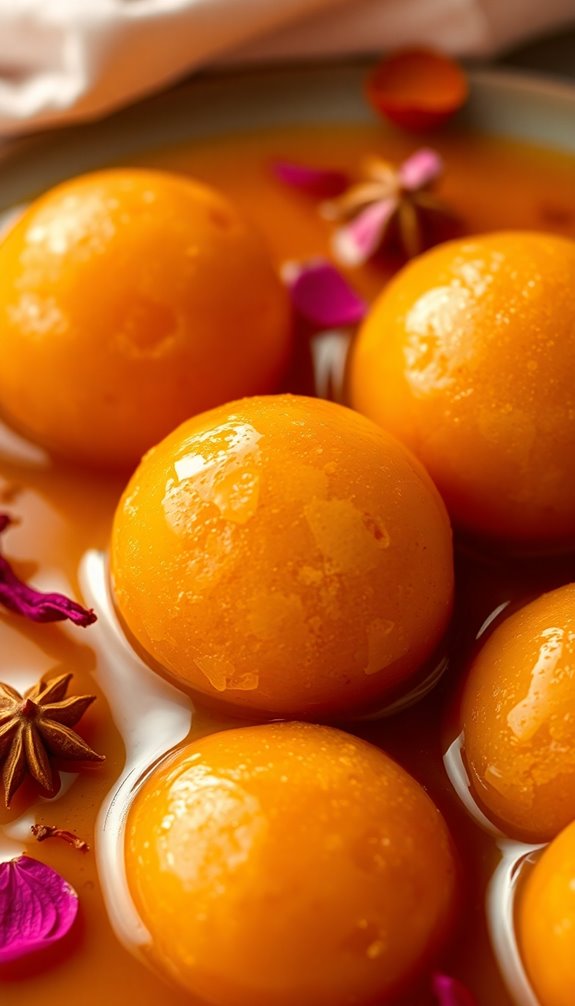
To make authentic Gulab Jamun, you need to focus on key ingredients that elevate the dish. Quality milk is essential, as it forms the base of your dough, and the right sugar syrup can make all the difference in flavor. Additionally, ensuring precise ingredient measurements will help achieve the perfect texture and consistency for your Gulab Jamun. Using ripe bananas in recipes can enhance sweetness and flavor, similar to how quality ingredients affect the overall taste of Gulab Jamun. Incorporating brown sugar into your syrup can add a deeper richness to the final dessert.
Essential Ingredients Overview
Creating authentic Gulab Jamun starts with a handful of essential ingredients that bring this beloved dessert to life.
You’ll need khoya (mawa), all-purpose flour, and baking powder to form the perfect dough. These create that signature soft texture. Properly mixed dry ingredients are vital for achieving the desired consistency in any dough. To enhance the flavor profile, consider incorporating almond extract for a unique twist.
Sugar and water mix to form the syrup, giving Gulab Jamun its characteristic sweetness.
While you might explore Gulab Jamun variations using ingredients like paneer or even chocolate, stick to the basics for the classic flavor.
If you need to make ingredient substitutions, remember that using condensed milk can work in a pinch, but it may alter the final taste. Brown sugar can also enhance the syrup’s flavor, adding a rich depth to your Gulab Jamun.
Embrace these essentials, and you’ll be well on your way to crafting these delightful treats.
Importance of Quality Milk
Quality milk plays an essential role in achieving the authentic flavor and texture of Gulab Jamun. When you choose high milk quality, you guarantee that your dessert has that rich, creamy essence that’s hard to replicate. The proteins and fats in quality milk help create a soft, melt-in-your-mouth consistency, crucial for perfecting those little balls of sweetness.
Moreover, using fresh milk brings nutritional benefits that enhance your dish. It adds important nutrients, making your Gulab Jamun not just a treat but also a wholesome indulgence. Additionally, the incorporation of protein-packed snacks can complement your dessert, providing a balanced approach to indulgence.
Sugar Syrup Secrets
The syrup is the soul of Gulab Jamun, transforming those soft, fried spheres into a divine indulgence. To achieve the perfect syrup consistency, you need to choose the right sugar types and balance flavors.
Here are three key elements for your syrup:
- Sugar Type: Use a mix of granulated sugar and jaggery for depth. Granulated sugar provides sweetness, while jaggery adds a rich, caramel-like flavor.
- Water Ratio: Aim for a 1:1 ratio of sugar to water to guarantee the syrup isn’t too thick or too runny.
- Flavor Enhancers: Infuse with cardamom and rose water to elevate the taste and aroma, making your Gulab Jamun truly irresistible.
Follow these secrets, and you’ll create syrup that perfectly complements your Gulab Jamun!
How to Make Gulab Jamun From Scratch
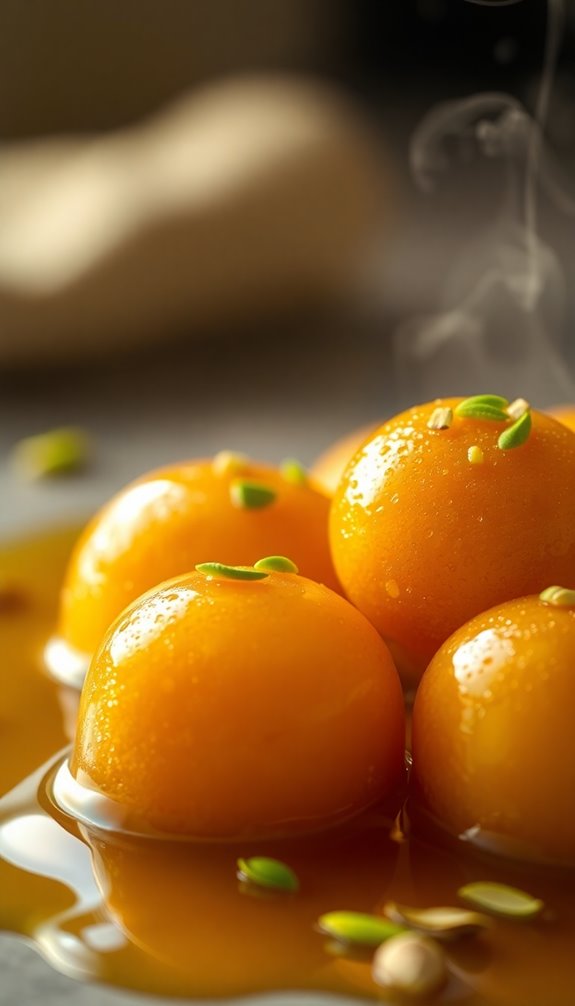
While making Gulab Jamun from scratch might seem challenging, it’s a rewarding experience that fills your kitchen with delightful aromas.
Start by mixing khoya, flour, and a pinch of baking soda to form a soft dough. Shape the dough into small balls, ensuring there are no cracks.
Heat oil in a pan and fry the balls until golden brown. For a touch of creativity, explore Gulab Jamun variations by adding cardamom or saffron to the dough.
Once fried, soak them in sugar syrup for a few hours. Remember, cooking tips like keeping the oil temperature steady will help you achieve that perfect texture.
Enjoy the process, and soon you’ll have a delicious treat to share!
Tips for Achieving Perfectly Soft Gulab Jamun
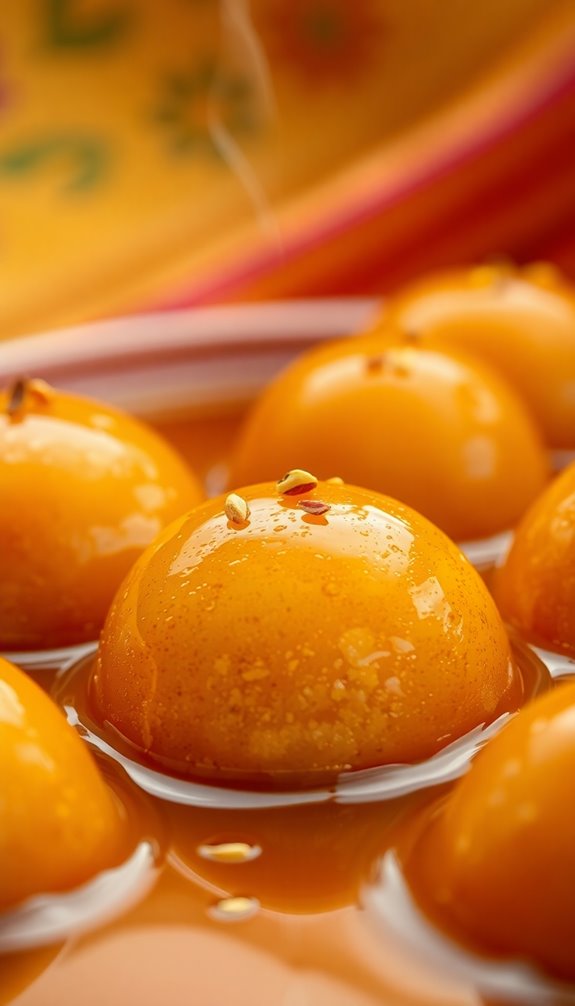
To achieve perfectly soft gulab jamun, you need to pay attention to a few key factors.
Start with the right dough consistency, maintain the ideal frying temperature, and don’t underestimate the importance of soaking time.
Master these elements, and you’ll create melt-in-your-mouth treats every time.
Proper Dough Consistency
Achieving the perfect dough consistency is essential for making soft, melt-in-your-mouth gulab jamun. The right balance guarantees your treats are both tender and enjoyable.
To help you achieve this, keep these tips in mind:
- Use the Right Flour: Opt for khoya or milk powder, which provides the necessary dough elasticity for that soft texture.
- Don’t Over-knead: Knead just until combined to avoid texture variation; too much can lead to a hard result.
- Rest the Dough: Let your dough rest for at least 20 minutes. This allows it to hydrate, enhancing softness and preventing cracks during frying.
Follow these steps, and you’ll be on your way to perfect gulab jamun every time!
Ideal Frying Temperature
Getting the frying temperature just right is essential for achieving perfectly soft gulab jamun. Aim for an oil temperature between 320°F to 340°F (160°C to 170°C).
If it’s too hot, your gulab jamun will brown quickly on the outside while remaining raw inside. On the other hand, if it’s too cool, they’ll absorb excess oil and become greasy.
To test the oil, drop a small piece of dough; it should rise slowly to the surface.
Remember these frying tips: fry in small batches to maintain the oil temperature and avoid overcrowding the pan.
This way, you’ll guarantee even cooking and that delightful softness you crave in each bite of your gulab jamun.
Soaking Time Importance
Once your gulab jamun are fried to a golden perfection, soaking them in syrup is the next key step for that melt-in-your-mouth texture. This process enhances syrup absorption and guarantees each bite is delightfully sweet.
Here are some effective soaking techniques:
- Warm Syrup: Use warm syrup for quicker absorption, allowing the gulab jamun to soak in flavor without becoming overly soggy.
- Soaking Duration: Soak for at least 2 hours, but ideally overnight, to achieve that perfect softness and richness.
- Gentle Handling: Place the fried gulab jamun in the syrup gently to prevent breaking, ensuring they soak thoroughly.
The Role of Sugar Syrup in Gulab Jamun
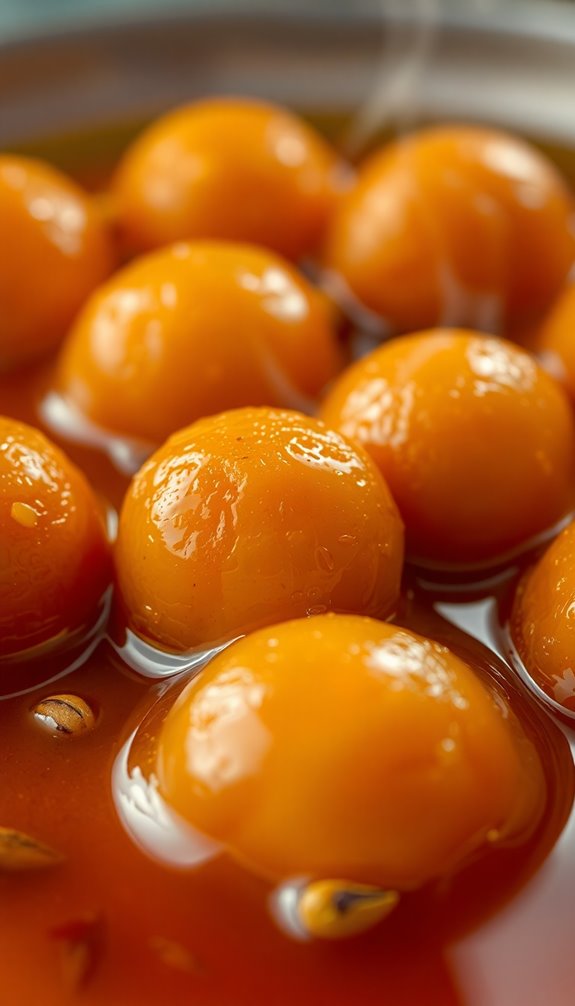
Sugar syrup plays an essential role in transforming Gulab Jamun from a simple dessert into a delightful experience. The syrup consistency is vital; it should be thin enough to soak into the soft balls but thick enough to cling to them.
When you dip the freshly fried Gulab Jamun into the warm syrup, you’re not just sweetening them—you’re enhancing their flavor. The syrup infuses each piece with a rich, sugary taste, making every bite irresistible.
You’ll notice how the balance of sweetness elevates the dessert, allowing the subtle hints of cardamom and rose water to shine through. Without the perfect sugar syrup, your Gulab Jamun wouldn’t offer that enchanting, melt-in-your-mouth sensation that makes it so beloved.
Variations of Gulab Jamun Around India
While exploring the diverse culinary landscape of India, you’ll discover that Gulab Jamun isn’t just one dish but a canvas for regional variations. Each region adds its unique flair, showcasing delightful adaptations that reflect local tastes and traditions.
Gulab Jamun is a canvas of regional variations in India, each reflecting unique local flavors and traditions.
Here are three remarkable variations:
- Kalaadi (Maharashtra): Made with a different dough and fried until dark, these have a rich, caramelized flavor.
- Bengali Gulab Jamun: Often made with chhena (fresh cheese), giving it a softer texture and a unique taste.
- Punjabi Amritsari Jamun: These are larger and often flavored with cardamom, perfect for festive celebrations.
These regional adaptations and festive variations guarantee that Gulab Jamun remains a beloved treat across India, each bite telling its own delicious story.
Common Mistakes When Making Gulab Jamun
When you set out to make Gulab Jamun, it’s easy to overlook some common pitfalls that can affect the final result. One major mistake is using too much moisture in the dough; this can lead to a soggy texture.
Also, don’t skip the resting period for the dough—allowing it to sit helps in proper formation.
When frying, keep an eye on the oil temperature; if it’s too hot, your Gulab Jamun will burn, and if it’s too cool, they’ll absorb too much oil.
Another common preparation error isn’t soaking them long enough in the syrup, which can lead to dry dumplings.
For effective Gulab Jamun troubleshooting, pay attention to these details to achieve that perfect soft, syrupy finish.
How to Store and Reheat Gulab Jamun?
When it comes to storing gulab jamun, you’ll want to keep it in an airtight container to maintain its moisture and flavor.
For reheating, there are a couple of techniques you can use to bring back that delicious taste and texture.
Let’s explore the best ways to keep your sweet treats fresh and enjoyable!
Ideal Storage Conditions
To keep your gulab jamun fresh and delicious, storing them properly is crucial. Follow these guidelines for ideal conditions:
- Use Airtight Containers: Place your gulab jamun in airtight containers to prevent moisture loss and keep them syrupy.
- Maintain Ideal Humidity: Store them in a cool, dry place with ideal humidity levels to avoid spoilage. A pantry is usually a good choice.
- Avoid Refrigeration: Don’t refrigerate unless necessary, as cold can alter their texture.
If you must, make sure they’re in airtight containers to minimize moisture exposure.
Reheating Techniques Explained
Reheating gulab jamun can elevate your dessert experience, ensuring they’re soft and syrupy once again. To achieve this, you’ve got a couple of effective reheating methods.
The microwave is quick: place your gulab jamun on a plate, cover it with a damp paper towel, and heat for about 10-15 seconds. This keeps them moist.
If you prefer the stove, gently warm them in a small pan over low heat, adding a splash of syrup for extra flavor. Aim for ideal temperatures—just warm enough to melt in your mouth but not so hot that they lose their texture.
Serving Suggestions for Gulab Jamun
While savoring Gulab Jamun, you can elevate the experience with a few thoughtful serving suggestions. Consider using elegant serving plates to showcase the dessert’s beauty.
Elevate your Gulab Jamun experience by serving it on elegant plates to highlight its exquisite beauty.
Here are some garnish ideas to enhance presentation and flavor:
- Chopped Nuts: Sprinkle crushed pistachios or almonds on top for a delightful crunch.
- Rose Petals: Add a few edible rose petals for a fragrant and visually appealing touch.
- Cardamom Dust: Lightly dust with cardamom powder to enhance the dessert’s aromatic qualities.
These simple additions not only elevate the look but also enrich the taste, making your Gulab Jamun an unforgettable treat.
Enjoy the delightful textures and flavors, turning each bite into a celebration.
The Cultural Significance of Gulab Jamun in Celebrations
Gulab Jamun plays an essential role in celebrations, bringing people together during festivals and special occasions.
You see it at weddings, Diwali, and even birthdays, symbolizing joy and togetherness. Its rich flavor and sweet aroma make it a beloved treat that enhances any festive gathering.
Festivals and Traditions
Celebrated across various cultures, Gulab Jamun holds a special place in festivities, symbolizing joy and togetherness. You’ll find this beloved sweet at many joyful occasions, marking significant moments in life.
Here are three key celebrations where Gulab Jamun shines:
- Diwali Celebrations: It’s a must-have during the festival of lights, serving as a sweet offering to friends and family.
- Wedding Traditions: At weddings, it represents abundance, making every family feast memorable.
- Festive Gatherings: From regional variations to cultural heritage, Gulab Jamun binds people in celebration, enhancing the spirit of togetherness.
Whether at a grand event or a simple gathering, this sweet treat embodies the essence of shared happiness and love.
Symbol of Joy
Sweetness is often synonymous with joy, and Gulab Jamun perfectly embodies this sentiment in celebrations. When you think of festive gatherings, this delightful dessert often steals the spotlight.
Its soft, syrupy texture brings people together, creating sweet memories that linger long after the last bite. Whether it’s Diwali, weddings, or birthdays, Gulab Jamun adds a touch of magic, enhancing the joy of the occasion.
Each bite is a reminder of shared laughter and cherished moments, making it more than just a treat—it’s a symbol of togetherness. As you savor this indulgence, you’re not just enjoying a dessert; you’re partaking in a cultural tradition that celebrates love, happiness, and the bonds that unite us all.
Pairing Gulab Jamun With Other Indian Desserts
When you think about indulging in Indian desserts, pairing Gulab Jamun with other treats can elevate your culinary experience.
These delightful Gulab Jamun pairings create wonderful dessert combinations that tantalize your taste buds:
These delightful Gulab Jamun pairings offer exquisite dessert combinations that will truly tantalize your taste buds.
- Rasgulla: The soft, spongy texture of Rasgulla complements the syrupy richness of Gulab Jamun, adding a delightful contrast.
- Kheer: This creamy rice pudding enhances the flavors of Gulab Jamun, making each bite a heavenly treat.
- Jalebi: The crispy, sweet spirals of Jalebi provide a perfect crunch, balancing the softness of Gulab Jamun.
These pairings not only enhance the overall experience but also showcase the diversity of Indian desserts.
Exploring Vegan and Gluten-Free Versions of Gulab Jamun
If you’re looking to enjoy Gulab Jamun without dairy or gluten, you’re in luck! Many delicious vegan alternatives exist. Instead of traditional khoya, you can use coconut milk powder or almond flour to create that rich texture.
For a gluten-free option, make sure you choose a flour like rice flour or chickpea flour instead of wheat flour.
When making the syrup, stick to natural sweeteners like maple syrup or agave to keep it vegan. The key is balancing flavors while maintaining that delightful sweetness.
Frequently Asked Questions About Gulab Jamun?
As you immerse yourself in the world of Gulab Jamun, you might find yourself with a few questions about this beloved dessert.
Let’s address some common queries, including some Gulab Jamun myths and health benefits:
- Are Gulab Jamuns unhealthy? While they’re indulgent, made with milk solids and sugar, enjoying them in moderation can fit into a balanced diet.
- Can I make Gulab Jamun at home? Absolutely! With the right ingredients and technique, you can create soft, syrupy perfection in your kitchen.
- What are the health benefits? When made with natural sweeteners and quality ingredients, they can provide energy and a delightful mood boost.
Understanding these facts can enrich your appreciation for this iconic dessert!
Where to Find the Best Gulab Jamun in India?
Where can you find the best Gulab Jamun in India? You’ll discover delightful options at local sweet shops, especially during Gulab Jamun festivals, where vendors showcase their finest recipes.
In Delhi, you can’t miss the melt-in-your-mouth versions at Bengali Market, while Mumbai’s sweet stalls offer regional variations that blend unique flavors.
Discover melt-in-your-mouth Gulab Jamun at Delhi’s Bengali Market and savor Mumbai’s unique regional twists at local sweet stalls.
In Kolkata, head to the iconic K.C. Das for their signature take on this classic dessert. If you’re in Hyderabad, seek out the traditional recipes at local eateries that keep the essence of Gulab Jamun alive.
Each state adds its twist, so don’t hesitate to explore and taste as you travel. You’ll find that every bite tells a delicious story of heritage and craftsmanship.
Conclusion
To sum up, enjoying gulab jamun isn’t just about savoring a sweet treat; it’s diving into a rich tradition that dates back centuries. Did you know that over 50 million gulab jamuns are consumed in India every year? Whether you whip up a batch at home or indulge in a shop’s masterpiece, this syrupy delight continues to hold a special place in hearts and celebrations. So, go ahead—treat yourself to this perfect Indian dessert!