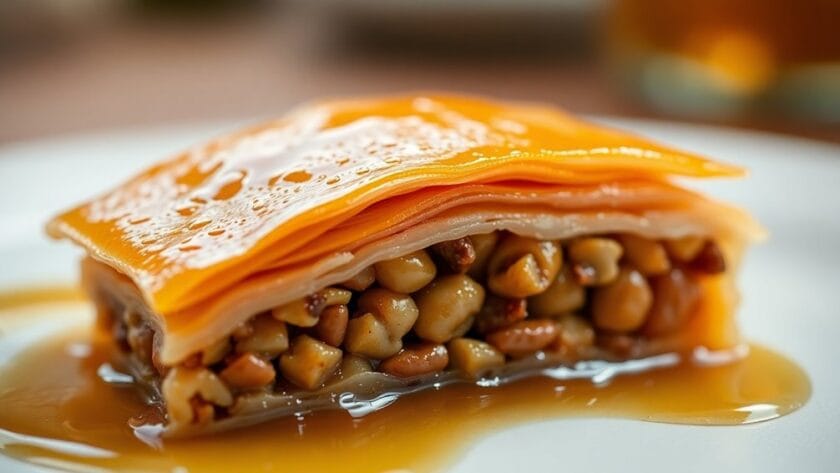
Authentic baklava features delicate layers of flaky phyllo dough, rich nuts, and sweet honey syrup, rooted in the culinary traditions of the Ottoman Empire. To create this indulgent dessert, you’ll need fresh nuts, unsalted butter, and a balanced honey syrup that brings everything together. Mastering the layering technique guarantees a flaky texture. If you want to avoid common mistakes and discover popular variations, there’s plenty more to explore about this delicious treat.
The Rich History of Baklava: From the Ottoman Empire to Today

Baklava isn’t just a delicious dessert; it’s a treat steeped in history. Originating in the kitchens of the Ottoman Empire, its layers of pastry, nuts, and honey reflect a rich cultural significance. The Ottomans perfected this sweet delight, showcasing it at royal banquets and celebrations. As you savor each bite, you’re experiencing a culinary tradition that spans centuries. Baklava symbolizes hospitality and generosity, making it a staple during festive occasions across various cultures. Its journey from the palaces of sultans to your table highlights the enduring influence of the Ottoman culinary arts. Today, baklava continues to unite people, reminding you of the shared history and flavors that transcend borders, much like the way baklava cheesecake merges diverse culinary traditions. Additionally, baklava’s intricate layering technique is akin to that of kolaches, which also showcase the artistry of pastry-making. Enjoying baklava connects you to a vibrant legacy.
Essential Ingredients for Authentic Baklava
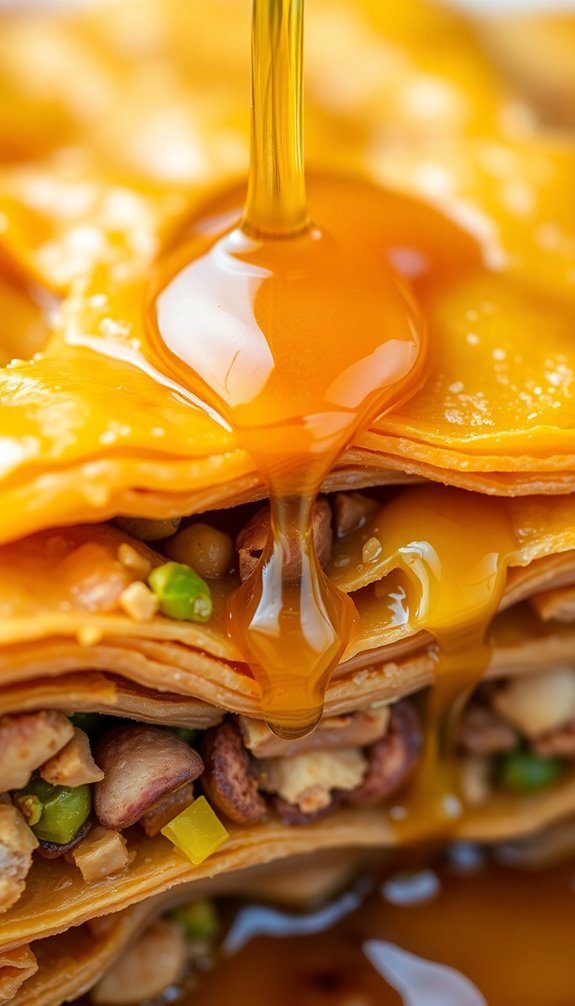
Creating authentic baklava requires a few key ingredients that come together to form its signature taste and texture. To achieve that perfect blend, focus on sourcing high-quality components:
- Phyllo dough: Thin layers that create the flaky texture. Properly mixed dry ingredients ensure that each layer bakes to perfection. Each layer should be brushed with unsalted butter to enhance the overall flavor.
- Nut types: Walnuts, pistachios, or almonds are traditional choices for a rich flavor.
- Butter: Use unsalted for a neutral base that enhances the nuts.
- Honey: A must for sweetness, providing depth to the syrup.
- Syrup techniques: Combine sugar, water, and lemon juice for that glossy finish. Incorporating natural sweeteners can elevate both flavor and healthiness in desserts.
Step-by-Step Guide to Making Baklava at Home
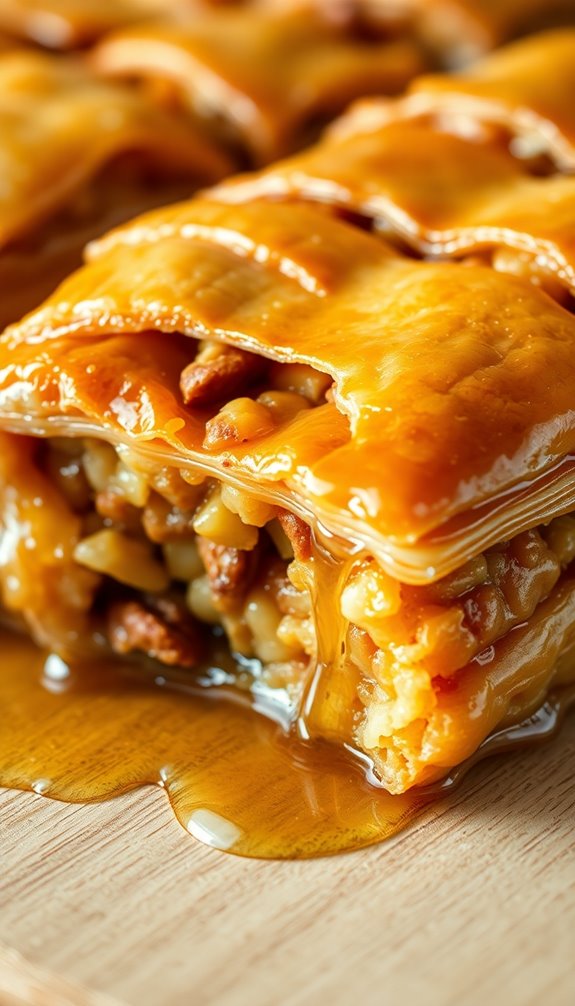
With your high-quality ingredients ready, it’s time to start making baklava at home. Begin by preheating your oven to 350°F (175°C).
Lay out your phyllo dough and brush each layer with melted butter—this is one of the key baklava techniques. In a bowl, mix finely chopped nuts with sugar and spices for flavor enhancements. The layering technique, similar to that used in making sesame balls, is crucial for achieving the perfect texture, much like the soft dough used in making nut rolls.
Layer several sheets of dough, sprinkling the nut mixture every few layers. Once you’ve built enough layers, cut the baklava into diamond shapes before baking.
After about 30-35 minutes, it should be golden brown. While it bakes, prepare a honey syrup to pour over it once removed from the oven. Traditionally, baklava is known for its rich history, similar to Czech traditions, that celebrates cultural heritage through food.
Allow it to soak for a few hours, then enjoy your homemade baklava!
Popular Variations of Baklava Around the World
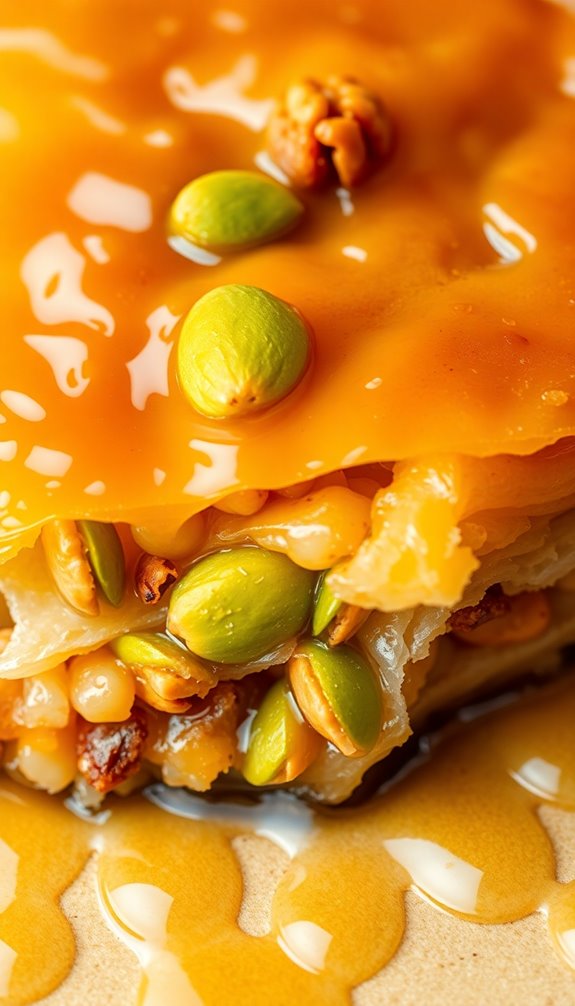
When you explore baklava around the world, you’ll discover some unique twists that make each version special.
Greek baklava delights with its honey and cinnamon, while Turkish variations often feature different nuts and spices.
Plus, Middle Eastern influences bring their own flair, adding depth to this beloved dessert.
Greek Baklava Delights
While many people know and love traditional Greek baklava, this delightful pastry has inspired countless variations around the world.
In Greece, baklava isn’t just a dessert; it’s a celebration of sweet traditions, showcasing rich flavor profiles and cultural significance. You’ll find unique twists that highlight nutty fillings and honey variations, making each bite a journey through the country’s culinary heritage.
Here are some popular Greek baklava delights you might encounter:
- Pistachio Baklava: A vibrant green twist with a rich flavor.
- Walnut Baklava: Earthy and sweet, balancing textures perfectly.
- Chocolate Baklava: A modern take with a decadent twist.
- Syrupy Baklava: Drenched in a honey syrup for extra sweetness.
- Baklava Rolls: Rolled instead of layered for an easy bite.
Additionally, like conchas in Mexico, baklava embodies the spirit of community and celebration in its cultural context.
Turkish Baklava Variations
Turkish baklava offers a delicious array of variations that reflect the country’s rich culinary history and diverse regional influences. You’ll find traditional fillings like pistachios, walnuts, and hazelnuts, each lending its unique flavor.
In Gaziantep, baklava is often made with locally sourced pistachios, known for their vibrant green color and buttery taste. Meanwhile, in the Aegean region, you might encounter baklava flavored with regional spices like cinnamon or cloves, adding depth to the sweetness.
Some variations even incorporate chocolate or fruit, showcasing the innovation that keeps this dessert exciting. Whichever version you choose, you’ll experience layers of flaky pastry, rich nuts, and the sticky sweetness of honey, making each bite a heavenly treat.
Middle Eastern Influences
As baklava spreads beyond Turkey, its Middle Eastern influences create a delightful tapestry of flavors and textures. You’ll find that each region puts its unique spin on this beloved dessert, showcasing cultural significance and historical recipes.
Here are some popular variations:
- Greek Baklava: Often features walnuts and cinnamon, with a lighter syrup.
- Lebanese Baklava: Includes rose water and pistachios, enhancing its fragrance.
- Egyptian Baklava: Uses semolina for a denser texture and incorporates spices in baklava.
- Persian Baklava: Adds cardamom and saffron, elevating the flavor profile.
- Modern adaptations: Experiment with different nuts and fillings while maintaining traditional serving methods.
These regional variations highlight the rich diversity of Middle Eastern desserts, blending classic and contemporary styles.
Common Mistakes to Avoid When Making Baklava

When making baklava, it’s easy to make a few key mistakes that can ruin your dessert.
Neglecting phyllo dough care, choosing the wrong nuts, or misbalancing the honey syrup can all lead to disappointing results.
Let’s explore these common pitfalls so you can create the perfect baklava.
Overlooking Phyllo Dough Care
While making baklava, one of the most essential aspects is how you handle phyllo dough. Neglecting proper care can ruin your dessert.
Here are common mistakes to avoid for ideal phyllo dough preservation and effective layering techniques:
- Not keeping phyllo covered: Always cover unused sheets with a damp cloth to prevent drying.
- Skipping the thawing process: Verify phyllo is completely thawed for easier handling.
- Using too much butter: Excess butter can make layers soggy instead of crispy.
- Rushing the layering: Take your time to layer evenly; uneven layers won’t bake properly.
- Ignoring the edges: Trim edges for a neat appearance and even cooking.
Skipping Proper Nut Selection
Choosing the right nuts is just as important as handling phyllo dough correctly. When making baklava, you can’t skip proper nut selection. Always prioritize nut freshness; stale nuts can ruin your dessert’s flavor profiles.
Fresh walnuts, pistachios, or almonds bring out the rich taste, elevating your baklava to new heights. Don’t just grab any nuts on the shelf—check the expiration date and aroma.
Each nut has its own unique flavor that complements the sweetness of the honey syrup. By selecting the right nuts, you enhance the overall texture and taste, ensuring a delightful bite every time.
Ignoring Honey Syrup Balance
A well-balanced honey syrup is crucial for baklava, yet many bakers overlook this essential component. Getting the right honey consistency and syrup thickness can make or break your dessert.
If the syrup is too thin, it won’t cling to the layers, while a syrup that’s too thick can overpower the delicate flavors of the nuts. Here are some tips to guarantee your syrup is just right:
- Use equal parts honey and water for balance.
- Heat gently to dissolve, but don’t boil.
- Allow it to cool slightly before pouring.
- Test the thickness by letting it drizzle off a spoon.
- Adjust sweetness with lemon juice for brightness.
Pay attention to these details, and your baklava will shine!
Tips for Storing and Serving Your Baklava
To keep your baklava fresh and delicious, consider these essential storage and serving tips. First, let your baklava cool completely before storing it.
Use an airtight container to preserve its crunch; if layered, separate them with parchment paper to prevent sticking. Store it at room temperature for up to a week, or refrigerate for longer freshness.
For serving suggestions, cut the baklava into small pieces for easy handling. Pair it with a scoop of vanilla ice cream or a dollop of whipped cream for an indulgent treat.
If you prefer, drizzle extra honey or sprinkle crushed nuts on top just before serving to enhance its flavor. Enjoy your baklava with coffee or tea for a delightful experience!
Conclusion
In the end, crafting authentic baklava is like weaving a tapestry of tradition and flavor. With each layer, you embrace the rich history and cultures that shaped this sweet delight. As you savor the golden, honey-soaked goodness, you’re not just enjoying dessert; you’re indulging in a delicious legacy. So, roll up your sleeves and let your kitchen become a bridge to the past, creating a symphony of textures and tastes that will linger in your heart.