Converting 12 mm to centimeters is easy! Just divide by 10, so 12 mm equals 1.2 cm. This small adjustment is essential for precise cooking and baking, ensuring your recipes turn out perfectly. It’s common to mix up millimeters and centimeters, so be mindful of that. Accurate measurements make a real difference in the kitchen. Stick around, and you’ll discover more tips to master metric conversions for all your culinary needs!
Understanding the Metric System Basics
When you immerse yourself in the metric system, you’ll find it’s a straightforward way to measure things. This system uses units like meters, liters, and grams, making it easier to understand and compare measurements. Accurate measurements are essential in cooking and baking, as they can significantly impact the quality of your dishes. In fact, precise measurements like gluten-free options can make a big difference in baking success.
Unlike other systems, the metric system relies on a base-ten structure, which simplifies calculations and conversions. You’ll notice unit differences, such as how 1 centimeter equals 10 millimeters, helping you gauge sizes easily.
The metric system’s base-ten structure makes calculations effortless, with clear unit relationships like 1 centimeter equaling 10 millimeters for easy size comparisons.
Whether you’re measuring ingredients in the kitchen or planning a DIY project, grasping these basics can save you time and confusion. Embracing the metric system allows you to communicate measurements universally, making it an essential skill in today’s global landscape. The role of measurements in recipes can greatly impact the final outcome.
Immerse yourself, and you’ll see how intuitive it really is!
Why Convert 12MM to Centimeters?
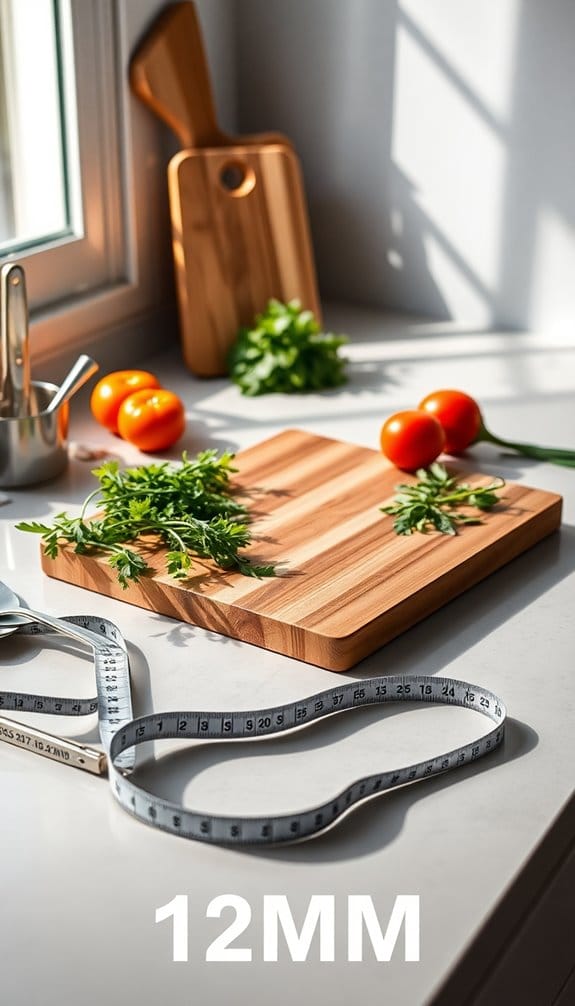
Converting 12 millimeters to centimeters is important for clarity in various contexts, especially when precision matters. Whether you’re cooking, crafting, or working on DIY projects, understanding this conversion is a necessity.
Millimeters and centimeters serve different purposes, and using the right measurement guarantees accuracy in your work. Additionally, incorporating natural sweeteners in your recipes helps maintain flavor while reducing sugar intake. When you convert 12MM to Cm, you’re aligning your measurements with standard practices, making it easier to communicate your needs effectively. This conversion boosts measurement accuracy, which can prevent costly mistakes in recipes or projects, such as when baking Almond Extract Infused Oatmeal Cookies. Moreover, using minimal ingredients in your recipes can simplify the cooking process and enhance your overall experience.
The Simple Formula for Converting MM to Cm
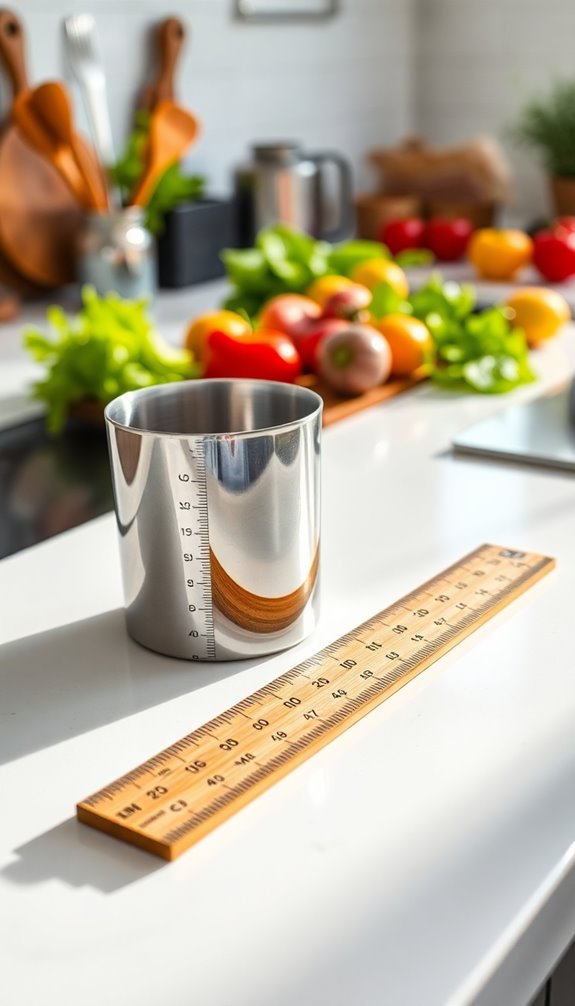
When you’re working with metric units, knowing how to convert millimeters to centimeters is essential. The formula is straightforward and can save you time in various tasks. Let’s break it down so you can confidently make the conversion. Accurate measurements are crucial in cooking and baking, ensuring that your recipes turn out as intended.
Understanding Metric Units
Here are some key points to remember:
- The metric system is decimal-based, simplifying calculations.
- Conversions typically involve multiplying or dividing by powers of ten.
- It’s universally adopted, enhancing communication and collaboration.
- Familiarity with metric units streamlines work across various disciplines. Understanding baking essentials can help improve your precision in the kitchen. Additionally, incorporating high-protein snacks can provide the energy needed for those longer cooking sessions.
Embracing the metric system not only makes your work easier but also opens doors to global standards and practices. Protein-packed snacks can also be part of your routine to sustain energy during these tasks.
Conversion Formula Explained
To convert millimeters (mm) to centimeters (cm), you simply need to remember that one centimeter equals ten millimeters. This means that to make the conversion, you’ll divide the number of millimeters by 10.
For instance, if you have 12 mm, you’ll calculate it as 12 mm ÷ 10 = 1.2 cm.
Utilizing this straightforward conversion technique guarantees measurement accuracy in your cooking or crafting projects. It’s quick and easy, making it perfect for the kitchen.
Just keep a calculator handy or memorize the formula for even faster results. With practice, converting mm to cm will become second nature, helping you achieve precise measurements every time you cook or bake.
Step-by-Step Guide: Converting 12MM to Cm
Converting 12 millimeters (MM) to centimeters (CM) is a straightforward process that anyone can master with just a few simple steps.
Start by remembering that 1 centimeter equals 10 millimeters.
Remember, 1 centimeter is equal to 10 millimeters—keeping this in mind simplifies your conversions!
So, to convert:
- Divide 12 by 10.
- Understand that this helps avoid common conversion challenges.
- Use a calculator if you’re unsure about your math.
- Practice with other measurements to enhance your skills.
Common Mistakes in Metric Conversions
Metric conversions can trip up even the most careful individuals. One of the most common errors occurs when you confuse millimeters and centimeters; it’s easy to mix them up since they’re closely related.
Another common pitfall is forgetting to multiply or divide by the correct factor—remember, 1 cm equals 10 mm! Rounding too early in the process can also lead to inaccuracies. You might think you’re being precise, but even minor miscalculations can affect your results.
Finally, relying solely on mental math without double-checking or using a calculator can lead to mistakes. By being aware of these conversion pitfalls, you can guarantee your metric conversions are accurate and reliable.
Practical Applications of 12MM to Cm Conversion
Understanding how to convert 12mm to cm can be incredibly useful in various practical situations.
Whether you’re in the kitchen or adjusting a recipe, having this knowledge enhances your cooking experience.
Here are some ways this conversion can help:
- Recipe adjustments: Accurately adjust ingredient quantities for different serving sizes.
- Measurement accuracy: Guarantee precision in your kitchen tools for consistent results.
- Baking precision: Achieve the right texture by measuring ingredients correctly in metric recipes.
- Food presentation: Scale components for a visually appealing dish, enhancing your cooking techniques.
Tools and Resources for Measurement Conversions
When it comes to measurement conversions, having the right tools can make all the difference. Start by using conversion apps that quickly turn millimeters into centimeters, saving you time in the kitchen.
Kitchen scales and measuring tools help guarantee accurate ingredient weights, making your recipes more reliable. For quick calculations, online calculators can be a lifesaver; simply input your measurements and get instant results.
Don’t forget about metric charts and conversion tables—they’re handy references for common conversions. Finally, cooking thermometers provide precise temperature readings, which are essential for successful cooking.
With these resources at your fingertips, you’ll navigate measurement conversions with ease and confidence, elevating your culinary skills.
Converting Other Measurements: What You Need to Know?
While many people focus on converting lengths, you’ll find that understanding how to convert other measurements—like weight, volume, and temperature—can be just as essential.
Here are some key metric conversion techniques and measurement accuracy tips to keep in mind:
- Use a reliable conversion chart to guarantee you’re using correct values.
- Double-check your calculations for weight and volume, especially in cooking.
- Round numbers appropriately; small discrepancies can lead to big flavor differences.
- Practice regularly to build confidence with conversions in your everyday tasks.
How to Adjust Recipes Based on Converted Measurements
When you adjust recipes using converted measurements, it’s essential to understand the differences in measurement systems.
Small changes can lead to big impacts on your dish.
Let’s look at some practical examples to make these adjustments easier for you.
Understanding Measurement Differences
- Precision: Metric advantages offer more precise measurements, reducing the risk of errors.
- Consistency: Using standardized units guarantees uniformity across different recipes.
- Scaling: Understanding how to convert helps when scaling recipes up or down.
- Ingredient Behavior: Different measurements can affect how ingredients interact, impacting flavor and texture.
Practical Conversion Examples
Understanding how to convert measurements is key to adjusting recipes effectively. When you encounter a recipe that calls for millimeters and you need centimeters, remember that 12mm equals 1.2cm.
Use this kitchen hack to tweak your ingredient amounts accurately. For instance, if a recipe requires 240mm of pasta, convert it to 24cm for easier measurement.
Don’t forget to have your measurement tools handy. A reliable scale can help you weigh ingredients after conversion, ensuring consistency in your cooking.
If you’re doubling a recipe, apply the same conversion to all measurements. With these simple adjustments, you can confidently navigate any recipe, making it adaptable to your kitchen needs.
Happy cooking!
Tips for Accurate Measurement in Cooking and Baking
Accurate measurements are essential in cooking and baking, as even a slight deviation can alter the final dish’s taste and texture.
To guarantee you’re getting it right, focus on effective measuring techniques and use the right precision tools. Here are some tips to help you:
- Use liquid measuring cups for liquids to avoid overflow.
- Level off dry ingredients with a straight edge for accuracy.
- Weigh ingredients when possible; digital scales offer the best precision.
- Always check expiration dates on your ingredients to maintain quality.
Mastering Metric Conversions for Culinary Success
After mastering effective measuring techniques, you’ll find that understanding metric conversions can further enhance your culinary skills. Embracing metric units offers you culinary precision and guarantees measurement accuracy in your recipes.
Whether you’re converting millimeters to centimeters or adjusting ingredient quantities, knowing how to navigate these conversions will elevate your cooking and baking.
For instance, if a recipe calls for 120 milliliters of liquid, converting that to cups can help you use the right tools. Practice these conversions regularly; soon, you’ll do them instinctively.
This knowledge not only boosts your confidence in the kitchen but also leads to consistent results, making every dish a masterpiece. So, immerse yourself in metric conversions and watch your culinary creations flourish!
Conclusion
Now that you’ve mastered converting 12mm to centimeters, you’re practically a culinary wizard! Imagine effortlessly whipping up dishes with precision, where each measurement is as perfect as a Michelin-starred chef’s. No more guesswork—only flawless recipes that impress your friends and family. You’re not just cooking; you’re creating masterpieces in your kitchen! So, grab that ruler and let your conversion skills shine brighter than a thousand kitchen stars! Your culinary journey is just getting started!