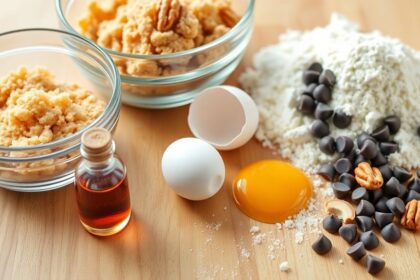
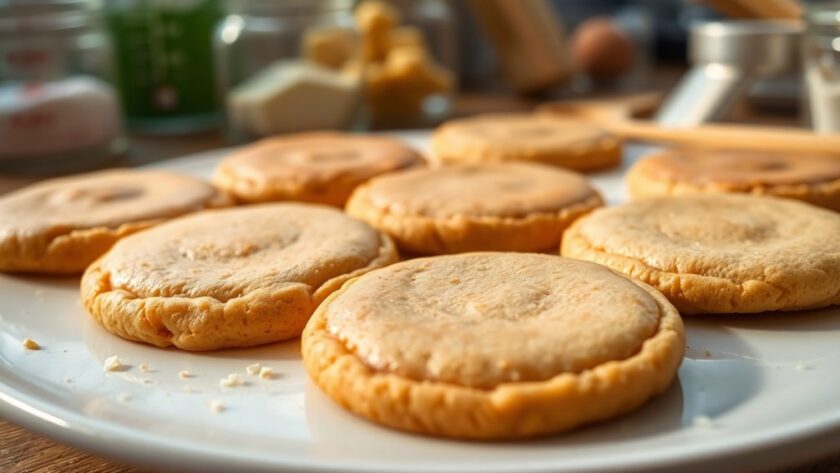
Flat cookies usually stem from common mistakes. You might be using too much sugar or fat, which causes excess spread. Insufficient baking soda and improper creaming of butter can prevent proper lift. Pay attention to your ingredient ratios, baking temperature, and mixing technique. Allowing the dough to chill can also help firm up the cookies. Discover how to troubleshoot and perfect your cookie baking for beautiful results ahead.
Understanding the Common Causes of Flat Cookies
When you bite into a cookie, you expect it to be chewy or crispy, not flat and lifeless. One common cause of flat cookies is too much cookie spread, which can happen if you’ve added too much sugar or fat. These ingredients melt during baking, leaving you with a sad, thin cookie.
Another culprit could be the use of insufficient baking soda. This leavening agent helps your cookies rise and maintain their shape. If you don’t measure it correctly, your cookies mightn’t get the lift they need. Additionally, properly creaming butter and sugar can help incorporate air into the dough, preventing excessive spreading. Balancing butter temperature is also essential in achieving the right texture and height for your cookies.
Finally, overmixing your dough can lead to excess gluten development, making your cookies spread even more. Keep these factors in mind to avoid those disappointing flat cookies next time! Additionally, improper butter temperature can significantly affect the texture and height of your cookies.
How Ingredient Ratios Affect Cookie Texture
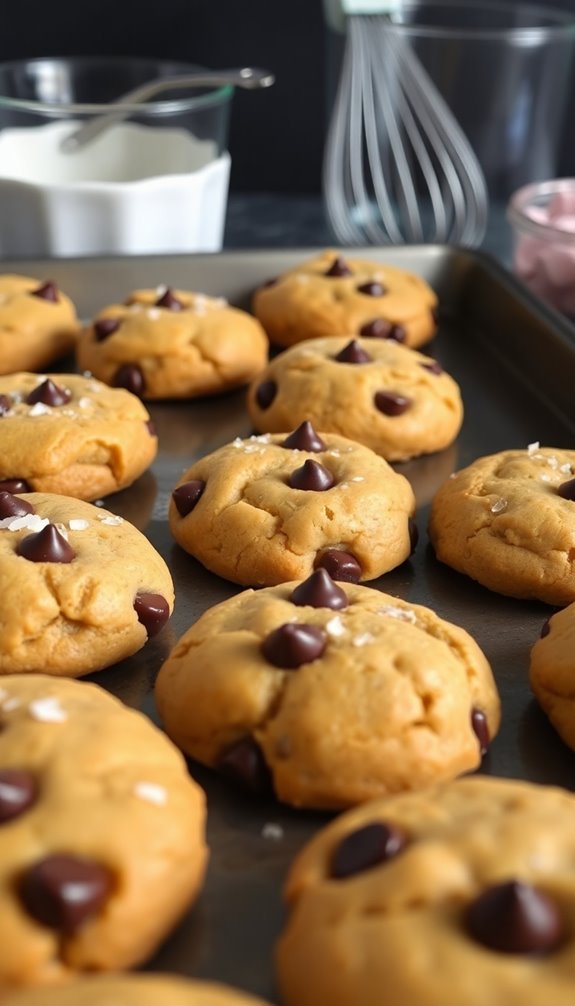
The ratios of flour to fat in your cookie dough play an essential role in determining texture. Too much fat can lead to a flat, greasy cookie, while the right balance creates a chewy, satisfying bite. Additionally, the type of sugar you use can affect not just sweetness, but also how your cookies rise and crisp up. For instance, using a combination of light brown sugar and granulated sugar can significantly influence the final texture and flavor of your cookies. Brown sugar’s moisture content helps retain softness, preventing excessive spreading during baking. Ultimately, achieving the perfect cookie texture often comes down to the right balance of baking agents that help your cookies maintain their shape.
Flour To Fat Ratio
Understanding the flour to fat ratio is essential for achieving the perfect cookie texture. The balance between flour types and fat can make or break your cookie. If you use too much flour, your cookies might turn out dry and crumbly. Conversely, too much fat can lead to flat, greasy cookies.
Aim for a ratio that allows the dough to hold its shape while still being tender. Also, consider fat temperatures; using softened butter versus melted can impact how your cookies spread. Softened fat incorporates air, creating a lighter texture, while melted fat leads to denser cookies. Kneading the dough properly will help you master your cookie game, ensuring they come out just right every time. Additionally, using self-rising flour can simplify your recipe by eliminating the need for separate leavening agents. Finally, incorporating browned butter can contribute a rich, nutty depth to your cookies, enhancing their overall flavor profile.
Sugar Types Impact Texture
While you mightn’t think about it, the type of sugar you use can markedly impact your cookie’s texture. Granulated sugar tends to create a crispier cookie, while brown sugar adds moisture, resulting in a chewier texture.
Using powdered sugar can lead to a softer, more tender cookie due to its fine texture and moisture content. If you’re considering sugar substitutes, be mindful of their different properties, as they can alter your cookie’s structure and flavor. Accurate baking times can also influence caramelization effects, impacting both taste and color. Experimenting with various sugar types will help you discover the perfect balance for your ideal cookie, ensuring you achieve that delightful texture you crave.
The Role of Baking Temperature in Cookie Shape
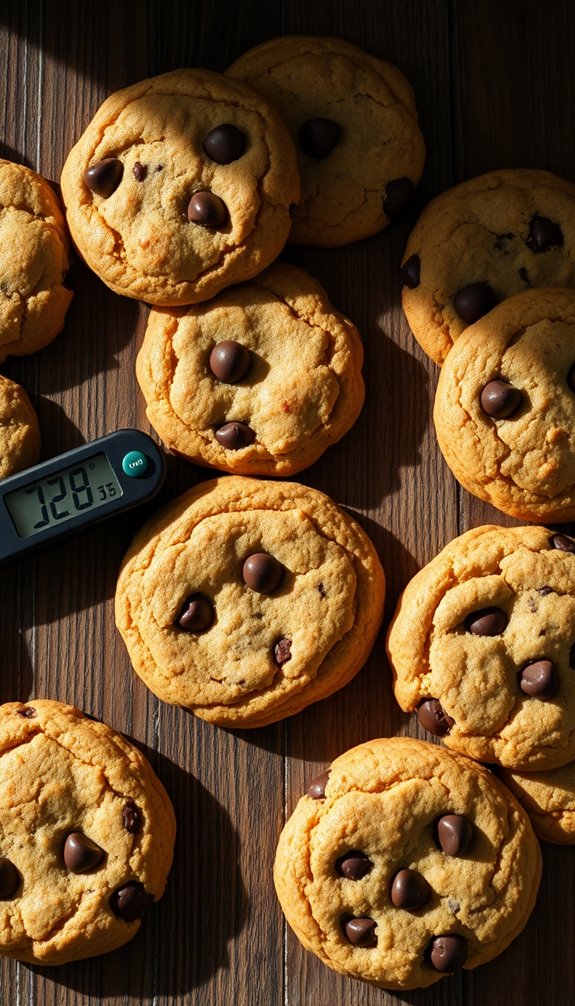
Baking temperature markedly influences cookie shape, as even a slight variation can lead to flat or puffy results.
Baking temperature plays a crucial role in cookie shape, with even minor adjustments yielding flat or puffy results.
When you bake at a lower temperature, your cookies tend to spread more before they set, resulting in a flatter shape. Conversely, higher temperatures cause the edges to firm up quickly, allowing the centers to rise, giving you a thicker, puffier cookie.
It’s essential to preheat your oven properly; if it’s not hot enough, your dough won’t hold its shape.
Experimenting with different baking temperatures can help you achieve the desired cookie shape. So, keep an eye on that oven thermometer, and adjust accordingly for the perfect batch every time!
Why Should You Chill Your Dough Before Baking?
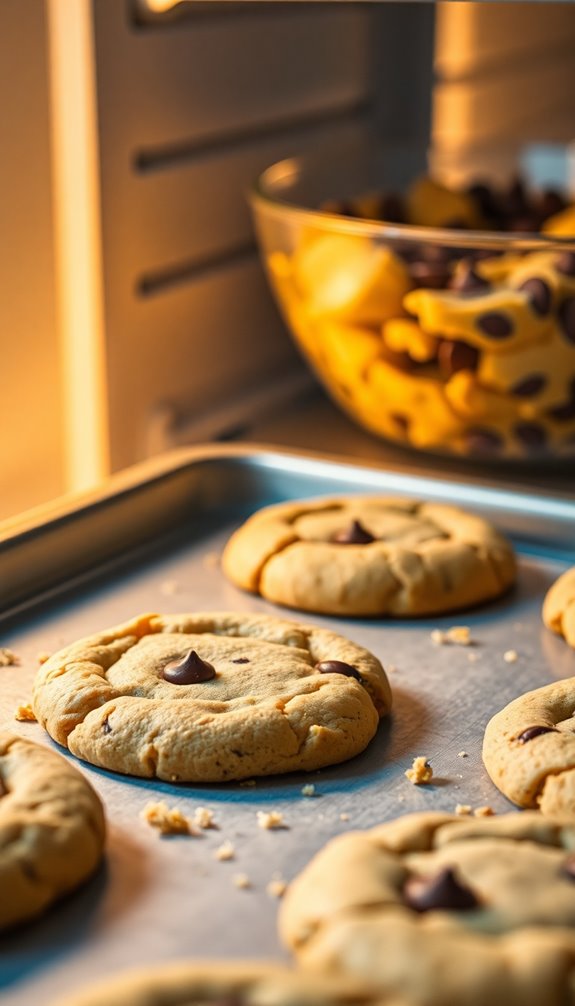
First, it enhances flavor development, allowing the ingredients to meld beautifully. You’ll also notice better texture enhancement; chilled dough creates a more tender cookie structure.
By slowing gluten formation, you prevent your cookies from becoming tough. Additionally, chilling helps with moisture retention, ensuring your cookies stay soft and chewy.
It also affects baking time; colder dough takes longer to spread, which means thicker, puffier cookies.
The Impact of Mixing Techniques on Cookie Density
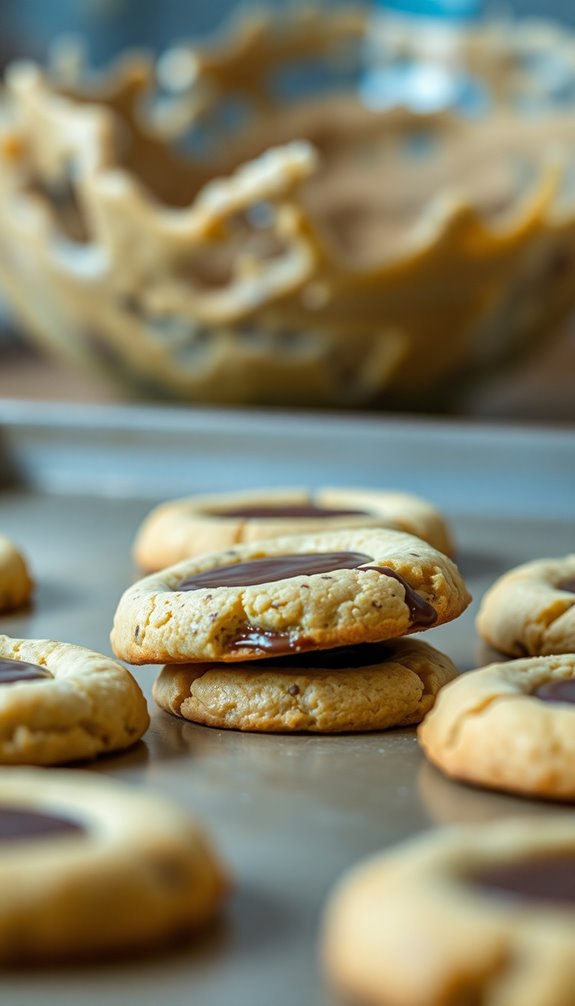
When it comes to cookie density, your mixing techniques play a vital role.
Using the creaming method properly can incorporate air for a lighter texture, while folding ingredients carefully helps maintain that fluffiness.
Plus, the speed at which you mix can either make or break your cookie’s final outcome, so it’s worth paying attention to.
Creaming Method Explained
While many factors influence cookie density, the creaming method stands out as a pivotal technique in your baking arsenal. This method involves mixing softened butter and sugar until you achieve a light, fluffy cream consistency.
The key here is butter temperature; it should be soft but not melted. If your butter’s too cold, it won’t incorporate air properly, leading to denser cookies. Aim for a pale, creamy mixture, which indicates you’ve incorporated enough air.
Proper creaming not only affects texture but also the cookie’s rise. Remember, the longer you cream, the more air gets trapped, giving your cookies that delightful lift. Master this technique, and you’ll be on your way to cookies that are anything but flat!
Folding Technique Importance
After mastering the creaming method, understanding the folding technique is just as vital for achieving the perfect cookie texture.
Folding techniques help maintain the right dough structure by carefully mixing ingredients without overworking them. This preserves air incorporation, which is essential for a light, airy cookie.
When you fold, you enhance texture while promoting the right ingredient interaction, allowing flavors to meld without compromising moisture retention. Proper folding minimizes gluten development, preventing dense cookies.
By mastering these mixing methods, you guarantee your cookies rise beautifully and have that delightful chewiness.
Mixing Speed Effects
Mixing speed plays an essential role in determining cookie density and texture. When you mix your dough at high speed, you incorporate more air, leading to a lighter, fluffier cookie.
However, too much mixing can overwork the gluten, causing the dough to become tough and dense. If you prefer a chewier texture, opt for a slower mixing speed. This helps maintain the dough consistency without over-developing the gluten structure.
It’s vital to find the right balance; mixing just enough to combine ingredients while preserving the dough’s integrity is key. Experiment with different speeds to see how they affect your cookies.
The right mixing technique can transform your cookie game from flat to fantastic!
How to Choose the Right Baking Sheet for Optimal Results
Choosing the right baking sheet can make all the difference in achieving perfectly baked cookies. Start by considering baking sheet materials. Heavy-gauge aluminum is a great choice for even heat distribution, while non-stick sheets can help your cookies release easily.
Selecting the right baking sheet is essential for achieving perfectly baked cookies, with materials like heavy-gauge aluminum ensuring even heat distribution.
Avoid dark-colored sheets, as they can cause uneven browning.
Next, think about cookie sheet sizes. Standard half-sheet pans are versatile and fit most ovens, but if you’re making larger batches, opt for full-size sheets. Having multiple sizes allows you to bake different cookie types simultaneously.
Finally, make certain your baking sheets are free from warps or dents, as they can affect how your cookies bake. With the right tools, you’ll be well on your way to baking success!
Troubleshooting: Fixing Flat Cookies in Your Next Batch
Even with the right baking sheets, you might still pull out a batch of flat cookies. To troubleshoot, first check your dough consistency; it should be thick and not too sticky.
If you made ingredient substitutions, they could affect your results, so stick to the recipe when possible. Confirm your oven calibration is accurate—invest in an oven thermometer if needed.
Humidity effects can also play a role, so consider adjusting your flour if it’s particularly humid. If you live at a high altitude, be prepared for altitude adjustments in your recipe.
Finally, allow your dough a proper rest period to enhance flavor and structure. With these tips, you’ll be on your way to perfect cookies!
Conclusion
To sum up, understanding the science behind flat cookies can transform your baking game. For instance, if you’ve ever pulled a tray of disappointing, flat cookies from the oven, try chilling your dough next time. This simple step allows the butter to solidify, leading to perfectly puffy cookies. Remember, a little attention to ingredient ratios and baking techniques can make all the difference. So, get back in the kitchen and bake those cookies to perfection!