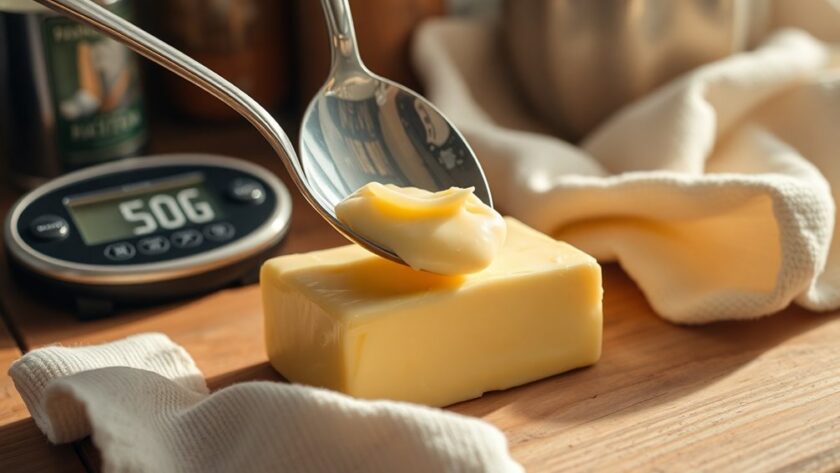
To measure 50 grams of butter, you’ll need about 3.5 tablespoons. Start with softened butter for easier scooping and pack it tightly into the tablespoon, leveling it off for precision. If you’re using melted butter, pour it right to the rim. Remember, accurate measurements are key in cooking and baking. You wouldn’t want to risk your dish with incorrect amounts. Stick around, and you’ll discover even more tips for butter measurement success!
Understanding Butter Measurement Basics
When it comes to cooking and baking, accurate butter measurement is essential for achieving the right texture and flavor. Different butter types, like unsalted, salted, or clarified, can affect your dish, so knowing how to measure properly is vital. Ingredient densities vary, and using a kitchen scale can help ensure precise measurements.
You can use various measurement methods based on your recipe. For instance, if you’re using sticks of butter, each stick typically equals ½ cup or 8 tablespoons, making it easy to cut off the exact amount. Freezing cookies is an effective way to preserve baked goods for later enjoyment, ensuring you always have a treat on hand.
If you’re measuring soft or melted butter, a liquid measuring cup can help you get precise measurements. Always remember to check your recipe for specific butter requirements, as even slight variations can impact your final results. Master these basics, and you’re well on your way to baking success! Additionally, knowing the right butter types can help you choose the best flavor for your dish.
Why Weight Matters in Cooking
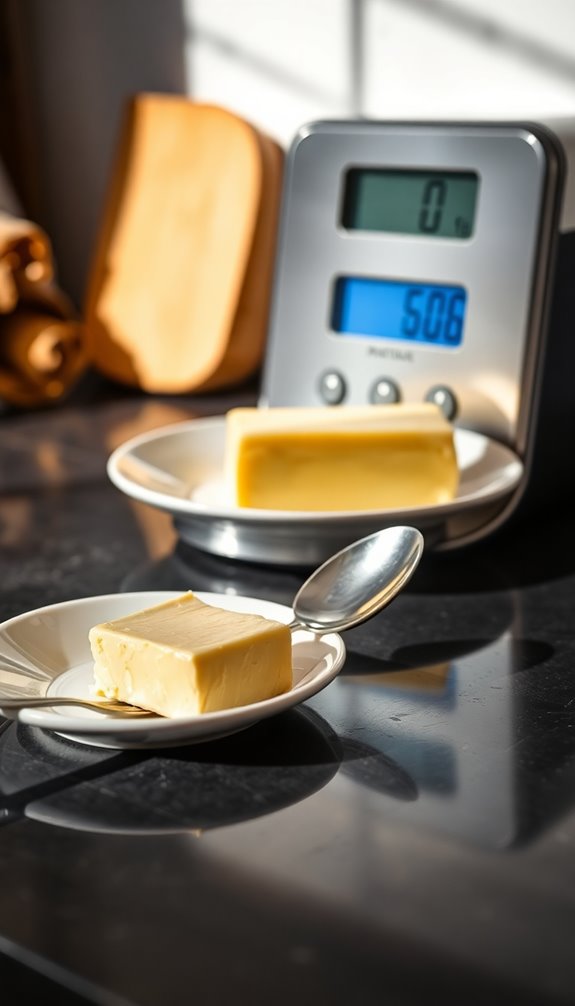
Here’s why weight matters:
- Cooking Precision: Accurate measurements lead to reliable results every time. You’ll avoid surprises and achieve the desired taste and texture. Additionally, using brown sugar can significantly impact the moisture and chewiness of your baked goods.
- Ingredient Ratios: Proper weight helps maintain the right balance between ingredients, essential for recipes like pastries where precision is key.
- Consistency in Results: Using weight allows you to replicate your favorite dishes perfectly, whether you’re cooking at home or scaling up for a gathering. Additionally, precise measurements can enhance the quality of your baked goods, ensuring the right nutritional balance for health-conscious recipes.
How Many Tablespoons Are in 50 Grams of Butter?
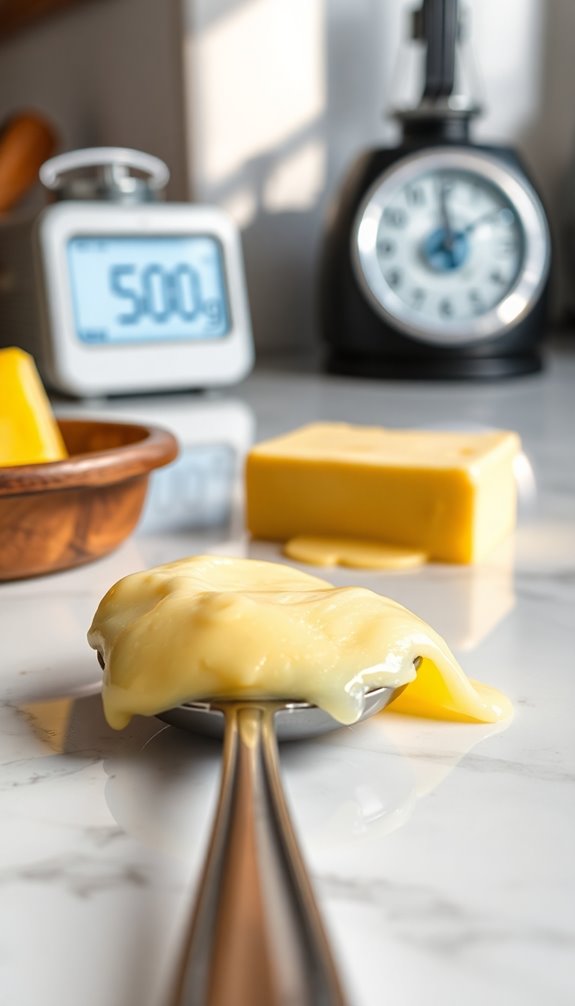
Measuring butter accurately can substantially impact your cooking, especially when you’re working with recipes that require precise ingredient ratios. If you need 50 grams of butter, you’ll find that it translates to about 3.5 tablespoons. This measurement guarantees you maintain the right balance in your dish, enhancing flavor and texture.
Remember that accurate measurements are essential in cooking and baking, as minor discrepancies can lead to disappointing results. In fact, using a kitchen scale can ensure you measure butter accurately, which is crucial for the best outcomes. If you’re using butter substitutes, it’s vital to remember that their density may vary, affecting measuring accuracy. Always check the conversion for each substitute to get it just right.
Keeping a kitchen scale handy can also help you achieve consistent results, especially when dealing with different butter types or alternatives. Additionally, high-altitude baking may require adjustments in ingredient measurements for optimal results. Trust these measurements to elevate your cooking and guarantee delicious outcomes every time.
Converting Grams to Tablespoons: The Formula
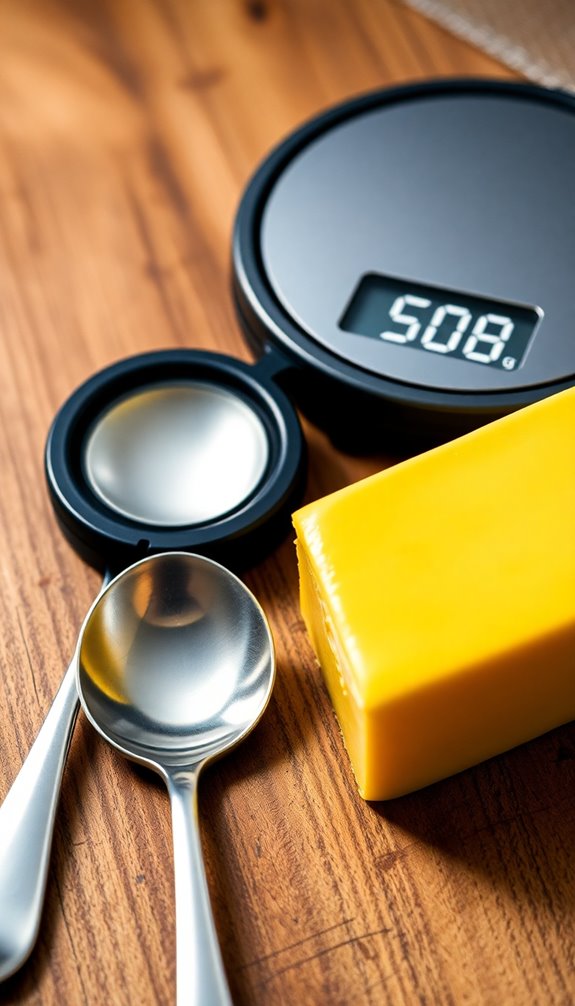
When you want to convert grams of butter to tablespoons, understanding its density is key. Butter typically weighs about 227 grams per cup, so you can use this information to make your conversions easier. Additionally, using accurate measurements is essential for achieving the perfect cookie texture. To further enhance your baking experience, consider using nutrient-rich swaps that can elevate both flavor and health benefits in your recipes. Let’s break down the formula you need to get accurate measurements.
Grams to Tablespoons Conversion
Ever wondered how to convert grams of butter into tablespoons? It’s easier than you might think! Understanding the right conversion techniques guarantees you achieve measurement accuracy in your recipes. Here’s how you can do it:
- Know the Standard Conversion: Typically, 1 tablespoon of butter weighs about 14 grams.
- Calculate: To convert grams to tablespoons, divide the number of grams by 14. For example, 50 grams ÷ 14 = approximately 3.57 tablespoons.
- Use a Scale for Precision: If you want to be spot-on, consider using a kitchen scale for measuring butter directly.
Understanding Butter Density
For instance, if you need 50 grams of butter, divide 50 by 14 to get approximately 3.57 tablespoons.
Keep in mind that if your butter’s consistency is softer or firmer, it might affect the measurement slightly.
Always check the butter’s state before measuring to guarantee you get the right amount for your recipes.
Accurate measurements lead to better baking results!
Tools You Can Use for Measuring Butter
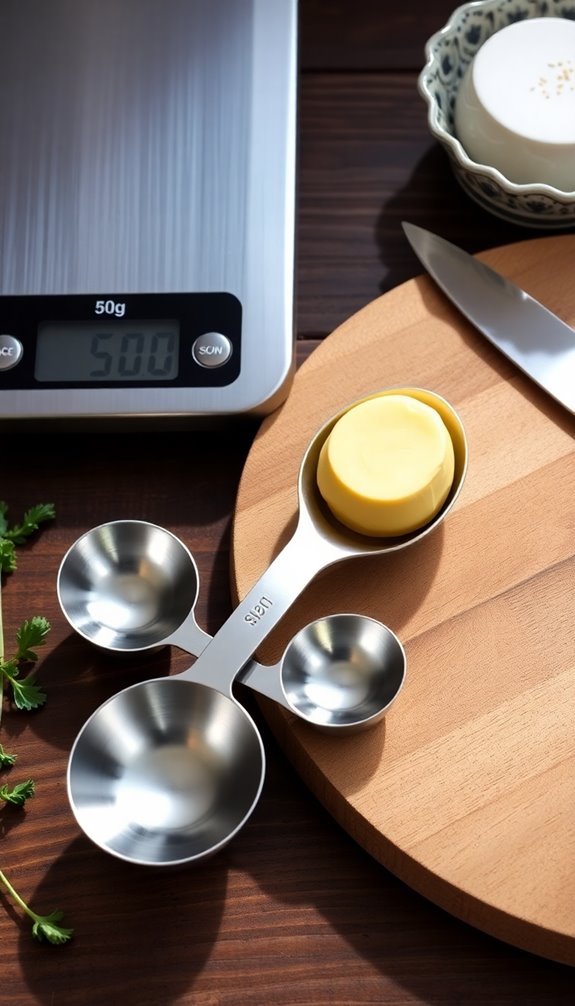
When you’re measuring butter, having the right tools can make all the difference.
A kitchen scale offers precision, while measuring cups can help with larger amounts.
Plus, stick butter often has handy markings that make it easy to cut exactly what you need.
Kitchen Scale Benefits
Using a kitchen scale can greatly enhance your butter-measuring experience, especially if you’re looking for accuracy in your recipes. The kitchen scale advantages are clear: you’ll achieve precise measurements that guarantee your dishes turn out just right.
Here are three benefits of using a kitchen scale:
- Consistency: Weighing your butter guarantees that you use the same amount every time, leading to consistent results in baking.
- Flexibility: You can easily switch between different units of measurement, making it simple to adapt recipes.
- Efficiency: A scale allows for quick measurements, saving you time and reducing cleanup since you can measure directly in your mixing bowl.
With these benefits, a kitchen scale is an essential tool for any serious cook.
Measuring Cups Overview
Measuring cups are one of the most common tools for measuring butter, and they come in handy whether you’re whipping up cookies or a rich sauce.
With various cup sizes available, you can easily find one that suits your recipe needs. When using measuring cups, it’s essential to adopt accurate measuring techniques to guarantee you get the right amount.
For soft butter, pack it into the cup, leveling it off for precision. For melted butter, simply pour it into a liquid measuring cup, checking the measurement at eye level.
Familiarizing yourself with these methods will help you achieve consistent results in your cooking and baking, making your culinary adventures more enjoyable and successful.
Stick Butter Markings
Stick butter is often marked with convenient measurements, making it easy to portion out exactly what you need for your recipes.
Whether you’re baking cookies or sautéing vegetables, knowing how to measure stick butter can simplify your cooking process. Here are some handy tools and tips:
- Stick Markings: Most stick butter types have 1-tablespoon increments clearly marked on the wrapper, allowing for quick measurements.
- Cutting Knife: Use a sharp knife to slice off the desired amount without any mess.
- Digital Scale: For precise measurements, especially in baking, a digital scale can help you measure exactly 50g of butter.
Using a Tablespoon: Proper Technique
When it comes to measuring butter accurately, a tablespoon is your best friend in the kitchen. To achieve precise measuring accuracy, start with a clean, dry tablespoon.
Measuring butter accurately is easy with a clean, dry tablespoon—your essential kitchen tool for perfect recipes.
Scoop the butter directly from the container, pressing it into the spoon to eliminate air pockets. Level off the top with a straight edge, like a knife, to guarantee you have the right amount.
If you’re measuring softened butter, you can use the tablespoon technique to pack it tightly, making certain it fills the spoon completely.
For melted butter, simply pour it into the tablespoon, confirming it reaches the rim.
Follow these steps, and you’ll measure butter like a pro, ensuring your recipes turn out just right every time.
Common Mistakes When Measuring Butter
While it might seem straightforward, mistakes in measuring butter can lead to less-than-perfect results in your baking. To guarantee butter consistency and measuring accuracy, avoid these common pitfalls:
- Ignoring Temperature: Cold butter is harder to measure accurately. Let it soften for better results.
- Using Improper Tools: Stick to standard measuring spoons instead of kitchen utensils that can skew the amount.
- Not Leveling Off: When using a tablespoon, don’t just scoop and drop. Level off the top for precise measurements.
Alternatives to Butter: Equivalent Measurements
If you’re looking for butter alternatives, it’s essential to know how to measure them correctly. Common butter substitutes include margarine, coconut oil, and applesauce, each with different measurement equivalents.
For margarine, use a 1:1 ratio, so if a recipe calls for 50g of butter, you’ll need 50g of margarine. Coconut oil, whether solid or melted, can also replace butter at equal amounts.
If you’re leaning towards plant-based alternatives, applesauce is great for baking; use about ¾ cup for every cup of butter. For more moisture, consider using mashed bananas as a substitute, but adjust the sugar in your recipe accordingly.
Knowing these measurements helps you easily swap butter without compromising your dish’s flavor or texture.
How to Measure Softened vs. Cold Butter?
Measuring softened versus cold butter can greatly impact your baking results, so it’s important to know the difference.
Softened butter incorporates air easily, creating a light texture in cakes and cookies. On the other hand, cold butter is ideal for flaky pastries, where you want to keep the fat solid.
Here’s how to handle each type:
- Softened Butter: Let your butter sit at room temperature for about 30 minutes. You should be able to press it easily with a finger.
- Cold Butter: Use right out of the fridge. It should be firm and solid for recipes like pie crusts.
- Measuring: Use a kitchen scale for accuracy, or check your tablespoon measurements, adjusting as needed for each butter type.
Adjusting Recipes: Scaling Butter Measurements
When you adjust recipes, scaling butter measurements is essential for getting the right texture and flavor.
You’ll need to understand butter’s density and how to convert measurements easily to maintain balance in your dish.
Let’s explore how to do this effectively.
Scaling Ingredients Correctly
As you adjust recipes, scaling butter measurements accurately is essential for achieving the right flavor and texture in your dishes. When it comes to ingredient scaling, even small discrepancies can make a big difference.
Here are three tips to guarantee measurement accuracy:
- Use a kitchen scale: Weighing butter gives you the most precise measurement.
- Know conversions: Familiarize yourself with common conversions, like tablespoons to grams, to avoid mistakes.
- Adjust gradually: When scaling recipes, tweak butter amounts in small increments to maintain balance in taste and texture.
Understanding Butter Density
Understanding how butter density affects measurements can greatly impact your cooking and baking results. Different butter types, like unsalted or salted, can have varying densities, which influences how you measure them.
When you’re using butter, consider its consistency; softened butter packs differently than cold or melted butter. For precise measurements, you’ll want to account for these differences.
If you’re adjusting recipes, knowing the density of the butter you’re using helps guarantee that your baked goods turn out as expected. For instance, if a recipe calls for melted butter but you’re using cold, solid butter, you may end up with too much or too little.
Converting Measurements Easily
Adjusting recipes by scaling butter measurements can seem tricky, but it doesn’t have to be. With the right approach to kitchen conversions, you can guarantee measurement accuracy every time. Here’s how to make it easier:
- Know the Conversion: Remember that 50g of butter is roughly equivalent to 3.5 tablespoons. Keep this handy for quick reference.
- Use a Scale: If possible, weigh your butter for the most precise measurement. This avoids any guesswork.
- Adjust Proportionally: When scaling a recipe, simply multiply the butter amount based on the total servings. For example, if doubling a recipe, double the butter.
With these tips, you’ll breeze through butter measurements and enjoy your cooking!
Tips for Accurate Butter Measurement
When you want to guarantee your recipes turn out perfectly, measuring butter accurately is essential. Different butter types, like unsalted or salted, can affect your dish’s flavor, so choose wisely.
To measure, use standard measurement techniques. If you’re using stick butter, the markings on the wrapper indicate tablespoons, making it easy to cut the exact amount. For softened butter, pack it firmly into a tablespoon for precision.
If you’re using a digital scale, remember that 50 grams of butter equals about 3.5 tablespoons. Always double-check your measurements for consistency.
Storing Leftover Butter: Best Practices
When it comes to storing leftover butter, proper wrapping is key to keeping it fresh.
You’ll want to guarantee it’s sealed tightly to prevent it from absorbing odors or drying out.
Also, maintaining the ideal storage temperature helps preserve its flavor and texture for longer.
Proper Wrapping Techniques
To keep your leftover butter fresh and flavorful, proper wrapping techniques are essential. Here are some simple steps to guarantee butter freshness:
- Use Wax Paper: Wrap your butter tightly in wax paper to create a moisture barrier. This helps prevent it from absorbing odors.
- Seal in a Container: Place the wrapped butter in an airtight container. This adds an extra layer of protection against air exposure.
- Label and Date: If you’re storing multiple types of butter, label your containers with the type and date. This way, you’ll know what you have and when it needs to be used.
Ideal Storage Temperature
Storing leftover butter at the right temperature is essential for maintaining its quality and flavor. Ideally, you should keep butter in the refrigerator, where it stays fresh for about a month.
If you want to extend its butter shelf life even further, consider freezing it. Just make sure to wrap it tightly in foil or plastic wrap to prevent freezer burn.
When using ideal storage methods, keep butter away from strong-smelling foods, as it can easily absorb odors.
If you frequently use butter, you can leave a small amount out at room temperature for a few days, but don’t forget to cover it. This way, you’ll enjoy delicious, spreadable butter whenever you need it!
Baking With Butter: Importance of Precision
Precision in baking is essential, especially when it comes to measuring butter. Accurate measurements can make or break your recipes, impacting texture and flavor.
Different butter varieties, like salted or unsalted, also affect your baked goods, adding another layer of complexity. Here’s why precision matters:
- Consistency: Using the right amount guarantees your results are repeatable every time you bake.
- Flavor Balance: Precise measurements help maintain the intended taste, allowing your chosen baking techniques to shine.
- Texture Control: Butter impacts the texture of cookies and cakes; too much or too little can lead to undesired results.
Troubleshooting: What If You Measure Incorrectly?
If you accidentally measure butter incorrectly, don’t panic; there are ways to salvage your baking.
First, identify whether you’ve used too much or too little butter. If it’s too much, you can adjust by adding a bit more flour or reducing other liquids in your recipe.
For butter measurement mistakes in the opposite direction, consider compensating with a small amount of oil or margarine to maintain moisture.
When correcting measurement errors, a quick taste test can also help; if the flavor’s off, tweak the other ingredients accordingly.
Conclusion
Measuring butter doesn’t have to be baffling! Whether you’re whipping up a wonderful dessert or a savory dish, knowing how to convert grams to tablespoons is key. Remember, precision pays off in the kitchen, so grab your tools, follow the formula, and get that 50 grams of butter just right. With these tips, you’re set for success in your savory and sweet baking adventures. Happy cooking, and may your meals be mouthwateringly marvelous!