Last updated: · By Claire Dawson
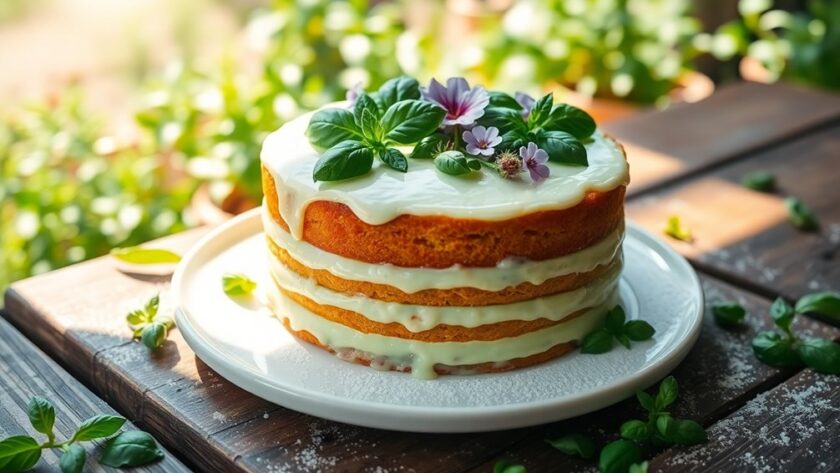
Basil cake is a moist olive oil cake flavored with fresh basil leaves and often finished with basil-infused whipped cream. The herb’s bright, slightly peppery flavor pairs well with sugar, citrus, and berries, so the result tastes unexpected but balanced. This guide gives you the ingredient quantities, the method, and serving ideas for making one at home, along with a clear look at what the research does and does not show about basil.
Key Takeaways
- Basil cake is an olive oil cake in which about 180 g of fresh basil leaves are blended into the oil before it goes into the batter.
- The base recipe uses 290 g of all-purpose flour, 330 g of sugar, 4 large eggs, and 165 g of extra virgin olive oil.
- Basil whipped cream starts with 12 oz of heavy cream that is warmed with basil, steeped for about 30 minutes, strained, chilled, and whipped to soft peaks.
- Bake at 340°F and begin checking for doneness around the 30-minute mark, since a toothpick inserted into the center should come out clean.
- Research on basil’s bioactive compounds is promising, but a review of basil’s antioxidant, antimicrobial, and anticancer activity concludes that clinical-level studies are still needed.
What Is Basil Cake?
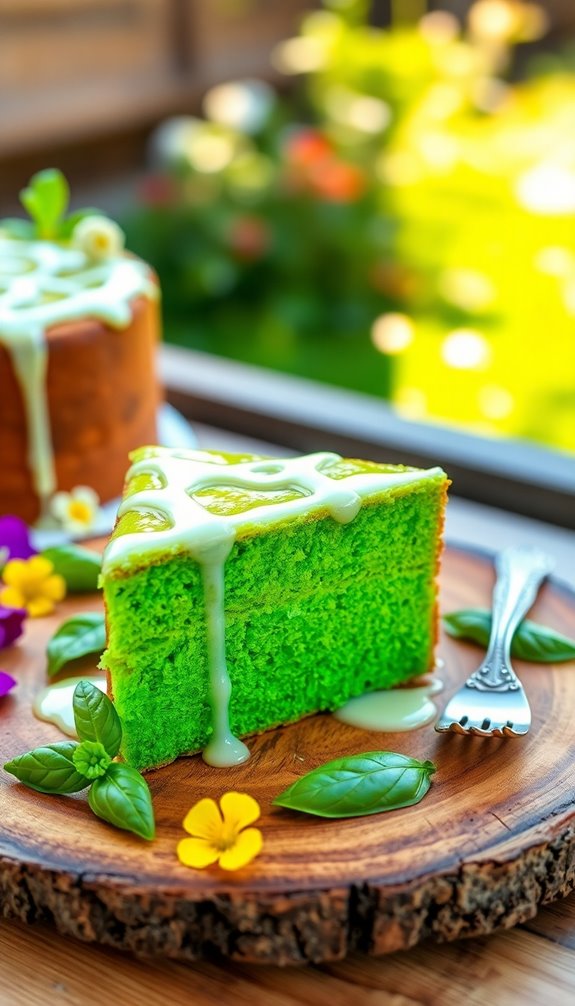
Basil cake is a dessert in which fresh basil is the main flavoring, and olive oil replaces some or all of the butter. An olive oil cake is a simple, dense-but-tender cake that uses oil for moisture rather than creamed butter. Adding basil to that base gives the cake a green color and an herbal, aromatic finish.
The concept started as a flavor experiment rather than a traditional recipe. Basil cake is an adaptation of herb-forward cakes that use aromatic greens in place of conventional flavorings, and it works best when you treat the basil as a primary ingredient rather than a garnish. Expect a cake that tastes fresh and grassy in a pleasant way, not one that tastes like pesto.
What Ingredients Do You Need for Basil Cake?
The core ingredients are fresh basil, extra virgin olive oil, all-purpose flour, sugar, eggs, and a small amount of leavening. Weighing the flour, sugar, oil, and basil gives you more consistent results than measuring by volume, especially with leafy herbs.
| Ingredient | Amount | Role in the cake |
|---|---|---|
| Fresh basil leaves | 180 g | Main herb flavor and green color |
| Extra virgin olive oil | 165 g | Moisture and fruity depth |
| All-purpose flour | 290 g | Structure |
| Sugar | 330 g | Sweetness and tender crumb |
| Large eggs | 4 | Binding and lift when whipped |
| Cornstarch, salt, baking powder | As your recipe specifies | Tenderness, balance, and rise |
| Heavy cream (for whipped topping) | 12 oz (1.5 cups) | Basil whipped cream base |
Choose fresh, bright green basil with no yellowing or wet spots. Use whole milk if you add any to the batter, because the extra fat helps keep the crumb moist. Pick a mild, fruity extra virgin olive oil so it supports the basil instead of competing with it.
Why Use Fresh Basil in Baking?
Fresh basil gives a brighter, more aromatic flavor than dried basil, which tastes more concentrated and earthy. Fresh leaves also give the batter its natural green color. If you substitute dried basil, use far less and expect a noticeably different flavor.
What Does the Research Say About Basil?
Basil leaves contain bioactive compounds that have drawn scientific interest. A review of basil leaves identifies rosmarinic acid as one of the most abundant polyphenols, and it is valued for its antioxidant activity (a review of basil leaves as a source of bioactive compounds).
Most of this evidence comes from laboratory and early-stage research. Another review of basil’s antioxidant, antimicrobial, and anticancer activity concludes that clinical-level studies are still needed to confirm the safety and role of these compounds in human health (a PubMed review of basil’s antioxidant, antimicrobial, and anticancer activity). A cake is still a dessert, so treat the basil as flavor first, not as a health food.
Also note that research on one basil type does not transfer neatly to others. A Nutrition Today summary points out that the number of clinical trials on specific health issues varies greatly among basil (Ocimum) species, which makes comparisons between species difficult (Nutrition Today’s brief summary of basil’s potential health benefits).
Can You Use Basil Seeds Instead of Leaves?
No, not in this recipe. Basil seeds are not conventionally eaten as food, even though the literature links them to nutritional value and properties such as antidiabetic and antioxidant activity (a review of basil seeds as a novel food). This recipe calls for basil leaves, and the seeds behave differently when cooked and baked.
Why Does Olive Oil Matter in Basil Cake?
Olive oil gives basil cake its moisture, tender crumb, and flavor base. A good extra virgin olive oil adds a fruity note that supports the herb. A harsh or stale oil can overpower the basil and make the cake taste bitter, so the oil is worth paying attention to.
You do not need the most expensive bottle. Look for a fresh oil with a clean, grassy or fruity aroma, and store it away from heat and light. If you prefer a milder cake, a lighter olive oil can work, though the flavor will be less pronounced.
For comparison, a traditional vanilla cake relies on butter for flavor and structure. If you want a butter-based cake for a side-by-side tasting, a simple, elegant vanilla cake recipe from Ina Garten is a useful baseline.
How Do You Make Basil Cake Step by Step?
The method has three parts: infuse the oil with basil, mix the batter, and bake until set. Work with room-temperature eggs so they whip to a good volume. Prepare your pan before you start, because the batter should go into the oven as soon as it is mixed.
- Prepare the oven and pan. Preheat the oven to 340°F. Grease a round or square cake pan well and line the bottom with parchment paper.
- Blend the basil into the oil. Combine 180 g of fresh basil leaves with 165 g of extra virgin olive oil and blend until smooth. For a warmer infusion, gently heat the oil until just warm, never simmering, then steep for about 10 minutes and let it cool.
- Mix the dry ingredients. Whisk 290 g of all-purpose flour with cornstarch, salt, and baking powder in a separate bowl so the leavening is evenly distributed.
- Whip the eggs and sugar. Beat 4 large eggs with 330 g of sugar until the mixture is pale yellow and thick enough to hold a ribbon when the beaters lift.
- Combine the wet mixture. Fold the cooled basil oil into the egg mixture until fully incorporated, making sure the oil is not warm enough to scramble the eggs.
- Add the dry ingredients. Fold the flour mixture in gradually, in two or three additions, stopping as soon as no dry streaks remain.
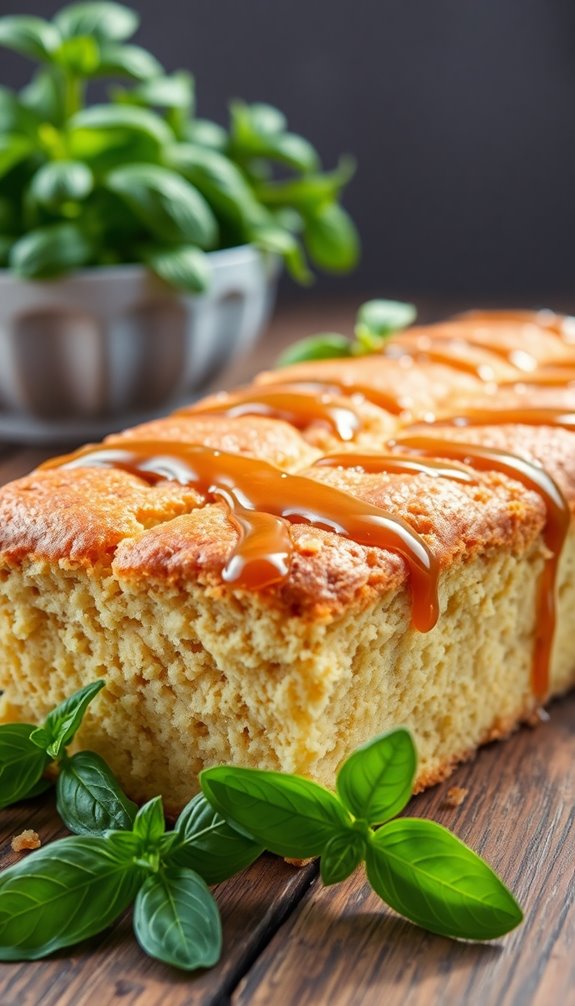
- Bake. Pour the batter into the prepared pan and bake. In a 9-inch round pan, plan on roughly 35 to 45 minutes, starting to check around 30 minutes. Rotate the pan halfway through for even color.
- Test for doneness. The top should be golden and spring back lightly, and a toothpick inserted into the center should come out clean or with a few moist crumbs.
- Cool completely. Let the cake cool in the pan for 10 to 15 minutes, then turn it onto a rack to cool fully before frosting or layering.
How Do You Make Basil Whipped Cream?
Basil whipped cream is made by steeping basil in warm heavy cream, straining it, chilling it, and whipping it to soft peaks. The steeping step pulls the herb flavor into the cream, so the leaves should be fresh and fully submerged.
- Blend the basil with sugar. Pulse about 1.5 cups of basil leaves with a few tablespoons of sugar until they form a wet pulp.
- Warm the cream. Heat 12 oz of heavy cream over medium heat with the basil mixture. Warm it until steaming, but do not let it boil.
- Steep. Remove the pan from the heat and let the cream sit for about 30 minutes so the basil flavor develops.
- Strain. Pour the cream through a fine-mesh strainer to remove the solids, pressing gently on the leaves to extract the liquid.
- Chill. Refrigerate the strained cream for at least 1 hour, and up to 12 hours, so it whips to a stable texture.
- Whip. Chill your bowl and beaters, then whip the cream to soft peaks. Taste and adjust the sweetness before using.
How Do You Assemble and Serve Basil Cake?
Serve basil cake with a generous layer of basil whipped cream and something bright, such as berries or lemon zest. The cream and fruit contrast the herb and the richness of the oil, which keeps each bite lively. Frost the cake only after it has cooled completely, or the cream will melt.
What Are Easy Layering Ideas?
For a layer cake, split the cooled cake horizontally and spread a thin layer of basil cream between the layers. Add macerated strawberries, which are berries tossed with a little sugar until they release their juices, then top with the remaining cream. Cut into the cake with a serrated knife for clean slices.
What Are Simple Serving Ideas?
For a rustic presentation, spoon the cake into bowls and top it with whipped cream and macerated strawberries. For individual portions, bake the batter in small pans or convert it using a standard method for turning a cake batter into cupcakes, which you can find in a guide to converting any cake recipe into cupcakes.
Finish with a light grating of lemon zest and a few small basil leaves. For more plating ideas, dessert garnish ideas that make plates look professional can help you add height and color without much extra work.
How Do You Fix Common Basil Cake Problems?
Most problems with basil cake come from oil that is too strong, basil that is not fresh, or underbaking. Use the checklist below before you change the recipe.
- The basil flavor is weak: Use fresh leaves at full strength, and make sure they are blended thoroughly into the oil.
- The flavor tastes bitter or grassy: Switch to a milder extra virgin olive oil, and avoid over-blending the basil, which can release bitter notes.
- The center is gummy: Bake longer and rely on the toothpick test instead of the clock, since oven temperatures vary.
- The cake is dense: Whip the eggs and sugar long enough to build volume, and fold the flour in gently.
- The cream is runny: Make sure the cream was chilled and the bowl was cold, and whip only to soft peaks before adding more sugar.
Frequently Asked Questions
Can I use dried basil in basil cake?
You can, but the result will taste different. Dried basil is more concentrated and earthy than fresh, so use much less and expect a flavor closer to a savory herb blend. The bright green color will also be missing, because dried leaves lose most of their color.
Does basil cake taste like pesto?
It should not. Pesto is savory and rich with garlic, cheese, and nuts, while basil cake is sweet and built on olive oil, eggs, and sugar. The basil adds a fresh, herbal top note that stands out against the sweetness.
Is basil cake healthy?
Basil cake is a dessert with a substantial amount of sugar and fat, so it is not a health food. Research on basil’s bioactive compounds, such as rosmarinic acid, is promising, but much of it is laboratory-based, and clinical-level studies are still needed. Enjoy it as a treat rather than counting on it for health benefits.
How long does basil cake keep?
Store the cake covered at room temperature for up to two days. If you have added whipped cream, refrigerate it and eat it within about two days, since dairy toppings spoil faster than the cake itself. Bring slices to room temperature before serving for the best texture.
Can I make basil cake dairy-free?
The cake itself can be made with a dairy-free recipe if you use plant-based milk and omit butter, since olive oil is already dairy-free. The whipped cream is harder to replace, and results depend on the brand of plant-based cream. Test a small batch before serving it to guests.
Conclusion
Basil cake is an olive oil cake that uses fresh basil for a bright, herbal flavor and a naturally green color. Use 180 g of basil, 165 g of extra virgin olive oil, and the other measured ingredients, bake at 340°F until a toothpick comes out clean, and finish with basil whipped cream. Treat the basil as a flavor choice rather than a health claim, and enjoy this unusual dessert for what it is.