
Last updated: · By Claire Dawson
An authentic kolache bread recipe is a soft, lightly sweet yeast dough enriched with milk, sugar, egg, and butter, then wrapped around a fruit or cheese filling and baked until golden. The dough does most of the work, so it needs a full rise and a tender crumb to deliver the classic texture. This guide covers the dough, fillings, shaping, baking, and storage, with sourced background on where the pastry comes from.
Key Takeaways
- Texas kolaches trace back to 19th-century Moravian immigrants, and their soft, yeasty dough encloses fruit, poppyseed, or sweet cheese fillings.
- Texas kolache dough is sweeter and fluffier than the rounder, flatter Czech versions, reflecting a Texas adaptation of the pastry.
- Sugar slows yeast in sweet dough, so expect a slower first rise than you would get with plain bread dough.
- Let the dough rise in a warm, draft-free spot until it doubles, which usually takes about 1 to 2 hours depending on your kitchen.
- Stored in an airtight container at room temperature, baked kolaches stay fresh for up to three days, and frozen kolaches keep for up to three months.
What Makes an Authentic Kolache Bread Recipe?
An authentic kolache is a sweet, yeast-raised pastry filled with fruit, poppyseed, or sweet cheese, and its soft dough is what defines it. The Southern Foodways Alliance traces Texas kolaches to 19th-century Moravian immigrants, describing their soft, yeasty dough as the vehicle for those fillings in its article Czech Out Texas Kolaches.
Authentic can mean two things. Atlas Obscura reports that Texas kolache dough is sweeter and fluffier than the rounder, flatter Czech versions in its piece How Texas Became an Unlikely Epicenter for Czech Pastries. This recipe follows the soft, sweet Texas-style dough that most American home bakers know. If you want the broader story of the pastry, read our guide to what a kolache is and where it comes from.
Ingredients for Soft, Sweet Kolache Dough
A basic kolache dough needs flour, milk, yeast, sugar, egg, butter, and salt. The ratios control how soft, sweet, and tender the finished bread turns out, so measure carefully. This recipe makes about 12 to 16 kolaches.
Yeast is a single-celled fungus that feeds on sugar and releases carbon dioxide gas, which is what makes bread dough rise. Gather these ingredients before you start:
- 1 cup whole milk, warmed to about 105°F to 110°F
- 1/3 cup granulated sugar
- 1 packet (2 1/4 teaspoons) active dry yeast
- 1 large egg, at room temperature
- 1/2 cup (1 stick) unsalted butter, softened
- 3 3/4 to 4 1/4 cups all-purpose flour, plus extra for dusting
- 3/4 teaspoon salt
- Filling of your choice, about 1 tablespoon per kolache
Whole milk adds richness and moisture, which helps keep the crumb soft. Fresh yeast matters more than any other ingredient, so check the expiration date before you measure.
How to Make Kolache Dough Step by Step
Warm the milk, activate the yeast, mix the dough, knead it until smooth, and let it rise until doubled. Working in this order gives you a dough that is easy to shape and bakes up light.
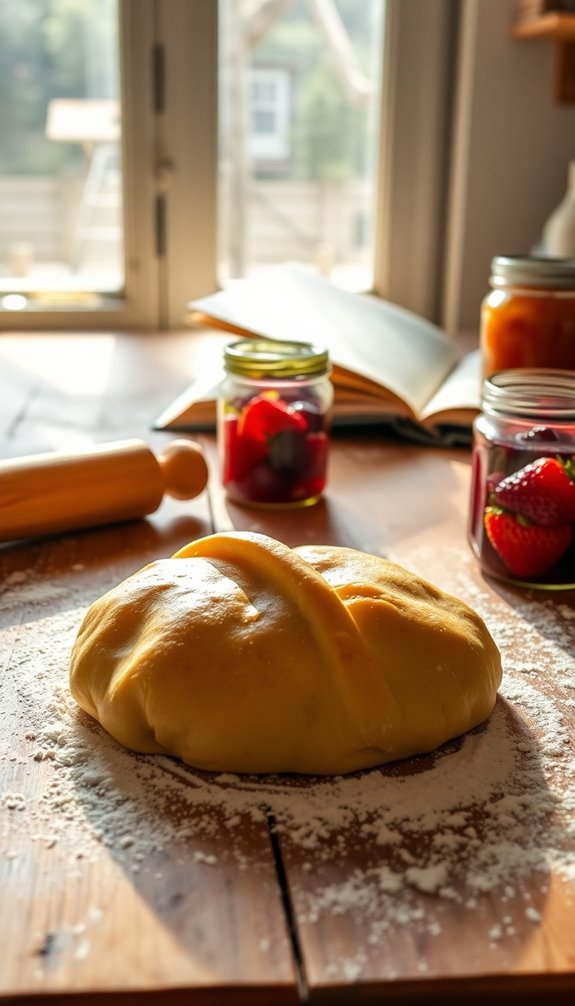
- Warm the milk to 105°F to 110°F, then stir in 1 tablespoon of the sugar and the yeast. Let it rest 5 to 10 minutes until foamy. If it does not foam, the yeast is not active, so start over with fresh yeast.
- In a large bowl, whisk the flour and salt together.
- Stir the remaining sugar, the egg, and the softened butter into the yeast mixture.
- Pour the wet mixture into the flour and stir until a shaggy dough forms.
- Knead the dough until it is smooth, elastic, and slightly tacky, about 8 to 10 minutes by hand.
- Place the dough in a greased bowl, cover it with a damp towel, and let it rise in a warm spot until doubled.
- Punch the dough down gently, then divide and shape it.
How Long Should You Knead Kolache Dough?
Knead the dough for about 8 to 10 minutes by hand, or about 5 to 6 minutes in a stand mixer on low speed with the dough hook. The dough is ready when it is smooth, springs back when pressed, and stretches thin without tearing.
- Expect the dough to feel slightly tacky, not sticky. Add flour only one tablespoon at a time.
- Use the heel of your hand to push the dough away from you, then fold it back and turn it a quarter turn.
- Under-kneaded dough tends to bake up dense, so keep going until the surface looks smooth.
How to Get Kolache Dough to Rise Properly
Give the dough a warm, draft-free spot and let it double, which usually takes about 1 to 2 hours. Sweet dough rises more slowly than plain bread dough, so plan for extra time rather than rushing it.
A 2021 explainer from Iowa State University Extension and Outreach notes that during proofing, yeast ferments the dough and generates gas, and a second rise gives bread more texture and flavor, in its post Yeast Bread Baking: A Kitchen Science Drama. Sugar also affects yeast directly. A study in PubMed Central reports that yeast in high-sugar, semi-solid dough produces glycerol to offset osmotic stress, and reduced glycerol output impairs fermentation in both bread and sweet dough (see the full research article). In practice, that means a sweet dough needs a little more patience.
Use these practical tips to create a good rising environment:
- Aim for a dough temperature around 75°F to 80°F.
- Place the covered bowl in an oven with only the light on, or on top of the warm fridge, but never turn the oven on to heat the dough.
- Cover the dough so it does not form a skin, which can dry the surface and affect the final texture.
For more on how to get a tender crumb, see our tips for soft, fluffy kolache dough texture.
Choosing Fillings for Your Kolaches
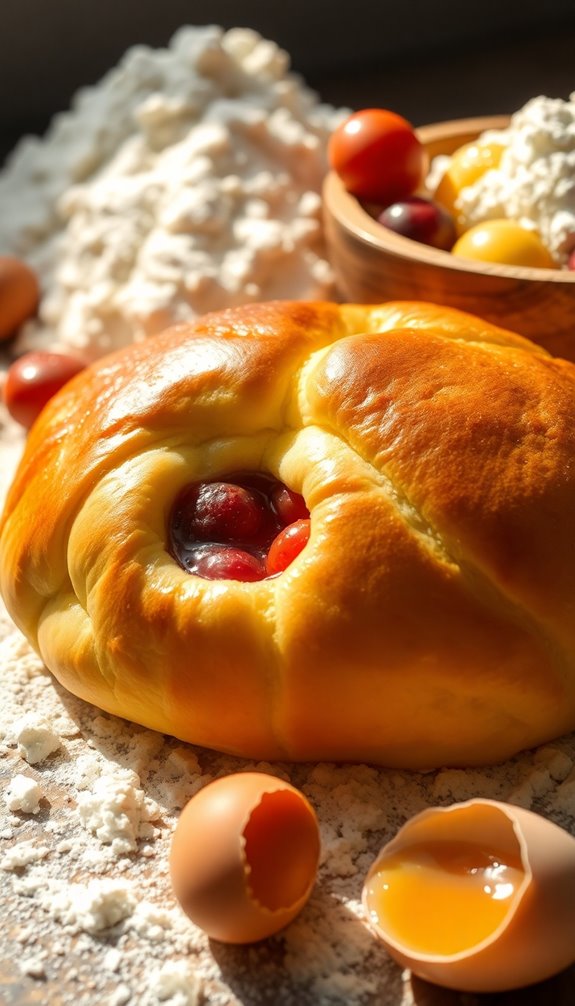
Traditional kolache fillings are fruit, poppyseed, and sweet cheese, and each one needs slightly different handling to keep it from leaking or soaking the dough. Choose thick fillings and measure them so the seams can close.
| Filling | Flavor | Preparation tip |
|---|---|---|
| Apricot or cherry fruit | Sweet and tart | Use thick preserves or cooked fruit, and drain any excess juice so the dough stays firm. |
| Poppyseed | Nutty and earthy | Choose a thick, prepared poppyseed filling so it does not seep through the dough. |
| Sweet cheese or cream cheese | Rich and creamy | Beat softened cream cheese with sugar, an egg yolk, and a little vanilla, then chill it before filling. |
| Pecan or walnut | Buttery and crunchy | Mix chopped nuts with brown sugar and cinnamon. For a related recipe, see this kolache nut roll recipe. |
Stick to about 1 tablespoon of filling per kolache. Too much filling makes the seams hard to pinch closed and causes leaks in the oven.
How to Shape and Fill Kolaches
Divide the dough, flatten each piece, add a spoonful of filling, and pinch the edges closed. Let the shaped kolaches rise again until they look puffy, which typically takes 30 to 45 minutes.
- Divide the dough into 12 to 16 equal pieces, about the size of a golf ball.
- Flatten each piece into a disc about 4 inches across, keeping the center slightly thicker than the edges.
- Add about 1 tablespoon of filling to the center.
- Gather the edges up over the filling and pinch the seams tightly so nothing leaks out.
- Place each kolache seam-side down on a parchment-lined baking sheet, about 2 inches apart.
- Cover loosely and let them rise until puffy before baking.
How to Bake Kolaches to a Golden Finish
Bake kolaches at 375°F (190°C) until golden brown, which usually takes 12 to 15 minutes. Position the rack in the center of the oven and rotate the pan halfway through for even color.
Watch the color rather than the clock, since ovens vary. Pull the kolaches when the tops and edges are golden and the bottoms are light brown. Brush the warm tops with melted butter for a soft, shiny finish, then transfer them to a rack to cool.
Troubleshooting Kolache Dough and Baking Problems
Most problems with kolache dough come down to yeast, kneading, temperature, or filling amounts. Check these common issues if your results fall short.
- Dense kolaches: Test the yeast in warm milk with sugar. If it does not foam within about 10 minutes, replace it. Dense bread can also mean under-kneaded dough or a rise that was too cool.
- Dough is too sticky: Add flour one tablespoon at a time, and avoid adding too much at once.
- Filling leaks: Use less filling, drain fruit well, and pinch the seams tightly before the second rise.
- Bottoms bake too dark: Use a light-colored baking sheet and set the rack in the center of the oven.
- Kolaches are pale: Bake a few minutes longer, and check that your oven is fully preheated.
Storing and Reheating Kolaches
Store baked kolaches in an airtight container at room temperature for up to three days. For longer storage, freeze them, which keeps their texture for up to three months.
- Cool the kolaches completely before storing them so condensation does not make the dough soggy.
- Wrap each kolache individually in plastic wrap, then place them in a freezer-safe bag.
- To thaw, leave them in the refrigerator overnight.
- Reheat thawed kolaches in a 350°F oven for about 10 minutes until warm and soft.
Kolache Variations and Comparisons
Once you have mastered the basic dough, you can try new fillings or compare kolaches with other sweet pastries. Savory options, such as cream cheese with jalapeño, work well with the same dough. If you want to understand how kolaches differ from Danish pastry, read our comparison of kolache and Danish.
Serving Kolaches for Gatherings
Kolaches suit breakfasts, brunches, and family celebrations because they are easy to hold and share. Serve them warm or at room temperature, and offer a mix of fruit and cheese fillings so guests can choose.
For a make-ahead option, bake the kolaches a few hours before your event and keep them loosely covered. Reheat them briefly before serving to restore their softness.
Frequently Asked Questions
Can I Make Kolache Dough the Night Before?
Yes, you can refrigerate the dough after the first rise, covered tightly, for up to 24 hours. Let it sit at room temperature for about an hour before shaping so it softens enough to work with. Allow extra time for the second rise after shaping.
Why Is My Kolache Dough Dense?
Dense dough usually results from inactive yeast, under-kneading, or a rise in a cold spot. Check that your yeast foams in warm milk, knead until the dough is smooth and elastic, and give it a warm place to double. Sweet dough can also rise more slowly, so patience matters.
Can I Use Instant Yeast Instead of Active Dry Yeast?
Yes, you can use instant yeast in the same amount. Many bakers mix it directly into the flour rather than proofing it first, but warming the milk still helps it work well. Keep the same rise times and check the dough for doubling.
How Long Do Kolaches Stay Fresh?
Kept in an airtight container at room temperature, kolaches stay fresh for up to three days. Frozen and wrapped well, they keep for up to three months. Reheat them gently to restore their softness.
Are Kolaches the Same as Danish Pastries?
No, they are different pastries. Kolaches are made from a soft, sweet yeast dough with a filling in the center, while Danish dough is typically laminated with layers of butter. The shape and texture of the two pastries differ as well.
Conclusion
Mastering an authentic kolache bread recipe comes down to a soft, sweet dough that rises fully, a filling that stays inside the seams, and a bake that turns golden. Start with a warm, active yeast, knead until smooth, and give the dough time to double. With those basics, you can make kolaches that carry both Texas-style softness and Czech heritage.