

To bake perfectly even cookies every time, start by understanding your oven’s quirks, like hot spots. Preheat it properly and position your baking sheets in the center for even heat. Choose the right ingredients, like a mix of granulated and brown sugar for flavor and moisture. Measure flour accurately and avoid overcrowding your sheets. Chilling the dough helps maintain shape, ensuring thick, chewy cookies. You’ll find even more tips for cookie success if you keep going.
The Science of Even Baking: Understanding Your Oven
When it comes to baking cookies, understanding your oven is essential for achieving that perfect batch. Every oven has its quirks, including oven hot spots that can lead to uneven baking. These areas may cook your cookies faster or slower, so knowing where they’re helps. To combat this, you can rotate your baking sheets halfway through the baking time. Good air circulation is also vital for even baking. Make sure to space your cookie sheets apart, allowing hot air to flow freely around each tray. If you overcrowd the oven, you’ll end up with cookies that are undercooked on one side and overcooked on the other. Additionally, be mindful of baking temperature variations, as they can drastically affect your cookie results. Remember, using gluten-free ingredients can also impact baking times and the final texture of your cookies, as excessive baking powder can lead to unwanted puffiness.
Choosing the Right Ingredients for Perfect Cookies
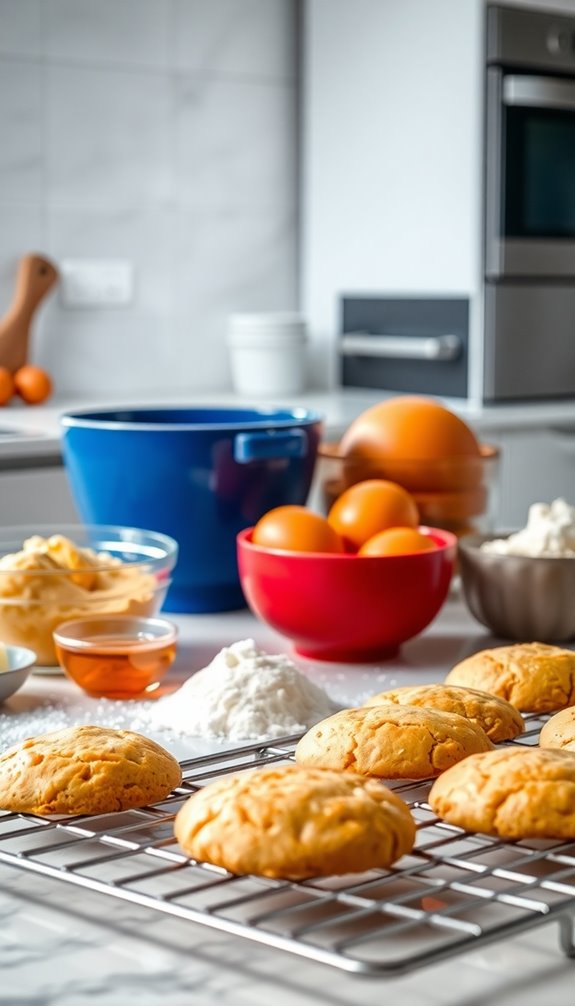
The foundation of perfect cookies lies in choosing the right ingredients. Quality matters, so always select fresh items to enhance flavor profiles.
Pay attention to ingredient ratios for a balanced texture, ensuring your cookies are neither too chewy nor too crumbly. Here are four key points to keep in mind:
- Flour Type: Use all-purpose flour for versatility or cake flour for lighter cookies. Using the right flour type can significantly impact the final texture.
- Sugars: Combining granulated and brown sugar offers a rich flavor and moisture.
- Fats: Butter provides flavor; consider using allergen substitutes like coconut oil for dairy-free options.
- Add-ins: Select complementary flavors—like chocolate chips and nuts—to elevate your cookies. Incorporating cornstarch for added structure helps prevent cookies from going flat.
With these tips, you’ll achieve a delightful cookie every time!
Common Baking Mistakes and How to Avoid Them

Baking cookies can be a rewarding experience, but it’s easy to make mistakes that ruin your efforts. One common issue is inaccurate measuring flour; always spoon it into the cup and level it off for precision. When baking at high altitude, proper adjustments to flour and sugar can help prevent cookies from spreading excessively. Additionally, using a gluten-free flour blend ensures that your cookies maintain the right texture and flavor.
Another mistake is incorrect baking temperature; preheat your oven properly to guarantee even cooking. Pay attention to cookie spacing on the baking sheet; if they’re too close, they might merge into one another. Consider your oven placement as well; positioning your tray in the center helps maintain consistent heat. Finally, use proper mixing techniques—overmixing can lead to tough cookies. Remember that precise measurements are crucial for achieving the desired texture and flavor.
Once baked, transfer your cookies to cooling racks to prevent sogginess. Avoid these pitfalls, and you’ll enjoy perfect cookies every time!
Adjusting for Oven Variability: Tips for Consistency
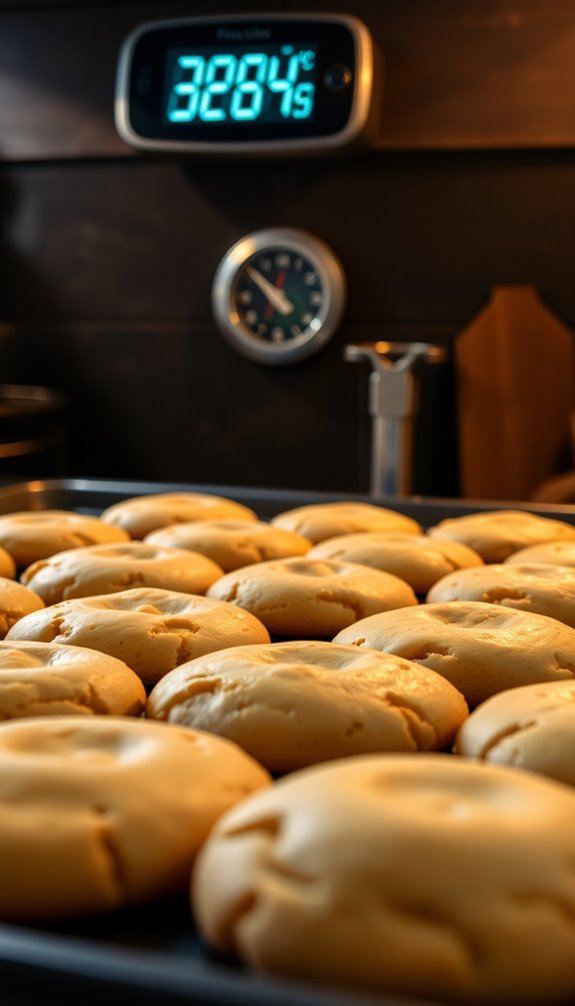
Although every oven is different, adjusting for variability can help you achieve consistent cookie results. Here are some tips to keep in mind:
- Oven Calibration: Regularly check your oven’s calibration to guarantee accurate temperatures, as temperature fluctuations can lead to uneven baking. Accurate measurements, including weight measurements, can also ensure consistency in your cookie recipes.
- Baking Sheet Placement: Position your baking sheets in the center of the oven for ideal heat distribution, avoiding the sides where cooking might be uneven.
- Oven Rack Positioning: Use the middle rack for most cookies to prevent burning on the top or bottom.
- Cookie Dough Chilling: Chill your cookie dough before baking. This helps maintain shape and consistency, especially in ovens prone to heat fluctuations. Additionally, monitoring cookies closely can help you achieve a perfect balance between crispy edges and chewy centers.
Enhancing Flavor and Texture: Secrets to Cookie Perfection
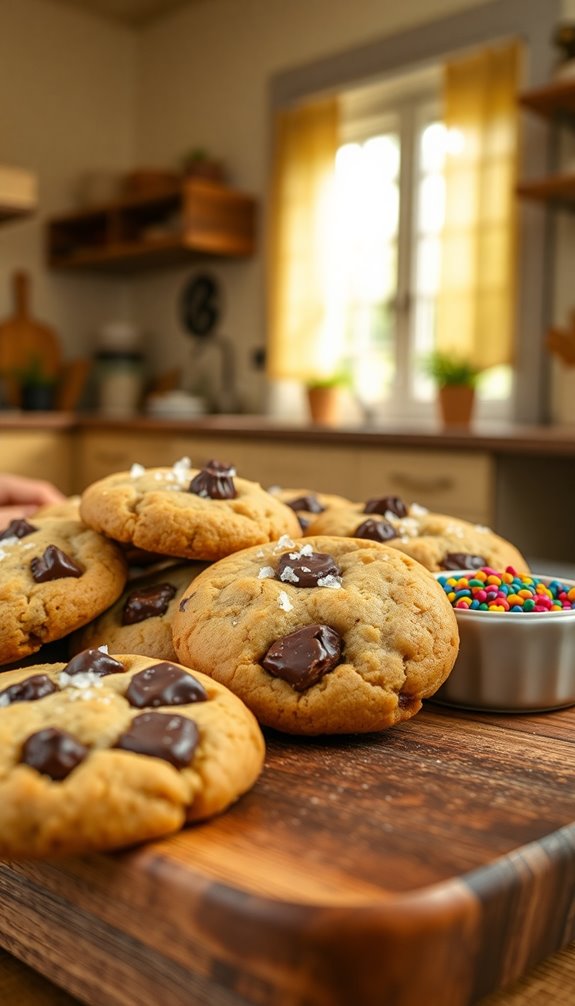
To elevate your cookies’ flavor and texture, it’s essential to focus on quality ingredients and thoughtful techniques. Start with high-quality butter and vanilla for rich cookie flavors.
Pay attention to ingredient ratios; a balance of sugars can enhance sweetness while maintaining chewiness. Use texture tips like chilling your dough, which helps prevent spreading and creates a thicker cookie.
Balancing sugars and chilling your dough enhances sweetness and thickness, ensuring perfectly chewy cookies every time.
Experiment with baking techniques, such as rotating the tray halfway through baking for even results.
Once your cookies are out of the oven, implement proper cooling methods. Let them cool on the baking sheet for a few minutes before transferring to a wire rack. This preserves the perfect texture while allowing the flavors to meld beautifully.
Enjoy your cookie perfection!
Conclusion
Now that you’ve mastered the art of even baking, you’ll find that perfect cookies might just become your signature treat. It’s funny how a little science, the right ingredients, and avoiding common mistakes can lead to such delicious outcomes. You might even surprise yourself when you bake a batch for friends, only to realize they’re asking for your secret. Remember, every cookie tells a story—make yours unforgettable with consistency and a touch of love!