
Last updated: · By Claire Dawson
To make peanut butter fudge with sweetened condensed milk, combine 2 cups of smooth peanut butter and one 14 oz can of sweetened condensed milk, heat them over low heat or in the microwave until smooth, spread the mixture in a parchment-lined 8- or 9-inch pan, and refrigerate it for at least 2 hours until firm. Sweetened condensed milk is milk with most of its water removed and sugar added, which makes it thick, sweet, and able to firm up when chilled. This guide covers ingredients, both cooking methods, fixes for soft or grainy fudge, storage, and allergy safety.
Key Takeaways
- A standard batch uses 2 cups of smooth peanut butter and one 14 oz can of sweetened condensed milk, and that ratio is the foundation of this recipe.
- Use sweetened condensed milk, not evaporated milk, because evaporated milk is unsweetened and will not produce the same sweetness or set.
- Chill the fudge for at least 2 hours before cutting so it firms enough to hold clean squares.
- Peanuts are one of the nine major food allergens the U.S. Food and Drug Administration (FDA) lists, so any batch containing peanut butter needs an allergy warning.
- Store the fudge in an airtight container in the refrigerator, where it keeps for about 2 to 3 weeks.
What Ingredients Do You Need for Peanut Butter Fudge?
You need two core ingredients: smooth peanut butter and sweetened condensed milk. Vanilla extract and mix-ins such as chocolate chips are optional additions that change flavor and texture without changing the basic method.
- 2 cups smooth peanut butter
- One 14 oz can sweetened condensed milk
- 1 teaspoon vanilla extract (optional)
- Mix-ins such as semi-sweet or white chocolate chips, or a pinch of flaky sea salt for topping (optional)
- A parchment-lined 8- or 9-inch square pan
Does the Type of Peanut Butter Matter?
Smooth peanut butter gives the most even, creamy texture. Crunchy peanut butter works if you want bits of peanut in the fudge, but the result will be less uniform. Natural peanut butter with separated oil can make the fudge greasy or soft, so stir it thoroughly before measuring.
Why You Need Sweetened Condensed Milk
Sweetened condensed milk supplies both the sugar and the thick body that help the fudge set. Evaporated milk is unsweetened and has a different consistency, so it will not replace it in this recipe. If you want a dairy-free version, look for a sweetened condensed plant-based milk, but expect the sweetness and set to differ.
How to Make Peanut Butter Fudge
To make peanut butter fudge, heat the peanut butter and condensed milk together until smooth, then chill the mixture for at least 2 hours. The stovetop method gives you more control over heat, and the microwave method is faster.
- Line an 8- or 9-inch square pan with parchment paper, leaving overhang on two sides so you can lift the fudge out later.
- Combine 2 cups of smooth peanut butter and one 14 oz can of sweetened condensed milk in a saucepan.
- Heat over low heat for about 5 to 7 minutes, stirring constantly, until the mixture is warm, smooth, and fully combined.
- Remove the pan from the heat and stir in 1 teaspoon of vanilla extract if you are using it.
- Spread the mixture evenly into the lined pan with a spatula.
- Refrigerate for at least 2 hours, until firm to the touch.
- Lift the fudge out with the parchment, cut into squares with a warm knife, and serve.
Microwave Method
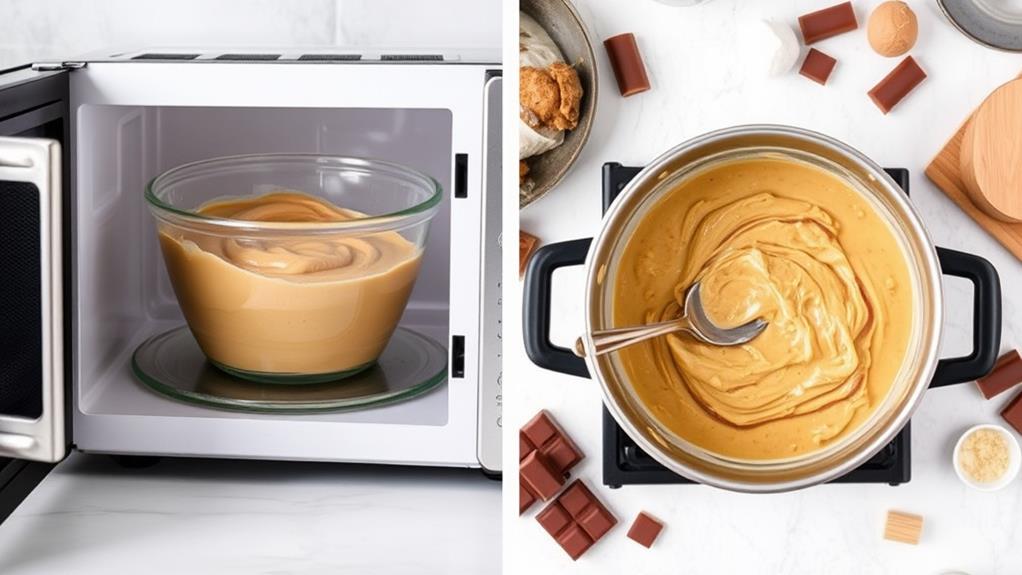
The microwave method works well when you want fudge in less time, but it requires close attention. Combine the peanut butter and condensed milk in a microwave-safe bowl, then heat in 30-second intervals, stirring well after each one, until the mixture is smooth. Expect the whole process to take about 3 to 4 minutes, and stop as soon as the mixture is smooth to avoid overheating.
Stovetop Method
The stovetop method gives you a steadier, more controlled heat. Keep the burner on low and stir constantly so the mixture does not scorch on the bottom of the pan. Once the mixture is smooth, move on to spreading and chilling right away.
Microwave vs. Stovetop: Which Method Should You Use?
Use the microwave if you are short on time and comfortable watching the bowl closely, and use the stovetop if you want more control over heat. Both methods produce creamy fudge that sets in the refrigerator, so the choice mostly depends on your schedule and equipment.
| Factor | Microwave | Stovetop |
|---|---|---|
| Active cooking time | About 3 to 4 minutes | About 5 to 7 minutes |
| Heat control | Less control; heat in short intervals | More control over low, steady heat |
| Risk to watch for | Overheating and uneven melting | Scorching if you stop stirring |
| Typical texture | Can be slightly softer | Often firmer when chilled |
| Cleanup | One microwave-safe bowl | One saucepan and a spatula |
How Long Does Peanut Butter Fudge Take to Set?
Peanut butter fudge needs at least 2 hours in the refrigerator to set enough for clean cuts. Longer chilling, such as overnight, gives a firmer result if you plan to cut it into small pieces or stack it for gifting.
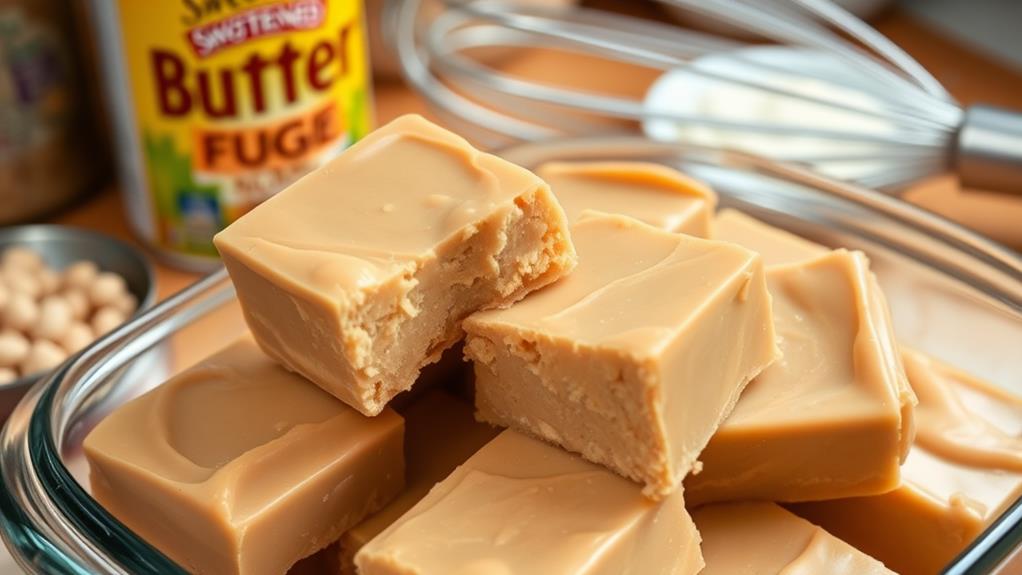
Spread the mixture evenly before it chills so the squares come out the same thickness. When you are ready to cut, run a knife under hot water, dry it, and cut in one firm motion. Wipe the blade between cuts to keep the edges neat.
Why Is My Peanut Butter Fudge Too Soft or Grainy?
Most soft or grainy fudge comes from the wrong milk, an off ratio, overheating, or peanut butter that has separated. Checking these four points usually solves the problem.
What If My Fudge Is Too Soft After Chilling?
First, confirm you used sweetened condensed milk and not evaporated milk. Then check the ratio: 2 cups of peanut butter to one 14 oz can of condensed milk is the ratio this recipe uses. If the fudge is still soft, chill it for at least 2 hours longer before cutting, since the surface can feel soft even when the center is setting.
Why Is My Fudge Grainy or Oily?
Graininess usually comes from overheating or from using a peanut butter with separated oil. Cook over low heat, stir constantly, and stir natural peanut butter thoroughly before you measure. Once the mixture is smooth, stop heating it right away to keep the texture even.
How Should You Store Peanut Butter Fudge?
Store peanut butter fudge in an airtight container in the refrigerator for about 2 to 3 weeks. For longer storage, freeze it in layers separated by parchment or wax paper for up to about 3 months.
- Keep the fudge in an airtight container so it does not pick up odors from the fridge.
- Layer pieces with parchment or wax paper to prevent them from sticking together.
- Freeze in a freezer-safe container, and wrap it well to limit freezer odors.
- Thaw frozen fudge in the refrigerator overnight to keep the texture creamy.
Room temperature is fine for a short time, but the fudge will soften faster. If you prepare sweets ahead for events, see these make-ahead desserts you can store and freeze for more ideas.
Is Peanut Butter Fudge Safe for People With Allergies?
No, peanut butter fudge is not safe for people with peanut allergies, and any batch that contains peanut butter should be labeled as containing peanuts. Peanuts are one of the nine major food allergens listed by the FDA’s guidance on food allergies.
If you buy ingredients, check the packaging. Under federal rules, packaged foods with a “Contains” statement must name the food source of each major allergen, which makes it easier to spot peanut ingredients in store-bought products, as explained in the FDA’s advice on reading food labels. A peer-reviewed review hosted by the National Library of Medicine describes how the Food Allergy Labeling and Consumer Protection Act (FALCPA) requires packaged foods to declare peanut and other major allergens in the review of food allergy labeling and exposure risks.
Federal guidance from FoodSafety.gov’s food allergy awareness resource notes that the original eight major allergens accounted for about 90 percent of food allergies and serious reactions in the U.S., and that sesame became the ninth major allergen in 2023. When you serve fudge, tell guests what it contains and keep it separate from other treats if someone has an allergy.
What Are Good Variations of Peanut Butter Fudge?
The most common variations add chocolate, salt, or crunch to the base recipe without changing the ratio. Stir mix-ins in after you remove the mixture from the heat so they keep their shape.
- Chocolate swirl: Melt semi-sweet or white chocolate chips and swirl them into the top before chilling.
- Salty-sweet: Sprinkle flaky sea salt over the surface before the fudge sets.
- Crunchy texture: Use crunchy peanut butter, or fold in chopped roasted peanuts.
- Vanilla boost: Add 1 teaspoon of vanilla extract for a rounder flavor.
If you enjoy chocolate and nut combinations, try this chocolate peanut butter fudge made with condensed milk or this almond bark fudge with condensed milk for a different take on the same technique.
Can You Make Dairy-Free Peanut Butter Fudge?
You can try a sweetened condensed plant-based milk in place of dairy condensed milk. Because each product differs in sugar and thickness, the fudge may be softer or sweeter, so check the set after the full 2-hour chill.
How Do You Serve and Gift Peanut Butter Fudge?
Serve peanut butter fudge in small squares on a platter, and pair it with fresh fruit or a scoop of vanilla ice cream for contrast. For gifts, wrap individual pieces in parchment and place them in a small box or clear bag. Simple garnishes help the presentation, and you can find more ideas in these dessert garnish ideas for a polished look.
Frequently Asked Questions
Can I use evaporated milk instead of sweetened condensed milk?
No, evaporated milk is unsweetened, so it will not give the same sweetness or thick set. Use sweetened condensed milk for this recipe. If you use the wrong milk, the fudge is likely to stay soft even after chilling.
Can I make peanut butter fudge without a microwave?
Yes, the stovetop method works well without a microwave. Heat the peanut butter and condensed milk over low heat, stirring constantly, until smooth. Then spread the mixture in a lined pan and chill it for at least 2 hours.
Why does peanut butter fudge need to chill?
Chilling allows the mixture to firm up so it holds its shape when cut. Cutting too early usually leads to smeared, soft edges. Plan for at least 2 hours in the refrigerator before slicing.
Can I use natural peanut butter?
You can, but stir it thoroughly first because separated oil can make the fudge greasy or soft. Smooth, stabilized peanut butter gives the most consistent results. If you use natural peanut butter, keep the heat low and stir constantly.
Conclusion
Peanut butter fudge with sweetened condensed milk needs only a few ingredients, a short cooking step, and at least 2 hours to set. Use the 2 cups of peanut butter and one 14 oz can of condensed milk ratio, choose the stovetop or microwave method, and label the fudge clearly if it contains peanuts. Store it airtight in the refrigerator, and you will have a reliable homemade treat for any occasion.