
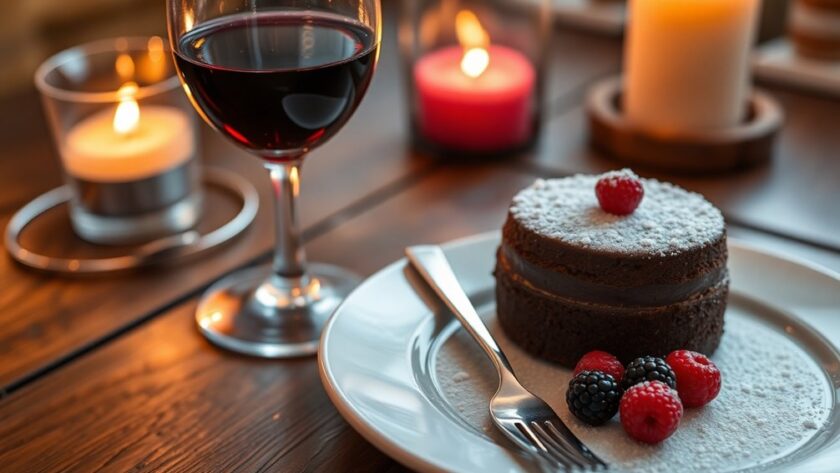
To pair wine with dessert like a pro, start by understanding your dessert’s sweetness level. Choose bold wines for rich, sweet desserts, while lighter, fresher wines work for delicate flavors. Classic pairings, like Cabernet Sauvignon with chocolate, never fail. Don’t shy away from experimenting—try unusual combos or seasonal ingredients. Avoid common pitfalls like overly sweet wines or mismatched textures. Want to enhance your pairing skills even more? There’s a lot more to discover!
Understanding the Sweetness of Your Dessert

When you’re pairing wine with dessert, understanding the sweetness of your dish is essential. Different desserts have varying sugar levels, and knowing these can help you choose the right wine.
Understanding the sweetness of your dessert is key to choosing the perfect wine pairing.
For example, a rich chocolate cake typically has higher sugar levels, which calls for a wine that can match its intensity. Ina Garten’s German Chocolate Cake is a perfect illustration of this, combining rich chocolate and coconut-pecan flavors that warrant a bold wine pairing. On the other hand, a light fruit tart has more subtle sweetness, allowing for a wine with a fresher flavor profile. The natural sweetness of desserts can be enhanced by seasonal ingredients that highlight their flavors.
Pay attention to how the dessert’s flavors interact with the wine’s characteristics; a balanced pairing enhances both. If you choose a sweet wine, it should be sweeter than the dessert to avoid overpowering it. This balance creates a delightful tasting experience you won’t forget, particularly when considering the flavors of fresh peaches that can elevate your dessert pairing.
Choosing the Right Wine Styles for Different Flavors

To enhance your dessert experience, you should choose wine styles that complement the specific flavors of your dish.
For fruity desserts, opt for a wine with bright acidity, like a Riesling or Moscato, to balance sweetness and elevate those flavor profiles. A delightful addition to these desserts can be a nut filling, which often adds a rich texture and flavor that pairs beautifully with fruity wines. The nutty baklava elements in Baklava Cheesecake create a harmonious connection with these wine choices.
If you’re enjoying chocolate, consider a rich Port or a bold Cabernet Sauvignon; their depth will enhance the cocoa notes.
For creamy desserts, a luscious Sauternes can work wonders, harmonizing with the dish’s richness while providing invigorating acidity. Remember, the key is to match the wine’s sweetness and acidity to your dessert’s flavors, ensuring a delightful pairing that enhances each bite. An indulgent dessert like Baklava Cheesecake can be beautifully complemented by these wine choices.
Trust your palate, and enjoy the exploration!
Classic Pairings That Never Fail
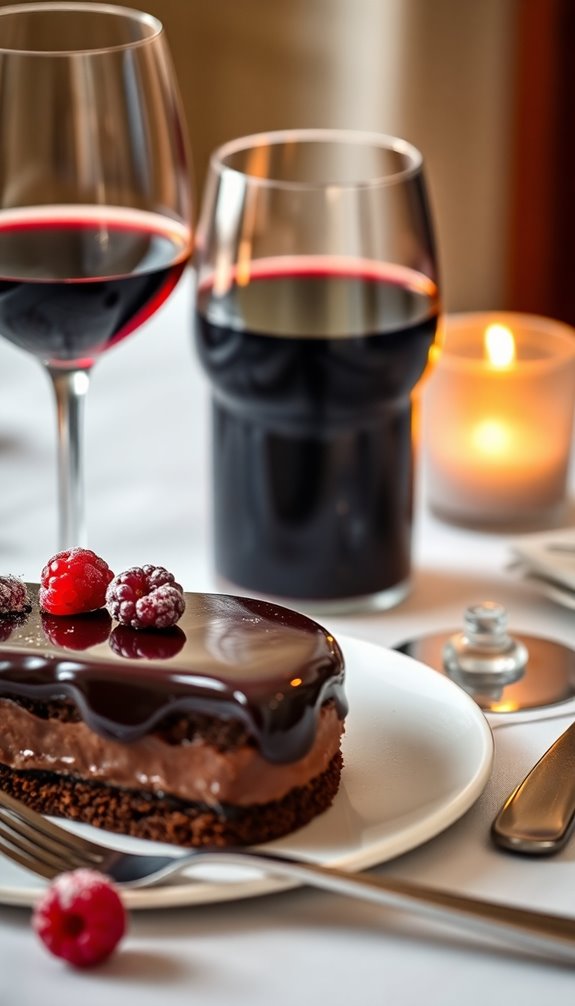
Some wine and dessert combinations have stood the test of time, delivering delightful results every time.
For chocolate delights, a rich Cabernet Sauvignon pairs beautifully, enhancing the deep flavors.
If you’re serving fruit tarts, consider a crisp Sauvignon Blanc that complements the tartness without overshadowing it.
When it comes to creamy mousses, a luscious dessert wine like Sauternes works wonders, balancing the creaminess with its sweetness.
For nutty confections, opt for a nutty Madeira or a robust Tawny Port, which harmonizes with the earthy notes of the nuts.
Sticking to these classic pairings guarantees your dessert and wine elevate each other, making for an unforgettable dining experience.
Trust these timeless options, and you can’t go wrong!
Tips for Experimenting With Unconventional Combos

While classic pairings offer a reliable foundation, stepping outside the norm can lead to delightful surprises. Embrace the adventure of experimenting with unconventional combos by considering these tips:
- Flavor Contrasts: Try a sweet dessert with a dry red wine to create an unexpected yet intriguing balance.
- Texture Balance: Pair a creamy dessert, like panna cotta, with a bubbly sparkling wine for a revitalizing contrast.
- Seasonal Ingredients: Use seasonal fruits in desserts and match them with wines that complement their unique flavors.
- Herbs and Spices: Incorporate herbs like basil or spices like cardamom in your dessert and find a wine that echoes those notes.
Additionally, consider pairing your gluten-free desserts with wines that enhance their unique flavors for a delightful experience.
These tips will inspire you to discover new dimensions in wine and dessert pairings!
Common Mistakes to Avoid When Pairing Wine and Dessert
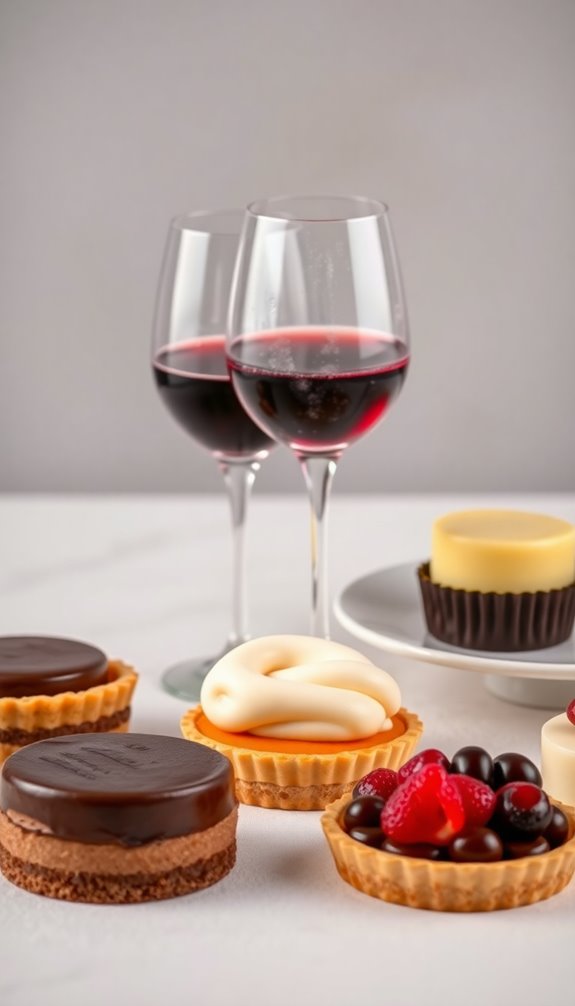
Exploring unconventional wine and dessert pairings can be a thrilling journey, but it’s easy to stumble into common pitfalls. One major mistake is choosing an overly sweet wine without considering wine balance. Make sure your wine’s sweetness complements, rather than overwhelms, your dessert.
Pay attention to acidity levels; a higher acidity can cut through rich desserts, enhancing the overall experience. For instance, pairing a dessert like creamy panna cotta with a wine that has balanced acidity can elevate the tasting notes beautifully. Additionally, a well-crafted Yule Log can also benefit from such thoughtful pairings, as its rich chocolate and whipped cream filling demand careful consideration.
Don’t forget dessert texture; a creamy dessert might pair better with a smooth wine, while a crunchy treat might call for something crisp.
Also, consider temperature contrasts; a chilled wine can elevate a warm dessert. Finally, harmonize flavor profiles; mismatched flavors can clash, ruining the harmony you aim for. Additionally, incorporating healthier ingredients in your dessert can create a more balanced pairing with your wine.
Avoiding these mistakes can elevate your dessert pairing game markedly.
Conclusion
Pairing wine with dessert doesn’t have to be intimidating. By understanding your dessert’s sweetness and flavor profile, you can choose the perfect wine to elevate your experience. Remember, classic pairings often hit the nail on the head, but don’t shy away from experimenting with new combinations. Just steer clear of common pitfalls, and you’ll be well on your way to impressing your guests. So, go ahead and raise a glass to sweet success!