Gluten-free baking can be simple and delicious once you grasp the basics. Start by understanding different gluten-free flours like almond, coconut, and oat. Combine flours for better texture, and don’t forget binders like xanthan gum. Measure accurately to avoid mishaps, and watch liquid ratios carefully. To elevate your baked goods, try sweeteners, spices, and seasonal ingredients. There are plenty of tips and recipes to explore that will make your gluten-free baking journey enjoyable and rewarding.
The Basics of Gluten-Free Baking: What You Need to Know
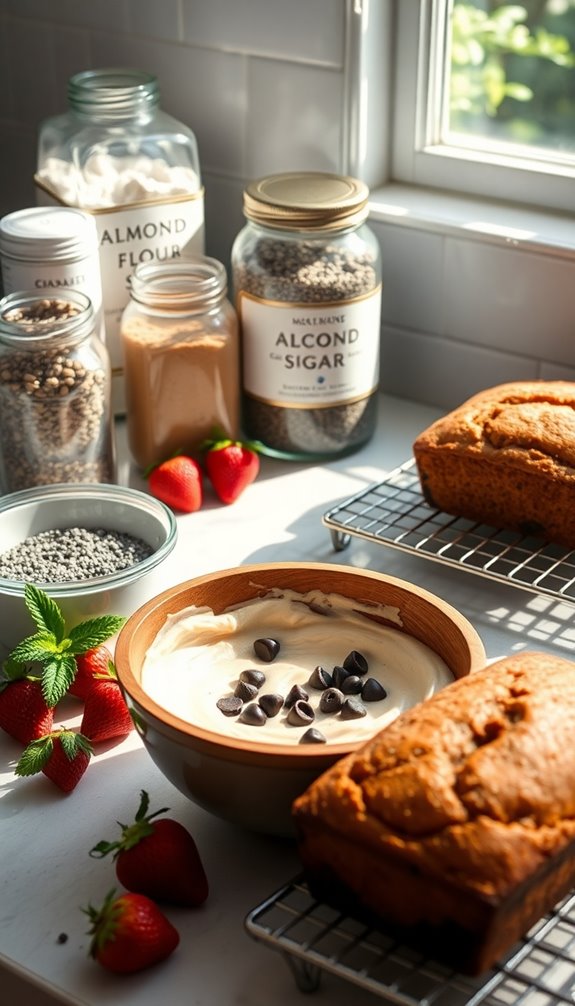
When you plunge into gluten-free baking, it’s vital to understand that not all flours are created equal. You’ll need to familiarize yourself with various gluten-free ingredients like almond flour, coconut flour, and tapioca starch. Each has unique properties that affect texture and flavor, such as how almond flour provides a nutty richness in baked goods. Additionally, gluten-free options may reduce inflammation and improve digestion for those sensitive to gluten.
Experimenting with different baking techniques is essential, too. For instance, blending multiple flours can create a well-rounded batter, while adding xanthan gum can help mimic the elasticity that gluten provides. Additionally, incorporating nutty undertones from ingredients like nuts or coconut can elevate the flavor profile of your baked goods.
Don’t forget to adjust your liquid ratios; gluten-free flours often absorb moisture differently. Embrace the learning process, and remember that practice leads to delicious results. With patience and creativity, you’ll master gluten-free baking in no time!
Essential Gluten-Free Flours and Their Uses

When it comes to gluten-free baking, knowing your flours is key. Each flour brings its own unique flavor and texture, so experimenting with different blends can elevate your creations. Additionally, using a gluten-free flour blend can simplify your baking process and ensure consistent results. For instance, incorporating a brioche-like yeast dough can enhance the lightness of your baked goods, making them irresistibly fluffy. Almond flour, noted for its nutty flavor and moisture, is an excellent choice for adding richness to cookies and other baked treats.
Let’s explore some common gluten-free flours and how to mix them for the best results.
Common Gluten-Free Flours
Gluten-free baking opens up a world of possibilities with a variety of flours that each bring unique flavors and textures to your creations.
Almond flour adds a rich nuttiness, while coconut flour offers a subtle sweetness and absorbs moisture well. Chilling dough for a short time can also help improve the texture when using these flours. Oat flour lends a mild flavor and works great in cookies and muffins, especially when combined with self-rising flour for a balanced texture.
Chickpea flour provides protein and a hearty texture, perfect for savory dishes. Brown rice flour is versatile, ideal for pancakes and breads.
Tapioca starch adds chewiness and helps bind ingredients, while sorghum flour contributes a light, sweet taste.
Finally, arrowroot powder is excellent for thickening and gives your baked goods a delicate crumb. Incorporating protein-packed snacks like cookies can also enhance the nutritional profile of your gluten-free treats.
Experiment with these flours to elevate your gluten-free baking!
Blending Flours For Texture
To achieve the perfect texture in gluten-free baking, blending different flours is key. Flour combinations like almond or cashew nut flour with starch blends, such as tapioca or potato starch, can enhance texture and moisture retention.
Experiment with blending techniques to find the right balance—this not only improves the crumb but also adds flavor balance. For instance, using a mix of oat flour and rice flour can provide a pleasant chewiness.
Incorporating light molasses into your recipes can also enhance moisture and add depth to flavors.
Consider shelf stability too; some blends may spoil faster than others. By mastering these combinations, you’ll elevate your gluten-free baked goods, ensuring they’re both delicious and satisfying.
Don’t hesitate to test and tweak until you find your ideal mix!
Easy and Delicious Gluten-Free Muffin Recipes
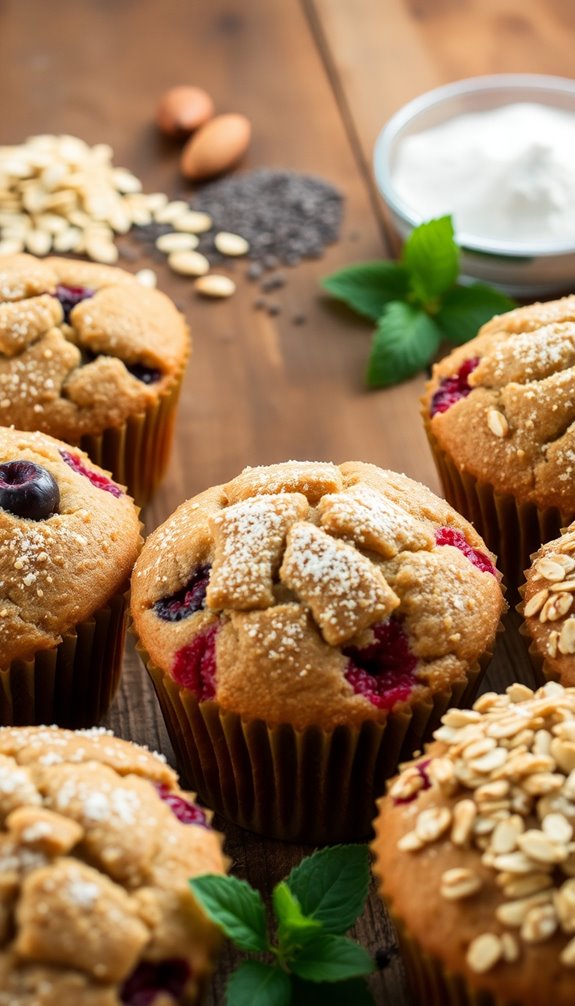
When you’re baking gluten-free muffins, knowing the essential ingredients makes all the difference.
You’ll love exploring flavorful variations that keep your taste buds excited.
Let’s whip up some easy recipes that everyone will enjoy!
Essential Gluten-Free Ingredients
While baking delicious gluten-free muffins might seem challenging at first, having the right ingredients on hand makes all the difference.
Start with gluten-free flours like almond or coconut flour, which provide a great base. Don’t forget gluten-free binders, such as xanthan gum or psyllium husk, to help your muffins hold together.
For sweetness, opt for gluten-free sweeteners like maple syrup, honey, or coconut sugar to enhance flavor without compromising texture. Adding a pinch of salt elevates the taste, while your favorite spices can bring warmth and depth.
With these essential ingredients, you’ll create muffins that aren’t only gluten-free but also incredibly satisfying.
Flavorful Muffin Variations
How can you elevate your gluten-free muffin game? Start with seasonal ingredients like pumpkin in fall or fresh berries in summer.
Experiment with fruity additions such as mashed bananas or applesauce for moisture and flavor.
For texture tips, combine almond flour with gluten-free oats to create a hearty muffin base.
Don’t forget sweetener options; honey or maple syrup can add a delightful twist.
Enhance your muffins with nutty enhancements like chopped walnuts or pecans.
Spice variations, like cinnamon or nutmeg, can warm up your recipe beautifully.
Finally, crown your creations with muffin toppings like a sprinkle of coconut or a drizzle of glaze.
With these ideas, your gluten-free muffins will be both delicious and memorable!
Indulgent Gluten-Free Brownie Variations to Try

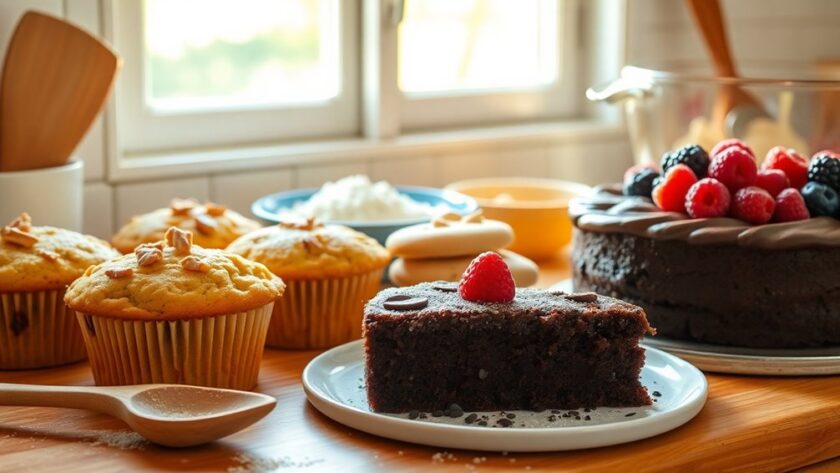
If you think gluten-free baking lacks indulgence, think again—these brownie variations will change your mind. Start with rich chocolate brownies featuring fudgy centers and chewy edges, then elevate them with nutty flavors like walnuts or pecans.
For a twist, try layered brownies, combining creamy frosting and fruity twists like raspberry or cherry. Craving something unique? Explore spiced variations with hints of cinnamon or cayenne for a kick.
Top your brownies with festive toppings, like crushed candies or drizzled chocolate, to impress any crowd. You can even add decadent add-ins like caramel swirls or sea salt for that perfect finish.
These indulgent options will satisfy your sweet tooth while keeping it gluten-free!
Common Gluten-Free Baking Mistakes and How to Avoid Them

When diving into gluten-free baking, it’s easy to make a few common mistakes that can impact your results. One major pitfall is improper ingredient substitutions. Not all gluten-free flours are created equal, so using the wrong type can lead to dense or crumbly baked goods.
Improper ingredient substitutions can lead to dense or crumbly results in gluten-free baking. Choose your flours wisely!
It’s vital to choose blends specifically designed for baking to guarantee the best texture.
Another mistake is measuring techniques. Gluten-free recipes often require precise measurements, so using a kitchen scale is your best bet. Scooping flour directly from the bag can lead to overpacking, resulting in dry results.
Instead, spoon the flour into your measuring cup and level it off. By avoiding these mistakes, you’ll set yourself up for gluten-free baking success!
Tips for Perfecting Your Gluten-Free Baking Skills
Mastering gluten-free baking can seem challenging, yet with the right techniques, you’ll find it’s both rewarding and delicious.
Start by experimenting with ingredient substitutions, like using almond flour or coconut flour for a unique flavor. Incorporate rising agents like baking powder or baking soda to improve texture.
Don’t forget about moisture retention; adding applesauce or yogurt can make a big difference. Adjusting your recipes may be necessary, so keep notes on what works.
Invest in equipment essentials, like a kitchen scale for accurate measurements. Use cooling methods that allow your baked goods to set properly, enhancing their presentation.
Finally, consider flavor enhancements like spices or vanilla extract to elevate your creations. Enjoy the process and happy baking!
Conclusion
So, you thought gluten-free baking would be a total disaster, huh? Well, surprise! With the right flours and a few simple recipes, you can whip up treats that even your gluten-loving friends will devour. Just remember, it’s not about being perfect; it’s about enjoying the process (and maybe hiding that last brownie from the kids). So grab your ingredients and get baking—your taste buds won’t know what hit ‘em!