
Last updated: · By Claire Dawson
A 5-inch pie is a single-serving pie, usually made in a small tin or ramekin-sized dish, and it is one of the easiest ways to serve several flavors at once. You can make 5-inch pie recipes with classic fillings like apple and pumpkin or with creative options like cookie butter and coconut cream. Most home bakers can stretch one batch of standard pie dough across several small pies, then bake them until the crust is golden and the filling bubbles.
Key Takeaways
- The USDA’s FoodData Central is a free, web-based resource on food nutrients that you can use to check the nutrition of your own pie fillings.
- Iowa State University Extension, citing USDA guidance, says fruit pies made with sugar are safe at room temperature for up to two days.
- Custard, cream, and egg-containing pies need refrigeration, so mini cream pies should go in the fridge after they cool.
- Tufts University Libraries describes FoodData Central as containing data on roughly 6,220 food items and up to 117 food components.
- Bake mini pies at 350°F to 400°F until the crust is golden and the filling bubbles, then check doneness early because small pies cook faster than full-size ones.
What Are 5-Inch Pies and Why Make Them?
A 5-inch pie is a small, individual pie that holds roughly one serving or a little more. Its main advantages are portion control, variety, and easy serving at parties, since each guest can take a whole pie instead of a slice from a large one.
Mini pies also reduce waste when you want to test a new filling. If a flavor does not work, you have made only a few small pies rather than a full 9-inch pie. The smaller size also means shorter bake times and less filling to prepare.
How Do You Make Crust for 5-Inch Pies?
To make a flaky crust for 5-inch pies, keep the fat cold, handle the dough as little as possible, and chill it before rolling. Most recipes use flour, cold butter or shortening, salt, and a small amount of ice water, and some add a teaspoon or so of vinegar.
What Ingredients Do You Need for a Flaky Crust?
A basic double-crust or lattice dough for mini pies usually includes the following ingredients. Adjust the amounts to the recipe you follow, because some doughs use egg or a mix of butter and shortening.
- All-purpose flour, plus extra for dusting the counter
- Cold butter, shortening, or a blend of both
- Fine salt
- Ice water, added a tablespoon at a time
- Optional: a small amount of vinegar or one egg, depending on the recipe
How Do You Roll and Fit Dough Into Small Pans?
Roll the dough to an even thickness, then cut circles that are slightly larger than your pie pans so the edges cover the sides fully. Gaps and thin spots are the most common causes of leaks, so press the dough gently into the corners of each pan.
If the dough becomes soft or sticky while you work, return it to the refrigerator for 10 to 15 minutes before continuing. Cold dough is easier to fit and holds its shape in the oven.
When Should You Pre-Bake a Crust?
Pre-bake, or blind bake, the crust when the filling is wet or needs little baking time, such as cream or no-bake fillings. For a fruit filling that bakes fully in the oven, you can usually skip pre-baking, but a short pre-bake helps prevent a soggy bottom in any pie with a juicy filling.
Line the chilled crust with parchment, add dried beans or pie weights, and bake until the edges set. Remove the weights and bake briefly more until the base looks dry and lightly golden.
Which 5-Inch Pie Recipes Should You Try?
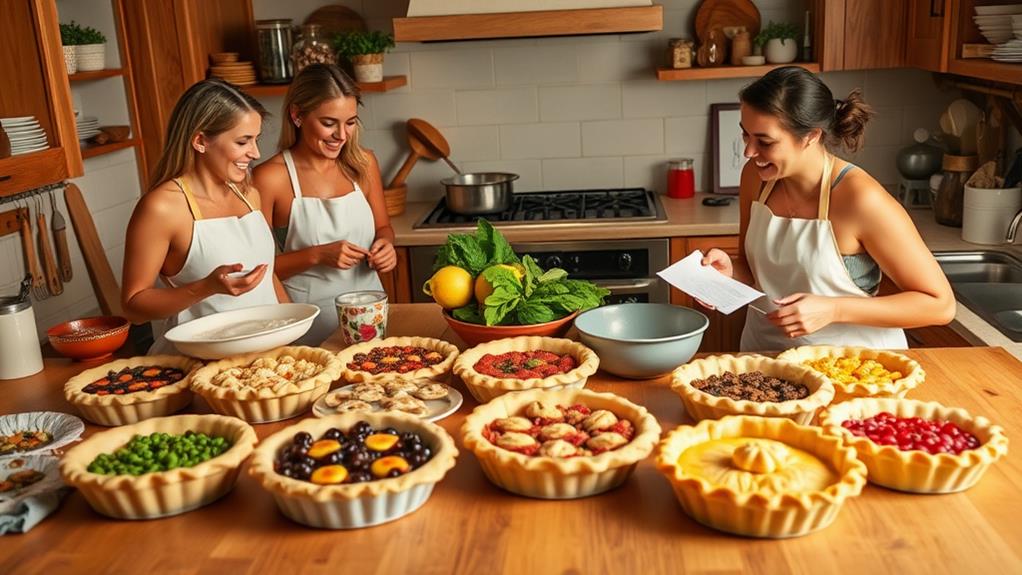
The best 5-inch pie recipes for most bakers are classic fruit fillings, which are forgiving and familiar, followed by cream or no-bake fillings for variety. Choose a filling that matches your crust and how much time you have to bake or chill.
| Filling | Best crust style | Baking approach | Practical tip |
|---|---|---|---|
| Apple cinnamon | Double crust or lattice | Bake until the filling bubbles through vents | Use a mix of tart and sweet apples for depth |
| Pumpkin | Single crust, pre-baked | Bake until the custard is set in the center | Chill the pies before slicing for clean edges |
| Mixed berry | Lattice top | Bake until the juices thicken | Add a spoonful of cornstarch to keep the filling from running |
| Cookie butter | Single crust, pre-baked | Bake only long enough to set the crust and warm the filling | Chill well before cutting |
| Coconut cream | Single crust, pre-baked | No oven time for the filling; chill after assembling | Refrigerate until firm |
Which Fruit Fillings Work Best in Small Pies?
Apple, peach, and mixed berry fillings work well in 5-inch pies because they bake through in the same time as the crust. Cut fruit into small, even pieces so it cooks at the same rate, and taste the filling before you add it, since fruit sweetness varies.
For a twist on the classic, try a peach apple pie that combines two fruits in one filling.
Can You Use Rhubarb or Other Tart Fruit?
Yes. Tart fruit like rhubarb pairs well with sweeter berries, and the balance is easier to control in small pies. Macerate the fruit with sugar for 15 to 30 minutes before filling the crusts so the juices are easier to manage.
If you want a seasonal option, a raspberry rhubarb pie recipe adapts well to individual pans.
What Are Good No-Bake or Cream Fillings?
No-bake and cream fillings are useful when you want a dessert that needs no oven time for the filling. They set in the refrigerator, which makes them practical for make-ahead desserts, but they also require more careful cooling and storage.
For a chilled option, you can try a no-bake chocolate mousse pie and scale it down to individual pans.
How Long Should You Bake 5-Inch Pies?
Bake 5-inch pies at 350°F to 400°F until the crust is golden and the filling is bubbling. Because they are small, they usually finish sooner than full-size pies, so check them before the time in your recipe runs out.
- Preheat the oven to the temperature in your recipe, usually between 350°F and 400°F, and set a rack in the center.
- Place filled pies on a rimmed baking sheet to catch drips and to make them easier to move.
- Cut steam vents in top crusts before baking, or use a lattice top so steam can escape.
- Bake until the crust is golden and the filling bubbles at the vents or edges, checking at the early end of the time range.
- Cool the pies on a rack. Fruit fillings thicken as they cool, so slicing too early can cause runny centers.
How Should You Store Mini Pies Safely?
Store fruit pies made with sugar at room temperature for up to two days, and refrigerate custard, cream, and egg-containing pies. Iowa State University Extension, citing USDA guidance, outlines these rules in its AnswerLine guidance on pie storage.
Refrigerate any mini pie with dairy, eggs, or cream as soon as it has cooled to safe handling temperature. Cover the pies loosely so the crust stays crisp and the filling does not pick up odors from the refrigerator.
Leftover pie dough should be wrapped tightly. Refrigerate it for short-term use or freeze it for later baking, and let frozen dough thaw in the refrigerator before rolling.
How Can You Check the Nutrition of Your Pie Filling?
You can check the nutrition of a pie filling with the USDA’s free FoodData Central database, which lists nutrient values for thousands of foods. Entering each ingredient gives you a better estimate than guessing from package labels, especially when you adjust sugar or swap ingredients.
FoodData Central is described in a paper in the American Journal of Clinical Nutrition on USDA’s FoodData Central as a transparent, web-based resource built for public health professionals, researchers, and the general public. Tufts University Libraries also notes that its files can be downloaded from the USDA website, which is useful for bulk analysis.
The USDA’s Nutritive Value of Foods reference includes entries for pie items such as apple pie filling. It uses a 2,000-calorie reference diet with total fat under 65 g and sodium under 2,400 mg as benchmarks, which can help you judge a single mini pie against daily targets.
What Are the Limits of Nutrition Estimates?
Database values are averages, so a homemade pie can differ from its listed numbers. Crust fat, sugar amounts, and fruit ripeness all change the final totals. Treat any calorie count as an estimate and use it for comparison rather than precision.
What Are the Best Tips for Serving Mini Pies?
Serve mini pies at room temperature or chilled, depending on the filling, and label flavors so guests can choose. Plan one or two pies per person if the pies are the main dessert, and more if you are serving several flavors.
- Label each pie with its filling, especially if it contains nuts, dairy, or alcohol.
- Keep cream and custard pies cold until serving, as the storage guidance above describes.
- Bake a few extra pies, since small pies disappear quickly at gatherings.
- Use a stand or tray so pies are easy to pick up without disturbing the filling.
If you need a quicker dessert for a busy week, these easy dessert recipes you can make in under 30 minutes are a practical backup.
Frequently Asked Questions
How many 5-inch pies does one recipe make?
The number depends on the size of your pans and how much dough and filling you use. A standard single-crust recipe often covers several small pies, so measure your pan and divide the dough into equal portions. Roll a test circle first to confirm the fit.
Do mini pies need to be refrigerated?
Fruit pies made with sugar can stay at room temperature for up to two days, according to USDA guidance cited by Iowa State University Extension. Pies with custard, cream, or eggs need refrigeration. When in doubt, refrigerate the pies and bring them to room temperature briefly before serving.
Why does my pie crust get soggy?
A soggy crust usually happens when a wet filling sits on an underbaked base. Pre-baking the crust, keeping the filling thick, and baking until the bottom looks dry help prevent this. Letting pies cool fully before cutting also keeps the filling from soaking into the crust.
Can you freeze mini pies?
Many unbaked and baked fruit pies can be frozen, but cream and custard fillings generally do not hold their texture well. Freeze unbaked pies solid, then wrap them tightly and bake from frozen, adding a few extra minutes to the bake time. Check doneness before serving.
How do I scale a 9-inch pie recipe down to 5-inch pies?
Start by measuring the volume of filling in your 9-inch recipe, then divide it by the number of small pans you plan to fill. Make the dough in portions sized for each pan, and expect bake times to be shorter. Keep notes on the adjustments so you can repeat the recipe.
Final Thoughts on 5-Inch Pie Recipes
Five-inch pie recipes give you a practical way to bake several flavors, serve guests with less waste, and experiment without committing to a full pie. Start with a classic fruit filling and a reliable crust, bake until golden and bubbling, and store cream or custard pies in the refrigerator. Once you are comfortable with small pies, try a creative filling and track your results so each batch improves.