
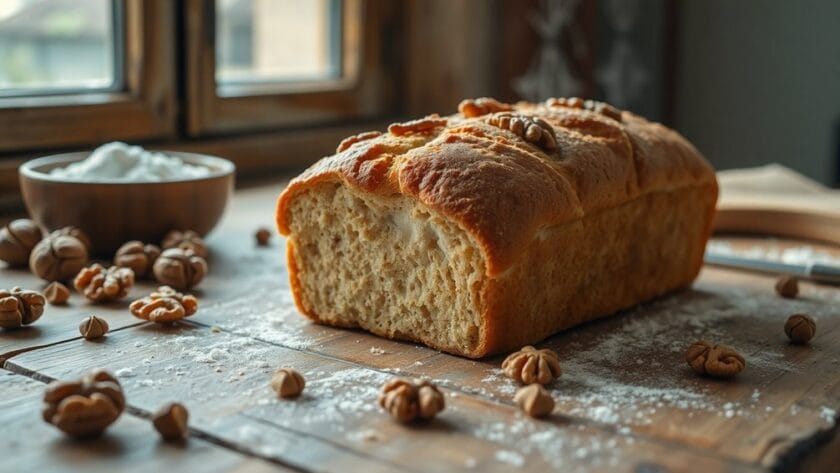
For a no-fail walnut bread recipe, start with high-quality whole wheat flour and fresh, coarsely chopped walnuts for great flavor. Combine dry and wet ingredients, then knead the dough until it’s slightly sticky. Let it rise in a greased bowl, covered. Remember to avoid overmixing and check your oven temperature for even baking. This bread’s perfect for toasting or as a hearty sandwich base. Stick around to uncover even more tips and creative ways to enjoy your loaf!
The Best Ingredients for Walnut Bread
When you’re making walnut bread, choosing the right ingredients is essential for achieving that perfect flavor and texture. Start with high-quality flour, preferably whole wheat, as it adds depth and enhances the bread’s nutritional benefits. Additionally, using gluten-free options can cater to those with gluten sensitivities while still providing delicious results.
Fresh walnuts are key; they should be chopped coarsely for ideal crunch and flavor. Incorporating almond extract can also add a unique nutty undertone that complements the richness of the walnuts. Don’t forget a pinch of salt to enhance the taste.
You can also experiment with flavor variations by adding honey or maple syrup for sweetness or herbs like rosemary for an aromatic twist. Using yeast instead of baking powder gives your bread that delightful rise. Additionally, consider incorporating overripe bananas for natural sweetness and moisture.
With these ingredients, you’ll create a loaf that’s not just delicious but also packed with nutrients, making it a wholesome choice for any meal.
Step-by-Step Instructions for Perfect Dough

With your high-quality ingredients ready, it’s time to focus on creating the perfect dough. Start by combining your dry ingredients in a large bowl. Gradually add the wet ingredients, mixing until a shaggy dough forms. Pay attention to dough hydration; it should be slightly sticky but manageable. Brown sugar can also enhance the flavor and moisture of your bread.
Now, it’s time for the kneading techniques. Turn the dough onto a floured surface and knead for about 10 minutes. Use the push-and-fold method, ensuring you develop the gluten without overworking the dough. Incorporating natural sweeteners can enhance the flavor profile of your bread while keeping it healthier.
If it feels too wet, sprinkle a little flour as needed, but avoid adding too much. Once the dough is smooth and elastic, shape it into a ball and let it rest in a greased bowl, covered for ideal rising.
Tips for Achieving the Right Texture and Flavor
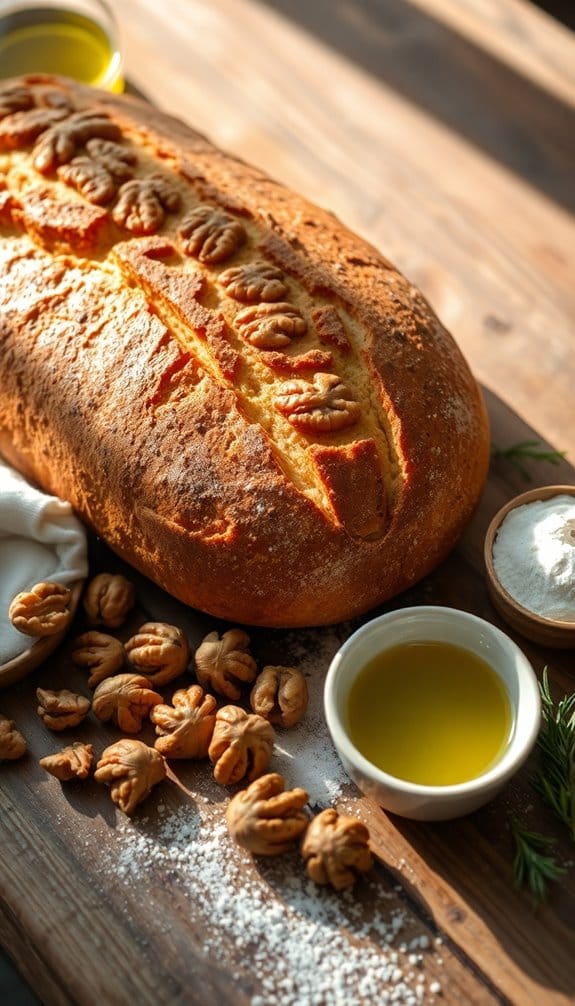
To achieve the right texture and flavor in your walnut bread, focus on the quality of your ingredients and the fermentation process.
Start by using fresh, high-quality walnuts; they’ll enhance the nutty flavor and texture. For texture tips, consider adding a mix of whole wheat and all-purpose flour to create a hearty crumb. Incorporating nutrient-dense flours can also improve the bread’s nutritional profile. You can also experiment with adding gluten-free alternatives to cater to diverse dietary needs.
Don’t rush the fermentation; allowing your dough to rise longer will develop complex flavors. For flavor balancing, incorporate a touch of honey or maple syrup to complement the walnuts without overpowering them.
Finally, a sprinkle of sea salt enhances overall taste, making each bite irresistible. Additionally, using whole wheat flour in your recipe can boost fiber content, contributing to better blood sugar management.
Keep these tips in mind, and you’ll create a walnut bread that’s both delicious and perfectly textured.
Common Mistakes to Avoid When Baking?
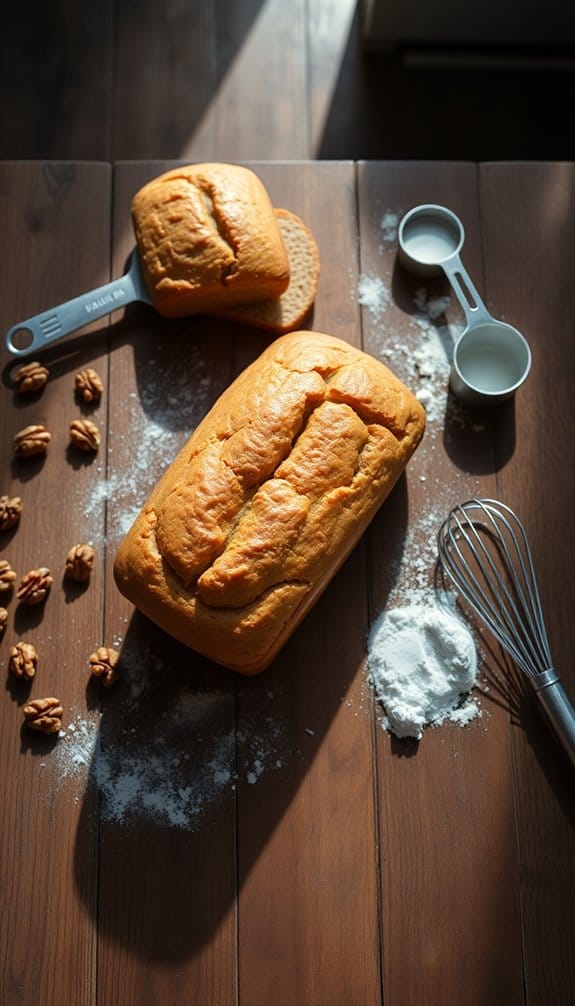
Baking walnut bread can be a rewarding experience, but it’s easy to stumble into common pitfalls. One major mistake is overmixing dough. When you mix too much, you develop gluten, making your bread dense instead of light and airy. Aim for just combined ingredients to maintain a tender crumb. Chilling dough can also enhance the texture of your bread, making it more enjoyable.
Another issue is improper measuring. Using the wrong amounts of flour or liquids can throw off your entire recipe. Always use the spoon-and-level method for flour, and don’t forget to sift if the recipe calls for it. Additionally, accurate measurements are crucial for consistent baking results, so consider using a kitchen scale to ensure precision.
Lastly, neglecting to check your oven temperature can lead to uneven baking. Invest in an oven thermometer to guarantee accurate results.
Creative Ways to Enjoy Your Walnut Bread
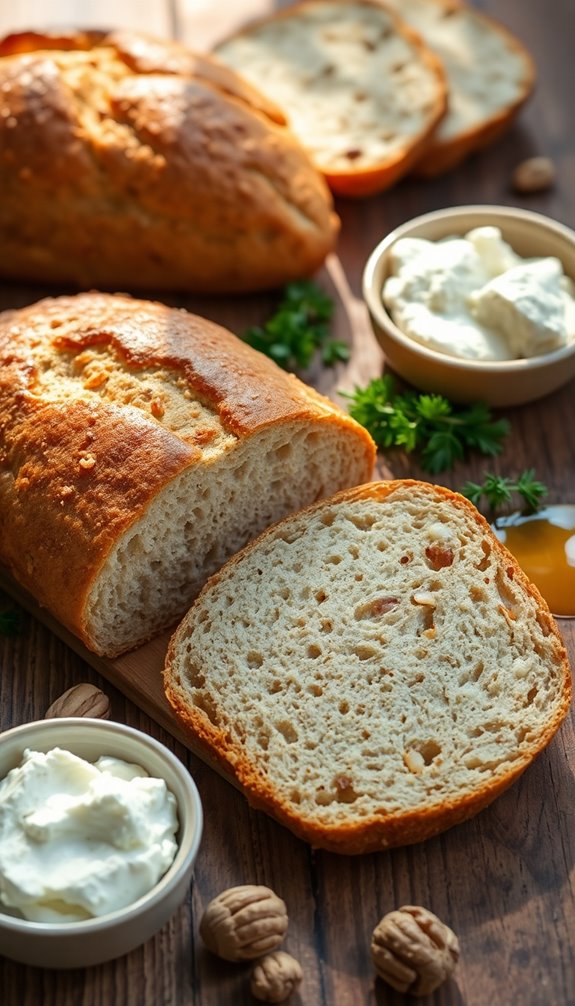
Once you’ve mastered the art of baking walnut bread, it’s time to explore all the delicious ways to enjoy it. Start your day with toast variations topped with creamy avocado, crumbled feta, or honey and walnuts.
For lunch, try hearty sandwich ideas like turkey and cranberry or roasted vegetables with a savory spread like pesto. Pair your walnut bread with soups or salads for a delightful dinner experience.
Don’t forget dessert options; a slice slathered with chocolate spread or served with fresh berries makes a perfect treat.
Experiment with different walnut toppings, like spiced nuts or a drizzle of balsamic glaze, to elevate your meals. The possibilities are endless, so get creative and enjoy every crumb!
Conclusion
As you slice into that golden-brown walnut bread, you might recall the day you first tasted it at a friend’s gathering, the warm aroma wrapping around you like a hug. It’s funny how a simple recipe can weave memories, turning a kitchen experiment into a cherished moment. Now, with these no-fail instructions, you’re not just baking bread; you’re creating connections. So, enjoy every bite, knowing you’ve crafted something special that can bring people together, just like it did for you.