If you’re looking for a delightful addition to your kitchen, homemade walnut bread is a must-try. With its rich, nutty flavor and heart-healthy omega-3 fatty acids from walnuts, it brings both taste and nutrition to your table. Using whole grain flours, honey, and dark molasses, it’s a simple yet satisfying recipe. You’ll also discover great tips for achieving the perfect texture and flavor. Plus, find out how to customize it to your liking!
Why Homemade Walnut Bread Is a Must-Try
When you bite into a slice of homemade walnut bread, you’ll quickly realize why it’s a must-try. Not only does its rich, nutty flavor delight your taste buds, but it also offers impressive health benefits.
Walnuts are packed with omega-3 fatty acids, which can boost heart health and improve brain function. Plus, the fiber in whole grain flour supports digestion. Incorporating nutritious ingredients like walnuts can enhance your overall health while enjoying a delicious treat. Additionally, using whole, unprocessed ingredients can further elevate the nutritional profile of your baked goods. The quality of ingredients, such as fresh eggs, plays a significant role in achieving the best texture and flavor.
Mastering baking techniques is key to achieving the perfect loaf. You’ll want to pay attention to kneading and rising times to guarantee a fluffy texture.
Experimenting with different methods can enhance the flavor and texture even further. With each slice, you’re not just enjoying a delicious treat; you’re nourishing your body and honing your baking skills.
Essential Ingredients for Perfect Walnut Bread
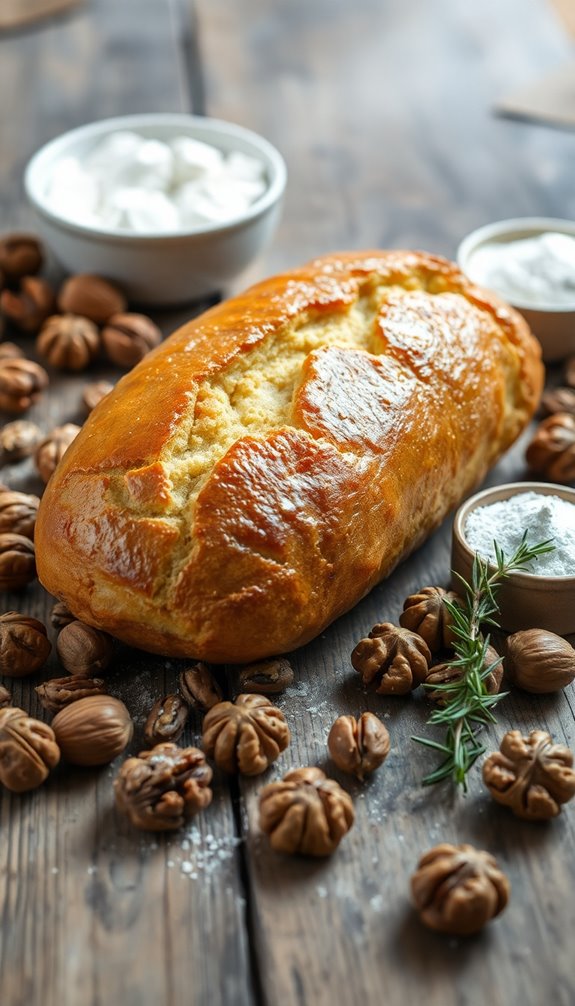
Creating the perfect walnut bread starts with selecting high-quality ingredients. First, choose fresh walnuts; they add a delightful crunch and rich flavor. Whole wheat flour not only enhances the texture but also provides nutritional benefits, including fiber and essential nutrients. Incorporating whole grain spelt flour can elevate the flavor profile and nutritional value of your bread. Additionally, using dark molasses can add a rich depth of flavor and moisture to your dough.
Don’t forget yeast, which gives your bread that lovely rise. If you need to make ingredient substitutions, consider using almond flour for a gluten-free option or honey instead of sugar for natural sweetness. Adding a pinch of salt enhances the flavors, while a splash of olive oil keeps your bread moist. Each ingredient plays an essential role, so take time to guarantee they’re first-rate. This attention to detail will elevate your homemade walnut bread to new heights! Additionally, using gluten-free flour can accommodate those with dietary restrictions while maintaining flavor.
Step-by-Step Instructions to Bake Your Loaf
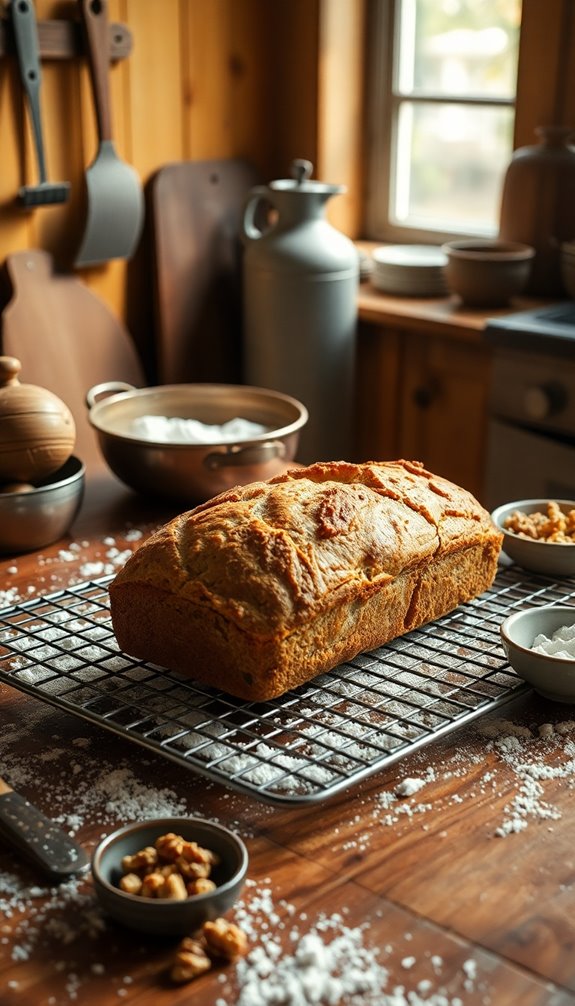
To bake your perfect walnut bread, start by gathering all your ingredients and tools. Mix your flour, yeast, salt, and water in a large bowl until combined. Choose your preferred kneading methods—either by hand or using a stand mixer—to develop the dough’s elasticity. Knead until smooth, then fold in your chopped walnuts for that signature flavor. Once your dough has risen, shape it into a loaf. Use loaf shaping techniques to guarantee it holds its form well.
Place the shaped loaf in a greased pan, allowing it to rise again until doubled in size. Preheat your oven, ensuring it reaches 325°F (160°C) for optimal baking, then bake the loaf until golden brown. Remember, allowing the dough to rest for 10 minutes can enhance its pliability, as a well-developed dough creates a better texture similar to a tender, snack cake-like texture. Let it cool before slicing, and enjoy your homemade walnut bread!
Tips for Achieving the Best Texture and Flavor
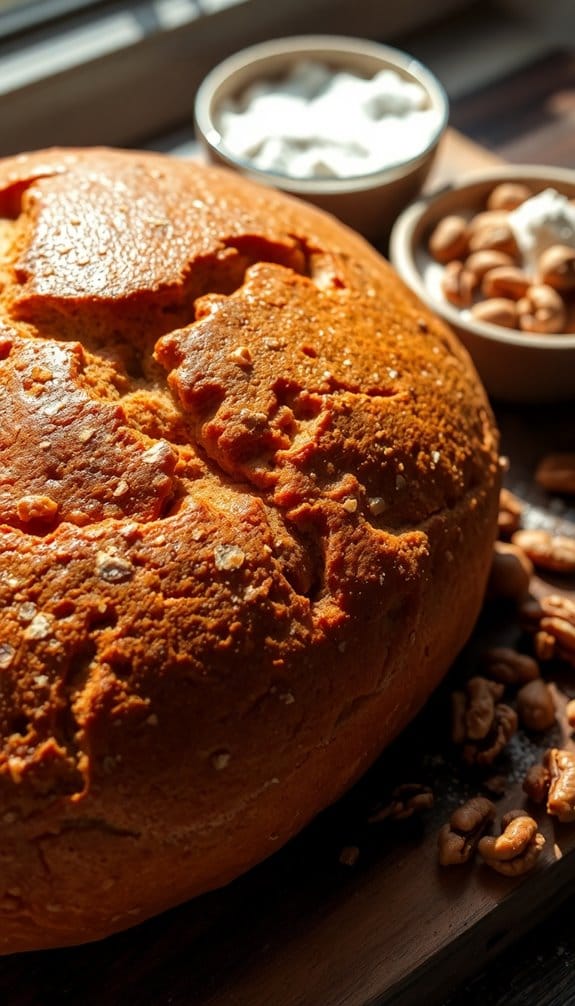
To get the best texture and flavor in your walnut bread, it all starts with choosing quality ingredients. Pay attention to your kneading techniques, as they play a vital role in developing the dough. Finally, don’t underestimate the importance of proper baking temperature to guarantee your loaf turns out perfectly every time. For optimal results, consider using a digital scale for precise measurements, especially when it comes to flour.
Choosing Quality Ingredients
When you’re aiming for the perfect walnut bread, selecting high-quality ingredients makes all the difference. Start with fresh, organic flour; it’s the foundation of your bread.
Look for nuts that are rich in flavor and have been sourced responsibly; quality assurance in ingredient sourcing guarantees you get the best.
Don’t skimp on the yeast, either—opt for active dry yeast that’s fresh, as it impacts the rise and texture.
Use pure, high-quality salt to enhance flavors without overpowering them.
Finally, consider adding a touch of honey or sugar for a subtle sweetness, choosing natural options whenever possible.
Kneading Techniques Explained
Kneading may seem straightforward, but mastering the technique can transform your walnut bread’s texture and flavor. To achieve the best results, try different kneading methods, like the push-fold technique or the stretch-and-fold approach. These methods enhance dough elasticity, making it easier for the bread to rise and develop a chewy texture.
Start by lightly flouring your surface and your hands. Knead the dough for about 10 minutes, applying consistent pressure. You should feel it becoming smoother and more elastic.
Don’t rush; patience is key. If the dough sticks, add a little flour but avoid overdoing it, as this can affect the final product. With practice, you’ll create a walnut bread that’s both delicious and perfectly textured.
Proper Baking Temperature
After perfecting your kneading technique, the next step is ensuring that your walnut bread bakes at the right temperature. A baking environment that’s too hot or too cold can ruin your hard work. Aim for a temperature of around 350°F (175°C) for excellent results. This allows the bread to rise properly while developing a golden crust.
Use an oven thermometer to check temperature accuracy, as built-in gauges can be unreliable. Preheat your oven thoroughly to create the ideal baking environment, and avoid opening the door frequently, which can cause temperature fluctuations.
Creative Variations to Customize Your Walnut Bread
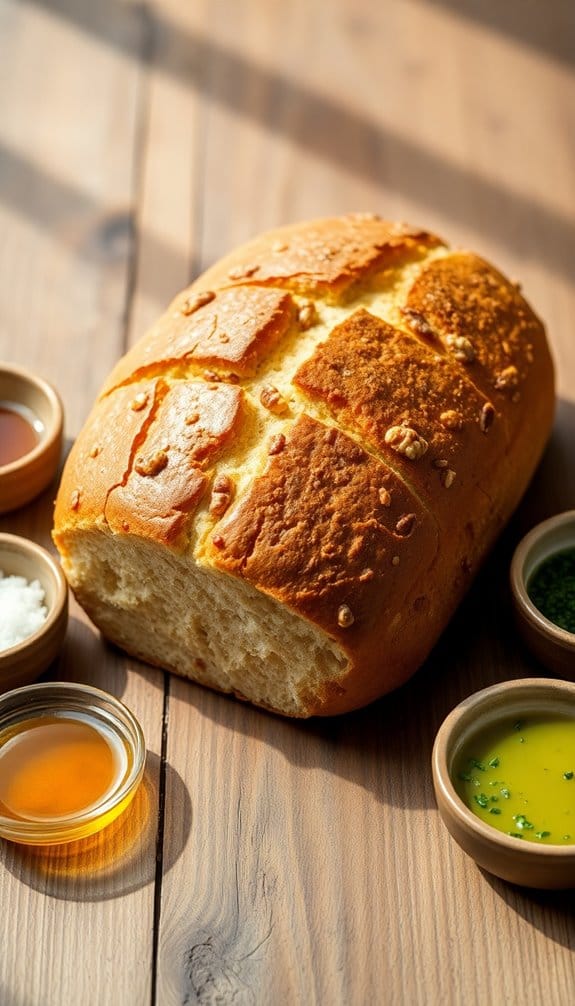
When you’re ready to put your own spin on walnut bread, think about combining different nuts for a richer flavor.
You can also add sweet ingredients like honey or dried fruit to create a delightful contrast.
Get creative and make your walnut bread truly your own!
Nutty Flavor Combinations
While you might love the classic taste of walnut bread, experimenting with nutty flavor combinations can elevate your baking to new heights.
Consider adding hazelnuts for a rich, earthy taste that complements walnuts beautifully. You could also mix in almonds for a crunchy texture and a sweet note, creating delightful nutty pairings.
For a more adventurous twist, try incorporating pistachios; their vibrant color and unique flavor offer intriguing flavor contrasts.
If you want to enhance the nuttiness even further, sprinkle in some chia seeds or flaxseeds. These additions not only boost flavor but also provide extra nutrition.
With these creative variations, your walnut bread will become a standout treat that’s sure to impress family and friends.
Sweet Additions To Enhance
To take your walnut bread to the next level, consider adding sweet ingredients that complement the nutty base.
Chocolate chips can provide a delightful contrast, while dried fruits like raisins or cranberries add natural sweetness and chewiness. A honey drizzle after baking enhances flavor and adds a glossy finish.
For a zesty twist, mix in citrus zest to brighten the bread. Maple syrup can replace sugar, offering a rich sweetness, and a cinnamon swirl can infuse warmth throughout.
If you’re feeling indulgent, caramel chunks create a gooey surprise. Finally, nut butter spread on warm slices adds creaminess and depth.
With these sweet additions, your walnut bread will become a unique and delicious treat!
How to Store and Refresh Your Walnut Bread
Proper storage is key to keeping your walnut bread fresh and flavorful. To make the most of your loaf, use these storing techniques and revitalizing methods:
- Cool Completely: Confirm your bread’s cooled down before wrapping it to avoid moisture buildup.
- Wrap Well: Use plastic wrap or foil to keep out air and prevent staleness.
- Store in a Breadbox: A breadbox allows airflow, keeping your walnut bread from drying out too quickly.
- Freeze for Longevity: If you won’t finish it soon, slice and freeze portions in airtight bags, pulling out what you need.
When you’re ready to enjoy it again, simply toast or warm it in the oven to revive that delightful taste!
Pairing Suggestions for Enjoying Walnut Bread
Walnut bread pairs beautifully with a variety of flavors, making it a versatile choice for any meal.
For breakfast options, try it toasted with fruit spreads like raspberry or apricot. If you’re in the mood for something savory, cheese pairings such as brie or goat cheese elevate the experience.
For a delightful snack, dip it in rich chocolate, creating a perfect sweet treat. As a lunch companion, consider it alongside hearty salads or as an accompaniment to soups, where its nutty flavor complements the dish.
Finally, if you’re enjoying a glass of wine, pair walnut bread with a fruity red or a crisp white to enhance the overall tasting journey. Enjoy experimenting with these delicious combinations!
Conclusion
So, you might think baking walnut bread is too time-consuming, but it’s actually a rewarding experience that fills your home with an irresistible aroma. Plus, the joy of slicing into a warm, homemade loaf is unmatched. You’ll impress your family and friends, and it’s easier than you think! With a few simple ingredients and steps, you can create a delicious staple that elevates any meal. Give it a try—you won’t regret it!