

Last updated: · By Claire Dawson
Ceylon cinnamon is the best choice for delicate baked goods, while cassia cinnamon delivers the bold, spicy flavor that stands up to cinnamon rolls, coffee cakes and spiced cookies. This guide to cinnamon types and uses explains the two main commercial types, the common varieties you will find in US stores, and how to match each one to a recipe. It also covers coumarin, the compound that most clearly separates the types from a safety standpoint, and how to store cinnamon so it stays fragrant.
Key Takeaways
- The two main commercial cinnamon types are Cinnamomum zeylanicum (Ceylon, or “true” cinnamon) and cassia, also called Chinese cinnamon.
- Cinnamomum verum, the species name for true cinnamon, supplies roughly 70% of global cinnamon production, according to a PubMed Central paper.
- A review in the journal Plants, People, Planet found coumarin at high concentrations in cinnamon other than Ceylon but only trace amounts in Ceylon cinnamon.
- Cassia cinnamon is often labeled Vietnamese, Saigon, Chinese or Indonesian cinnamon, and it can contain high levels of coumarin.
- Store ground cinnamon in an airtight, opaque container away from heat and light to keep its flavor longer.
What Is Cinnamon and Where Does It Come From?
Cinnamon is the dried inner bark of trees in the Cinnamomum genus, and the types sold in stores come from different species. True cinnamon, or Ceylon, is native to Sri Lanka and southern India, according to a systematic review of the medicinal properties of true cinnamon in PubMed Central. That same review identifies cassia, also called Chinese cinnamon, as the other main commercial variety.
Because the two types come from different plants, they differ in flavor, price and chemistry. Knowing which one is in your jar tells you how it will behave in a batter or dough.
Ceylon vs. Cassia: Which Cinnamon Should You Use?
Use Ceylon cinnamon for light, delicate desserts where you want a subtle warmth, and use cassia when you want a strong, spicy punch. Ceylon has a milder, more floral taste, while cassia is bolder and more intense. Both work in baking, but they produce noticeably different results.
The table below compares the two main types side by side.
| Feature | Ceylon (true cinnamon) | Cassia |
|---|---|---|
| Botanical name | Cinnamomum zeylanicum (also listed as C. verum) | Several Cinnamomum species, including cassia-type varieties |
| Native origin | Sri Lanka and southern India | Grown in several Asian countries |
| Flavor | Mild, delicate, floral | Bold, spicy, intense |
| Coumarin content | Trace amounts | High concentrations in many products |
| Common labels | Ceylon, true cinnamon | Cassia, Saigon, Korintje, Chinese, Vietnamese, Indonesian |
| Best baking uses | Light cakes, muffins, custards, delicate cookies | Cinnamon rolls, coffee cakes, spiced cookies, apple pie |
Cassia is the type most often found on grocery shelves. ConsumerLab notes in its cinnamon product reviews that cassia is the most common type sold, and that it is often labeled with names such as Vietnamese, Saigon, Chinese or Indonesian cinnamon. If your label says only “cinnamon,” it is most likely cassia.
Ceylon costs more and is harder to find in standard supermarkets, but it is widely sold online and in specialty spice shops. If you bake often, it is worth buying a small amount to compare.
What Are Saigon and Korintje Cinnamon?
Saigon and Korintje are two cassia varieties you will see most often in baking aisles. Both are bolder than Ceylon, but they differ in intensity and how they fit into recipes. Treat them as cassia when you plan your coumarin intake.
Saigon Cinnamon
Saigon cinnamon is a Vietnamese cassia with a strong, sweet heat and high volatile oil content. Its intensity makes it a good choice for recipes where cinnamon should be the leading flavor, such as cinnamon rolls, cinnamon-streusel coffee cakes and spiced cookies. Start with slightly less than a recipe calls for if you are new to it, then adjust to taste.
Korintje Cinnamon
Korintje is a cassia type usually associated with Indonesia, and it has a milder, earthier flavor than Saigon. That balance makes it a practical everyday option for quick breads, oatmeal cookies and snack cakes. It is less dominant than Saigon, so it works well when cinnamon should support other flavors like chocolate, nuts or banana.
How Should You Use Cinnamon in Baking?
Match the cinnamon type to the intensity you want, and choose ground or stick cinnamon based on how the recipe handles heat and liquid. Ground cinnamon disperses quickly through batters and doughs, while sticks release flavor slowly and suit liquids that simmer for a long time.
Follow these practical tips to get consistent results:
- Mix it into dry ingredients first. Whisking cinnamon with the flour and sugar spreads it evenly so no bite tastes flat or overly strong.
- Use Ceylon for light bakes. Choose it for shortbread, vanilla cakes, custards and muffins where a strong spice would overpower other flavors.
- Use cassia for bold bakes. Reach for Saigon or Korintje in cinnamon rolls, apple desserts, gingerbread and spiced coffee cakes.
- Infuse liquids with sticks. Simmer cinnamon sticks in milk, cream or syrup for custards, rice pudding and poached fruit, then strain before using.
- Add spice to fillings. Mix cinnamon with brown sugar and butter for a cinnamon roll filling or a streusel topping.
For more ideas, see this guide to unique cinnamon roll flavors to try at home, which shows how different spice choices change the finished roll.

Can You Use Cinnamon in Yeasted Doughs?
Yes, you can use cinnamon in yeasted doughs, but measure it carefully and mix it in with the sugar and flour. Heavy amounts of any strong spice can slow fermentation, so it is best to follow the quantity in a tested recipe rather than adding extra for more flavor. A well-balanced recipe will give you warmth without a dense or sluggish dough.
Ground Cinnamon or Cinnamon Sticks?
Ground cinnamon is the right choice for most baking because it blends evenly and releases flavor quickly. Sticks are better for infusions, mulled drinks and slow-simmered fruit. If a recipe calls for ground cinnamon and you only have sticks, grind them fresh in a spice grinder for the best flavor.
Is Cinnamon Safe to Eat? Understanding Coumarin
Cinnamon is safe in normal baking amounts for most people, but the type you choose matters because of coumarin. Coumarin is a naturally occurring plant compound, and cassia types tend to contain far more of it than Ceylon does.
A review published in Plants, People, Planet describes coumarin as hepatotoxic (harmful to the liver) and carcinogenic at high doses, and it found high concentrations in cinnamon species sold as cinnamon other than Ceylon. Ceylon cinnamon contained only trace amounts. This difference is the strongest reason many bakers choose Ceylon for frequent use.
A separate PubMed Central analysis of Cinnamomum verum notes that cassia-type species are considered inferior to true cinnamon in biochemical composition. That source is useful for understanding the chemistry, but it does not replace label-level guidance for everyday cooking.
Cinnamon supplements raise the stakes. Because capsules can deliver much larger doses than a sprinkle on toast, talk with a health care professional before taking them regularly, especially if you take medication or have a liver condition. For baking, choosing Ceylon for frequent use is a simple way to lower coumarin exposure.
How Should You Store Cinnamon to Keep It Fresh?
Store cinnamon in an airtight, opaque container in a cool, dark place away from heat, light and moisture. Heat and light break down the aromatic oils that give cinnamon its flavor, so a sunny spice rack near the stove will fade it faster than a pantry shelf.
Follow these steps to protect your supply:
- Transfer ground cinnamon from its paper or clear packaging into an airtight jar with an opaque or dark body.
- Label the container with the type and purchase date, since Ceylon and cassia look nearly identical once ground.
- Store the jar in a cool, dry pantry or cabinet, away from the stove, dishwasher and sunny windows.
- Keep a dry spoon in the jar, and never sprinkle cinnamon over steam or into a wet bowl, which can cause clumping.
- Buy smaller amounts more often, and check the best-by date before you buy.
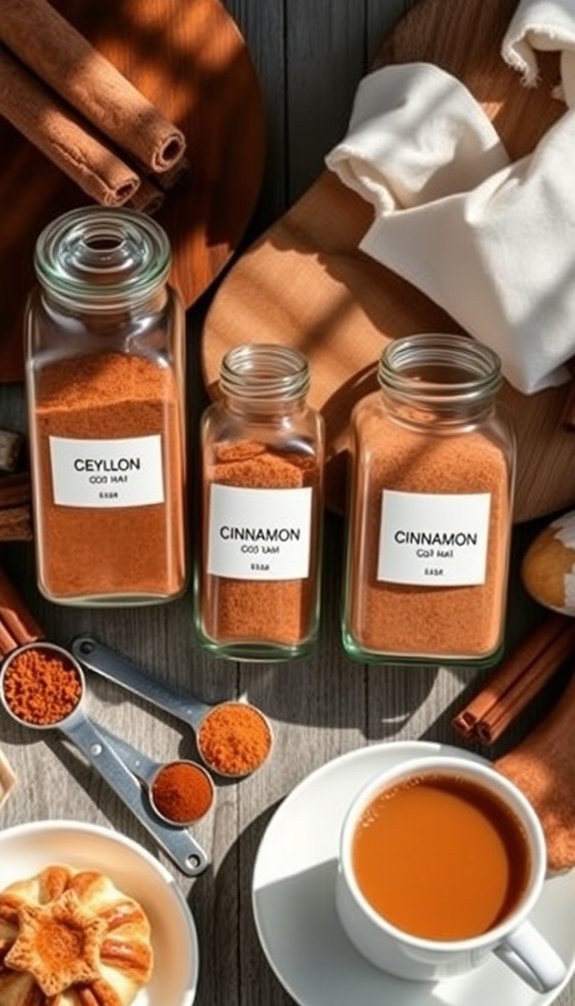
Ground cinnamon loses its punch faster than cinnamon sticks because more of its surface is exposed to air. If your cinnamon smells flat or dusty when you open the jar, it is time to replace it. For more on keeping baked goods at their best, read this guide to how long cinnamon rolls keep and how to store them.
What Are the Most Common Cinnamon Baking Mistakes?
The most common mistakes are using stale cinnamon, choosing the wrong type for the recipe and adding too much for the texture you want. Each one is easy to avoid once you know what to look for.
- Using old spice. Dull, dusty-smelling cinnamon will make bakes taste flat, so buy in small quantities.
- Ignoring the type. Strong cassia in a delicate vanilla cake can overwhelm other flavors, while mild Ceylon in a cinnamon roll may taste faint.
- Skipping the mix. Clumps of cinnamon create unevenly spiced bites, so whisk it into the dry ingredients.
- Relying on cinnamon for sweetness. Cinnamon adds warmth and depth, but it does not replace sugar in a recipe.
Which Flavors Pair Well With Cinnamon?
Cinnamon pairs well with fruit, chocolate, nuts, coffee and warm seasonings like nutmeg and ginger. Its sweet, woody notes balance tart fruit and deepen rich ingredients. Use a light hand with cassia when pairing it with delicate flavors.
Apples and pears are classic partners for pies and crisps. Chocolate and cinnamon make brownies and cakes taste more complex, while a pinch in coffee or cocoa adds a warm finish. For more dessert pairings, browse these essential cookie cookbooks for building your baking library.
Frequently Asked Questions
Is Ceylon cinnamon better than cassia for baking?
Ceylon is better for delicate recipes where you want a mild, floral warmth, while cassia is better when you want bold, spicy flavor. Neither is better in every case. Many bakers keep both on hand and use Ceylon for frequent baking because it contains much less coumarin.
Which cinnamon is best for cinnamon rolls?
Cassia types such as Saigon or Korintje are the usual choice for cinnamon rolls because their stronger flavor holds up through the dough, filling and frosting. Ceylon also works if you prefer a gentler roll. Choose the type that matches the flavor you want in the finished bake.
Is cassia cinnamon safe to eat?
Cassia is generally used in normal food amounts, but it can contain high levels of coumarin. The Plants, People, Planet review describes coumarin as hepatotoxic and carcinogenic at high doses. If you eat cassia often, consider alternating with Ceylon or talking with a health care professional about your intake.
Can I substitute Ceylon cinnamon for cassia?
Yes, you can substitute Ceylon for cassia in most recipes, but the flavor will be milder and less spicy. Start with the same amount, taste the batter, and add a little more if you want a stronger result. Expect the finished bake to be more subtle.
How can I tell which type of cinnamon I have?
Check the label first, because Ceylon is usually labeled as Ceylon or true cinnamon, while cassia is often labeled Saigon, Korintje, Chinese, Vietnamese or Indonesian. If the label just says cinnamon, it is most likely cassia. Ground Ceylon is usually lighter in color and milder in smell.
How long does ground cinnamon last?
Ground cinnamon keeps its best flavor for a shorter time than sticks, so buy it in small amounts and replace it when it smells weak. Store it in an airtight, opaque container in a cool, dark place. A quick smell test is the most reliable check.
Conclusion
Choosing the right cinnamon types and uses comes down to flavor and safety. Ceylon offers mild, floral warmth with trace coumarin, while cassia types like Saigon and Korintje bring bold spice for cinnamon rolls and coffee cakes. Store your cinnamon airtight and away from heat, and it will reward you in every batch.
More on Cinnamon Types and Uses
Related guides: The Best Cinnamon Roll Topping: From Glaze to Cream Cheese Icing · Perfectly Pillowy Cinnamon Rolls: Your New Go-To Recipe · What Is a Kolache? a Sweet History and Our Favorite Recipe
Free tools: Baking Cups to Grams Converter (Free)