

Last updated: · By Claire Dawson
A vanilla bread recipe is a quick bread, which means it is leavened with baking powder instead of yeast, so there is no rising time. This version makes one 9 by 5-inch loaf that is soft, lightly sweet and sturdy enough for slicing. You need eight basic ingredients, including vegetable oil instead of butter, which keeps the batter easy to mix and the crumb tender.
This guide gives you exact measurements, step-by-step baking directions, and practical fixes for common problems like a dense or sunken center. It also explains the vanilla labeling rules that affect what you buy, so your bread tastes the way you expect.
Key Takeaways
- This vanilla bread recipe makes one 9 by 5-inch loaf from 2 cups of all-purpose flour, 1 cup of sugar, 2 teaspoons of baking powder, 1 egg, 1/3 cup of vegetable oil, 1 cup of milk and 1 teaspoon of vanilla extract.
- Bake at 350 degrees Fahrenheit for 45 to 50 minutes, or until a toothpick inserted into the center comes out clean or with a few moist crumbs.
- The FDA standard of identity requires vanilla extract to contain at least 35% ethyl alcohol by volume, and products below that level are sold as vanilla flavoring.
- Mix the wet and dry ingredients only until combined, because overmixing develops gluten and can make the loaf tough.
- Cool the loaf in the pan for 10 minutes, then cool it fully on a wire rack before slicing or storing it airtight.
What Ingredients Do You Need for Vanilla Bread?
You need eight core ingredients: flour, sugar, baking powder, salt, egg, oil, milk and vanilla extract. Vanilla is the main flavor, so the quality of your extract affects the final taste more than any other single ingredient.
| Ingredient | Amount | Role in the loaf |
|---|---|---|
| All-purpose flour | 2 cups | Provides structure |
| Granulated sugar | 1 cup | Adds sweetness and helps keep the crumb tender |
| Baking powder | 2 teaspoons | Lifts the batter as it bakes |
| Salt | 1/2 teaspoon | Balances the sweetness |
| Large egg | 1 | Binds the batter and adds richness |
| Vegetable oil | 1/3 cup | Adds moisture and stays liquid at room temperature |
| Milk | 1 cup | Hydrates the flour |
| Vanilla extract | 1 teaspoon | Provides the main flavor |
Some older vanilla bread recipes call for a full tablespoon of baking powder. For 2 cups of flour, that is too much, and it can leave a bitter, metallic taste. Two teaspoons gives a clean rise for this loaf.
What Is Vanilla Extract and Why Does It Matter?
Vanilla extract is a solution of flavor compounds from vanilla beans, dissolved in alcohol and water. The U.S. Food and Drug Administration sets a minimum alcohol level for vanilla extract, which is at least 35% ethyl alcohol by volume, as described in the FDA standard of identity for vanilla extract in the Code of Federal Regulations.
Products with less alcohol do not meet that standard. Under the federal rule for vanilla flavoring, a product below 35% alcohol by volume is classed as vanilla flavoring rather than extract. Check the label before you buy, because the two terms are not interchangeable.
If you want a layer-cake version of the same flavor profile, try this Ina Garten vanilla cake recipe for a more formal dessert.
How Do You Make Vanilla Bread Step by Step?
Preheat the oven to 350 degrees Fahrenheit (176 degrees Celsius), mix the dry and wet ingredients in separate bowls, combine them gently, and bake the batter in a greased 9 by 5-inch loaf pan for 45 to 50 minutes. Most of the work takes about 15 minutes of hands-on time.
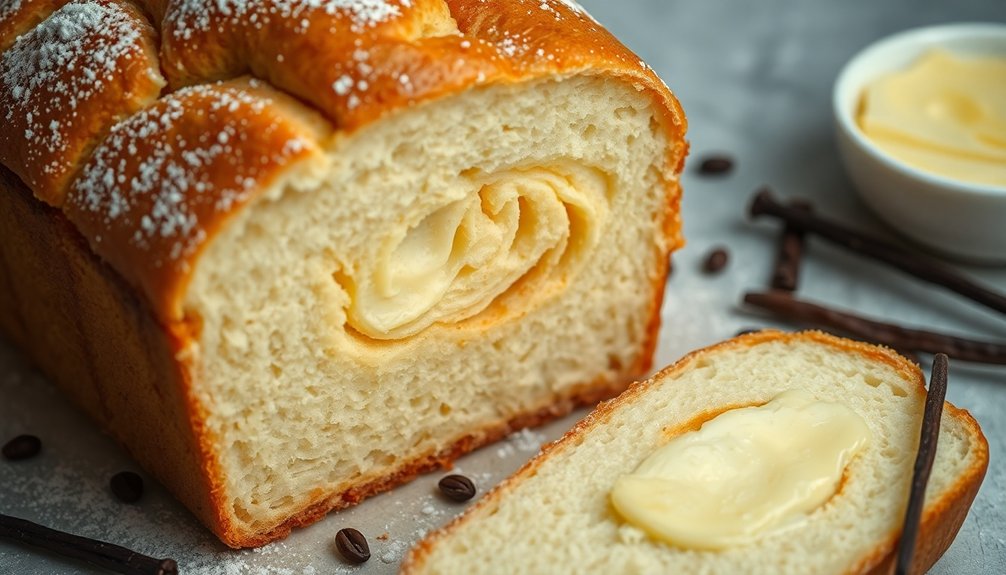
- Preheat the oven to 350 degrees Fahrenheit. Grease a 9 by 5-inch loaf pan, or line it with parchment paper so the loaf lifts out easily.
- In a large bowl, whisk together 2 cups of all-purpose flour, 1 cup of granulated sugar, 2 teaspoons of baking powder and 1/2 teaspoon of salt until evenly combined.
- In a separate bowl, whisk 1 large egg, 1/3 cup of vegetable oil, 1 cup of milk and 1 teaspoon of vanilla extract until smooth.
- Pour the wet mixture into the dry ingredients. Fold with a spatula just until no dry streaks remain. A few small lumps are fine.
- Spread the batter evenly in the prepared pan and smooth the top.
- Bake for 45 to 50 minutes. Insert a toothpick into the center. It should come out clean or with a few moist crumbs. If the top browns too quickly, loosely tent it with foil for the rest of the bake.
- Cool the loaf in the pan for 10 minutes. Then lift it onto a wire rack and cool it completely before slicing.
What Tips Help Vanilla Bread Turn Out Soft and Even?
Three habits matter most: measure flour accurately, mix gently, and test for doneness before you remove the loaf. Following these steps prevents the most common problems, including a gummy texture and a sunken middle.
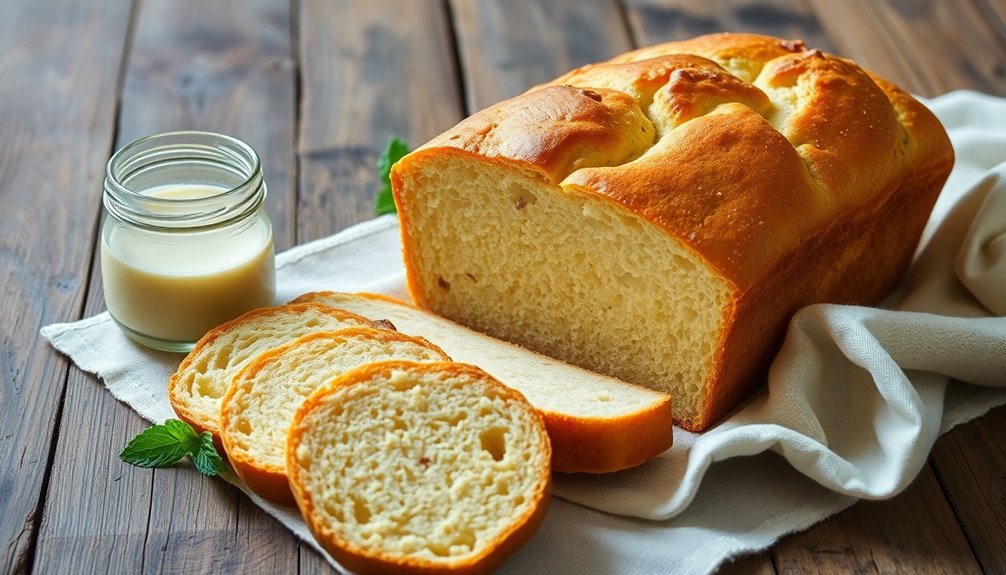
Why Does My Vanilla Bread Sink in the Middle?
A dip in the center usually means the loaf was underbaked, the batter was overmixed, or the batter had too much liquid. Overmixing builds gluten, which makes the structure tough and can cause the center to collapse as it cools.
Bake until a toothpick comes out clean or with a few moist crumbs. Start checking at 45 minutes, since loaf size, oven accuracy and pan material all change the bake time.
How Should You Measure Flour?
Spoon flour into the measuring cup and level it with a knife. Scooping straight from the bag packs in extra flour, which can make the loaf dry. If you have a kitchen scale, weighing the flour gives the most consistent results.
Quick Pre-Bake Checklist
- Oven preheated to 350 degrees Fahrenheit, with the rack in the center
- Loaf pan greased or lined with parchment
- Baking powder and vanilla measured with level measuring spoons
- Egg and milk at room temperature for a smoother batter
- Batter folded only until the dry streaks disappear
How Can You Change the Flavor of Vanilla Bread?
You can add mix-ins, spices or a different extract to change the flavor while keeping the base recipe the same. Fold any add-ins into the batter at the end, and expect the bake time to vary slightly, so keep testing for doneness.
- Chocolate chips: Fold in about 1/2 cup of semisweet chips. Tossing them with a spoonful of the measured flour helps them stay suspended in the batter.
- Warm spices: Add 1/2 teaspoon of cinnamon or nutmeg to the dry ingredients. Both pair well with vanilla.
- Nuts: Fold in about 1/2 cup of chopped walnuts or pecans for crunch.
- Dried fruit: Add about 1/2 cup of raisins or dried cranberries for sweetness and chew.
- Almond extract: Replace 1/4 teaspoon of the vanilla with almond extract for a nutty undertone.
For a fruit-based version, this banana bread recipe for an 8 by 8 pan uses a similar mixing method. For a seasonal twist, try this Tartine pumpkin bread recipe for fall.
How Should You Store Vanilla Bread?
Store cooled vanilla bread in an airtight container or tightly wrapped at room temperature for several days. For longer storage, freeze it, because freezing preserves the loaf better than leaving it out.
Wait until the loaf is completely cool before wrapping it, since trapped steam leads to a soggy top. Wrap the cooled loaf tightly in plastic wrap and foil, label it with the date, and freeze. Thaw it at room temperature, still wrapped, to reduce condensation.
To serve, enjoy the bread plain, toasted, or with a simple glaze. Make the glaze by simmering equal parts sugar and water with a touch of vanilla, then brushing it over the top. A pinch of cinnamon or ginger in the glaze adds warmth.
Frequently Asked Questions
Can I Use Butter Instead of Oil?
Yes, you can replace the 1/3 cup of vegetable oil with an equal amount of melted butter for a richer flavor. Butter contains some water, so the crumb and browning may be slightly different. Let the butter cool slightly before whisking it into the wet ingredients.
What Is the Difference Between Vanilla Extract and Vanilla Flavoring?
Vanilla extract must contain at least 35% ethyl alcohol by volume under the FDA standard. A product with less alcohol is classed as vanilla flavoring, so it does not meet the extract standard. Read the label, since both products may appear on the same shelf.
Can I Make This Vanilla Bread Gluten-Free?
This recipe is written for all-purpose wheat flour, so it is not tested as gluten-free. Gluten-free flour blends absorb liquid differently, which changes the texture. If you try one, check that the blend is labeled for baking and expect to adjust the milk.
Why Did My Vanilla Bread Come Out Dense?
Dense bread usually comes from overmixing, too much flour, or old baking powder. Mix only until the dry streaks disappear, spoon the flour into the cup, and check that your baking powder is fresh. Underbaking can also make the loaf feel heavy.
Can I Bake This Vanilla Bread in Muffin Tins or a Different Pan?
Yes, but the bake time changes. Smaller portions bake faster, so check them early. A different loaf pan size or shape changes the bake time too, so use a toothpick test rather than relying only on the timer.
How Long Does Vanilla Bread Last?
Vanilla bread stays fresh for several days when stored airtight at room temperature. Frozen and tightly wrapped, it keeps well for longer. Slice the loaf before freezing if you want to pull out single portions.
Conclusion
A good vanilla bread recipe depends on accurate measurements, gentle mixing and a reliable toothpick test. Use 2 cups of flour, 2 teaspoons of baking powder and 1 teaspoon of pure vanilla extract, then bake at 350 degrees Fahrenheit until the center is set. Once you have the basics, use the add-ins above to make the recipe your own.