Last updated: · By Claire Dawson
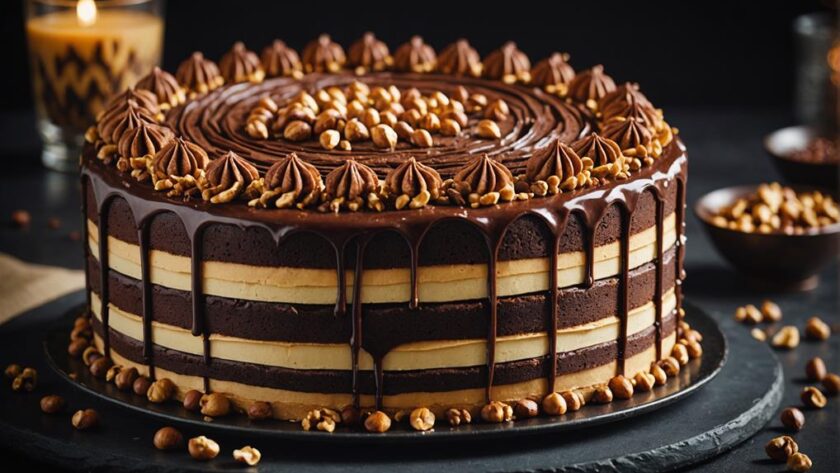
The Dobos torte is a Hungarian layer cake made from thin sponge layers, chocolate buttercream, and a hard caramel top scored into wedges. To make an authentic Hungarian Dobos torte recipe at home, you bake several paper-thin sponge layers, beat a chocolate buttercream enriched with cooked sugar and egg yolks, and finish the cake with a caramel top. The work takes a full day, but each step is manageable for a patient home baker.
This guide covers where the cake came from, what each component does, and a recipe with clear steps. It also explains how to store the torte, where the caramel top can go wrong, and which flavor changes are worth trying.
Key Takeaways
- The Dobos torte was first shown at the National General Exhibition in Budapest in 1885, and Emperor Franz Joseph I and Empress Elisabeth were among the first to taste it.
- The name comes from the Hungarian “Dobos torta,” meaning “Dobos cake,” and is also spelled “Dobosh” in English.
- The caramel top was originally a practical way to keep the cake fresher longer, which mattered in the late 19th century.
- Dobos donated his recipe to the Budapest Pastry and Honey-Bread Makers Guild in 1906.
- Sources disagree on the creation year, giving 1884, 1885, or 1887, so the 1885 exhibition is the most consistently cited date.
What Is a Dobos Torte?
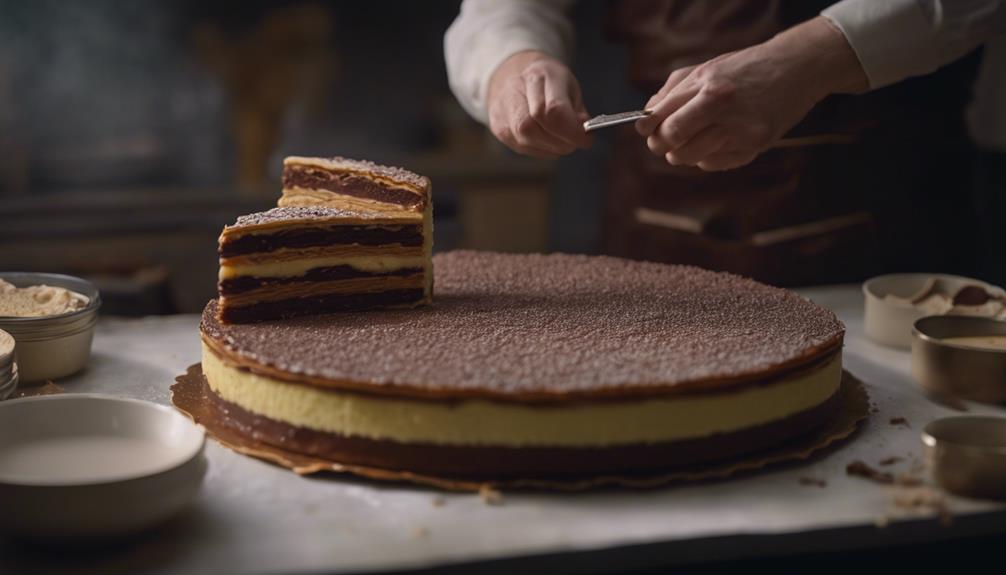
A Dobos torte is a sponge cake built from several thin layers, each spread with a chocolate buttercream, and topped with a sheet of caramel cut into wedges. The contrast is the point: soft cake and rich, smooth filling sit under a brittle, glassy top. The caramel is what most people remember about the cake.
Where Does the Name Come From?
The name comes from the Hungarian “Dobos torta,” which translates to “Dobos cake.” English sources also use the spelling “Dobosh.” The name honors the confectioner who created the recipe, not the ingredients.
Who Created the Dobos Torte?
Confectioner József Dobos is credited with the cake. According to a Wikipedia entry on the Dobos torte, it was first shown at the National General Exhibition of Budapest in 1885, and Emperor Franz Joseph I and Empress Elisabeth were among the first to taste it. Because Wikipedia is community-edited, treat its dates as a starting point and check them against primary sources if you need precision.
Why Does the Caramel Top Matter?
The caramel top began as a practical choice. A Zingerman’s Community of Businesses article on Dobos torta explains that the caramel was a way to keep the cake fresher longer, a real concern in the late 19th century. Today it is the signature element, so do not skip it.
Offbeat Budapest notes that after competitors tried to copy the cake, Dobos made the recipe public. The cake remains a staple across former Habsburg lands, according to its guide to traditional Hungarian pastries and cakes.
What Ingredients and Equipment Do You Need?
You need three components: sponge layers, chocolate buttercream, and caramel for the top. The quantities below make a cake about 8 inches across, with five layers, and serve 12 people.
Sponge Ingredients
- 6 large eggs, separated and at room temperature
- 3/4 cup (150 g) granulated sugar, divided
- 3/4 cup (95 g) all-purpose flour, sifted
- 1 teaspoon vanilla extract
- 1/8 teaspoon fine salt
Buttercream Ingredients
- 4 large egg yolks
- 1/2 cup (100 g) granulated sugar, for the caramel
- 1/4 cup (60 ml) hot water
- 1 cup (227 g) unsalted butter, softened and cubed
- 4 ounces (115 g) bittersweet chocolate, melted and cooled to warm
- 1/4 teaspoon fine salt
- 1 teaspoon vanilla extract
Caramel Top Ingredients
- 1/2 cup (100 g) granulated sugar
- 1 teaspoon fresh lemon juice
Equipment Checklist
- Two half-sheet pans and parchment paper
- A stand mixer or hand mixer
- An 8-inch cake round or plate to use as a template
- A heavy saucepan for the caramel
- An offset spatula and a serrated knife
- A silicone mat or lightly oiled parchment for the caramel top
How Do You Make the Sponge Layers?
Bake the sponge in thin, separate layers, not as one thick cake. Preheat the oven to 350°F and trace an 8-inch circle on each sheet of parchment so you can spread each layer evenly. Thin layers bake quickly, so watch them closely.
- Preheat the oven to 350°F and line two half-sheet pans with parchment. Trace an 8-inch circle on each parchment sheet, then flip the paper so the marks face down.
- Beat the egg yolks with 1/2 cup (100 g) of the sugar and the vanilla for about 4 minutes, until thick and pale.
- In a clean bowl, beat the egg whites with the salt until foamy. Gradually add the remaining 1/4 cup (50 g) sugar and beat to stiff, glossy peaks.
- Fold one-third of the whites into the yolks to lighten the batter. Sift in the flour in three additions and fold gently with the remaining whites. Stop as soon as no dry streaks remain, since overmixing deflates the batter.
- Spread about 1/2 cup (120 g) of batter inside each circle with an offset spatula, aiming for an even layer about 1/8 inch thick.
- Bake one or two layers at a time for 8 to 10 minutes, until the edges are golden and the centers spring back when lightly touched.
- Let each layer rest for 1 to 2 minutes, then peel off the parchment and cool completely on a rack. Trim any ragged edges to exactly 8 inches using the template.
If you want a simpler butter-based batter to practice with first, try this Ina Garten’s vanilla cake recipe. It uses a more forgiving method, so you can learn how to judge doneness and crumb before tackling the thin layers.
How Do You Make Chocolate Buttercream?
Chocolate buttercream for a Dobos torte is an egg yolk and butter emulsion with a caramel base and melted chocolate. The caramel adds depth, and the yolks give the filling a silky, custard-like body. Keep the caramel warm, not hot, when you add it to the yolks so the butter does not melt.
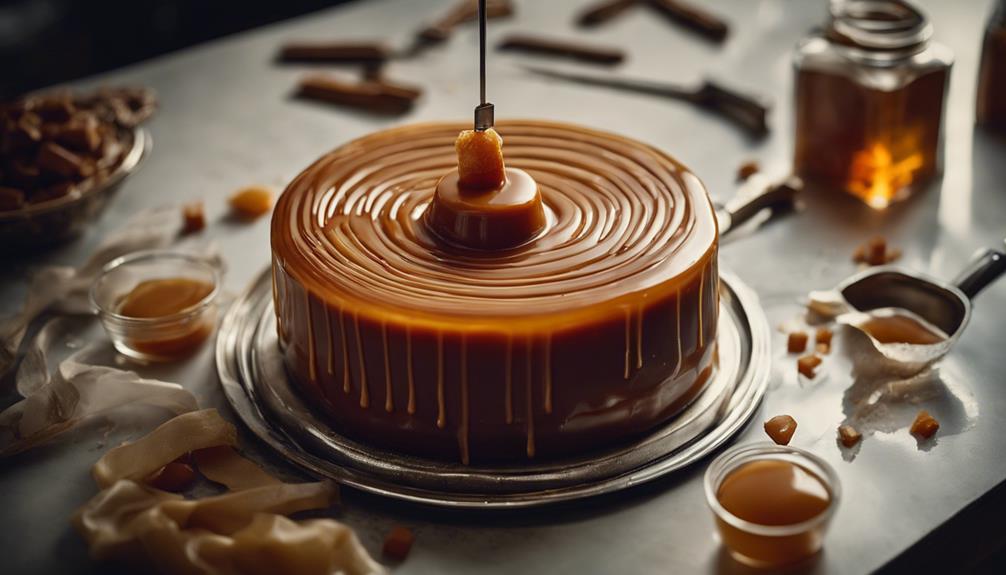
- Cook the 1/2 cup sugar in a heavy saucepan over medium heat, swirling occasionally, until it turns a deep amber. Remove from the heat and carefully whisk in the hot water. The mixture will bubble and spatter, so keep your face away from the pan.
- Return the pan to low heat for 30 seconds if the caramel has seized, then let it cool until just warm, about 10 minutes.
- Beat the egg yolks in a stand mixer on medium speed for 2 minutes, until pale. With the mixer running, pour in the warm caramel in a slow stream.
- Keep beating for about 5 minutes, until the bowl feels cool to the touch. A warm base will melt the butter and produce a soupy filling.
- Add the butter a few cubes at a time, beating well after each addition and scraping the bowl. The mixture may look curdled midway; it will smooth out.
- Beat in the warm melted chocolate, salt, and vanilla until the buttercream is uniform and glossy.
How Do You Add Caramel to the Buttercream?
Add caramel to the yolks while it is warm, not hot or cold, so it blends smoothly. Cooking the sugar to deep amber gives a toasted, slightly bitter note that balances the sweet chocolate. Pale caramel will taste flat, so take it closer to the color of an old penny.
How Do You Fix Buttercream That Is Too Thin or Too Stiff?
If the buttercream looks soupy, chill it for 15 minutes and rebeat it. If it looks stiff or grainy, beat in warm water one teaspoon at a time until it spreads easily. Adding water slowly protects the texture, and you can test a small spoonful on a cake layer before filling the whole torte.
How Do You Make the Caramel Top?
Make the caramel top by cooking sugar and lemon juice to a dark amber, spreading it into a thin round, and scoring it into 12 wedges before it hardens. The lemon juice helps prevent crystallization. Work quickly, because the caramel sets within minutes.
- Place the 1/2 cup sugar and lemon juice in a clean, dry saucepan. Cook over medium heat without stirring, swirling the pan gently, until the sugar is deep amber, about 6 to 8 minutes.
- Pour the caramel onto a lightly oiled silicone mat or parchment. Use an oiled offset spatula to spread it into an 8-inch circle.
- Let it cool for 1 to 2 minutes, until it is firm enough to score but still pliable. Use an oiled knife to score 12 even wedges.
- When fully cool, break the caramel along the scored lines. Store the pieces in an airtight container at room temperature, away from humidity.
Caramel absorbs moisture from the air, so a sticky top usually means it was made too early or stored in a humid kitchen. Make the caramel on the day you plan to serve the cake.
How Do You Assemble the Dobos Torte?
Assemble the torte by stacking the sponge layers with a thin, even coat of buttercream between each one, then chilling it so the filling firms up. Set the caramel top on just before serving, so it stays crisp.
- Place one sponge layer on a flat serving plate or cardboard round. Spread about 1/2 cup (120 g) of buttercream evenly over the top, reaching the edges.
- Repeat with the next four layers, keeping the stack straight and pressing gently to level it. Leave the top layer bare.
- Spread a thin coat of buttercream over the sides and top of the stack, then chill for at least 1 hour so it firms up.
- Lightly score the buttercream into 12 wedges with a sharp knife, following the caramel wedges you made.
- Just before serving, place the caramel top on the cake. Lift it carefully with an offset spatula and set it flat so the wedges line up with your scoring.
Should You Brush the Layers With Syrup?
You can brush the layers with a light syrup if you want a moister cake. Simmer 1/4 cup (50 g) sugar with 1/4 cup (60 ml) water until dissolved, cool it, and stir in 1 tablespoon of rum or bourbon if you like. Brush each layer lightly, because too much syrup makes the sponge soggy and softens the buttercream.
How Should You Store and Serve Dobos Torte?
Store the assembled torte in the refrigerator for up to 3 days, without the caramel top, and serve it cool or at room temperature. Because the buttercream contains butter and egg yolks, do not leave the cake out for long periods.
| Component | Make ahead | How to store |
|---|---|---|
| Sponge layers | Up to 2 days | Wrap airtight at room temperature, or freeze up to 1 month |
| Chocolate buttercream | Up to 3 days | Refrigerate in an airtight container; bring to room temperature and rebeat before using |
| Caramel top | Same day only | Keep dry in an airtight container at room temperature |
| Assembled cake (no caramel) | Up to 3 days | Refrigerate covered; add the caramel top just before serving |
Serve the cake in thin wedges, since it is rich. Break the caramel top into pieces, or cut through it with a sharp knife using a gentle sawing motion. Many people enjoy the crackly caramel as a separate bite.
What Flavor Variations Work Well?
The most reliable variations change the chocolate, add a liqueur to the buttercream, or add citrus. Change one element at a time so you can taste the difference. Keep the caramel top traditional so the cake still reads as a Dobos torte.
- Liqueur: Stir 1 to 2 tablespoons of rum or Grand Marnier into the finished buttercream. For a fuller orange-liqueur flavor, try this Grand Marnier cake recipe with an orange liqueur twist.
- Espresso: Dissolve 1 teaspoon of instant espresso powder in the warm chocolate before adding it to the buttercream.
- Salt: Use a little more salt in the buttercream to sharpen the chocolate, or sprinkle a few flakes of sea salt on the caramel.
- Citrus: Add 1 teaspoon of finely grated orange zest to the buttercream for a brighter finish.
Can You Use Different Chocolate?
You can use milk or white chocolate, but the cake will taste sweeter and less bitter. If you switch, reduce the sugar in the caramel slightly to keep the balance. Bittersweet chocolate, around 60 to 70 percent cacao, gives the most traditional result.
How Is It Different From a Viennese Torte?
The Dobos torte is built from thin sponge layers with a caramel top, while many Viennese tortes rely on a dense chocolate cake and fruit preserves. If you want to compare the two, read this classic Sacher torte recipe from Vienna, which uses a different cake and filling.
Frequently Asked Questions
How long does it take to make a Dobos torte?
Plan for about 3 to 4 hours of active work, plus chilling time. Many bakers split the job over two days by baking the layers and making the buttercream one day, then assembling the cake the next.
Can I make a Dobos torte ahead of time?
Yes. The sponge layers and buttercream can be made up to two or three days ahead, and the assembled cake keeps for up to 3 days in the refrigerator. Make the caramel top on the day you serve the cake.
Why did my caramel top get sticky?
Caramel pulls moisture from the air, especially in humid weather. Make it close to serving time, store it in an airtight container, and keep it away from the refrigerator, where condensation can form.
Why did my buttercream look curdled?
Buttercream often looks curdled when the butter is too cold or the bowl is too warm. Keep beating, since it usually smooths out as the butter emulsifies. If it stays broken, chill it briefly and rebeat.
Is Dobos torte the same as Sacher torte?
No. Both are famous Central European cakes, but the Dobos torte is known for its thin sponge layers, chocolate buttercream, and caramel top, while the Sacher torte is a chocolate cake typically filled with apricot preserves.
Conclusion
An authentic Hungarian Dobos torte recipe rewards careful work: thin, golden sponge layers, a smooth caramel-enriched chocolate buttercream, and a crisp caramel top that you make on the day you serve it. Follow the steps in order, keep the caramel warm when you fold it into the yolks, and store the cake cold. The result is a torte that honors a cake first shown in Budapest in 1885.