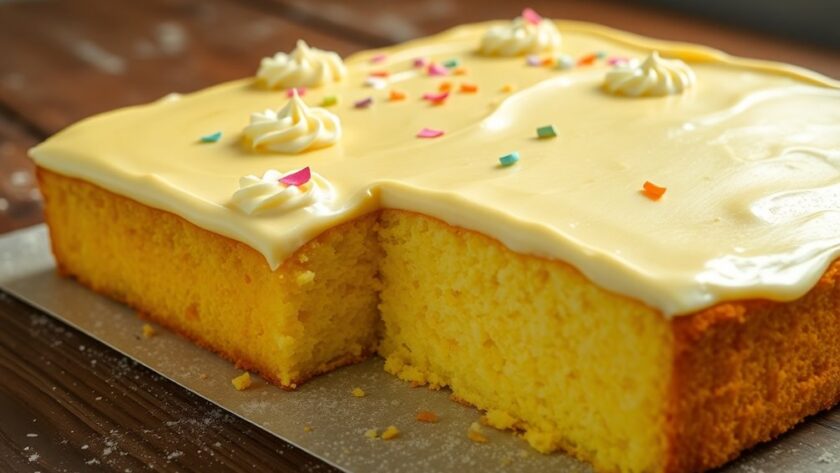
If you want a yellow sheet cake that tastes like bakery-style perfection, start with high-quality ingredients like organic eggs and real butter. Make certain to cream the butter and sugar until fluffy for a light texture. Incorporating buttermilk or sour cream adds moisture. For enhanced flavor, consider mixing in vanilla extract or fresh citrus zest. Don’t forget to monitor baking times carefully to guarantee it’s just right. Stay tuned to discover more tips and tricks for your baking success!
The Secret to Perfect Yellow Sheet Cake
When you want to bake the perfect yellow sheet cake, understanding a few key elements makes all the difference. Focus on achieving the ideal cake texture by mastering ingredient ratios; too much flour can lead to dryness. Additionally, using gluten-free flour can help achieve a light and tender texture for those with dietary restrictions. Incorporating sour cream into your batter can significantly enhance moisture content.
Pay attention to flavor balance; a hint of vanilla enhances the cake’s richness. Embrace baking science by using the correct pan material—light-colored aluminum often yields the best results.
Consider serving temperature, as a warm cake pairs beautifully with frosting compatibility. Use the right baking tools to streamline preparation efficiency, ensuring everything’s ready at hand.
Finally, think about cake longevity; a well-stored cake retains moisture and flavor, keeping it delicious for days. These factors will elevate your cake-making game, especially the importance of ingredient ratios that can significantly affect the final outcome.
Essential Ingredients for Bakery-Style Flavor
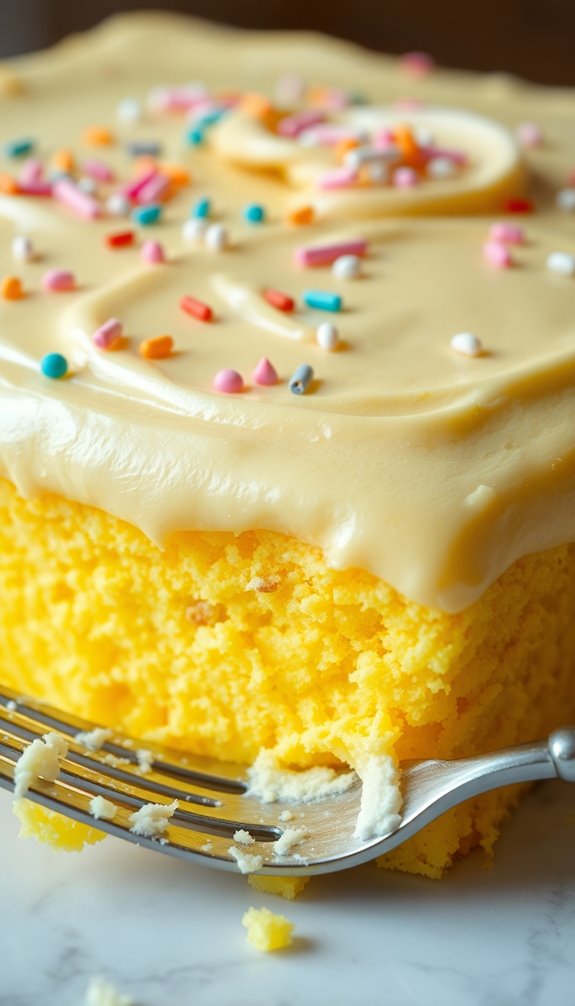
To achieve that irresistible bakery-style flavor in your yellow sheet cake, you need to focus on the quality of your ingredients. Using fresh, high-quality components makes a noticeable difference in taste. Plus, incorporating some flavor enhancement techniques can elevate your cake to a whole new level. Consider adding vanilla extract to enhance flavor, similar to how it enriches chocolate chip cookies. Additionally, using high-quality chocolate chips can significantly improve the overall taste and texture of baked goods. Don’t forget that using premium vanilla beans can elevate the flavor even further, setting your cake apart from standard recipes.
Quality of Ingredients
Using high-quality ingredients is essential for achieving that irresistible bakery-style flavor in your yellow sheet cake. Start with fresh, organic eggs and real butter; they make a noticeable difference. Classic puff pastry, which requires meticulous preparation, highlights the importance of using quality ingredients in any baking endeavor.
When it comes to flour, choose a high-protein variety for a better structure. Additionally, incorporating whole grains can enhance texture and taste, making your cake even more delightful. Consider your ingredient sourcing carefully—local markets often offer fresher options that enhance taste and texture.
For sugar, opt for pure cane sugar instead of cheaper alternatives; it elevates sweetness and balances flavors perfectly. Don’t forget about vanilla extract; pure is always better than imitation.
With these choices, you’re not just baking; you’re flavor profiling your cake for that warm, comforting taste reminiscent of your favorite bakery treats. Make each ingredient count to create a true masterpiece! Additionally, using high-quality ingredients can greatly enhance the overall flavor and texture of baked goods.
Flavor Enhancements Techniques
While you may think a simple yellow sheet cake needs little more than basic ingredients, incorporating flavor enhancements can elevate it to a bakery-worthy delight.
Start by adding a splash of flavor extracts like almond essence or vanilla bean for depth. A hint of citrus zest brightens the cake, while spice additions such as cinnamon or nutmeg bring warmth.
For a richer taste, consider mixing in chocolate chips or nutty flavors like chopped walnuts. Fruit purees can add moisture and a unique twist, while a subtle coffee infusion enhances the overall flavor profile. Additionally, using vanilla bean paste can infuse intense taste and create a more complex flavor experience.
Finally, don’t overlook herbal notes; a touch of fresh rosemary or thyme can surprise and delight the palate, creating a truly exceptional cake.
Step-by-Step Instructions for Baking
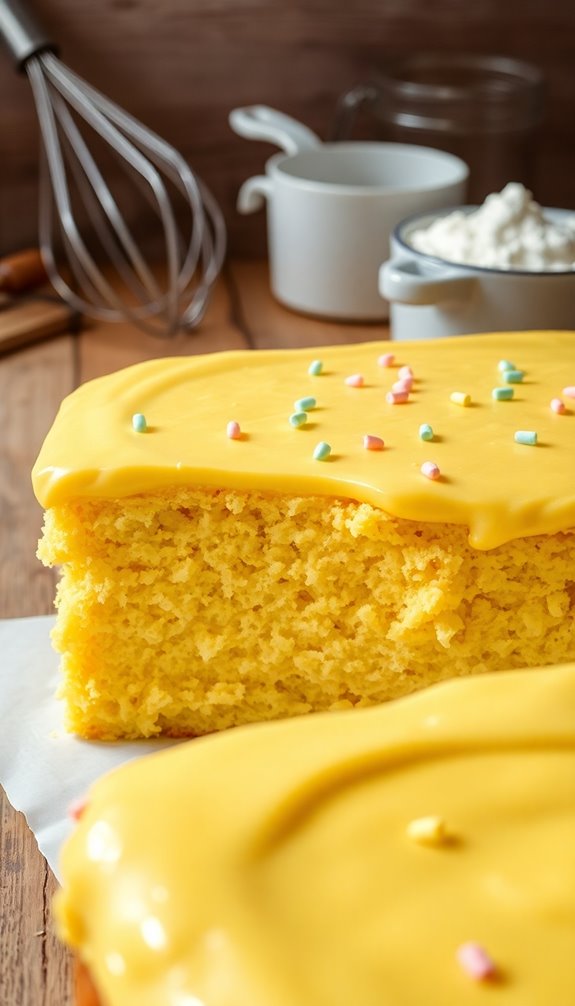
Now that you’ve gathered your essential ingredients, it’s time to get baking!
You’ll learn the best mixing techniques to create a smooth batter and discover the perfect baking time for that fluffy finish.
Let’s jump into the step-by-step instructions to make your yellow sheet cake a success!
Essential Ingredients Needed
To bake a delicious yellow sheet cake, you’ll need a few essential ingredients that come together to create a moist and flavorful treat.
The right ingredient sourcing is important for achieving that perfect cake flavor. Here’s what you’ll need:
- All-purpose flour – This forms the base of your cake, giving it structure.
- Granulated sugar – Sweetens the cake and helps achieve a tender crumb.
- Unsalted butter – Adds rich flavor and moisture to your cake.
Make sure to choose high-quality ingredients for the best results.
Each component plays a significant role in enhancing the overall taste and texture, ensuring your yellow sheet cake tastes just like the ones from your favorite bakery.
Mixing Techniques Explained
Mixing is the heart of baking, and mastering the techniques is key to achieving a light and fluffy yellow sheet cake. Start by creaming the butter and sugar together until it’s light and fluffy. This process incorporates air, which helps your cake rise.
Next, add the eggs one at a time, mixing well after each addition to guarantee a smooth batter consistency.
When you incorporate the dry ingredients, use gentle folding, mixing just until combined. Avoid overmixing, as this can lead to a dense cake.
If you’re adding liquids, alternate them with the dry ingredients to maintain the ideal batter consistency. By following these mixing methods, you’ll set the foundation for a perfect yellow sheet cake.
Baking Time Guidelines
Once you’ve mastered the mixing techniques, it’s time to focus on baking your yellow sheet cake to perfection. Here are some essential baking time guidelines to keep in mind:
- Preheat Your Oven: Make certain your oven is fully preheated before placing the cake inside. This helps guarantee even baking.
- Timing Techniques: Start checking for doneness at the lower end of the recommended baking time. Insert a toothpick; it should come out clean.
- Baking Time Adjustments: If you’re using a different pan size, adjust the baking time accordingly. Thinner cakes bake faster, while thicker ones take longer.
Follow these tips, and you’ll achieve that bakery-style perfection you desire!
Tips for Achieving a Moist and Tender Crumb
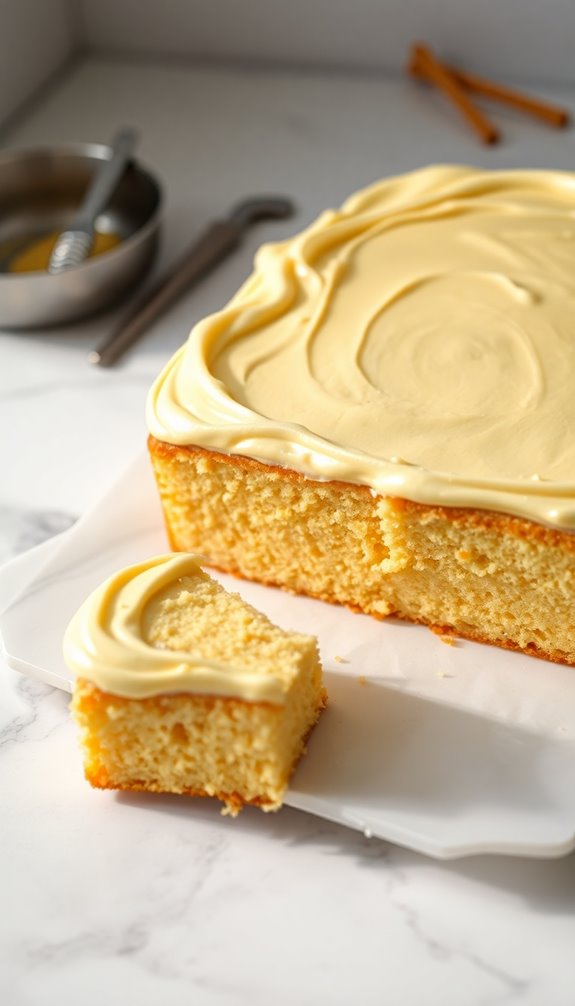
Achieving a moist and tender crumb in your yellow sheet cake is easier than you might think. Start with the right ingredient ratios; using a balance of butter, sugar, and eggs will set the foundation for a great cake texture.
Be sure to cream the butter and sugar well, as this incorporates air and adds lightness. Don’t overmix once you add the dry ingredients; doing so can lead to a dense cake. Instead, mix until just combined.
Adding a bit of sour cream or buttermilk can also enhance moisture and flavor. Finally, keep an eye on your baking time—overbaking can dry out your cake, while underbaking might leave it too wet.
Enjoy your perfect yellow sheet cake!
How to Properly Grease and Line Your Pan
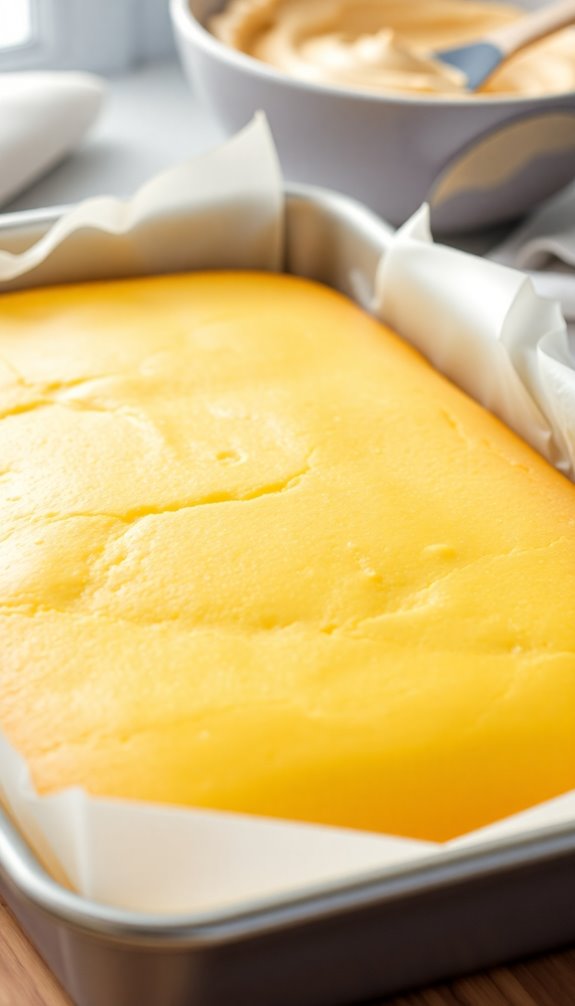
When it comes to baking your yellow sheet cake, choosing the right pan is essential for success.
You’ll want to know effective greasing techniques and proper lining methods to guarantee your cake comes out perfectly.
Let’s explore how to set your pan up for baking success!
Choosing The Right Pan
- Material Types: Opt for aluminum or non-stick pans. Aluminum promotes even heat distribution, enhancing baking performance.
- Size Considerations: Confirm your pan is the right size for your recipe. A too-small pan can overflow, while a too-large one may affect texture.
- Durability Factors: Choose sturdy pans that won’t warp.
This assures consistent baking and helps maintain your cake’s design options.
Greasing Techniques Explained
After selecting the right pan, the next step is to guarantee it’s properly prepared for baking. Start with your greasing methods. For a classic approach, use softened butter or one of the many butter alternatives, like coconut oil. Just spread it evenly across the pan’s bottom and sides.
If you prefer oil choices, consider vegetable or canola oil, applying it with a paper towel for an even coat. Non-stick sprays can simplify your life, too; just spray evenly without overdoing it.
Don’t forget flour dusting after greasing—this aids in cake release. You can also use baking sprays designed for cakes, which combine oiling techniques and flour in one convenient application.
With the right preparation, you’re set for a perfect bake!
Proper Lining Methods
How can you guarantee your cake slides out of the pan effortlessly? Proper lining methods are key. Here are three effective techniques:
- Parchment Paper: Cut a piece to fit the bottom of your pan, then grease the sides for easy removal.
- Silicone Mats: These are perfect for baking sheets and layer cakes, providing a non-stick surface without the need for grease.
- Greasing Options: Use butter, oil, or cooking spray to coat your pan, ensuring all corners are covered, especially for various pan sizes.
Once your cake is baked, let it cool on cooling racks for a few minutes before removing.
With these lining alternatives, you’ll achieve easy removal every time!
The Importance of Room Temperature Ingredients
When baking a delicious yellow sheet cake, using room temperature ingredients is essential for achieving the perfect texture and flavor. When your ingredients, like eggs and butter, are at room temperature, they blend more easily, creating a smooth batter.
This uniformity helps trap air, leading to a light, fluffy cake.
Moreover, room temperature ingredients enhance the overall flavor, allowing the sugars and fats to combine more thoroughly. You’ll notice the difference in taste and texture when you take that first bite.
Customizing Your Yellow Sheet Cake With Flavor Additions
To elevate your yellow sheet cake beyond the classic recipe, consider incorporating flavor additions that suit your taste. Here are three delicious ideas to get you started:
- Citrus Zest: Add lemon or orange zest for a revitalizing twist that brightens the flavor.
- Flavor Extracts: Experiment with vanilla, almond, or coconut extracts to enhance the cake’s richness.
- Fruit Additions: Fold in fresh berries or mashed bananas for natural sweetness and moisture.
You can also try a buttermilk variation for tanginess, or mix in chocolate chips for a decadent touch.
For a more sophisticated flavor, consider a coffee infusion or spice blends.
Finally, top it off with nut toppings or a caramel drizzle for extra flair!
Icing and Frosting Options for the Perfect Finish
While the cake itself is a delight, choosing the right icing or frosting can truly elevate your yellow sheet cake to new heights.
Experiment with various frosting flavors like chocolate, vanilla, or lemon to find your favorite flavor pairing. Consider using ganache for a rich, glossy finish, or a classic buttercream for a lighter, airy texture.
You can also explore different icing techniques to create unique decoration styles, such as piping rosettes or smooth spreads. Seasonal toppings, like fresh berries or edible flowers, add a pop of color and enhance visual appeal.
For themed decorations, coordinate your color themes with the occasion.
Finally, think about serving suggestions—slice it up and serve with a scoop of ice cream for an unforgettable treat!
How to Store and Preserve Your Cake Freshness
Properly storing your yellow sheet cake can keep it fresh and delicious for days. To maximize cake longevity, follow these freshness tips:
- Airtight Containers: Place your cake in an airtight container to control humidity and prevent it from drying out.
- Refrigerator Storage: If you’ve frosted the cake, store it in the fridge for up to a week. Be sure to cover it well to maintain moisture.
- Freezing Methods: For longer storage, wrap the cake in plastic wrap and aluminum foil, then freeze. It can last up to three months this way.
Using these layering techniques guarantees your cake stays moist and flavorful, letting you enjoy that bakery-style perfection even longer!
Troubleshooting Common Baking Issues
Even with the best storage methods, baking can sometimes go awry, leaving you with unexpected results.
If your cake’s too dense, check your mixing times; overmixing can lead to tough textures. For flat cakes, you might need baking temperature adjustments or oven calibration.
If you’ve made ingredient substitutions, verify they’re compatible with your recipe. Using the wrong pan sizes can also affect baking time and texture, so stick to the recommended sizes.
Altitude adjustments can be essential too—higher altitudes may require tweaks in liquid or leavening agents.
Watch out for common ingredient errors, like expired baking powder.
Finally, cooling techniques matter; cooling too quickly can crack your cake, so let it sit at room temperature.
Creative Serving Suggestions for Any Occasion
When you want to elevate a simple yellow sheet cake, think about creative serving suggestions that can transform it into a showstopper for any occasion. Here are three ideas to inspire you:
- Festive Presentations: Layer the cake with colorful fruits and edible flowers for vibrant color contrasts.
- Themed Decorations: Use seasonal accents like pumpkin spice or peppermint for holiday gatherings, enhancing flavor contrasts.
- Unique Platings: Serve individual portions on decorative plates, adding texture with whipped cream or crunchy toppings.
These creative toppings and serving pairings won’t only delight your guests but also make your cake a centerpiece that reflects your style and creativity!
How to Make Variations: Chocolate, Lemon, and More
To take your yellow sheet cake to the next level, consider exploring delicious variations like chocolate, lemon, and more.
For chocolate variations, simply replace part of the flour with cocoa powder for a rich twist. Add lemon zest for a rejuvenating citrus flavor, or try a hint of almond extract for warmth.
You can also incorporate coconut flavor to evoke tropical vibes. For a delightful crunch, mix in some nuts or top your cake with seasonal fruits and berry toppings.
Spice additions like cinnamon or nutmeg can elevate the taste, while different frosting styles—like cream cheese or chocolate ganache—offer exciting texture contrasts.
Experimenting with these variations will keep your cake lively and fun for every occasion!
Tips for Decorating Like a Pro at Home
Although decorating a yellow sheet cake might seem intimidating, you can easily achieve a professional look at home with a few simple techniques. Here are three tips to elevate your cake decorating skills:
- Color Combinations: Choose a color palette that complements your celebration theme. Soft pastels work for spring, while bold colors suit summer parties.
- Piping Methods: Master basic piping techniques to create beautiful borders or intricate designs. Practice with different tips to add texture contrasts.
- Edible Embellishments: Use seasonal touches like fresh fruit or themed sprinkles to enhance your cake’s appearance. Flavor pairings can also inspire your decorations.
With these professional techniques, your yellow sheet cake will look as amazing as it tastes!
Conclusion
As you savor your bakery-style yellow sheet cake, remember that every bite is a little piece of happiness, reminiscent of childhood memories and sunlit afternoons. With the right techniques and a sprinkle of creativity, you’ve transformed simple ingredients into a masterpiece worthy of any celebration. So, whether it’s a birthday or just because, let this cake be your canvas—adding joy and sweetness to life’s moments, much like a warm embrace on a chilly day. Enjoy!