
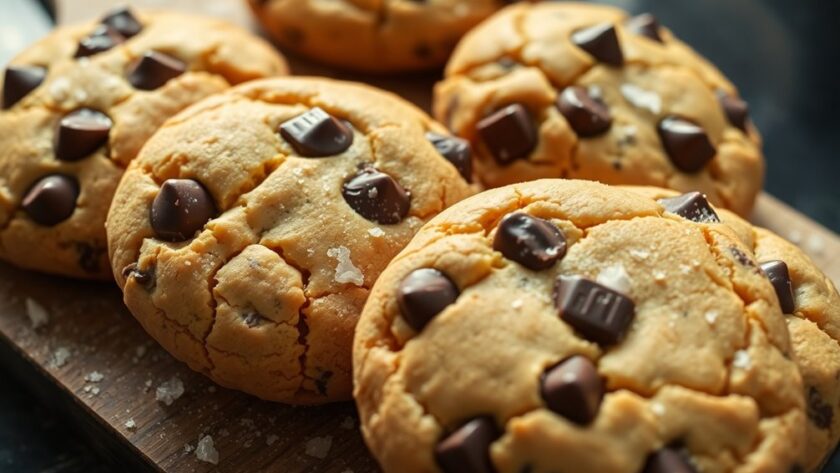
To create the best high-altitude chocolate chip cookies that stay chewy, you need to adjust your ingredients and techniques. Use a mix of all-purpose and cake flour for the perfect texture, and balance brown and granulated sugar to enhance moisture and flavor. Be mindful of baking time and temperature—bake at 375°F for fewer minutes. Proper mixing is key to avoid tough cookies. If you want tips on flavor variations and baking adjustments, stick around for more insights!
Understanding High-Altitude Baking Challenges
When you bake at high altitudes, you’ll quickly notice that the usual rules don’t always apply. The baking science shifts due to altitude effects, impacting moisture retention and ingredient behavior.
For instance, rising agents like baking powder or baking soda can become overly active, causing your cookies to rise too quickly and then collapse. You might also experience texture variations, making cookies less chewy than expected. Additionally, the lower air pressure can diminish flavor intensity, leaving your treats tasting flat. Understanding these challenges is essential for achieving the perfect cookie structure. Properly mixed dry ingredients are vital for desired texture and rise, so adjusting baking times and ingredient ratios will help you navigate these hurdles, ensuring your high-altitude chocolate chip cookies are both delicious and chewy. Furthermore, baking time adjustments are crucial to prevent dryness and ensure a moist, chewy cookie. For optimal results, consider the unique characteristics of high-altitude baking that can further influence your cookie’s final outcome.
Key Ingredients for Chewy Cookies at High Altitudes
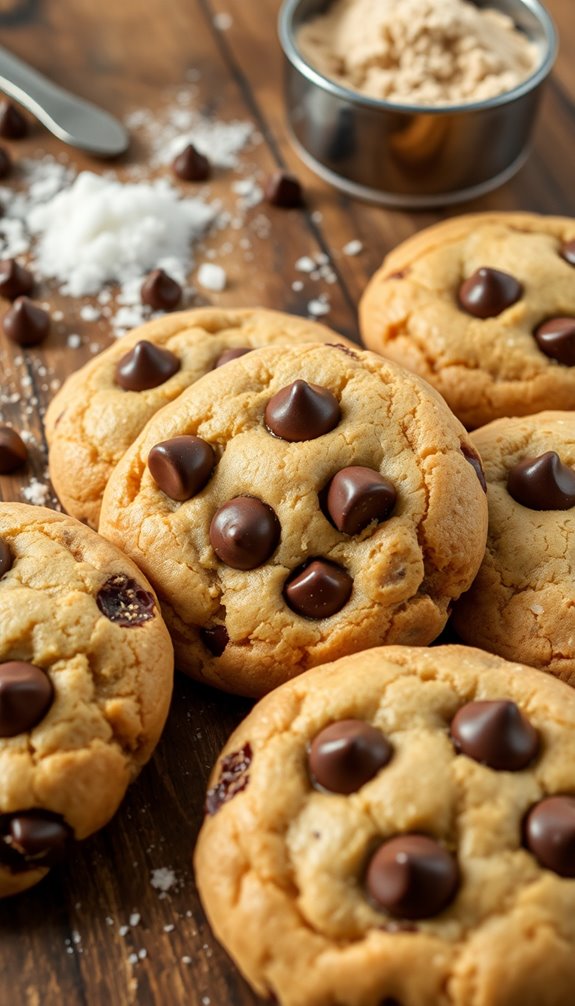
When baking cookies at high altitudes, the right ingredients can make all the difference. You’ll want to pay close attention to the type of flour, adjust sugar ratios, and consider how eggs affect moisture. Each of these factors plays a vital role in achieving that perfect chewy texture you crave. Incorporating a tablespoon of molasses can help replicate the moisture and flavor of brown sugar, ensuring your cookies remain deliciously chewy. Additionally, using self-rising flour can simplify your recipe while providing the necessary leavening for a light and airy texture. For added flavor, consider using almond flour to enhance the nutty richness, just as it does in classic chocolate chip cookies.
Flour Type Matters
Choosing the right flour is essential for achieving that perfect chewy texture in high-altitude chocolate chip cookies. Different flour types impact gluten development and protein content, which are vital in high altitudes.
All-purpose flour usually works well, but you can experiment with pastry flour for a softer bite or cake flour for an even lighter texture. A combination of sugars can also enhance the chewy quality, making the cookies more enjoyable. Whole grain flours can add depth, but be mindful of hydration levels, as they absorb more moisture. Additionally, using granulated sugar instead of brown sugar can also contribute to a desirable texture. Using browned butter will also enrich the flavor and improve the overall texture of your cookies.
If you’re considering flour substitutions, remember they may alter your cookie’s final texture. Proper flour storage also matters; keep your flour in a cool, dry place to maintain freshness and consistency in your baking.
Sugar Ratios Adjustments
To achieve that irresistible chewiness in your high-altitude chocolate chip cookies, adjusting sugar ratios is essential. By tweaking sugar types, you can optimize moisture balance and enhance flavor impact.
For example, using a mix of brown and granulated sugar can create a richer taste while providing the right sweetness levels. Incorporating light brown sugar can add moisture and a subtle caramel flavor, enhancing the chewy texture.
Balancing these ingredient ratios is vital; too much granulated sugar can lead to dry cookies, while excess brown sugar can make them overly moist.
Pay attention to texture variations as well; you want that soft, chewy bite. Embrace baking science and customize your recipe based on these adjustments, ensuring every batch turns out perfectly chewy, even at high altitudes.
Eggs and Moisture
Eggs play an essential role in achieving that perfect chewy texture in high-altitude chocolate chip cookies. They provide moisture retention, which is vital at higher elevations where baked goods can dry out more quickly.
When you’re baking at altitude, you might want to reflect on egg substitutions, like using an extra yolk or incorporating applesauce, to enhance moisture without sacrificing flavor. These alternatives can help maintain that gooey center you crave.
Remember, the balance of ingredients is key; too many egg substitutions can lead to a denser cookie. So, experiment carefully, and you’ll find the right combination that keeps your cookies chewy and delicious, even at high altitudes.
Enjoy the process and savor each bite!
How to Adjust Your Chocolate Chip Cookie Recipe?
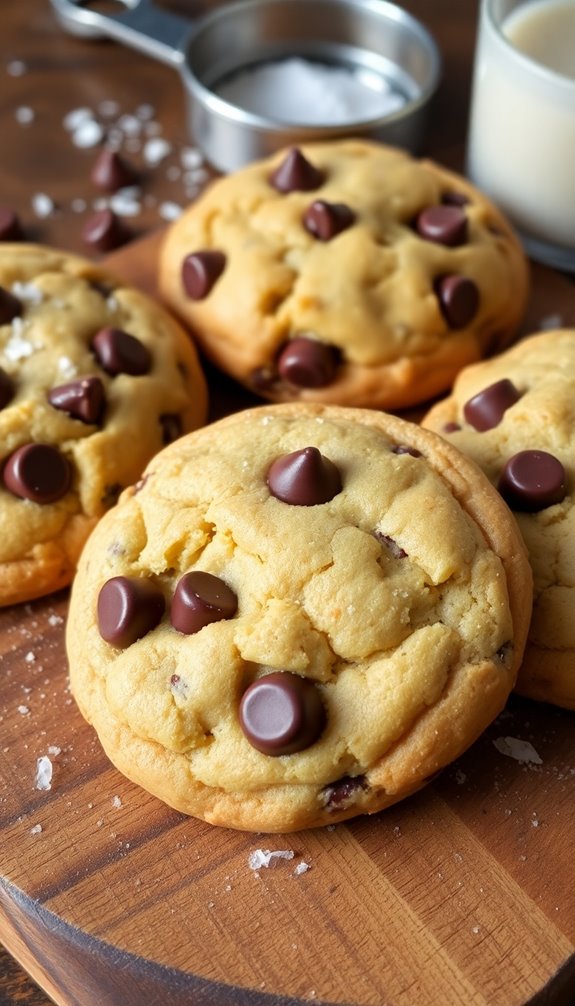
Wondering how altitude affects your chocolate chip cookie recipe? At higher elevations, the lower air pressure can lead to dry, crumbly cookies instead of the chewy texture you crave.
To adjust, first, reduce the sugar slightly; this helps prevent excess spreading. Next, add a bit more liquid—water or milk—to counteract the drier environment.
You might also want to increase your flour by a tablespoon or two for better structure. Don’t forget to shorten your baking time; cookies can bake faster at altitude.
The Role of Flour and Its Impact on Texture
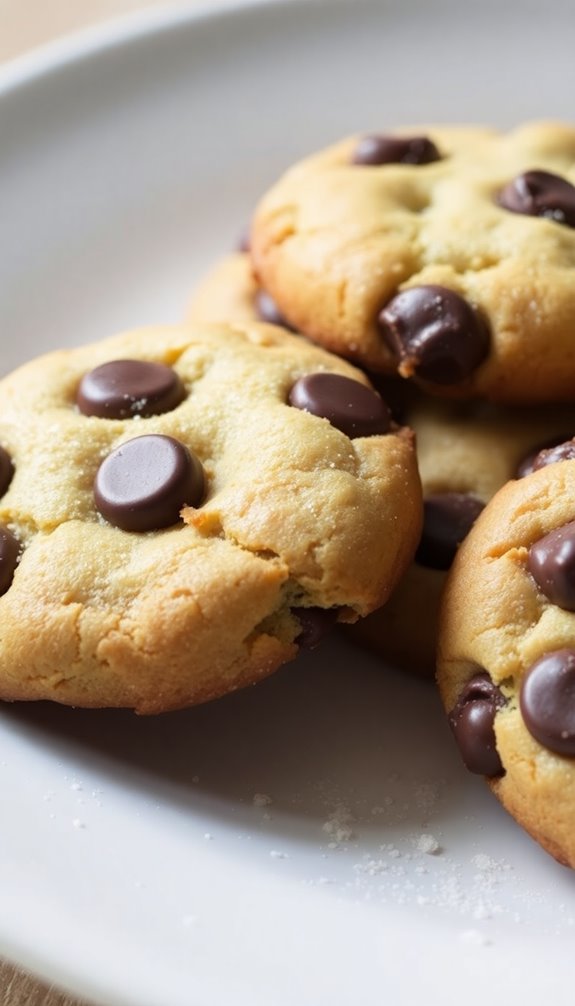
While you mightn’t often think about flour’s role in your cookie recipe, it greatly impacts texture and structure.
The type of flour you choose affects the flour protein content, which is essential for gluten development. Higher protein flours, like bread flour, create more gluten, leading to a chewier texture.
On the other hand, all-purpose flour strikes a balance, providing the right chewiness without making cookies too dense.
For high-altitude baking, you may want to adjust the flour quantity to prevent excess gluten formation, which can lead to tough cookies.
Why Does Brown Sugar Make a Difference?
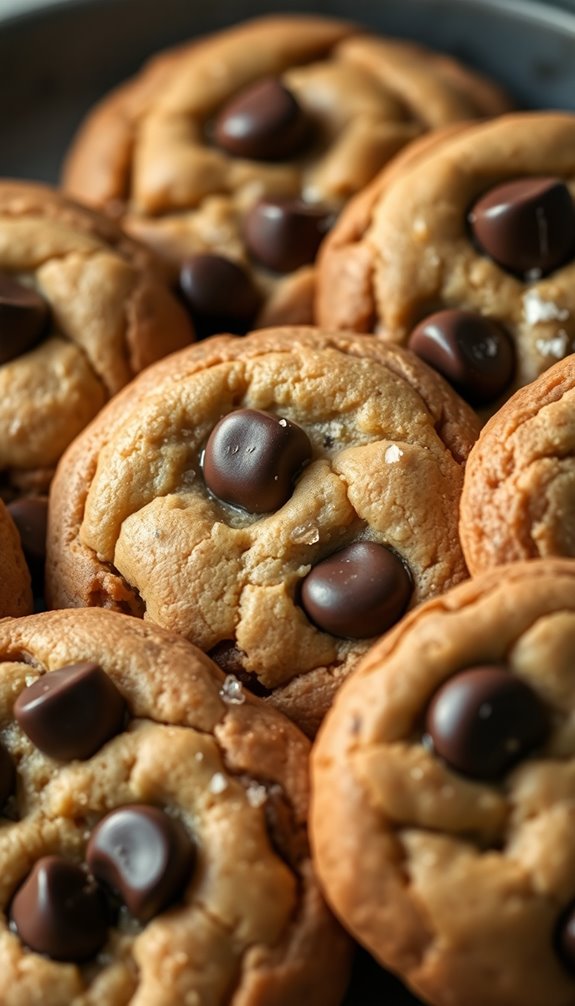
Flour plays a significant role in texture, but the type of sugar you use can transform your cookies in surprising ways.
Brown sugar benefits your high-altitude chocolate chip cookies by enhancing moisture retention. Its higher moisture content prevents them from drying out, ensuring that they stay chewy even at elevated elevations.
Brown sugar enhances moisture retention in high-altitude cookies, ensuring they remain chewy and delicious even at elevated elevations.
Plus, brown sugar introduces a rich caramel flavor that elevates the overall taste profile of your cookies. This unique flavor, along with its ability to create a softer texture, makes brown sugar a standout choice.
Using it instead of white sugar not only adds depth but also contributes to the perfect balance between chewiness and softness.
Ultimately, brown sugar is a secret weapon for achieving cookie perfection.
Importance of Proper Mixing Techniques
When you mix your ingredients properly, you set the foundation for cookies that rise and bake evenly, especially at high altitudes.
Using the right mixing methods can make all the difference in achieving the perfect dough consistency. Start by creaming your butter and sugars well; this incorporates air, helping your cookies rise.
Be careful not to overmix once you add the flour, as this can lead to tough cookies. Instead, mix until just combined, allowing those chocolate chips to fold in seamlessly.
A well-mixed dough will yield a chewy center and crispy edges, giving you the ideal cookie experience.
Pay attention to your mixing techniques, and you’ll enjoy delicious results every time.
Baking Time and Temperature Adjustments
When you’re baking at high altitude, adjusting your baking time and temperature is essential for perfect chocolate chip cookies.
You’ll want to find the ideal baking temperature to guarantee they rise just right.
Understanding how elevation impacts your bake can make all the difference in achieving that chewy, gooey texture you love.
Optimal Baking Temperature
To achieve the perfect high-altitude chocolate chip cookies, understanding the ideal baking temperature is essential. High altitudes affect baking science, often requiring adjustments to temperature effects.
You’ll want to bake your cookies at a slightly higher temperature, around 375°F. This helps set the structure quickly, preventing excessive spread.
At higher altitudes, lower air pressure can lead to cookies that spread too much if baked at standard temperatures. By increasing the heat, you guarantee your cookies remain chewy and maintain that perfect texture.
Keep an eye on them, as they may bake faster than expected. Remember, getting the temperature right is key to achieving those delightful, high-altitude treats you crave!
Adjusting Bake Time
When you’re at higher elevations, you’ll often need to reduce your bake time by a few minutes. Start by checking your cookies a couple of minutes earlier than the recipe suggests. If they’re golden brown around the edges but still soft in the center, that’s a good sign they’re ready.
Remember, altitude adjustments aren’t just about temperature; they also affect moisture levels. Keep an eye on your cookies, as overbaking can lead to a dry texture.
With a little practice, you’ll find the perfect bake time for your altitude!
Elevation Impact Insights
As you bake cookies at high altitude, understanding how elevation impacts baking time and temperature is essential. Elevation effects can cause your cookies to spread more and bake faster, so you’ll need to adjust accordingly.
Typically, you might decrease the baking temperature by 15 to 25 degrees Fahrenheit to prevent over-browning.
Additionally, to maintain moisture retention, consider adding an extra tablespoon of liquid, like milk or water. This helps keep your cookies chewy despite the drier environment at higher altitudes.
Keep a close eye on them while baking; they could be done sooner than expected. By making these adjustments, you’ll achieve that perfect chewy texture you’re after, no matter how high you are!
Essential Tools for High-Altitude Baking
When baking at high altitudes, having the right tools can make all the difference in achieving perfect chocolate chip cookies.
Start with a reliable baking scale for accurate measurements, ensuring your ingredients are precise. Use measuring cups and mixing bowls to mix your dough seamlessly.
Invest in silicone mats for easy cookie release and to prevent sticking. Quality cookie sheets help distribute heat evenly, while an oven thermometer confirms your temperature is spot-on, essential for high-altitude baking.
Don’t forget cooling racks to let your cookies breathe and maintain their chewy texture.
Finally, an ingredient sifter will help incorporate air into your dry ingredients, making your cookies light and delicious.
With these tools, you’re set for success!
Flavor Variations for Your Chocolate Chip Cookies
Ready to amp up your chocolate chip cookies?
You can easily transform them with nutty additions like walnuts or pecans, or switch out extracts for a unique twist.
Let’s explore how these simple changes can elevate your baking game!
Nutty Additions
While chocolate chip cookies are already a classic treat, adding nuts can elevate their flavor and texture to a whole new level. Incorporating different nut types, like walnuts or pecans, brings a delightful nutty flavor that complements the sweetness of the chocolate.
This not only enhances taste but also improves texture balance, giving your cookies a satisfying crunch. Experimenting with ingredient ratios can create unique cookie variations; for instance, using more nuts can enhance the overall nut benefits, like added protein and healthy fats.
Try adjusting your baking techniques, like lightly toasting nuts beforehand, to further boost flavor. With these simple tweaks, you’ll transform your cookies into an irresistible, chewy delight!
Flavorful Extract Swaps
How can you take your chocolate chip cookies to the next level? Start by experimenting with flavorful extract swaps! Instead of just vanilla, try almond or coconut extract for a unique combination that’ll surprise your taste buds.
These extract varieties can elevate the flavor intensity, making each bite unforgettable. Don’t be afraid to mix and match—use a splash of orange extract alongside vanilla for a warm, citrusy twist.
You can even blend extracts for more depth, like pairing maple with bourbon. These experimental swaps will transform your cookies into a gourmet treat, perfect for impressing friends or family.
Your high-altitude cookies won’t only stay chewy but also burst with exciting flavors!
Common Mistakes to Avoid When Baking at Altitude
Baking at high altitude can be a rewarding experience, but it also comes with its own set of challenges that can lead to common mistakes.
One common error isn’t adjusting the baking temperature; higher altitudes often require lower temps to prevent cookie spread. Ingredient substitutions can also throw you off—stick to tested recipes.
Be mindful of humidity levels, which affect dough consistency and rising agents. Avoid overmixing dough, as this can toughen your cookies. Make necessary texture adjustments, like adding extra flour or liquid.
Ultimately, don’t underestimate cooling methods; letting cookies cool too quickly can lead to undesired results.
With attention to these details, you’ll create chewy, high-altitude chocolate chip cookies that delight!
Tips for Storing Chewy Cookies Successfully
After perfecting your high-altitude chocolate chip cookies, storing them properly guarantees they stay chewy and delicious.
Start by using airtight cookie containers to keep air out and maintain moisture. For best results, consider humidity control; a desiccant packet can help absorb excess moisture.
If you’ve got leftovers, try freezing techniques. Wrap cookies individually in plastic wrap, then place them in a freezer-safe container. This method preserves flavor and texture while preventing freezer burn.
When you’re ready to enjoy them, simply thaw at room temperature. Avoid letting cookies sit out for too long, as exposure to air can dry them out.
With these tips, your cookies will remain irresistible and chewy for days!
Reader-Favorite High-Altitude Chocolate Chip Cookie Recipes
If you’re craving the perfect high-altitude chocolate chip cookie, you’re in luck—readers have shared their favorite recipes that deliver on flavor and texture.
These recipes shine with unique twists, inviting you to plunge into baking experiments that celebrate regional variations and historic recipes.
- Rich, dark chocolate chunks for an intense flavor
- Sea salt sprinkles for a delightful contrast
- Walnuts or pecans for added crunch
- Festive themes, like pumpkin spice or peppermint, for seasonal fun
- Creative cookie decoration ideas, like drizzling with caramel
With the right ingredient sourcing and flavor enhancements, you’ll create cookies that pair beautifully with milk or coffee, making every bite an indulgent experience.
Conclusion
Baking chewy chocolate chip cookies at high altitude may seem challenging, but you’ve got the tools to succeed! Don’t worry if your first batch isn’t perfect; it often takes a few tries to master the adjustments. Remember, each cookie is a delicious opportunity to learn. With the right ingredients and techniques, you’ll be enjoying those soft, gooey treats in no time. So preheat that oven and get ready to impress your taste buds!