

When you’re out of key ingredients, don’t fret! You can swap eggs for mashed bananas or applesauce, and use coconut oil instead of butter. Almond or oat milk works great in place of dairy milk. For flour, consider gluten-free blends or almond flour as alternatives. When sweetening, try honey or maple syrup for a healthier twist. You’ll discover even more easy swaps and tips to save your dessert baking endeavors!
Eggs: What Can You Use Instead?

Have you ever found yourself in the middle of baking and realized you’re out of eggs? Don’t worry! There are plenty of egg replacements that can save your dessert.
If you’re looking for vegan alternatives, try using mashed bananas or unsweetened applesauce. Just a quarter cup of either works well as a substitute for one egg. These ingredients can also add a hint of richness and flavor to your baked goods, similar to how butter and sugars do in cookie recipes. For an added protein boost, consider incorporating protein-packed snacks like peanut butter protein cookies into your baking.
Ground flaxseed mixed with water is another great option—combine one tablespoon of flaxseed with three tablespoons of water, let it sit for a few minutes, and you’re good to go.
Silken tofu can also be blended until smooth to replace eggs in recipes. Using these substitutes allows you to create delicious treats while incorporating healthy ingredients that align with your dietary preferences.
These substitutes won’t just help you keep baking; they can add unique flavors and textures to your treats too!
Butter: Delicious Alternatives for Your Baking
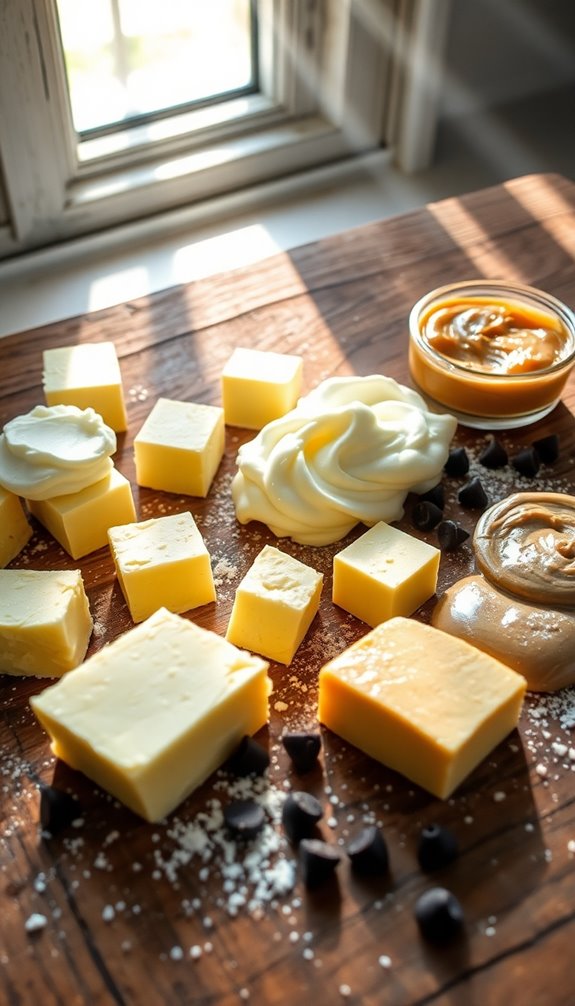
When you find yourself out of butter, don’t fret; there are several tasty alternatives that can keep your baking on track.
Whether you need to maintain that rich butter flavoring or achieve the right butter consistency, these substitutes will do the trick:
- Coconut oil: Provides a subtle sweetness and similar fat content. Additionally, using natural sweeteners can further enhance the health benefits of your baked goods. These alternatives are particularly useful for making no-bake desserts, which require less time and effort.
- Vegetable oil: A simple swap that offers moisture, but may alter flavor slightly.
- Applesauce: Ideal for a healthier option; it adds moisture without the fat.
Experimenting with these alternatives can yield delicious results. Additionally, using brown sugar can enhance the chewiness of your baked goods, making them even more delightful.
Just remember to adjust your measurements, as some substitutes may require a bit of tweaking to achieve the perfect texture in your baked goods.
Happy baking!
Flour: Creative Substitutes for Different Needs

When you’re baking and need to switch up your flour, there are plenty of creative options to contemplate.
Whether you’re looking for gluten-free alternatives or exploring nut-based flours, you can easily find substitutes that work for your needs. For instance, using a high-quality gluten-free flour blend can ensure your baked goods maintain their desired texture and flavor. Additionally, incorporating oats as a hearty base can enhance the nutritional profile of your desserts while adding a delightful texture. Consider using gluten-free flour options to diversify your recipes and cater to dietary restrictions.
Let’s explore some tasty choices that can elevate your dessert game!
Gluten-Free Flour Options
While traditional wheat flour is often the go-to for baking, exploring gluten-free flour options can open up a world of delicious possibilities.
Many gluten-free blends combine various flours to mimic the baking properties of wheat flour, ensuring your desserts still rise and have great texture.
Here are some popular gluten-free flour options to try:
- Almond flour: Adds moisture and a nutty flavor.
- Coconut flour: Absorbs liquid well; use it sparingly.
- Rice flour: A versatile base for many gluten-free recipes.
Experimenting with these options can lead to delightful treats that everyone can enjoy, regardless of dietary restrictions. Just remember to adjust your recipes accordingly to achieve the best results! Additionally, consider using whole grain oats in your gluten-free baking for added texture and nutrition.
Nut-Based Flour Choices
If you’re looking to elevate your baking with unique flavors and added nutrition, nut-based flours are fantastic substitutes to contemplate.
Almond flour, for instance, brings a subtly sweet taste and moist texture to your baked goods. Plus, it’s rich in healthy fats and protein, showcasing significant nut flour benefits.
Cashew flour offers a creamy, buttery flavor, perfect for cookies and cakes.
When using nut flours, remember they’re denser than regular flour, so adjust your recipes accordingly, often using less.
You can explore various nut flour recipes, from pancakes to brownies, to discover delightful new textures and tastes.
Sugar: Sweet Swaps for Healthier Baking
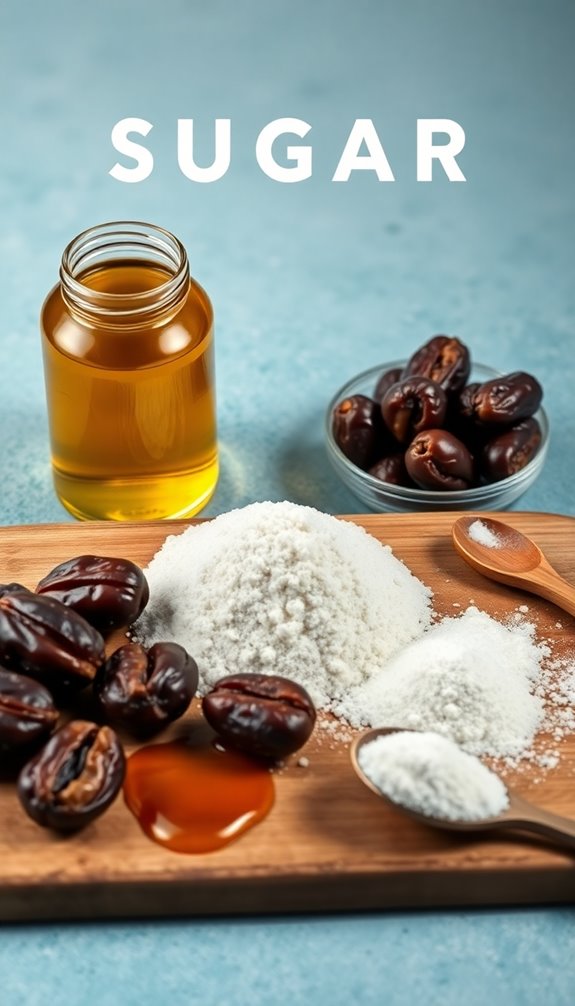
Although sugar is a staple in many dessert recipes, there are plenty of healthier alternatives that can satisfy your sweet tooth without compromising flavor.
Explore healthier alternatives to sugar that can satisfy your sweet cravings without sacrificing flavor.
By using natural sweeteners, you can create delicious desserts while reducing refined sugar intake. Here are some great sugar alternatives to evaluate:
- Honey: A natural sweetener that adds moisture and flavor.
- Maple Syrup: Perfect for adding depth to baked goods with its unique taste.
- Coconut Sugar: A lower glycemic index option that works well in most recipes.
These options not only enhance your treats but also offer additional nutrients.
Milk: Dairy-Free Options for Your Recipes

If you’re looking for dairy-free options for your baking, there are a few fantastic alternatives to evaluate.
Almond milk brings versatility, while coconut milk adds a rich creaminess that can elevate your treats.
Oat milk is another great choice, offering its own unique benefits that can enhance your recipes.
Almond Milk Versatility
When you’re looking for a dairy-free option in your dessert recipes, almond milk stands out as a versatile ingredient that can easily replace traditional milk. Its light flavor and creamy texture make it a fantastic substitute in various dishes.
Here are some almond milk benefits to evaluate:
- Low in calories: Almond milk typically has fewer calories than dairy milk, making it a lighter option.
- Rich in vitamins: Many brands fortify almond milk with essential nutrients like vitamin D and calcium.
- Easy to use: You can swap almond milk in equal parts for traditional milk in most almond milk recipes.
Coconut Milk Creaminess
Coconut milk brings a rich, creamy texture to your desserts, making it another fantastic dairy-free alternative. One of the key coconut milk benefits is its ability to enhance flavors while providing a velvety consistency. You can easily substitute coconut milk for heavy cream in recipes like chocolate mousse or custards, creating luscious treats without dairy.
Plus, its natural sweetness pairs well with tropical flavors, perfect for cakes and puddings.
Experiment with coconut milk recipes like coconut panna cotta or dairy-free ice cream for a delightful twist. Not only will your desserts be creamy and delicious, but you’ll also enjoy the added health benefits of coconut milk, including essential nutrients and healthy fats.
Oat Milk Benefits
Oat milk is a versatile dairy-free alternative that adds a creamy texture to your baked goods. It’s perfect for those who want to enjoy oat milk recipes without sacrificing flavor or consistency.
Plus, it offers several benefits:
- Nutrient-rich: Oat milk nutrition includes fiber, vitamins, and minerals that enhance your overall diet.
- Allergy-friendly: It’s free from lactose, nuts, and soy, making it suitable for various dietary needs.
- Sustainable choice: Oats require less water and land to produce, making oat milk an eco-friendly option.
Using oat milk in your recipes can elevate your desserts while keeping them deliciously dairy-free.
Baking Powder: How to Replace It When You’re Out?
Have you ever found yourself in the middle of baking a dessert only to realize you’re out of baking powder?
Don’t worry! You can easily make a substitute using common pantry items. One effective option is to mix 1/4 teaspoon baking soda with 1/2 teaspoon cream of tartar. This combination mimics the leavening agent properties of baking powder types.
Easily substitute baking powder by mixing 1/4 teaspoon baking soda with 1/2 teaspoon cream of tartar for perfect results!
Alternatively, if you have yogurt or buttermilk, use 1/2 cup of either and reduce your liquid ingredients by 1/2 cup.
Remember, these substitutes may slightly alter your dessert’s taste and texture, so keep that in mind.
With these leavening agent comparisons, you can still whip up a delicious treat without missing a beat!
Baking Soda: What to Use If You Don’t Have It?
If you find yourself without baking soda, don’t worry—you’ve got options!
You can use alternative leavening agents or certain acidic ingredients to achieve the same rise in your baked goods.
Let’s explore some effective substitutions to keep your desserts fluffy and delicious.
Alternative Leavening Agents
When you’re in the middle of baking and realize you’ve run out of baking soda, don’t panic—there are plenty of alternative leavening agents you can use.
These substitutes can help achieve that desirable rise without the need for baking soda reactions. Consider these yeast alternatives:
- Baking powder: A reliable one-to-one substitute; it already contains an acid.
- Self-rising flour: This flour has baking powder mixed in; just adjust your recipe’s flour amount.
- Whipped egg whites: Fold into your batter for lightness and lift, great for cakes and soufflés.
With these alternatives, you can still whip up a delicious dessert even without baking soda on hand!
Acidic Ingredients Options
Baking soda often needs an acidic ingredient to activate its leavening properties, so figuring out alternatives is key when you’re out of it.
If you don’t have vinegar, consider using lemon juice or lime juice as citrus alternatives. Both add that necessary acidity and can enhance flavor.
You could also try using yogurt or buttermilk, which not only provide acidity but also contribute moisture to your dessert.
If you’re in a pinch, even cream of tartar mixed with water can work.
Just remember, whatever acidic ingredient you choose, the ratio matters—typically, one tablespoon of vinegar or citrus juice can replace about half a teaspoon of baking soda.
Your baked goods will rise beautifully!
Baking Powder Substitution Guide
Even the most seasoned bakers can find themselves without baking powder, but don’t worry—there are effective substitutes to keep your desserts rising.
Depending on the baking powder types you have on hand, you can still achieve the desired effect in your recipes.
Here are some reliable alternatives:
- Baking soda & vinegar: Mix 1/4 teaspoon baking soda with 1/2 teaspoon vinegar for each teaspoon of baking powder.
- Baking soda & yogurt: Use 1/4 teaspoon baking soda mixed with 1/4 cup yogurt to replace baking powder.
- Baking soda & lemon juice: Combine 1/4 teaspoon baking soda with 1/2 teaspoon lemon juice for a quick fix.
Just remember that the baking powder effectiveness of these substitutes may vary, so adjust your quantities accordingly.
Happy baking!
Vanilla Extract: Easy Substitutes for Flavor
If you find yourself out of vanilla extract while baking, don’t worry—there are several easy substitutes that can save your dessert.
One great option is to use a vanilla bean. Simply scrape the seeds from half a bean and mix them into your batter or dough.
If you don’t have vanilla beans, flavored extracts like almond or hazelnut can add a unique twist to your recipe. Use about half the amount of these extracts compared to vanilla, as they tend to be more potent.
You might also consider using a splash of bourbon or rum for depth.
With these alternatives, your dessert will still be delicious, even without vanilla extract!
Chocolate: Alternatives for Cocoa and Chocolate Chips
When you find yourself short on cocoa powder or chocolate chips, there are several effective alternatives to keep your dessert plans on track.
For cocoa powder alternatives, consider using unsweetened baking chocolate. Melt it down and use about three times the amount of chocolate compared to cocoa.
Another option is carob powder, which has a sweet and nutty flavor.
Carob powder offers a delightful sweet and nutty flavor that can elevate your desserts.
Finally, if you need chocolate chips, you can chop up any chocolate bar you have on hand, like dark or milk chocolate, for a quick substitution.
- Unsweetened baking chocolate (3:1 ratio)
- Carob powder for a unique twist
- Chopped chocolate bars for easy chips
These substitutions can save your dessert when you’re in a pinch!
Honey: Other Sweeteners to Consider
Baking often requires sweeteners, and honey is a popular choice for its rich flavor and natural sweetness. If you need an alternative, consider maple syrup or agave nectar.
Maple syrup offers a similar depth, while agave provides a milder taste. When substituting, keep in mind that both have different honey flavor profiles, so your dessert may taste slightly different.
You’ll also need to make honey texture adjustments; for instance, these liquids are thinner than honey. To compensate, reduce the other liquids in your recipe by about 1/4 cup for each cup of syrup you use.
This way, your baked goods maintain their desired consistency while still delivering sweetness and flavor.
Yogurt: What to Use When You’re Out of It?
What do you do if you find yourself without yogurt for your dessert recipe? Don’t worry; you can still create a delicious treat. Here are some great substitutes that can replicate yogurt’s benefits and flavor:
- Sour cream: It offers a similar tangy taste and creamy texture.
- Buttermilk: This adds moisture and a slight acidity, perfect for cakes and muffins.
- Applesauce: This can enhance sweetness while keeping your dessert moist, though it may alter the yogurt flavor slightly.
Each of these options works well in baking, ensuring your dessert remains tasty and satisfying.
Just remember to adjust your recipe slightly to account for the differences in consistency and flavor. Happy baking!
Oil: Best Substitutes for Cooking and Baking
If you find yourself low on oil while cooking or baking, don’t panic; there are several effective substitutes that can help you achieve the desired texture and flavor in your recipes.
Applesauce is a fantastic option, especially in baked goods, adding moisture without overpowering flavors. You can also use melted butter, which not only brings richness but also enhances the taste profile.
For a healthier choice, consider using mashed bananas; they provide similar oil benefits while adding natural sweetness. Additionally, yogurt can be a great substitute, keeping your dishes moist.
When selecting substitutes, remember that different oil types can affect your final product, so choose wisely based on your recipe’s needs.
Nuts: Creative Replacements for Crunch and Flavor
When you’re looking to add texture and flavor to your desserts, nuts often come to mind. But if you’re out of nuts or need a substitute, don’t worry! You can achieve similar nut textures and nut flavors with a few clever alternatives.
Consider using these options:
Consider these nut alternatives: seeds, shredded coconut, or granola for added texture and flavor in your desserts.
- Seeds: Pumpkin or sunflower seeds can provide a satisfying crunch.
- Coconut: Shredded coconut offers a sweet, chewy texture and enhances the flavor profile.
- Granola: A mix of oats, nuts, and sweeteners adds both crunch and richness.
These substitutes can elevate your desserts just like nuts would, giving you that desired bite and taste without missing out on deliciousness.
Cream: What to Use When You Need a Rich Texture?
When you’re looking to replace cream for that rich texture in your desserts, there are great alternatives.
Milk alternatives, like almond or coconut milk, can work surprisingly well, while Greek yogurt adds creaminess and a bit of tang.
Let’s explore how these options can fit into your baking.
Milk Alternatives for Cream
Looking for a creamy texture in your dessert but need to avoid dairy? You can still achieve that rich milk texture and delectable cream flavor with these fantastic alternatives:
- Coconut Cream: This provides a luscious, tropical twist that’s perfect for whipped toppings or pie fillings.
- Cashew Cream: Blend soaked cashews with water for a smooth, neutral-flavored cream that’s versatile in both sweet and savory dishes.
- Soy Milk: When thickened, it mimics cream well and works great in puddings and sauces.
These substitutes not only deliver the desired texture but also enhance your desserts without compromising flavor.
Greek Yogurt as Substitute
If you’re seeking an alternative to cream that still offers a rich texture, Greek yogurt is a fantastic choice. It provides a creamy consistency while being lower in fat and higher in protein, making it a healthier option.
The Greek yogurt benefits extend beyond nutrition; it also adds a subtle tang that enhances the flavor of your desserts. You can use it in various Greek yogurt recipes, such as cheesecakes, mousses, or even in frosting.
For every cup of cream, substitute three-quarters of a cup of Greek yogurt and adjust the sweetness to your taste. This swap won’t compromise your dessert’s richness but will elevate it with added health perks.
Give it a try, and you might just love the results!
Conclusion
So next time you’re in a pinch while baking, remember these ingredient swaps to save the day. For instance, if you’re out of eggs, try using mashed bananas in your brownies. You’ll get a moist texture and a hint of natural sweetness without missing a beat. With these simple substitutions, you can whip up delicious desserts anytime, ensuring that your baking adventures are always a success, no matter what you’ve got on hand!