
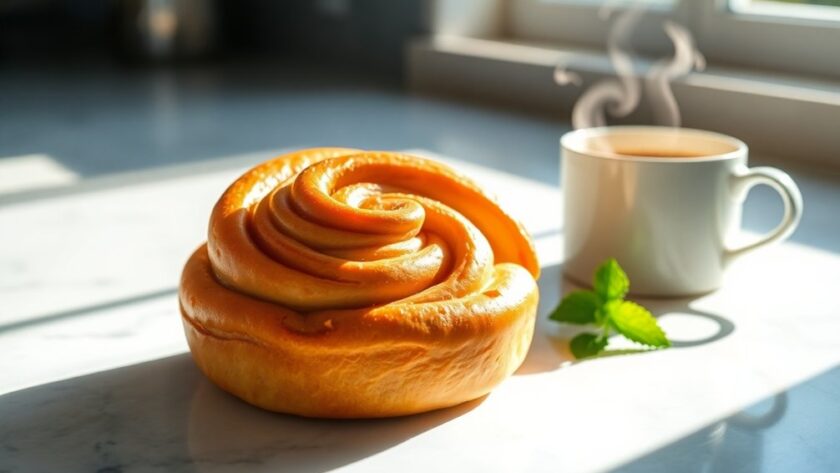
Morning buns are your new favorite breakfast pastry that combines flaky croissant dough with a sweet filling of cinnamon, sugar, and citrus zest. They’re light and buttery, offering a satisfying crunch that sets them apart from heavier cinnamon rolls. Perfect for a quick bite, these buns are often served warm and pair beautifully with coffee or tea. If you’re curious about how to make them or want tips for perfecting your baking, there’s more to explore.
What Are Morning Buns?
Morning buns are a delightful pastry that combines the richness of buttery croissant dough with a sweet filling of cinnamon, sugar, and orange zest.
Originating in San Francisco, these morning buns are celebrated for their light, flaky texture that sets them apart from other pastries. The dough is meticulously layered, creating a delicate appearance and a satisfying crunch thanks to a caramelized sugar exterior. This flaky texture is reminiscent of traditional pastries such as Norwegian Kransekake, which also highlight careful layering techniques. Additionally, the traditional Julekage bread showcases the beauty of intricate dough preparation during festive seasons.
Each batch typically yields 12 buns, allowing you to customize their size and shape to your liking. Proper proofing and careful baking are essential to achieve that ideal flakiness while preventing butter leakage.
With their unique flavor and texture, morning buns are a delicious addition to your breakfast routine, much like how chocolate chip cookies have become a staple in American households since their invention in 1938.
The Difference Between Morning Buns and Cinnamon Rolls
When you bite into a morning bun, you’ll notice its light, flaky texture from buttery croissant dough, while a cinnamon roll has a denser, bread-like feel. The flavors also set them apart: morning buns bring a hint of citrus zest alongside cinnamon, whereas cinnamon rolls focus on sweet glaze. Gluten-free flour can also be used to create a unique twist on these pastries, allowing those with dietary restrictions to enjoy a delicious breakfast treat. Understanding these differences can help you appreciate each treat’s unique charm. The art of layering phyllo dough can inspire new variations of morning buns, blending flavors and textures from classic pastries.
Dough Composition Differences
While both morning buns and cinnamon rolls are beloved breakfast treats, their dough compositions set them apart considerably.
Morning buns use buttery croissant dough, creating a light and flaky texture that’s a delight to bite into. In contrast, a cinnamon roll typically features a chewier, bread-like dough that offers a more substantial bite.
The recipe for morning buns incorporates not just cinnamon and sugar, but also a hint of orange zest, giving them a unique citrusy flavor. When you roll and cut the dough for morning buns, distinct layers form, enhancing their flakiness.
On the other hand, cinnamon rolls are traditionally rolled into spirals, leading to a different structure and baking method, resulting in a softer finish.
Texture and Flavor Contrast
The differences in texture and flavor between morning buns and cinnamon rolls are striking.
Morning buns are made with buttery croissant dough, giving them a light, flaky texture that peels apart beautifully. In contrast, cinnamon rolls use a denser, chewier bread-like dough that holds its spiral shape.
Flavor-wise, morning buns feature a delightful blend of cinnamon and sugar, enhanced by the bright notes of orange zest. Cinnamon rolls, on the other hand, typically shine with a sweet glaze, often cream cheese or vanilla.
When baked, morning buns develop a crisp, caramelized exterior, while cinnamon rolls offer a soft, gooey finish. This unique preparation method makes morning buns a standout choice for your morning treat.
A Brief History of Morning Buns
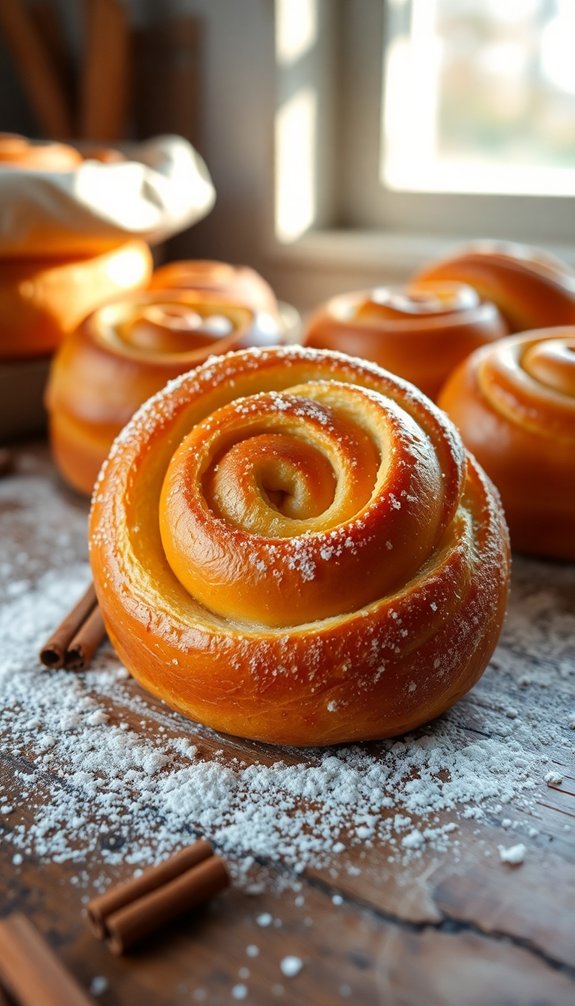
Morning buns have their roots in Wisconsin bakeries, where they first gained popularity. As they made their way to California, particularly in San Francisco, these pastries evolved into a beloved local staple. You’ll find that the buttery croissant dough and unique flavor profile set them apart from other breakfast treats. These pastries evoke nostalgic desserts that remind many of cherished moments spent with family over homemade treats. The artisanal craftsmanship involved in creating these buns emphasizes quality, authenticity and a celebration of culinary heritage. Much like traditional recipes such as tiramisu, morning buns reflect a deep appreciation for regional flavors and time-honored baking techniques.
Origin in Wisconsin Bakeries
Originating in the quaint bakeries of Wisconsin, morning buns first captivated locals before spreading their delightful charm across the country.
These pastries, with their buttery croissant dough, quickly distinguished themselves from other treats. The unique flaky texture and rich flavor make them irresistible.
In Wisconsin, bakers crafted morning buns using a blend of cinnamon, sugar, and sometimes orange zest, creating a filling that reflects both regional traditions and the heart of Midwestern baking.
As word spread, morning buns evolved from local favorites to a nationwide sensation. Their journey showcases culinary innovation, highlighting how a simple pastry can evolve and adapt while retaining its original charm.
You can now enjoy this delicious treat as part of your quick breakfast routine!
Rise in San Francisco
In the bustling streets of San Francisco, morning buns have risen to new heights, enchanting the taste buds of locals and visitors alike.
Originally crafted in Wisconsin, these pastries found their way to California, where they quickly gained popularity. Combining the best of cinnamon rolls and croissant dough, morning buns feature a flaky, buttery texture that’s distinct from traditional muffins.
Local bakeries like Tartine have played a pivotal role in their rise, showcasing the artistry of baking with each batch. Infused with cinnamon and orange zest, these delightful treats offer a unique twist on familiar flavors.
Today, morning buns are a beloved breakfast staple, reflecting San Francisco’s vibrant culinary scene and the evolution of American baking traditions.
How to Make Morning Buns at Home
Making delicious morning buns at home is easier than you might think. Start by preparing a croissant dough with flour, yeast, butter, and orange juice. Knead it until smooth, then roll it into a rectangle.
Sprinkle a filling of brown and white sugar, cinnamon, and orange zest before shaping it into a log and cutting pieces. Place the cut pieces swirl side up in a muffin tin and let them proof for 1 to 1.5 hours. To enhance the texture and flavor of your morning buns, consider using gluten-free ingredients that can provide a unique taste while catering to dietary needs. Incorporating gluten-free flour options can also improve the nutritional profile of your pastries.
Bake at 375°F for 45-55 minutes, turning the pan halfway through for even browning. Cool them on a wire rack. These morning buns are best eaten the day they’re made, but you can refresh leftovers by warming them in the oven. To boost the nutritional value, consider incorporating superfoods like nuts or seeds into the filling for added flavor and health benefits.
Tips for Perfecting Your Morning Buns
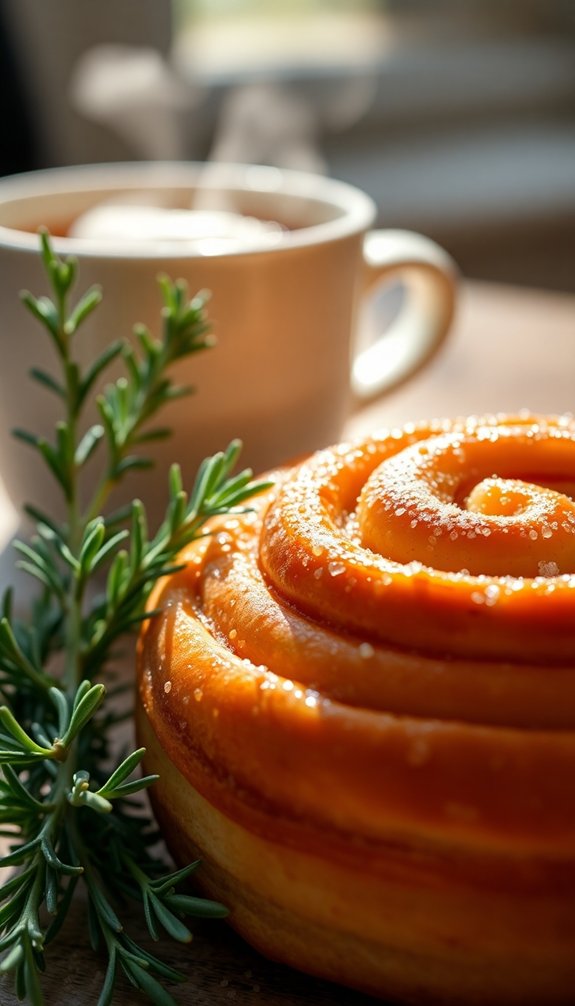
How can you guarantee your morning buns turn out perfectly every time? Start by ensuring proper proofing of your croissant dough at around 75°F for 2-3 hours. This helps avoid butter melting and allows the buns to expand to 1 1/2 times their original size. Additionally, make sure to incorporate high-quality marzipan for an elevated flavor in other pastries.
Preheat your oven to 400°F, then bake at 375°F for 45-55 minutes, turning the baking sheet 180° after 20 minutes for even browning. Incorporating a balance of protein, fats, and carbohydrates in your breakfast can also enhance your energy levels for the day ahead. For a delicious filling, mix sugar for coating muffin with 55 grams of orange zest and 1 tablespoon of cinnamon.
Once baked, cool your buns on their sides on a wire rack for a couple of minutes to maintain their flaky texture and achieve that deep golden brown finish. Additionally, consider using flavor enhancers like vanilla extract to elevate the taste of your morning buns.
Baking and Serving Suggestions
Once you’ve perfected your morning buns, it’s time to think about how to enjoy them best. Serve warm to savor their flaky texture and rich flavor. A light dusting of a sugar mixture evenly combined with brown sugar and white sugar for coating enhances every bite.
Here are a few suggestions to elevate your morning buns experience:
- Pair them with a hot cup of coffee or tea for the ultimate breakfast treat.
- Enjoy them fresh out of the oven or at room temperature for maximum flavor.
- For next-day enjoyment, simply reheat at 350°F for about 5 minutes.
Let the buns cool completely before freezing, so you can enjoy them anytime!
Storage Options for Leftover Morning Buns
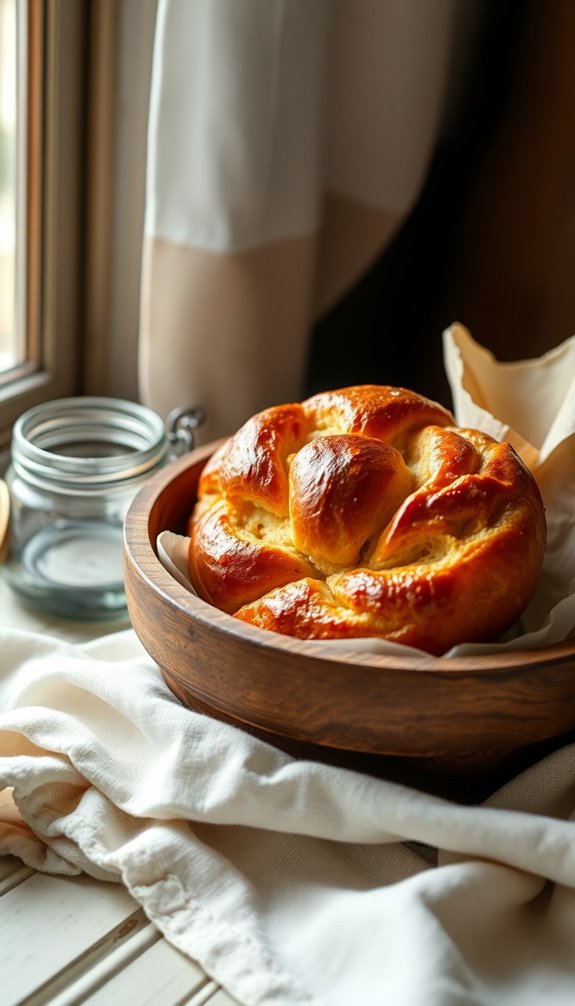
Leftover morning buns deserve proper care to maintain their deliciousness. After baking, let the buns cool on their sides on a wire rack to preserve their texture.
If you plan to enjoy them the next day, place them in a Ziploc bag at room temperature overnight. For the best taste, refresh them in the oven at 350°F before serving.
If you want to store them longer, freeze the cooled buns. Just defrost them before reheating to keep their quality intact. For added sweetness, lightly dust the buns with granulated sugar before storing.
If you have unbaked dough, freeze it for up to a week, transferring it to the refrigerator the night before you plan to bake.
Exploring Variations of Morning Buns
While classic morning buns are delightful on their own, exploring variations can elevate your baking experience to new heights.
You can personalize the flavor with different fillings, spices, and toppings that excite your taste buds. Consider these options:
- Fillings: Try chocolate, nuts, or seasonal fruits for a unique twist.
- Spices: Enhance the aroma with nutmeg or cardamom alongside cinnamon for a warm, inviting scent.
- Toppings: A light icing or cream cheese glaze adds sweetness and texture.
Experimenting with dark brown sugar or citrus zest, like lemon or grapefruit, can also introduce invigorating flavor profiles.
With these variations, your morning buns can go from ordinary to extraordinary, delighting you and anyone you share them with.
Join the Morning Buns Community

Baking morning buns is a delightful journey, and joining the morning buns community can enrich your experience even further. Here, you’ll find enthusiastic bakers sharing their unique recipes and variations, fostering creativity and collaboration.
Whether you’re trying out a recipe that uses muffin tins or experimenting with flavors, the community encourages personal touches that make your buns even more special. Many members appreciate the shared journey of perfecting morning buns, exchanging tips and techniques to make baking more enjoyable.
Plus, you’ll feel welcomed as a newcomer, inspired to immerse yourself in making morning buns. Remember, buns are best eaten fresh, and sharing them with fellow enthusiasts makes the experience all the more rewarding!
Conclusion
Now that you’re armed with all things morning buns, it’s time to whip up a batch and transform your breakfast game! These delightful pastries are sure to become your new obsession, making every morning feel like a special occasion. Don’t forget to experiment with flavors and toppings to find your perfect match. So, gather your ingredients, and get ready to enjoy the most delicious pastry that’ll knock your socks off! Happy baking!