When it comes to baking, unsulphured molasses is your best bet for a clean flavor and nutritional boost. Light molasses works well for sweet treats like cookies, while dark molasses adds a rich depth to gingerbread. If you’re looking for a strong, bittersweet kick, blackstrap molasses shines in savory dishes. Each type offers unique benefits, so choose wisely! Keep going to discover more about how to incorporate molasses into your favorite recipes.
What Is Molasses?
Molasses is a thick, dark syrup that comes from the sugar-making process, specifically when sugar cane or sugar beet juice is boiled to extract sugar crystals.
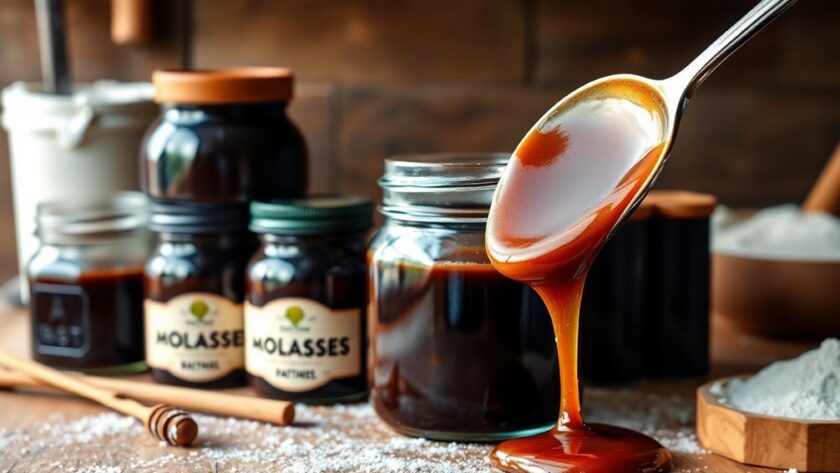
There are different types of molasses, each with its unique flavor and sweetness. Light molasses, produced from the first boiling, is the sweetest and mildest option. Dark molasses, from the second boiling, offers a thicker texture and stronger flavor. Blackstrap molasses, resulting from the third boiling, is the darkest and least sweet, with a bitter taste but packed with vitamins and minerals.
Unsulphured molasses, made from mature sugar cane, is often preferred for its clean flavor and is a popular choice in baking, enhancing both taste and nutrition in your recipes. Additionally, molasses can be used to create rich flavors in various desserts, such as the Hungarian Dobos Torte.
The Difference Between Sulphured and Unsulphured
When choosing between sulphured and unsulphured molasses, it’s important to understand how preservation methods affect flavor.
Sulphured molasses can have a strong, chemical taste due to the sulfur dioxide used in its production, while unsulphured molasses offers a cleaner, sweeter flavor that enhances your baked goods. For most baking purposes, unsulphured molasses is the better choice. Additionally, unsulphured molasses contains essential nutrients that can contribute positively to the nutritional profile of your baked treats.
Preservation Methods Explained
Understanding the difference between sulphured and unsulphured molasses can greatly influence your baking outcomes.
Sulphured molasses is treated with sulfur dioxide as a preservative, often derived from young sugar cane. This process can impart a strong chemical flavor and reduce sweetness, making it less desirable for baking.
In contrast, unsulphured molasses is made from mature cane and lacks that chemical aftertaste, offering a cleaner taste and better sweetness.
Most commercial molasses available in stores is unsulphured, which is the preferred choice for most baking applications.
When you opt for unsulphured molasses, you’re ensuring a superior flavor profile that enhances the overall quality of your baked goods, allowing you to achieve sweet success in your recipes.
Flavor Profile Differences
While choosing the right type of molasses for your baking, it’s essential to grasp the flavor profile differences between sulphured and unsulphured varieties.
Unsulphured molasses, derived from mature sugar cane, offers a cleaner, sweet flavor that enhances your recipes. This makes it the preferred choice for baking, especially in traditional treats like gingerbread cookies.
In contrast, sulphured molasses is treated with sulfur dioxide, which can impart a strong flavor that may not suit many baked goods. Moreover, the sulfur treatment can reduce its sweetness, making unsulphured molasses a better option when sweetness is vital.
Most commercial molasses available today is unsulphured, ensuring it’s accessible for all your baking needs.
Choose wisely for sweet success!
Light Molasses
Light molasses is your go-to option for a sweet, mild flavor that enhances baked goods without overwhelming them.
It’s perfect for everything from cookies to marinades, and its versatility allows for easy substitutions in recipes. Additionally, using gluten-free flour in your baked goods can further accommodate dietary preferences.
Let’s explore its unique flavor profile, ideal uses in baking, and how you can swap it with other types of molasses.
Flavor Profile Overview
The flavor profile of light molasses is gentle and sweet, making it a versatile ingredient for baking. Its mild taste enhances your baked goods without overwhelming other flavors, making it perfect for various recipes.
- Derived from the first boiling of sugar cane or beet juice
- Ideal for cookies and light cakes
- Adds sweetness to gingerbread and holiday treats
- Light amber color and syrupy texture keep baked items soft
- Contains vitamins and minerals, with about 60 calories per tablespoon
Using light molasses in your recipes not only sweetens but also enriches the texture of your desserts.
With its subtle profile, you can enjoy deliciously balanced flavors in everything from simple cookies to festive gingerbread.
Ideal Baking Uses
When you’re looking to elevate your baked goods, light molasses is a fantastic choice for various recipes. This sweet molasses, derived from the first boiling of sugar syrup, has a mild flavor that enhances your treats without overwhelming them.
It’s perfect for holiday cakes and pecan pies, adding just the right touch of sweetness. When baking cookies, light molasses contributes to a chewy texture, helping create soft and tender treats that everyone loves.
You’ll find that this type of molasses is often recommended in recipes that don’t specify a type, making it a versatile staple in your pantry.
Substitutions and Alternatives
If you find yourself without light molasses, don’t worry—there are several great substitutes that can keep your baking on track.
Just remember that these alternatives might change the flavor and color of your dish. Here are some options:
- Cane syrup
- Honey
- Dark corn syrup
- Sorghum syrup
- Dark or blackstrap molasses (use sparingly)
When a recipe calls for light molasses, using dark molasses can lend a more robust flavor that might overpower your sweet and savory creations.
Be sure to taste your substitute before adding it, as adjusting the sweetness can help mimic the delicate balance provided by light molasses.
Happy baking!
Dark Molasses
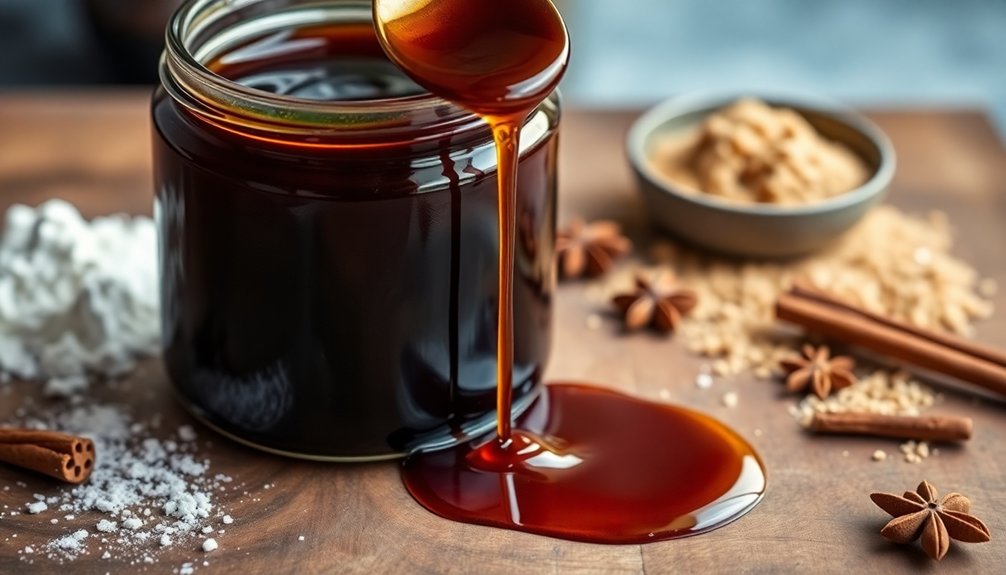
While many bakers gravitate toward light molasses for its sweetness, dark molasses offers a deeper, more robust flavor that’s perfect for recipes like gingerbread cookies and barbecue sauces.
Produced from the second boiling of sugar cane or beet juice, dark molasses has a thicker texture and a less sweet taste, making it ideal for baking goods where you want that strong molasses flavor to shine through.
This syrup contributes a rich color and depth, especially in traditional holiday recipes. Mincemeat pie is one such festive dish that benefits from the complex flavors of dark molasses.
Remember, the flavor profile of dark molasses is more dominant, so use it thoughtfully in savory dishes to avoid overpowering other ingredients.
When substituting for light molasses, feel free to use it in equal amounts, but expect a different taste and color in your final product.
Blackstrap Molasses
Although blackstrap molasses is the thickest and darkest variety, its particularly bitter flavor can be a challenge for bakers. Here are some key points to take into account:
Blackstrap molasses, the thickest and darkest type, offers a unique bitterness that can be tricky for baking.
- Produced from the third boiling of young sugar cane or beet juice
- Known for its rich mineral content: iron, calcium, magnesium, and potassium
- Best suited for savory recipes like baked beans and marinades
- Should only be used in recipes that call for it to avoid overpowering other flavors
- Less sweet than other types of molasses, making it unsuitable for most desserts
When you’re exploring different types of molasses, remember that blackstrap molasses enhances savory dishes but may not work well in sweet recipes. Additionally, this type of molasses can be paired with rich spices like cardamom to balance its bitterness in specific baked goods. Use it wisely to achieve ideal flavor!
How to Use Molasses in Baking
When you incorporate molasses into baking, you’ll discover its unique ability to enhance flavors and add depth to your treats.
For cookies and cakes that need a delicate sweetness, light molasses is your best bet. Its mild flavor complements other ingredients without overpowering them.
If you’re making gingerbread or baked beans, opt for dark molasses; it provides robust flavor and richness.
Be cautious with blackstrap molasses, as its strong, bitter taste can overwhelm baked goods. Reserve it for savory dishes unless a recipe specifically calls for it.
If you run out of molasses, you can substitute cane syrup, honey, or dark corn syrup at a 1:1 ratio, but be prepared for some changes in flavor and color. Additionally, consider using natural sweeteners like honey or maple syrup to create a healthier alternative in your baking.
Recipes Featuring Molasses
Molasses adds a rich depth to a variety of baked goods, making it a beloved ingredient in countless recipes. Here are some delicious options to try:
- Classic gingerbread cake, where dark molasses enhances the flavor and color.
- Soft, chewy molasses cookies that stay moist and sweet.
- Pecan pie, using regular molasses for a balanced, rich taste.
- Sticky toffee pudding, featuring robust molasses for a warm, spiced dessert.
- Grilled meats marinated with blackstrap molasses, giving a smoky glaze.
Incorporating molasses into your baking not only elevates the sweetness but also deepens the overall flavor profile, whether you’re using it in tender cookies or savory dishes like sweet potatoes. Additionally, using fresh, seasonal produce when baking can enhance the flavors of your molasses-infused treats.
Enjoy experimenting with this versatile ingredient!
Conclusion
So, next time you reach for that bottle of molasses, remember the variety you choose can make all the difference in your baked goods. Coincidentally, the rich flavors of dark molasses might just elevate your gingerbread cookies to legendary status. Who knew a simple ingredient could transform your baking adventures? Whether you go for light, dark, or blackstrap, you’re bound to create something delicious. Happy baking, and may your sweet success be just a pour away!