

To elevate your tea time, try a simple vanilla glaze for your scones! It requires just three ingredients: powdered sugar, milk or cream, and vanilla extract, taking less than five minutes to whip up. This glaze not only adds a glossy finish but also enhances the flavor of your scones. Whether you prefer a light drizzle or a thicker icing, you can easily adjust the consistency. Stick around to discover tips and favorite recipes for the perfect glaze!
Why You Should Make This Vanilla Glaze
If you’re looking to elevate your scones, making a vanilla glaze is a must. This simple yet delicious glaze requires just three ingredients: powdered sugar, milk or cream, and vanilla extract.
In under five minutes, you can whip up a glossy finish that enhances the flavor and appearance of your baked goods. You can easily adjust the consistency by varying the liquid, allowing you to choose between a light drizzle or a thicker icing, depending on your preference.
Plus, this vanilla glaze is versatile; you can experiment by adding different extracts or citrus juices to complement your scones’ unique flavors. Trust us, this glaze will transform your tea time treats into something truly special! Additionally, using gluten-free flour can ensure that everyone can enjoy your delightful scones.
Choosing Vanilla for Glaze
When you’re choosing vanilla for your glaze, consider how each type impacts flavor and appearance.
Real vanilla extract is a budget-friendly option that packs a punch, while vanilla bean paste adds beautiful flecks and a richer taste for special occasions.
If you’re looking for the most intense flavor, whole vanilla beans might be worth the investment. The versatility of vanilla in baking is similar to the way chocolate chip cookies have evolved with new ingredients and adaptations, catering to various tastes and preferences.
Types of Vanilla Extract
Choosing the right type of vanilla extract can greatly enhance your scone glaze. Real vanilla extract is your go-to for casual baking; it’s affordable and adds a lovely flavor to your glaze.
If you’re looking for something more intense, consider vanilla bean paste. It not only amps up the flavor but also gives your glaze visual appeal with its flecks.
For those special occasions, whole vanilla beans offer a robust aroma and flavor that truly elevate any glaze, though they come at a higher cost.
You can also make homemade vanilla extract by steeping vanilla beans in alcohol, providing a personalized touch that’s both cost-effective and flavorful for your glazes.
Visual Appeal With Vanilla
While the flavor of your scone glaze is essential, the visual appeal can’t be overlooked. Choosing the right type of vanilla can elevate your glaze not just in taste but also in appearance.
Real vanilla extract is a great choice for everyday baking, providing flavor without being too dark. If you want a more striking look, consider using vanilla bean paste, which adds appealing flecks and a deeper taste.
For special occasions, whole vanilla beans offer an exquisite aromatic quality, but keep in mind they may darken your glaze. To maintain a bright white finish, use vanilla bean seeds.
No matter the choice, let vanilla transform your glaze into a delightful visual treat that complements your scones beautifully.
Cost Considerations for Vanilla
Even if you’re aiming for a stunning glaze, cost considerations play a significant role in selecting the right vanilla.
Real vanilla extract is your best bet for casual baking, typically priced between $10 and $15 for a 4-ounce bottle. This makes it accessible for everyday glaze recipes.
If you want a visual twist, vanilla bean paste offers lovely flecks but costs around $15 to $20.
Whole vanilla beans, while luxurious, can set you back $3 to $7 each, so save those for special occasions.
If you’re feeling adventurous, consider making your own vanilla extract; it’s cost-effective and customizable.
Ultimately, choose the vanilla that fits your budget while elevating your glaze to the next level!
What’s the Difference Between Icing and a Glaze?
When you’re deciding between icing and glaze, understanding their differences can help you achieve the look and taste you want.
Icing is thicker and perfect for detailed decorations, while glaze is thinner, providing a shiny finish without hardening.
Let’s break down their consistency, ingredients, and how you can use each to elevate your scones. Adding a healthier sweetener to your glaze can enhance its flavor while reducing sugar content, making your tea time treats even more enjoyable.
Consistency Variations Explained
Icing and glaze may seem similar at first glance, but they serve distinct purposes in baking, particularly when it comes to scones. The main difference lies in their consistency variations.
Icing is thicker, containing more sugar, making it ideal for spreading or decorating. In contrast, glaze has a higher liquid content, allowing for a delicate drizzle that enhances your scones’ appearance.
While icing hardens to form a firm crust, glaze remains soft and glossy. To achieve the desired consistency, simply adjust the amount of milk or cream you add; less liquid yields thicker icing, while more creates a thinner glaze.
Both can elevate the flavor and visual appeal of your scones, but their application methods set them apart.
Ingredients Comparison Overview
Understanding the differences in ingredients between icing and glaze can help you choose the right one for your scones.
Icing typically contains sugar, butter, and flavorings, making it thick and rich—perfect for frosting cakes. In contrast, a glaze uses sugar combined with milk, cream, or even lemon juice to achieve a thinner, smoother consistency.
While icing hardens to form a firm shell, glaze remains soft and glossy, allowing it to soak into your scones. To create the ideal glaze, you can adjust the sugar-to-liquid ratio, making it versatile for drizzling.
Common Usage Scenarios
Choosing between icing and glaze for your scones can profoundly affect both their appearance and taste. Each option serves a unique purpose, depending on what you’re aiming for.
- Icing provides a solid layer, perfect for decorative pastries.
- Glaze offers a thinner, shiny finish, enhancing the visual appeal of your scones.
- If you want a richer flavor, consider icing made with butter or cream cheese.
- For a casual look, a glaze drizzled over scones gives a delightful, glossy touch.
Ultimately, your choice between icing and glaze hinges on how you want your scones to look and taste. Icing creates structure, while glaze delivers a more relaxed, inviting appearance.
Enjoy experimenting with both!
Step-by-Step Instructions to Make Perfect Vanilla Glaze Every Time
When you’re ready to elevate your scones with a perfect vanilla glaze, start by gathering your ingredients and tools.
To make the glaze, combine 1 cup of sifted confectioners’ sugar with 1 1/2 tablespoons of whole milk or heavy whipping cream, and add 1/2 of a vanilla bean pod or 1/2 teaspoon of vanilla extract in a bowl.
Whisk the mixture until it’s smooth and glossy. If you want a thinner glaze, add more milk; for a thicker icing, mix in more powdered sugar.
Confirm you apply the glaze to completely cooled scones to maintain its look.
For a beautiful drizzle, use a spoon or squeeze bottle, letting the glaze set for at least 30 minutes before serving. This simple technique can be used to enhance other desserts, such as Norwegian Kransekake, which features a stunning glaze as part of its presentation.
Tools for Making Extra Fabulous Vanilla Glaze
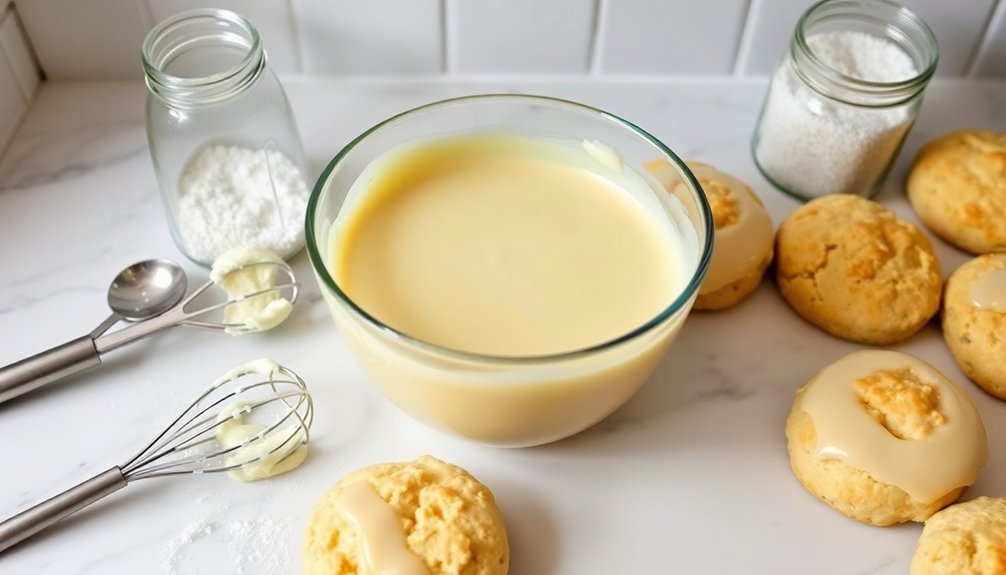
To achieve an extra fabulous vanilla glaze, having the right tools on hand makes all the difference. Here’s what you need:
- Small mixing bowl: This is essential for combining your ingredients.
- Whisk: Use it to whisk together until smooth, ensuring no lumps in your glaze.
- Fine-mesh sieve: Sift confectioners’ sugar through this to keep your glaze silky and lump-free.
- Piping bag or teaspoon: These allow for precise application, giving your scones a decorative touch.
Optionally, keep a microwave-safe container handy for reheating any glaze that thickens too much. Additionally, cheesecake’s evolution reflects how diverse and adaptable desserts can be, similar to how you can customize your glaze for various flavors.
With these tools, you’ll create a delicious glaze that elevates your tea time treats!
Favorite Vanilla Glaze Recipes
Whether you’re looking to enhance your scones or simply satisfy your sweet tooth, there are countless vanilla glaze recipes that can elevate your baking game.
A basic vanilla glaze is quick and easy, requiring just confectioners’ sugar, milk or heavy cream, and vanilla extract. You can adjust the consistency by varying the liquid; thicker glazes work well for icing, while thinner ones are perfect for drizzling.
For extra flair, try adding citrus juice or different extracts. Remember, glazes should be applied to cooled scones for a smooth finish. Gluten-free options can also be used in your baking, ensuring that everyone can enjoy your delicious treats.
Once prepared, your vanilla glaze can be stored at room temperature for same-day use or refrigerated for up to a week, making it a flexible addition to your baking repertoire.
Tips for Using Glaze on Scones

A perfectly glazed scone can elevate your baking from good to great. Here are some tips to help you achieve that glossy finish:
- Choose your glaze thickness: Mix powdered sugar with milk to control consistency; add more sugar for a thicker coating.
- Flavor it up: Enhance your glaze with lemon juice, vanilla extract, or almond extract for added depth.
- Apply carefully: Use a spoon or piping bag to drizzle the glaze over completely cooled scones, preventing it from melting.
- Let it set: Allow the glaze to harden for at least 30 minutes before serving, ensuring a delightful sweetness without stickiness. Additionally, experimenting with vibrant icing can inspire creative variations for your scones.
Follow these tips, and you’ll impress everyone with your beautifully glazed scones!
Serving Suggestions for Glazed Scones
While glazed scones are delicious on their own, they become even more delightful when paired with the right accompaniments. For breakfast, serve them alongside crispy bacon and eggs for a hearty meal that satisfies.
As an afternoon snack, enjoy your scones with a steaming cup of tea or coffee in a cozy bowl. Their drizzled glaze adds visual appeal, making them perfect for gatherings and holiday events.
For dessert, consider pairing glazed scones with fresh fruits or a dollop of whipped cream to elevate your eating experience. Their versatility allows you to serve them any time of day, fitting seamlessly into both casual and formal occasions. Additionally, festive cookie ingredients can also complement your scones, adding a seasonal touch to your tea time.
Cooking up these combinations will surely impress your guests!
Conclusion
With a drizzle of vanilla glaze, your scones can transform from ordinary to extraordinary, like a sunrise breaking through the morning fog. Embrace the simple joy that comes with each bite, elevating your tea time into a delightful ritual. So, don’t hesitate to experiment with flavors and techniques—let your creativity flow. Remember, every glaze you make is a reflection of your personal touch, turning each scone into a delicious masterpiece that warms the heart and soul.