

To release your inner pastry chef, start with essential ingredients like whole grain flour, unsalted butter, and dry yeast for perfect croissants. Follow a classic recipe that includes cold milk and careful lamination for flaky layers. Get creative with sweet or savory fillings like chocolate ganache or ham and cheese. Remember to avoid common mistakes, and guarantee your dough’s temperature stays low. Keep exploring new flavor twists and techniques for delightful croissant creations!
Essential Ingredients for Perfect Croissants
To craft the perfect croissant, you’ll need a few essential ingredients that come together to create that iconic flaky texture and rich flavor.
Start with 1.3 kilos of whole grain flour, which provides the structure and strength your dough needs. Add in 300 grams of unsalted butter for those delightful layers and a buttery taste.
Begin with 1.3 kilos of whole grain flour for essential structure, then fold in 300 grams of unsalted butter for rich, flaky layers.
You can’t forget the fermentation process, so include 50 grams of dry yeast to help the dough rise and become airy. Balance it all with 50 grams of salt, enhancing the flavor while strengthening the gluten structure.
Each ingredient plays a crucial role, and using high-quality products will elevate your croissant experience to a whole new level. Incorporating high-quality ingredients can significantly enhance the overall taste and texture of your pastries.
Classic Croissant Recipe Step-by-Step
Crafting classic croissants requires precision and patience, but the results are undeniably rewarding. Follow these steps to create your perfect batch:
- Prepare croissant dough using cold milk, strong bread flour, and caster sugar.
- Mix slowly for 15 minutes, keeping salt and yeast separate initially.
- Create a butter block for the lamination process, matching the dough’s consistency.
- Execute a series of single turns, aiming for 37 layers through careful rolling with a rolling pin.
- Shape the croissants by rolling without adding flour, ensuring the tail is tucked for structure.
Finally, bake them in a preheated oven at 170 degrees Celsius for the first 10 minutes, then lower the temperature for a flaky finish. Mastering the art of lamination techniques is crucial for achieving the perfect croissant texture. Enjoy your delicious creations!
Flavor Variations: Sweet and Savory Additions
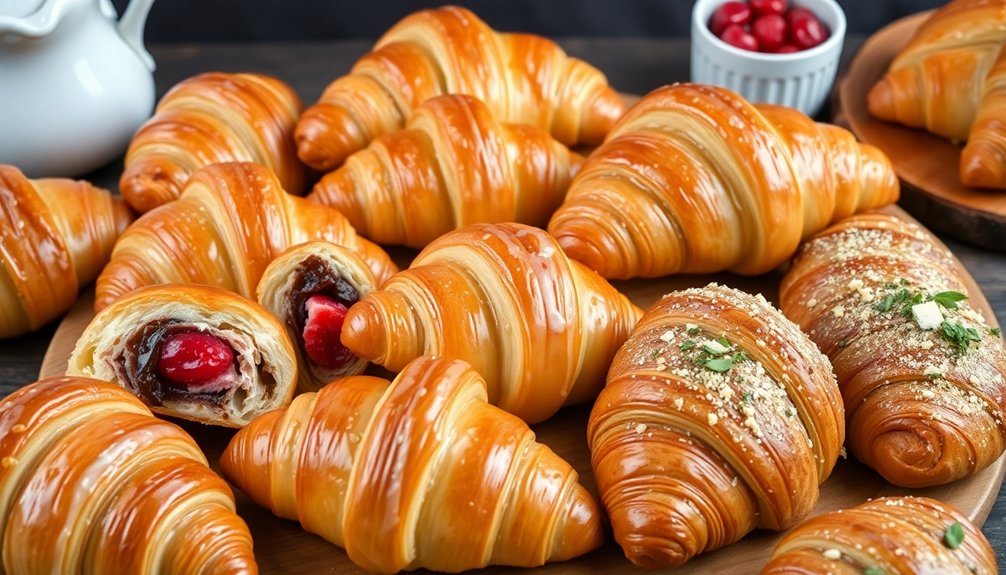
When you think about flavor variations for your croissants, the possibilities are endless! Sweet fillings like almond paste or chocolate can elevate your pastry, while savory twists with ham and cheese create a delightful contrast. Don’t forget to experiment with flavored butters and toppings to really make your croissants shine! Additionally, consider using choux pastry techniques to create unique textures and flavors in your croissant fillings.
Sweet Fillings Ideas
If you want to take your croissant game to the next level, sweet fillings can transform these flaky pastries into a delightful treat.
Here are some creative ideas to inspire your baking:
- Chocolate ganache: Rich and decadent, perfect for chocolate lovers.
- Almond paste: Adds a nutty sweetness that complements the buttery layers.
- Pastry cream: A smooth, custardy filling for a classic touch.
- Seasonal berries: Fresh or preserved, they bring a fruity brightness.
- Spiced mixtures: Incorporate cinnamon or nutmeg for an aromatic twist.
These sweet fillings not only enhance the flavor but also create a beautiful contrast to the flaky texture.
Savory Twist Suggestions
Savory croissants can elevate your baking game just as much as their sweet counterparts. To create a mouthwatering treat, start by incorporating grated cheese, like Gruyère or cheddar, into your filling for a rich, savory flavor.
You can also add sautéed mushrooms, spinach, or caramelized onions for an earthy taste and delightful texture. Infuse your croissants with aromatic herbs by mixing fresh thyme or rosemary into the butter during lamination.
For a spicy kick, toss in finely chopped jalapeños or sun-dried tomatoes with the cheese. Don’t forget about breakfast options—scrambled eggs and crispy bacon or smoked salmon make for a delicious savory brunch that’ll impress anyone!
Get creative and let your inner pastry chef shine!
Creative Fillings to Elevate Your Croissants
Ready to take your croissants to the next level?
By experimenting with sweet fillings like rich almond paste or seasonal fruit jams, you can create delicious variations that will impress anyone. Don’t forget to explore savory options, like cheese and ham, for a unique twist that transforms your pastry into a satisfying meal. Additionally, consider incorporating traditional fillings inspired by cultural desserts like sesame balls for a delightful fusion of flavors.
Sweet Fillings Inspiration
While croissants are delicious on their own, adding sweet fillings can transform them into extraordinary treats.
Here are some creative ideas to inspire you:
- Almond paste or frangipane for a nutty, rich flavor
- Chocolate filling using high-quality dark chocolate or chocolate hazelnut spread
- Fresh fruits like raspberries or strawberries paired with light pastry cream
- A drizzle of flavored syrups, like orange blossom or rosewater, for a unique twist
- A hint of citrus zest to brighten up the flavors
These fillings not only elevate the classic croissant but also offer delightful contrasts in taste and texture.
Savory Options to Explore
After exploring sweet fillings that can elevate your croissants, it’s time to turn your attention to savory options that offer a delightful contrast.
Consider filling your croissants with a mix of sautéed mushrooms, spinach, and ricotta cheese for a delicious savory option. You can also incorporate cooked bacon or prosciutto with a sprinkling of gruyère cheese, creating a rich, flavorful combination that pairs beautifully with the flaky texture.
For a Mediterranean twist, try sun-dried tomatoes, feta cheese, and fresh basil. If you’re seeking a unique flavor profile, a curried chicken salad filling with diced chicken, curry powder, and yogurt will surprise your taste buds.
Finally, enhance your croissant with roasted peppers, goat cheese, and fresh herbs for added depth.
Unique Flavor Combinations
Exploring unique flavor combinations can transform your croissant experience into something extraordinary.
By experimenting with fillings, you’ll reveal a world of taste that goes beyond the classic buttery pastry. Here are some creative ideas to elevate your croissants:
- Almond paste and raspberry jam for a delightful contrast
- Ham and cheese or spinach and feta for savory options
- A rich chocolate ganache filling for indulgent moments
- Infused dough with herbs and goat cheese for sophistication
- Seasonal fruit fillings like spiced apple or pear with cinnamon
These combinations not only enhance the flavors but also allow your creativity to shine.
Whether you crave something sweet or savory, these unique fillings are sure to impress. Get ready to delight your taste buds!
Infusing Dough With Unique Herbs and Spices
How can you elevate your croissant game with unique flavors? Start by incorporating fresh herbs like rosemary or thyme into the butter block during the lamination process. This infuses your dough with aromatic flavors that enhance its buttery richness.
Elevate your croissants by infusing the butter block with fresh herbs like rosemary or thyme for a rich, aromatic flavor.
You can also experiment with spices; mixing cinnamon or cardamom into the dough at the initial stage adds warmth and complexity.
For a Mediterranean twist, blend in finely chopped sun-dried tomatoes and basil for a savory variation. A touch of garlic or onion powder can deliver a delightful savory kick.
Finally, brushing flavored oils—like truffle or chili oil—onto the dough before rolling it out can transform your croissants into gourmet creations, bursting with unique flavors. Additionally, consider incorporating nutrient-rich flours like almond or coconut flour to enhance texture and health benefits in your dough.
Tips for Achieving Flakiness and Texture
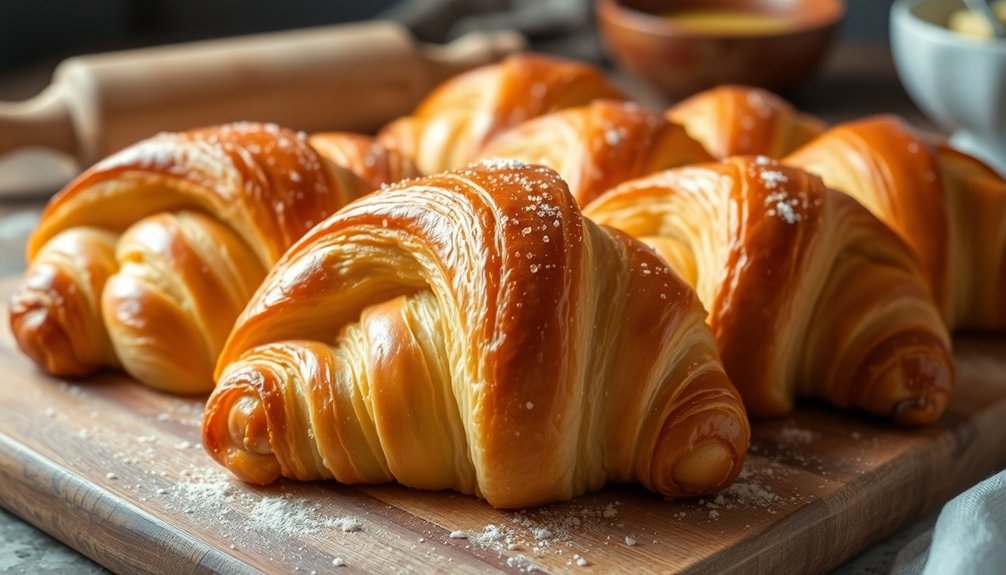
To get that perfect flaky texture in your croissants, start with cold ingredients to keep the dough temperature low. Proper laminating techniques are essential, so make sure your butter is the same consistency as the dough for even layers. Finally, pay attention to your baking temperature; it can make all the difference in achieving that crispy finish. Additionally, using gluten-free flour options can provide unique textures and flavors, enhancing your croissant experience.
Ingredient Temperature Importance
While making croissants, the temperature of your ingredients plays a crucial role in achieving that coveted flakiness and texture.
Here are some key points to remember:
- Use cold butter and milk to keep the dough’s temperature low.
- Pre-chill your bowls and dough hook to prevent overheating.
- Keep the dough below 23 degrees Celsius during mixing and resting.
- Verify the butter’s temperature matches the dough for proper layering.
- Maintain a warm, humid environment (around 28 degrees Celsius) during proofing for ideal yeast activation.
Proper Laminating Techniques
Achieving the perfect flakiness in croissants hinges on mastering proper laminating techniques. Start by using professional-grade butter for lamination, ensuring it rolls easily and integrates with the dough without breaking.
Perform a single turn (three-fold) at least three times, aiming for a total of 37 layers for that sought-after flakiness. Keep your dough temperature below 23 degrees Celsius during mixing and rolling to prevent the butter from melting.
Roll the dough to about 10 millimeters thick, rotating it 90 degrees between turns to maintain even layers and prevent sticking. Don’t forget to let the laminated dough rest in the refrigerator for 20-25 minutes after each turn to relax the gluten, making it easier to work with.
Baking Temperature Control
After perfecting your lamination techniques, the next step in crafting delicious croissants is mastering baking temperature control.
Proper oven temperature is essential for achieving that coveted flaky texture. Here are some tips to guarantee even cooking:
- Start by baking at 170°C with 100% humidity for ideal steam.
- Reduce the temperature to 160°C after 10 minutes to prevent burning.
- Use a conventional oven for a stable baking environment.
- Monitor the total baking time, aiming for 20-21 minutes.
- Keep an eye on fluctuations in your oven temperature to avoid uneven baking.
Common Mistakes to Avoid When Baking Croissants
When baking croissants, it’s crucial to avoid common pitfalls that can ruin your hard work. First, make sure all ingredients, especially butter and liquids, are cold to maintain proper dough consistency and prevent overactive yeast.
During the resting phase, don’t let the dough become overly gassy; it should feel puffed but not excessively risen for those perfect flaky layers. Be cautious with flour when shaping; too much can cause the layers to separate, compromising texture.
When laminating, confirm the butter’s consistency matches the dough to achieve even layering. Finally, remember to egg wash only the top layers before baking. This prevents the sides from sticking together, guaranteeing your croissants turn out beautifully flaky. Additionally, consider using healthier ingredients like whole grain flour or natural sweeteners to elevate your croissant recipe.
Pairing Suggestions for Your Croissant Creations
Now that you’ve mastered the art of baking croissants and avoided common mistakes, it’s time to think about how to elevate your creations.
As a budding pastry chef, consider these pairing suggestions that enhance your croissant recipe:
- A dollop of homemade raspberry jam for a sweet-tart contrast.
- Rich chocolate ganache, perfect for a decadent dessert experience.
- Creamy scrambled eggs and smoked salmon for a savory breakfast delight.
- Seasonal fruit salad, adding a revitalizing burst to your flaky pastry.
- A warm cup of freshly brewed café au lait to cut through the richness.
- For a unique flavor twist, try pairing your croissants with cherry tomato jam, a versatile condiment that enhances a wide range of dishes.
Experiment with these combinations and watch your croissants transform into unforgettable culinary experiences!
Storing and Reheating Croissants for Freshness
To keep your croissants fresh and delicious, proper storage and reheating techniques are essential.
Store your baked croissants in an airtight container at room temperature for up to two days, or refrigerate them for a week to prevent staleness. For longer storage, freeze them in a single layer on a baking sheet, then transfer to a freezer-safe bag for up to a month.
Store baked croissants in an airtight container at room temperature for two days, or refrigerate for a week to keep them fresh.
When you’re ready to enjoy them, reheating is key. Preheat your oven to 180-200 degrees Celsius and warm the croissants for about one minute to revive their flaky texture. Avoid the microwave, as it can make them soggy.
Letting them cool completely after baking before storage enhances their flavor and overall freshness, ensuring that you preserve the nutty richness of the pastry.
Sharing the Joy: Hosting a Croissant Tasting Party
Hosting a croissant tasting party can be a delightful way to share your love for these flaky pastries with friends and family. Here are some ideas to enhance your gathering:
- Gather a variety of croissant flavors, like classic butter, almond, chocolate, and ham & cheese.
- Prepare dipping sauces such as chocolate ganache or fruit preserves to elevate the tasting experience.
- Create a cozy tasting area with comfortable seating for engaging discussions about flavors.
- Provide croissant tasting scorecards for guests to rate aspects like texture and taste.
- Offer a brief demonstration of baking techniques, inspiring guests to try making their own at home. Incorporating a gluten-free flour option can also ensure that everyone can enjoy the deliciousness!
This interactive event will surely leave everyone craving more delicious croissants!
Conclusion
Now that you’ve explored the delightful world of croissant baking, it’s time to put your skills to the test. Did you know that the average French person consumes about 60 croissants a year? Imagine being the one to share your homemade creations with friends and family! With practice and creativity, you’ll not only master the classic recipe but also create unique flavor combinations that’ll impress everyone. So, roll up your sleeves and start baking your buttery masterpieces!