

To make perfectly thin and chewy chocolate chip cookies, you need a balance of ingredients and technique. Use a mix of light brown and granulated sugar for chewiness, and don’t forget to chill the dough for at least 20 minutes. Measure flour accurately to avoid cakiness, and bake until the edges are golden brown while keeping the centers soft. With these tips, you’ll be on your way to cookie perfection—discover more ways to enhance your baking experience!
Ingredients for Thin & Chewy Chocolate Chip Cookies
To create perfect thin and chewy chocolate chip cookies, you’ll need a few essential ingredients. Start with 1 cup of unsalted butter for richness and moisture.
To achieve the ultimate thin and chewy chocolate chip cookies, begin with 1 cup of rich, unsalted butter.
Combine 1 1/2 cups of light brown sugar with 1/2 cup of granulated sugar to enhance that chewy texture and sweetness. You’ll also require 2 cups of all-purpose flour to provide structure without making the cookies cakey—be sure to measure accurately.
Add 1 teaspoon of baking soda for lift and 1/2 teaspoon of fine salt to boost flavor. Two large eggs and 2 teaspoons of vanilla extract act as binders and flavor enhancers.
Finally, fold in 1 1/2 cups of semi-sweet chocolate chips for that classic taste in this delightful cookie recipe. The chocolate chip cookie’s invention represents a happy accident in culinary history, showcasing how simple ingredients can create extraordinary results.
Step-by-Step Directions
Start by preheating your oven to 350°F and lining a baking sheet with parchment paper.
In a large bowl, cream together 1 cup of softened butter and 1 1/2 cups of packed light brown sugar with 1/2 cup of granulated sugar until it’s pale and fluffy, about 3 minutes.
Next, add 2 large eggs and 2 teaspoons of vanilla extract, mixing until just combined to keep that chewy cookie texture.
In a separate bowl, whisk together 2 cups of all-purpose flour, 1 teaspoon of baking soda, and 1/2 teaspoon of fine salt.
Gradually incorporate the dry mixture into the wet ingredients.
Drop rounded tablespoons of dough onto the prepared baking sheet, spacing them 1 inch apart.
Using gluten-free flour can yield equally delicious results for those with dietary restrictions.
Bake for 10 to 11 minutes until the edges are golden brown.
Tips for Achieving the Perfect Texture

Achieving the perfect texture in chocolate chip cookies often comes down to a few key techniques.
Start by using a combination of light brown sugar and granulated sugar; this balance creates that ideal chewy yet crisp cookie. Be careful not to overmix the dough after adding flour, as that can toughen the texture.
Using both light brown and granulated sugar achieves the perfect chewy-crisp balance; avoid overmixing to maintain a tender texture.
Chilling the dough for at least 20 minutes before baking helps control spreading, giving you thinner cookies with a chewier center. Make sure your butter is at room temperature but not melted—this keeps your dough light and fluffy.
When baking at 350°F, aim for 9-11 minutes, watching for golden brown edges while keeping the centers soft and slightly underbaked for that delicious chewy finish. Additionally, consider using healthier sweeteners like honey to enhance flavor while boosting the overall nutritional content of your cookies.
Common Issues and How to Fix Them
When baking cookies, you might run into issues with thickness and spreading. If your cookies turn out too thin or spread too much, small adjustments can make a big difference.
Let’s explore some common fixes that can help you achieve the perfect cookie every time. Incorporating healthier ingredients can also enhance the texture and flavor of your cookies while maintaining a guilt-free approach.
Cookie Thickness Problems
Cookie thickness can be a frustrating issue, especially when you’re aiming for that perfect balance of chewy and crispy. Here are some common cookie thickness problems and how to fix them:
- Measure the flour accurately: Too much flour can lead to thick, cakey cookies. Level off your measuring cups or weigh the flour for precision.
- Use softened butter: Cold butter affects texture. Verify your butter’s at room temperature for proper mixing and spreading.
- Adjust oven temperature: If cookies aren’t spreading enough, lower the oven temperature by 25°F. This gives them more time to flatten while baking.
Additionally, consider refrigerating cookie dough for less spreading or tapping the baking sheet after baking to deflate cookies for thinner results.
Spreading Issues Solutions
Baking the perfect chocolate chip cookie often comes down to how well they spread in the oven.
If you’re facing spreading issues, start by ensuring accurate flour measurement; leveling off your measuring cups prevents excess flour, which can lead to thick cookies that don’t spread.
Chilling the cookie dough for at least 20 minutes helps control how much the cookies spread. Make sure to space them about an inch apart on the baking sheet to allow for expansion.
If your cookies still aren’t spreading, try lowering the oven temperature by 25°F to prevent them from setting too quickly.
Finally, consider using a mix of brown and granulated sugar; brown sugar promotes that coveted chewiness and aids in spreading.
Freezing Cookies and Cookie Dough
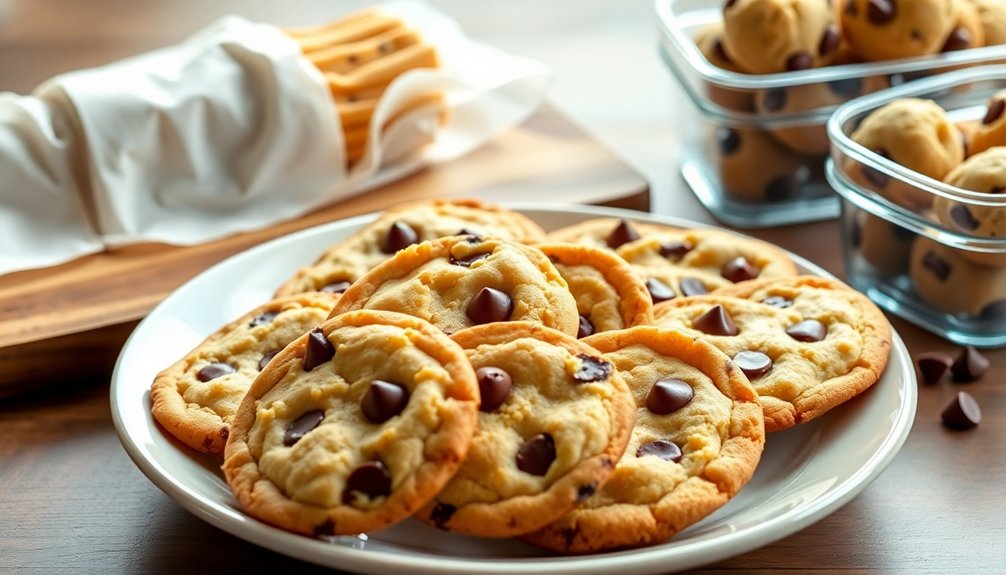
Freezing cookies and cookie dough is a great way to keep your treats fresh and ready for any occasion. You can freeze baked cookies for up to three months or store cookie dough for six months, making it easy to satisfy cravings anytime. Additionally, cookies made with gluten-free ingredients can be a delightful option for those with dietary restrictions, ensuring everyone can enjoy a sweet treat. Let’s explore the best ways to freeze both, so you’re never short on delicious cookies!
Freezing Baked Cookies
While you might think that fresh cookies are best enjoyed right away, freezing baked cookies can be a fantastic way to preserve their deliciousness for later.
Here’s how to do it right:
- Use an airtight container: Store your cookies in a freezer-safe container with waxed paper between layers to prevent sticking.
- Freeze shortly after baking: This helps maintain freshness and prevents moisture loss for that ideal texture.
- Thaw properly: Leave frozen cookies at room temperature for a few hours before enjoying them.
Freezing Cookie Dough
If you want to enjoy freshly baked cookies anytime, freezing cookie dough is a smart solution.
Start by scooping dough balls onto a lined baking sheet and freeze them for about 2 hours. Once frozen, transfer the dough balls to a freezer bag for easy storage.
This method allows you to keep cookie dough for up to 6 months, ready for quick baking whenever cravings strike.
When you’re ready to bake, just thaw frozen cookie dough for about 15 minutes at room temperature. Remember to add an extra minute to the baking time for the best results, ensuring even cooking of those thin cookies.
With this technique, you’ll always have the perfect treat on hand!
Measuring Ingredients Accurately
Accurate measurement of ingredients is essential for achieving the perfect chocolate chip cookies, as even small discrepancies can alter the texture and flavor.
Accurate ingredient measurement is crucial for perfect chocolate chip cookies, as even slight variations can change texture and flavor.
Here’s how you can guarantee precise ingredient measurements:
- Flour: For accurate measurement of flour, use measuring cups. Spoon the flour into the cup and level it off with a straight edge. Remember, one cup of all-purpose flour typically weighs about 120-125 grams, depending on your method.
- Butter: One stick of softened butter equals 1/2 cup or about 113 grams. Make certain it’s softened but not melted for ideal mixing.
- Double-check: Always double-check your ingredient measurements to prevent excess, as small inaccuracies can greatly impact the desired cookie texture. Additionally, accurately measuring ingredients can aid in reducing overall sugar intake, supporting health goals while baking your favorite treats.
Recommended Tools for Baking
Having the right tools can make all the difference when baking chocolate chip cookies. A cookie scoop is essential for ensuring each cookie is uniform in size, promoting even baking and a consistent texture.
Opt for aluminum baking sheets, as they enhance heat conductivity, leading to perfectly baked cookies with crisp edges. Line your baking sheets with parchment paper to prevent sticking and simplify cleanup.
Using a stand mixer or hand mixer helps you efficiently cream butter and sugars, achieving that light and fluffy texture vital for chewy cookies.
Finally, a kitchen scale allows for precise measurements of ingredients, ensuring accuracy and consistency in both flavor and texture. Incorporating high-quality gluten-free flour blends can further elevate your baking, especially for those with dietary restrictions.
With these tools, you’ll be set for cookie-baking success!
Success Stories From Home Bakers
As countless home bakers have discovered, the joy of baking chocolate chip cookies extends beyond just the delicious end result.
The thin and chewy recipe has sparked a wave of success stories that highlight the community’s engagement.
Here are three common modifications that enhance the cookie experience:
- Adjusting Baking Temperatures: Many bakers found that lowering the temperature yields a softer texture.
- Ingredient Ratios: Tweaking the ratio of flour to butter can create a perfect, gooey center.
- Incorporating Different Chocolate Types: Switching up chocolate varieties adds depth to flavor.
These tips and techniques demonstrate the recipe’s reliability, inviting families to join in on the fun of creating irresistible chocolate chip cookies together. Additionally, experimenting with cream cheese frosting can elevate your dessert game by adding a rich and tangy flavor profile.
Variations to Try for Different Flavors
Baking chocolate chip cookies opens up a world of flavor possibilities that can turn a classic treat into something extraordinary. Start by experimenting with different types of chocolate chips, like dark or white chocolate, to enhance the flavor profile.
For added richness and crunch, mix in chopped nuts such as walnuts or pecans. A sprinkle of sea salt on top before baking creates a delightful sweet and salty contrast.
To achieve a chewy texture, substitute half the all-purpose flour with oats, introducing a nutty flavor that pairs beautifully with semisweet chocolate chips.
Finally, don’t hesitate to add a dash of almond extract or espresso powder for a unique twist that elevates your chocolate chip cookies to new heights. You can also incorporate unique vegan flavor combinations for a festive touch that delights the palate.
Conclusion
As you savor each bite of these thin and chewy chocolate chip cookies, think of them as little treasures crafted with love and precision. They symbolize the joy of baking and the warmth of home, bringing together family and friends. Remember, perfection lies not just in the ingredients, but in the care you put into every step. So, embrace the process, share your creations, and let these cookies become the sweet memories that linger long after the last crumb is gone.