When it comes to yellow and vanilla cake, you’re in for a treat! Yellow cake is rich and buttery, thanks to whole eggs, while vanilla cake offers a lighter, airy texture using only egg whites. Both cakes are delicious, but their flavors and densities set them apart. Yellow cake pairs great with dense chocolate frosting, and vanilla shines with lighter toppings like berry compote. Want to know how to perfect your baking skills? Keep exploring!
What Is Yellow Cake?
When you think of a classic dessert, yellow cake often comes to mind, thanks to its vibrant golden hue and rich flavor. Made with whole eggs, including both yolks and whites, this cake boasts a buttery taste that elevates its appeal.
Its dense texture makes yellow cake perfect for layered creations or thick frosting applications. The mildly custard-like flavor pairs beautifully with chocolate frosting or cream cheese, adding versatility to your dessert table.
Whether it’s for birthday cakes or other festive desserts, yellow cake’s appealing color and taste make it a favorite choice. With its moist crumb and rich flavor, it’s no wonder yellow cake is a staple in celebrations everywhere. Additionally, the nostalgic desserts made with yellow cake often evoke cherished memories of family gatherings and special occasions.
What Is Vanilla Cake?
Vanilla cake is a beloved classic that brings its own unique charm to the dessert table. This category encompasses both white cake and yellow cake, distinguished by their ingredient compositions and flavors.
White cake relies on egg whites, resulting in a pale, fluffy texture, while yellow cake incorporates egg yolks, giving it a richer flavor and golden hue. Most vanilla cake recipes use the creaming method, mixing butter and sugar for that perfect fluffiness.
This cake serves as a versatile base, pairing beautifully with a variety of frostings and fillings, making it suitable for all occasions. Whether you prefer the delicate sweetness of white cake or the robust taste of yellow cake, vanilla cake remains a cherished favorite. Additionally, almond sponge cake serves as an excellent alternative in gourmet desserts, providing a light and delicate texture.
Flavor and Texture Comparison
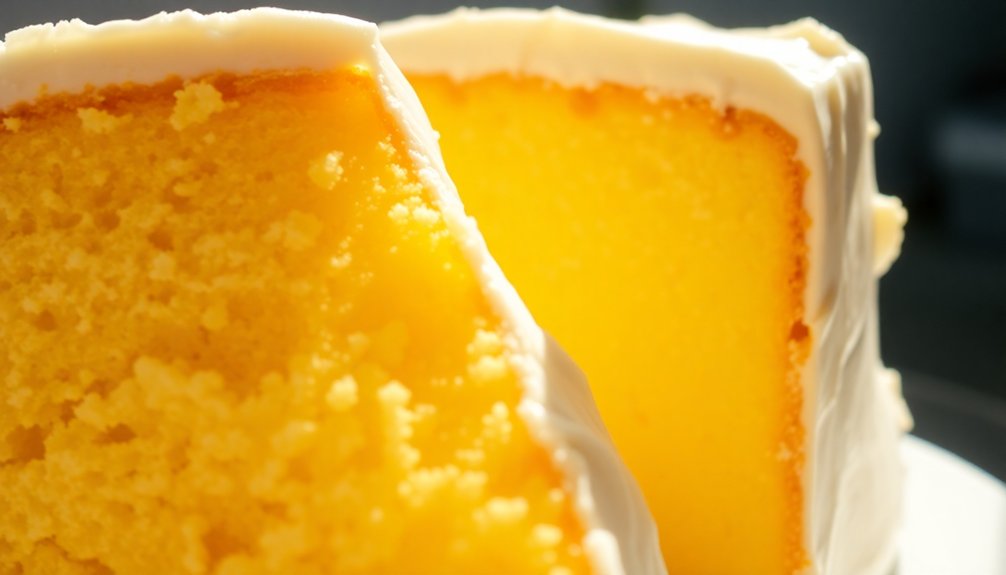
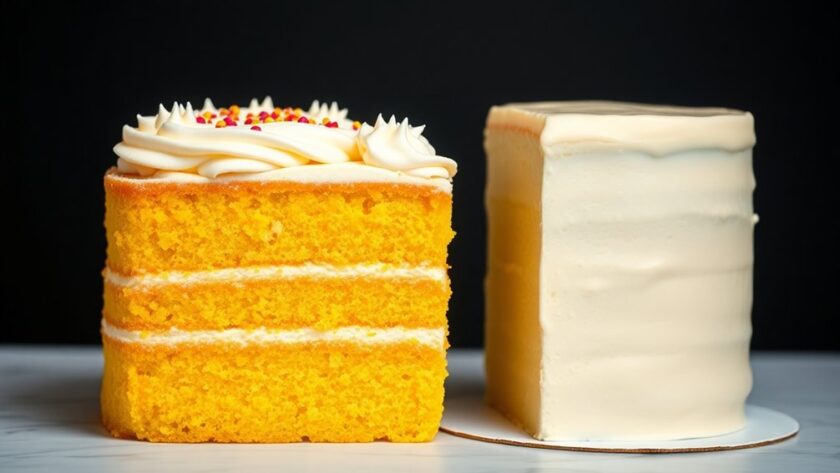
Yellow cake boasts a rich, buttery flavor thanks to whole eggs and egg yolks, while vanilla cake has a lighter, more pronounced vanilla taste from using primarily egg whites.
With regard to texture, yellow cake is dense and moist, making it perfect for layered desserts. On the other hand, vanilla cake is light and airy, resulting in a soft and tender crumb.
The golden color of yellow cake comes from the yolks, while vanilla cake remains pale.
Both cakes are flavored with vanilla extract, but yellow cake’s richer profile pairs well with heavier frostings, whereas vanilla cake complements lighter toppings like whipped cream or fruit. Additionally, like chocolate chip cookies, the classic recipe has evolved to include various adaptations and flavors, appealing to diverse preferences and dietary needs.
Best Frosting and Filling Pairings
Choosing the right frosting and filling can elevate your yellow or vanilla cake to new heights.
For yellow cake, opt for dense fillings like chocolate ganache or salted caramel, which enhance its rich, buttery flavor. Pair it with creamy chocolate frosting for a decadent contrast that complements the cake’s moist texture.
On the other hand, vanilla cake shines with lighter fillings such as vanilla pastry cream or berry compote, allowing the delicate flavors to take center stage. You might also enjoy lemon curd for a zesty kick. Additionally, consider using cream cheese frosting to enhance the tangy flavor profile, which beautifully complements both cake types.
For a revitalizing touch, whip up some cream and top it with fresh berries or use coconut cream, which works beautifully with vanilla cake’s airy qualities.
Baking Tips for Perfect Cakes
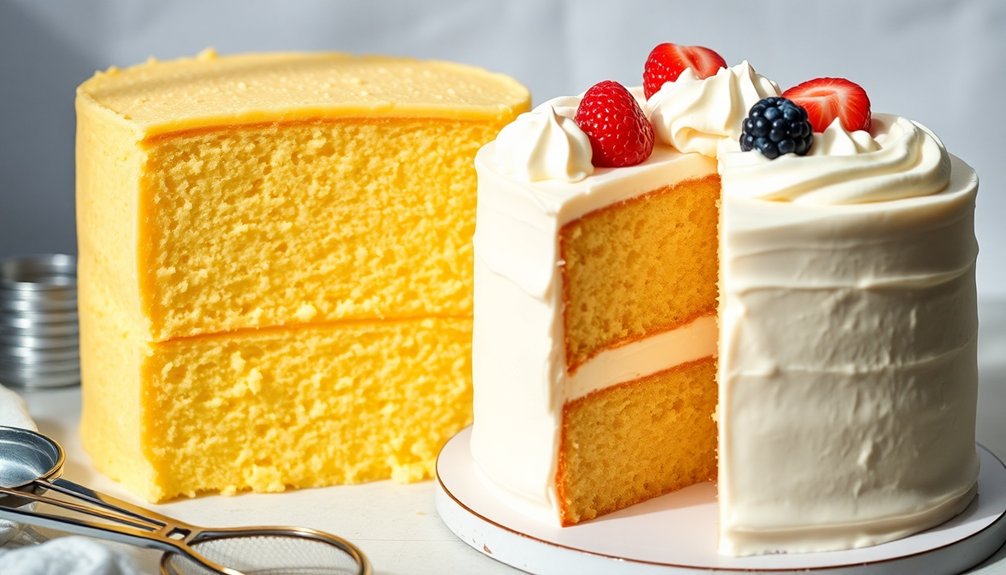
When crafting the perfect yellow or vanilla cake, mastering the baking process is key to achieving a delightful result. Start by ensuring all ingredients are at room temperature; this helps create a smoother batter and promotes an ideal rise.
Master the baking process for the perfect yellow or vanilla cake by using room temperature ingredients for a smoother batter and better rise.
For vanilla cake, separate the eggs and whip the egg whites to incorporate more air, resulting in a lighter texture. Always use high-quality butter for both cake types, as it enhances flavor and richness.
Avoid overmixing your yellow cake batter; mix just until ingredients are combined to prevent a denser texture. Finally, monitor baking times carefully—underbaking can cause a gooey center, while overbaking leads to dryness. Additionally, using gluten-free flour can help create a delicious alternative for those with dietary restrictions.
Follow these baking tips, and you’re sure to impress!
Conclusion
In the grand dessert debate, choosing between yellow and vanilla cake isn’t just a matter of flavor; it’s a reflection of your personal taste and memories. Yellow cake, with its rich buttery notes, dances on your palate, while vanilla cake offers a delicate, classic charm. Whichever you prefer, both cakes can bring joy to any occasion. So, why not indulge in both? After all, life is too short to limit yourself to just one slice of happiness.