To master layered cookies, start with a strong base of fine graham cracker crumbs mixed with melted butter. Use high-quality ingredients like sweetened condensed milk for binding, and guarantee even layering for balanced flavors. Avoid common mistakes such as overmixing and uneven distribution. Experiment with unique flavors by adding nuts or jams, and pay close attention to baking times. Stick around to uncover additional tips that can take your layered cookie game to the next level.
Understanding Layered Cookie Basics
When you plunge into the world of layered cookies, it’s important to grasp the basics to achieve that perfect blend of flavors and textures. Each layer plays a vital role, starting with a strong base made from fine graham cracker crumbs mixed with melted butter. To ensure a successful cookie base, using gluten-free flour can enhance the texture for those with dietary restrictions. Combining different flours can further elevate the taste and texture of your layered cookie.
This foundation adheres well and supports the subsequent layers, which often include rich chocolate. Pouring sweetened condensed milk over the layers acts as a binding agent, ensuring everything stays together during baking. Be cautious while mixing; overmixing can compromise the dough’s integrity. Finally, pay attention to baking temperatures and times, as underbaking can ruin your masterpiece, leaving you with a messy result instead of beautifully defined layers. Additionally, consider using low-sugar alternatives to enhance the flavor while promoting healthier eating habits.
Enjoy the process!
Essential Ingredients for Success
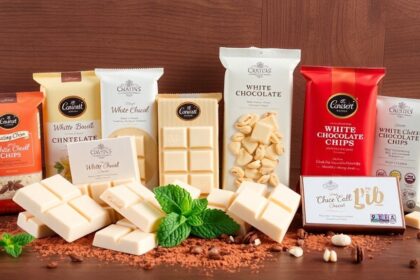
To create delicious layered cookies, you need to focus on essential ingredients that contribute to flavor and structure. Start with fine graham cracker crumbs; they absorb melted butter and help form a cohesive base. Sweetened condensed milk acts as a binding agent, ensuring the layers stick together while enhancing the overall taste. Incorporate dark brown sugar into your cookie dough for added moisture and rich caramel undertones, resulting in a thicker, chewier texture. Additionally, making sure to use high-quality ingredients contributes to the overall success of your baking, similar to how traditional Julekake utilizes flour, sugar, and yeast for its unique flavor profile. Finally, don’t skimp on high-quality chocolate, like Ghirardelli bittersweet bars, as it elevates the flavor profile, delivering an intense chocolate experience. Additionally, using rich almond flavor can also enhance your cookies, reminiscent of the beloved Norwegian Kransekake.
Tips for Perfect Layering Techniques
To create the perfect layered cookies, you need effective layering ingredient strategies that guarantee each layer complements the others. If you run into common issues, like separation or uneven texture, don’t worry—there are simple fixes. For a healthier twist, consider using almond flour or oats instead of white flour to boost the nutritional profile of your cookies. Additionally, using gluten-free flours can enhance the texture and keep your cookies enjoyable for everyone. Almond flour cookies are not only gluten-free but also packed with protein and fiber, making them a nutritious option for cookie lovers. Let’s explore these techniques to elevate your cookie game.
Layering Ingredient Strategies
While perfecting your layered cookies, employing effective ingredient layering strategies is crucial for achieving that ideal texture and flavor.
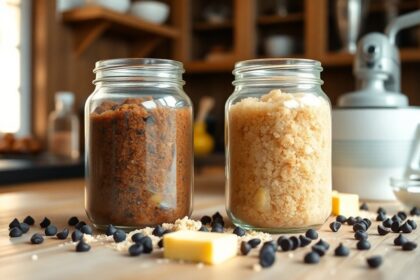
Start by mixing graham cracker crumbs thoroughly with melted butter; using fine crumbs enhances crust stability. This cohesive crust forms the foundation for your layers of dough.
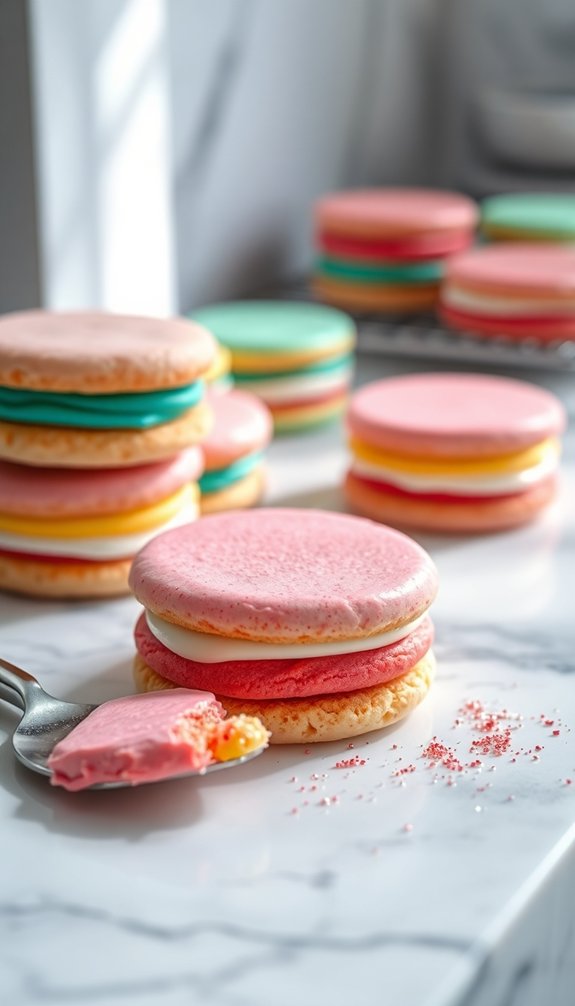
When layering ingredients, distribute sweetened condensed milk evenly to bind everything together and prevent separation during baking. Stick to a consistent order, like coconut, chocolate chips, and butterscotch chips, for balanced flavor and even baking results.
Allow each layer to cool before adding the next; this prevents melting and guarantees defined structures in your cookie bars.
Troubleshooting Common Issues
Even with the best layering strategies, issues can still arise during the baking process. To guarantee your dough and chocolate layers adhere properly, mix graham cracker crumbs with melted butter thoroughly. This prevents crust separation.
When layering, focus on even distribution, especially with sweetened condensed milk on graham crackers; it’s vital for a cohesive structure. Avoid overmixing your ingredients, as it can lead to structural problems and affect texture.
Allow each layer to cool before adding the next; this stabilizes the structure and prevents messy combinations. Finally, keep a close eye on baking times. Underbaking can leave layers soft and unstable, while overbaking may dry them out.
Perfecting these techniques will enhance your layered cookies!
Common Mistakes to Avoid
When crafting layered cookies, it’s vital to be aware of common mistakes that can ruin your hard work. Overmixing your ingredients may lead to a dense cookie, making it difficult to achieve those perfect layers of chocolate. Additionally, be sure to use the right texture for the graham cracker crumbs to ensure a cohesive base that complements the layers.
Also, don’t skip the melted butter in your graham cracker crust; without it, the layers might separate, compromising structure. Make sure you allow each layer to cool adequately before adding the next; otherwise, they’ll blend and lose their distinct appearance. Incorporating nutrient-rich flour alternatives can also enhance the overall flavor and health benefits of your cookies.
Pay attention to baking times, as ignoring them can result in uneven layers—some overcooked, others undercooked. Finally, remember to use fine graham cracker crumbs for a cohesive base; the right texture is essential for those delicious, layered cookies. Chocolate chip cookies, which have been a beloved dessert for over 80 years, can inspire you to experiment with layered variations.
Unique Layering Ideas to Try
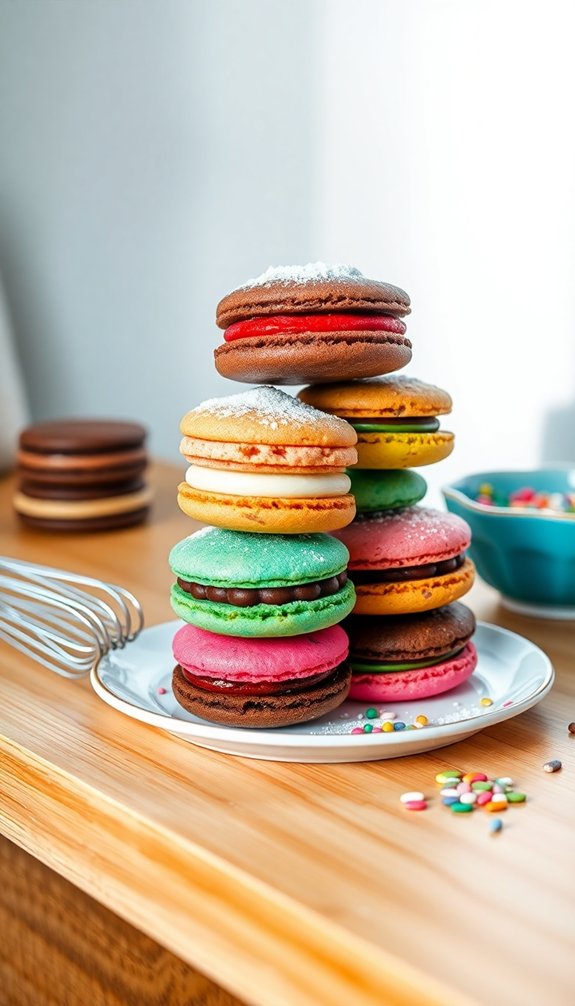
Ready to elevate your layered cookies?
You can create amazing flavor combinations and add surprising textures by mixing in ingredients like chocolate chips, nuts, or even vibrant jams. Additionally, consider incorporating almond extract infused oatmeal cookies to enhance the flavor profile and add a nutty undertone that will delight your taste buds and impress your friends! These layered cookies can also be made protein-packed, offering nutritious snacks that satisfy your cravings while supporting your health goals. To truly capture the holiday spirit, experiment with unique vegan flavor combinations that will make your cookies stand out during festive gatherings.
Flavorful Layer Combinations
As you explore the world of layered cookies, consider how different base layers can set the stage for unique flavor combinations. Start with chocolate chip cookie dough or graham cracker crusts for a delightful foundation.
Between the layers, add a mix of nuts, dried fruits, or flavored chocolate chips to introduce exciting textures and tastes. Sweetened condensed milk can bind these ingredients while adding a rich sweetness that enhances various flavors.
For an eye-catching contrast, use flavored jams or fruit purees between layers. Don’t forget to sprinkle in spices like cinnamon or nutmeg to elevate your cookie experience with warm, aromatic notes.
These creative combinations will transform your layered cookies into irresistible treats!
Textural Enhancements to Layers
Enhancing the texture of your layered cookies can elevate them to a whole new level.
Try incorporating finely chopped nuts or chocolate chips between cookie layers for a delightful crunch. Melted chocolate or caramel serves as a binding layer, adding flavor while keeping everything intact during baking.
Don’t forget to experiment with flavored extracts like almond or orange to introduce unique flavor profiles without sacrificing structure. For a rich, indulgent twist, add a layer of creamy frosting to complement the chewiness of your cookies.
For a playful touch, layer in some crushed cookies or candies, such as Oreos or toffee bits, to surprise your taste buds with exciting textures and flavors in every bite.
Baking and Cooling for Optimal Texture
To achieve the perfect texture in layered cookies, it’s crucial to bake them at the right temperature, usually around 350°F.
Pay close attention while baking to guarantee your layers solidify properly. Here’s what to keep in mind:
- Use a baking pan lined with parchment paper for easy removal.
- Monitor baking times closely to avoid over-baking or under-baking.
- Once done, transfer your cookies to a wire rack to cool completely, preventing moisture buildup.
- For enhanced flavor and texture, refrigerate the cookies after they’ve cooled to room temperature.
Following these steps will help you create cookies with a delightful texture that holds together beautifully!
Storage Tips to Maintain Freshness
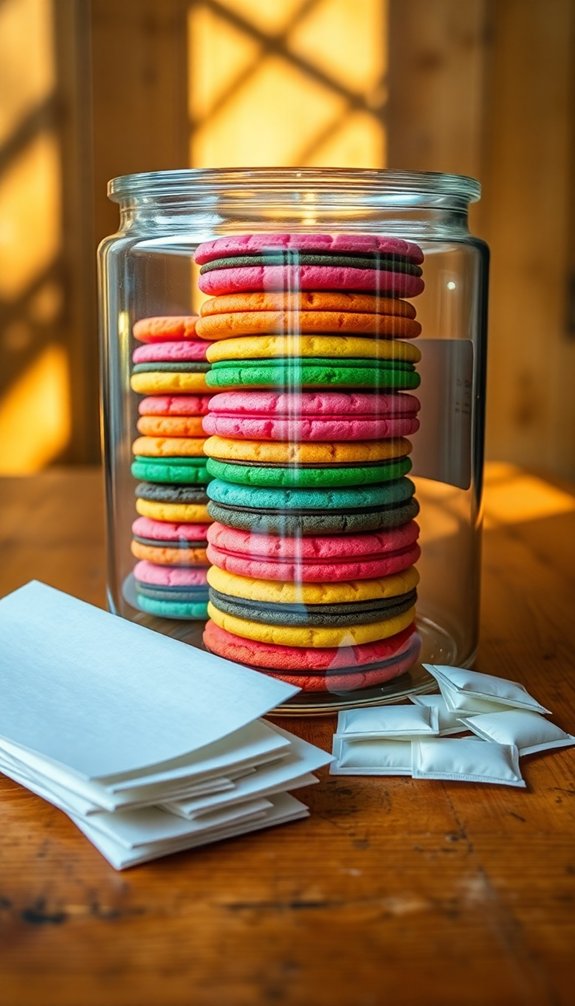
While you might be tempted to leave your layered cookies out on the counter, storing them properly is essential to keep them fresh and delicious.
To maintain their texture, place your cookies in an airtight container at room temperature. For peak freshness, you can keep them in the baking pan if it’s covered securely; this helps maintain moisture levels.
When stacking cookies, use parchment paper between layers to prevent sticking and preserve their shape. If you want to enhance the flavor and texture, consider refrigerating them before serving.
For longer storage, frozen layered cookies can last up to a month—just remember to thaw them at room temperature before enjoying their full flavor.
Community Insights and Shared Experiences
How do bakers create those perfectly layered cookies you admire? The secret lies in community insights and shared experiences. Here’s what many bakers recommend:
- Use a cookie cutter to guarantee uniform layers.
- Divide your dough into three equal portions for consistent thickness.
- Utilize parchment paper to aid in transferring layers smoothly.
- Engage in troubleshooting common layering mistakes, like avoiding overmixing or missing butter.
These shared tips highlight the importance of layering to prevent crust separation.
It’s amazing how community support fosters creativity, encouraging bakers to experiment with different base layers and techniques.
Creative Variations on Layered Cookies
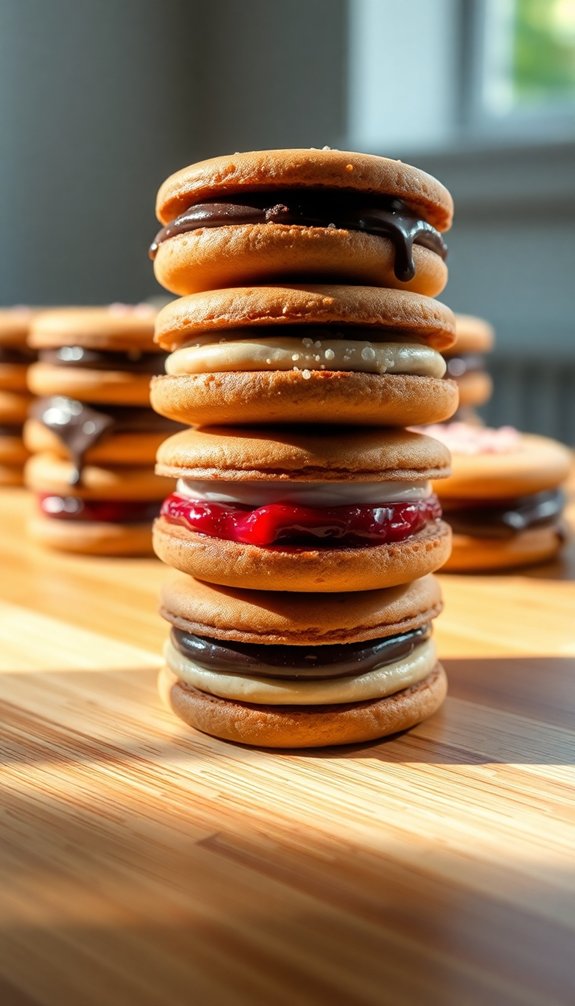
Building on the shared insights from the baking community, you can take your layered cookies to the next level with creative variations.
Start by experimenting with different base layers, like chocolate chip cookie dough or brownie batter, to craft unique flavor profiles. You can enhance texture and taste by incorporating additional ingredients such as nuts, dried fruits, or flavored chips in each layer.
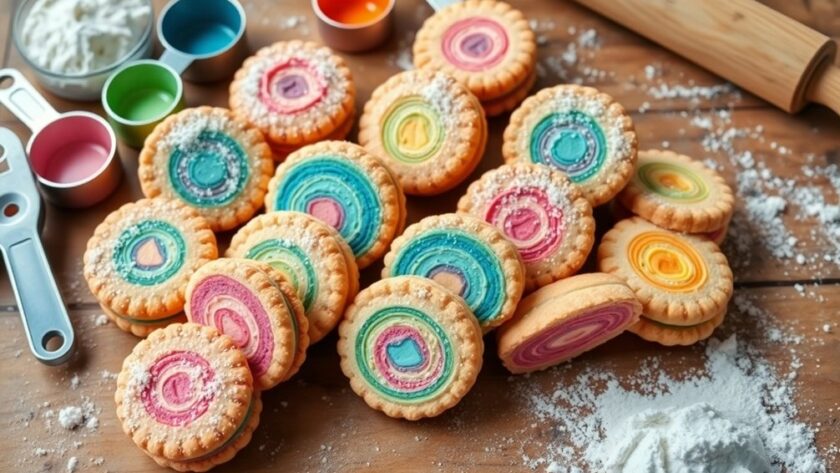
Try using melted chocolate or caramel as binding layers for improved cohesion and flavor. Don’t forget to vary the color and flavor of each layer with food coloring and extracts to make them visually appealing.
Finally, consider alternative sweeteners or gluten-free flours to accommodate diverse dietary preferences while keeping your layered cookies delicious.
Conclusion
In the world of baking, layered cookies are like a well-told story, each layer adding depth and flavor to your culinary tale. Just as a skilled author crafts their narrative, you’ve learned to blend ingredients and techniques, creating a masterpiece. Remember, every cookie you bake is a chapter in your journey, filled with sweet triumphs and lessons. As you share these treats with loved ones, you’re not just serving cookies; you’re sharing a piece of your heart.