
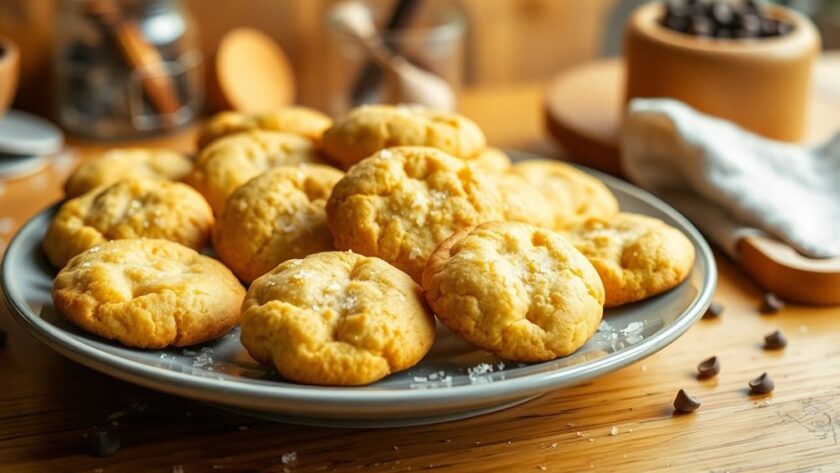
The secret to chocolate chipless cookies is all about embracing unique flavors and textures. By using high-quality ingredients like nut flours and natural sweeteners, you can create delicious treats without cocoa. Add dried fruits or nuts for delightful chewiness and crunch. Spices like cinnamon or vanilla extracts can elevate the taste, making each bite special. These cookies can be just as satisfying, if not more! Discover more creative combinations and tips to enhance your chocolate chipless cookie experience.
Why Try Chocolate Chipless Cookies?
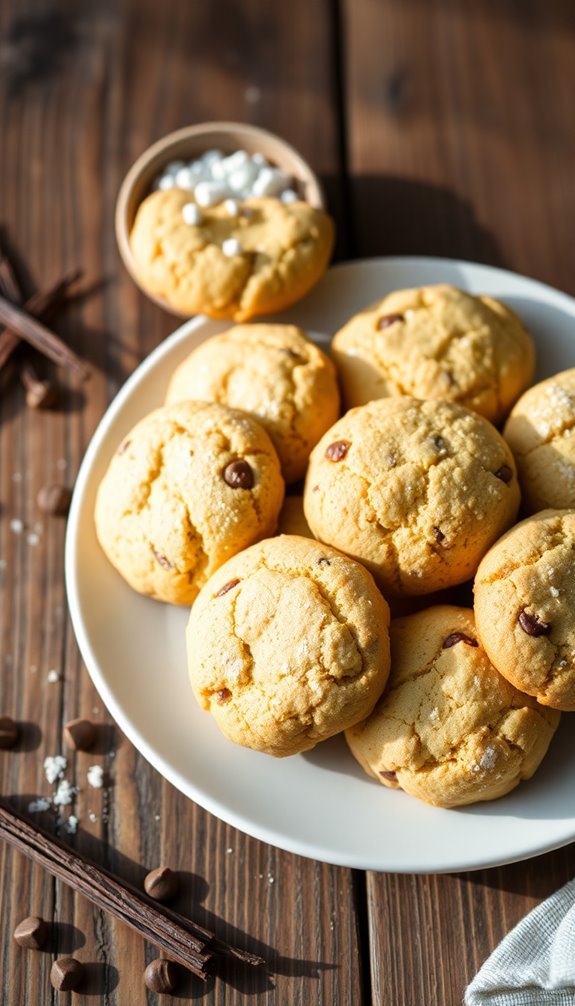
If you’re looking to shake up your dessert routine, chocolate chipless cookies are worth a try.
These cookies offer a delightful twist on traditional favorites, showcasing unique textures that’ll surprise your taste buds. By swapping out chocolate chips, you can explore an array of cookie flavors that highlight other ingredients. Experimenting with optional mix-ins like nuts, dried fruits, or even spices like cinnamon to create a distinct taste experience can lead to delightful surprises. You’ll discover how each element contributes to chewy, crispy, or crumbly textures that keep each bite exciting. Additionally, utilizing a gluten-free flour blend ensures that those with sensitivities can still enjoy these delicious cookies.
These cookies provide an exciting twist on classics, revealing unique textures and flavors that elevate your baking experience.
Plus, without chocolate, you might find yourself tasting the true essence of the cookie base. Additionally, experimenting with natural sweeteners for cookies can enhance flavors and create a healthier treat.
The Essential Ingredients for Flavorful Cookies
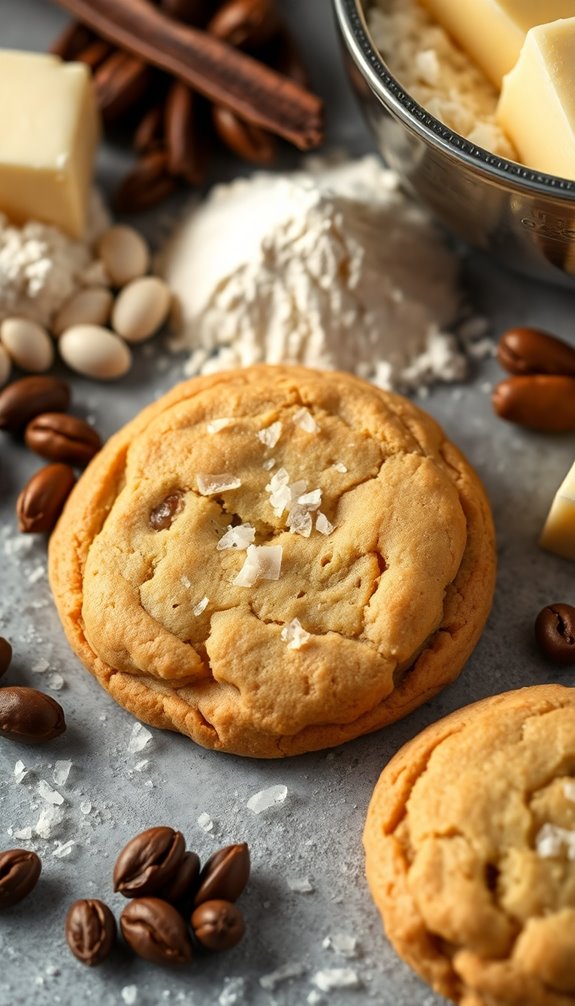
When it comes to baking cookies without chocolate chips, the right ingredients make all the difference.
You’ll want to focus on a flavorful base, explore unique enhancements, and consider factors that affect texture and structure. One great option to consider is using almond flour as it provides a nutty richness and a moist, chewy texture that can elevate the taste of your cookies. Incorporating ingredients like pistachios can add both a delightful crunch and a pop of color to your cookie creations. Additionally, using honey as a sweetener can enhance the flavor while providing natural nutritional benefits.
Let’s break down what you need to create cookies that truly stand out.
Flavorful Base Ingredients
The foundation of any great cookie lies in its base ingredients, which play a crucial role in developing flavor and texture.
In order to create a delicious cookie without chocolate chips, focus on using high-quality components that elevate your treats. Here are three essential ingredients to take into account:
- Nutty Bases: Opt for almond or hazelnut flour to introduce a rich, nutty flavor that complements your cookies perfectly. This approach enhances the cookies’ overall flavor profile, similar to how higher baking temperature encourages even browning and crispiness. Additionally, using self-rising flour simplifies the baking process by eliminating the need for separate leavening agents.
- Flavorful Extracts: Vanilla, almond, or even citrus extracts can add depth and complexity, enhancing the overall taste. These extracts can work in harmony with the rich flavors of butter and dark brown sugar for a caramel-like experience.
- Quality Butter: Choose unsalted butter for a creamy richness, ensuring your cookies have a delightful melt-in-your-mouth texture. Using high-quality butter is essential as it adds richness and controls saltiness in your cookies.
With these flavorful base ingredients, you’ll create cookies that are both satisfying and memorable. Additionally, using dairy-free butter alternatives can provide a creamy texture while accommodating dietary restrictions.
Unique Flavor Enhancements
Building on a solid foundation of base ingredients, you can take your cookie game to the next level with unique flavor enhancements.
Consider using flavor infusion techniques like steeping spices in melted butter or adding zests from citrus fruits. These methods not only elevate the taste but also create a delightful aroma that entices.
You can explore alternative textures by incorporating ingredients like finely chopped nuts or oats, which add a satisfying crunch alongside the rich flavors.
Don’t forget extracts—vanilla, almond, or even coffee can transform your cookies into a gourmet experience. Additionally, incorporating nutty flavor profiles from almond flour can enhance the richness of your cookies.
Experimenting with these enhancements will yield cookies bursting with flavor, proving that you don’t need chocolate chips to create something extraordinary.
Happy baking!
Texture and Structure Factors
To achieve the perfect texture and structure in your cookies, you’ll want to pay close attention to the essential ingredients. The right balance guarantees not only great cookie density but also structural integrity.
Here are three key factors to reflect on:
- Flour Type: Choose all-purpose or cake flour to influence density and chewiness.
- Fat Content: Butter or alternative fats can affect moisture levels, impacting the final texture.
- Sugar Ratios: Adjusting granulated and brown sugar changes both sweetness and chewiness.
How to Choose the Right Sweetener for Your Cookies?
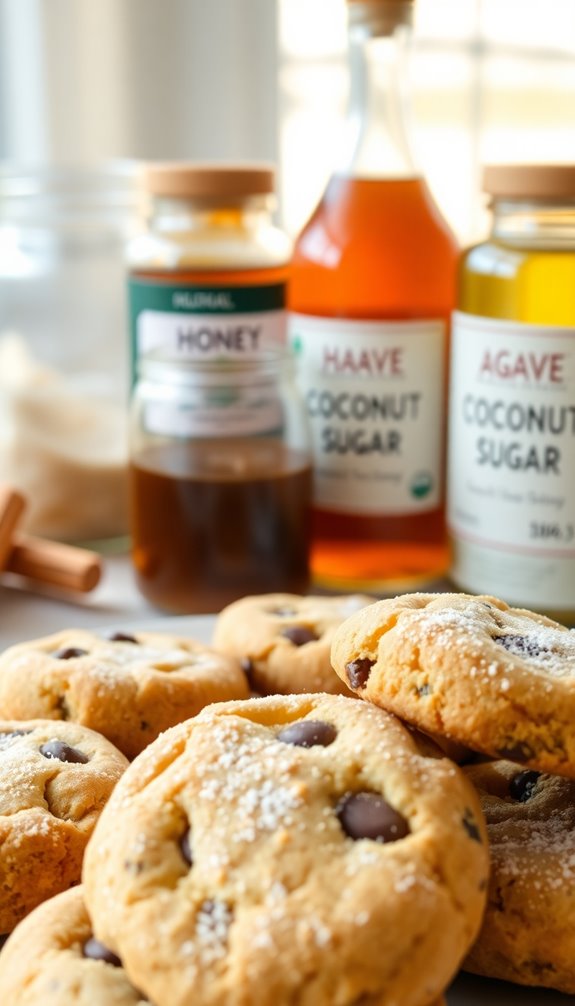
When it comes to sweetening your cookies, you’ve got plenty of options to contemplate.
Each type of sweetener brings its own flavor profile, influencing the overall taste of your treats.
Let’s explore how to pick the right one for your chocolate chipless cookies!
Types Of Sweeteners Available
Choosing the right sweetener for your cookies can make all the difference in flavor and texture. With so many options available, you can easily find the perfect match for your recipe.
Here are some sweetener types to evaluate:
- Natural sweeteners like honey and maple syrup offer rich flavors.
- Artificial sweeteners provide low-calorie alternatives without sacrificing sweetness.
- Granulated and liquid sweeteners can greatly affect your cookie’s consistency.
When selecting a sweetener, think about your desired outcome.
Sugar alternatives and sweetener blends can cater to different dietary needs, while flavor enhancing sweeteners elevate your cookies.
Remember, each option has unique properties, so choose healthy sweeteners or baking substitutes that fit your preferences best.
Happy baking!
Sweetener Flavor Profiles Explained
Understanding the flavor profiles of different sweeteners can greatly enhance your cookie-baking experience. When choosing sweetener types, consider how their unique flavors can impact your cookies.
For instance, brown sugar offers a rich, molasses-like taste, while white sugar provides a clean sweetness that lets other flavors shine. If you prefer something more intense, try using honey or maple syrup; they add depth but also alter the texture.
Agave nectar has a milder flavor, making it versatile for various recipes. Remember, the flavor intensity of each sweetener can influence your cookie’s final taste, so don’t hesitate to experiment.
Balancing sweetness with other ingredients is key to achieving the perfect cookie, so choose wisely!
Exploring Alternative Mix-Ins Beyond Chocolate
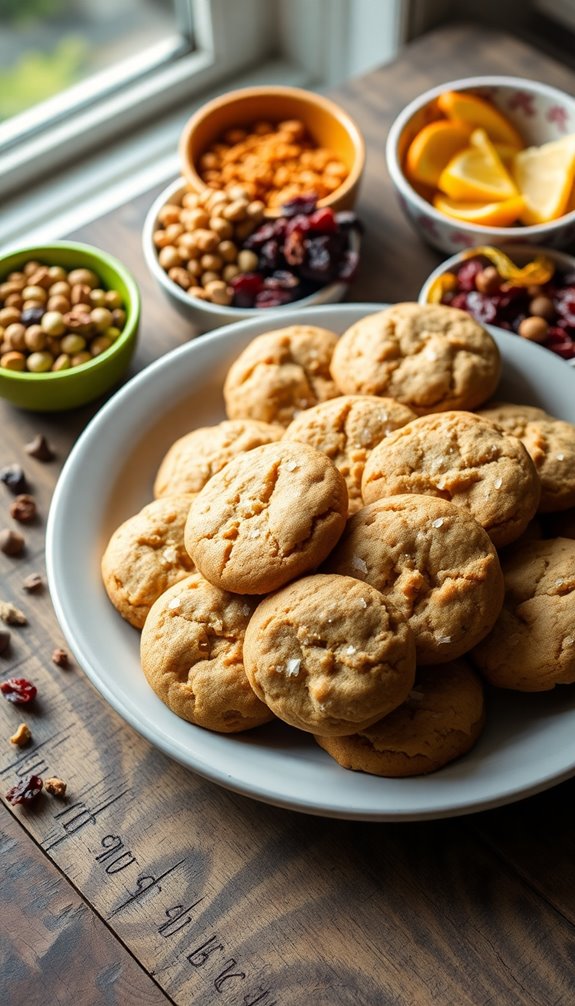
Why limit your cookie creativity to just chocolate? Embrace alternative flavors and explore mix-ins that elevate your cookie game.
By experimenting with different ingredients, you can achieve delightful surprises in taste and creative textures. Here are some fantastic alternatives to contemplate:
- Dried Fruits: Apricots, cranberries, or raisins add a chewy sweetness.
- Nuts and Seeds: Walnuts, pecans, or sunflower seeds bring crunch and depth.
- Spices and Zests: Cinnamon, nutmeg, or citrus zests offer unexpected warmth.
Incorporating these mix-ins not only enhances flavor but also transforms your cookies into unique treats.
The Role of Spices in Enhancing Cookie Flavor
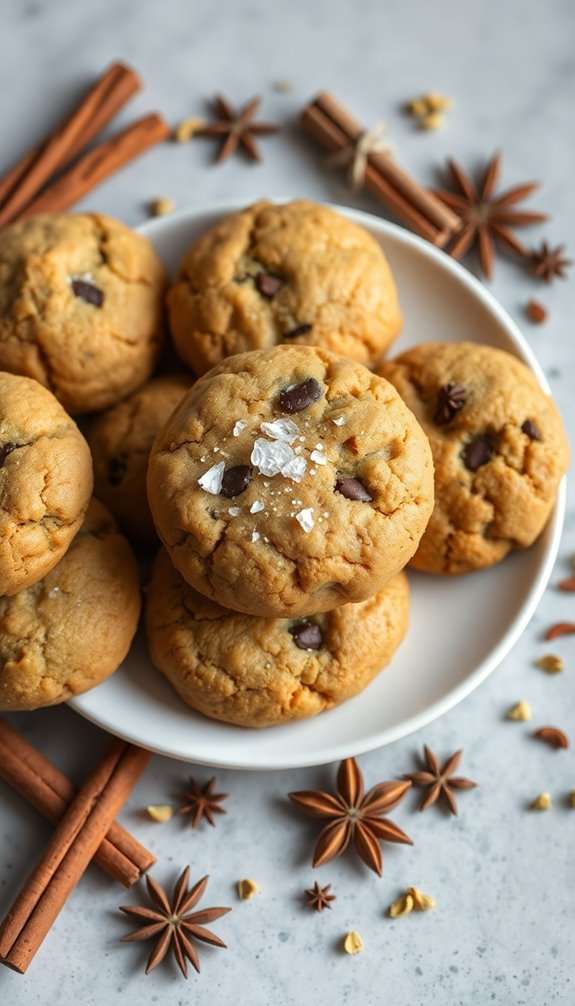
Spices can transform your cookie experience by adding unique flavor profiles that surprise your taste buds.
They also balance sweetness, making each bite more interesting and satisfying.
Plus, the aromatic enhancements from spices create an inviting atmosphere that elevates your baking to a whole new level.
Unique Flavor Profiles
While chocolate chips often steal the spotlight in cookie recipes, incorporating unique spices can elevate your cookie game to new heights.
By experimenting with different flavor profiles, you’ll create cookies that surprise and delight. Consider these options:
- Herbal infusions: Rosemary or thyme can add an unexpected depth.
- Cinnamon and nutmeg: These warm spices create a comforting aroma and flavor.
- Fruit extracts: Almond or orange extracts can introduce a touch of brightness.
These elements not only enhance the overall taste but also make your cookies stand out.
The right combination of spices brings balance and sophistication, ensuring that each bite is a memorable experience.
Balancing Sweetness With Spice
Incorporating spices into your cookie recipes not only adds unique flavor profiles but also plays a significant role in balancing sweetness. When you think about spice integration, consider using cinnamon, nutmeg, or ginger to complement the sugar’s natural sweetness.
These spices create a delightful contrast that prevents your cookies from becoming overly sweet. For instance, a pinch of sea salt can enhance the flavor while contributing to the sweetness balance, making every bite more enjoyable.
You’ll find that spices not only elevate the overall taste but also bring warmth and depth to your cookies. By experimenting with different combinations, you’ll discover how spices can transform your cookie experience without relying on chocolate or cocoa for richness.
Aromatic Enhancements For Appeal
Aromatic spices can elevate your cookie baking experience, transforming ordinary recipes into extraordinary treats. By incorporating these spices, you’ll achieve a delightful flavor infusion that excites the palate.
Here are three spices you should consider:
- Cinnamon: Adds warmth and sweetness, creating a comforting aroma.
- Nutmeg: Offers a nutty, slightly sweet flavor that enhances the cookie’s richness.
- Cardamom: Imparts a unique, aromatic touch that elevates the overall taste.
These aromatic spices not only enhance flavor but also provide an inviting scent that fills your kitchen.
Experimenting with different combinations allows you to discover your favorite profiles, ensuring each batch of cookies is a memorable experience.
Embrace these spices, and watch your cookie creations come alive!
How to Achieve the Perfect Cookie Texture?
To achieve the perfect cookie texture, you need to contemplate several key factors that influence the final product.
First, consider your cookie baking techniques. Mixing the dough just until combined prevents overworking the gluten, which can lead to tough cookies.
For achieving chewiness, use brown sugar instead of white; it adds moisture and helps create that desirable texture.
Pay attention to your baking time, too—pulling the cookies out of the oven when they’re slightly underbaked allows them to firm up while cooling.
Finally, let them rest on the baking sheet for a few minutes before transferring to a wire rack.
These small adjustments can make a big difference in achieving that perfect cookie texture you desire.
The Importance of Butter vs. Oil in Cookies
Choosing the right fat in your cookie recipe can greatly impact flavor and texture. While butter brings rich flavor and a delightful chewy texture, oil alternatives can offer unique benefits. Here’s a quick look at their differences:
- Butter benefits: Adds depth and richness, along with a pleasant aroma. It also helps cookies spread nicely while providing a tender crumb.
- Oil alternatives: Often result in a softer texture, making cookies less crumbly and more cake-like. They can also be healthier options, depending on the type used.
- Versatility: Using a combination of both can enhance flavors and textures, allowing for creative variations in your cookie recipes.
Ultimately, your choice between butter and oil will determine the final taste and feel of your delicious cookies.
Tips for Baking Cookies With Unique Flavors
If you want to make cookies that stand out, think about substituting ingredients for bold flavors.
You can experiment with unique mix-ins, like dried fruits or spices, to create something truly special.
Let your creativity run wild, and don’t be afraid to try new combinations!
Flavorful Ingredient Substitutions
While traditional chocolate chip cookies are beloved, experimenting with different flavors can elevate your baking to new heights. You can easily switch up your cookie flavor by making a few simple ingredient swaps.
Here are some ideas to inspire your next batch:
- Replace vanilla extract with almond extract for a nutty twist.
- Use brown sugar instead of granulated sugar for deeper caramel notes.
- Incorporate spices like cinnamon or nutmeg for a warm, aromatic touch.
These substitutions not only enhance the overall taste but also add a unique flair to your cookies.
Don’t be afraid to mix and match; the right ingredient swaps can lead to delightful surprises in every bite!
Creative Mix-Ins Ideas
When you’re ready to take your cookies to the next level, incorporating unique mix-ins can make all the difference.
Think about adding unusual ingredients like crushed pretzels for a salty crunch or dried lavender for a floral hint. You can also experiment with flavor pairings, such as pairing orange zest with white chocolate or mixing in spicy ginger with molasses.
Don’t shy away from savory options, either; a sprinkle of rosemary can elevate your cookie game. For a nutty twist, try adding toasted coconut or almond flour.
Creative Flavor Combinations for Chocolate Chipless Cookies
Although chocolate chip cookies are a classic favorite, exploring creative flavor combinations can elevate your cookie game to new heights.
By utilizing innovative cookie toppings and unique cookie flavoring techniques, you can create delightful surprises for your taste buds.
Innovative toppings and unique flavoring techniques can transform your cookies into delightful surprises for every palate.
Here are three flavor combinations to contemplate:
- Lemon Rosemary: The zesty brightness of lemon paired with fragrant rosemary adds an unexpected twist.
- Cinnamon Maple: Incorporate warm cinnamon and rich maple syrup for a comforting, seasonal treat.
- Coconut Almond: Mix shredded coconut with almond extract for a tropical flair that transports you to paradise.
Embrace these combinations, and you’ll discover that chocolate chipless cookies can be just as satisfying and full of flavor as their classic counterpart.
The Science of Cookie Baking: Understanding Temperature and Time
Understanding the science of cookie baking is essential for achieving that perfect texture and flavor you crave. The key lies in temperature and time, which are vital components of cookie science.
When you bake at the right temperature, the butter melts, creating a tender crumb, while sugars caramelize for that golden color and rich taste. If you overbake, cookies become hard and dry, losing their desirable chewiness.
Baking chemistry reveals that cookies spread due to the heat, allowing air pockets to form and creating a light texture.
Adjusting baking time can enhance your cookies’ flavor profile, so keep an eye on them! Get these elements right, and you’ll enjoy cookies that are consistently delicious and satisfying.
How to Store and Preserve Your Cookies for Freshness?
To keep your cookies fresh and delicious, proper storage is key. Follow these freshness tips to guarantee your cookie creations stay delightful:
Proper storage is essential for keeping your cookies fresh and delightful; follow these tips for optimal enjoyment.
- Use airtight containers: Store cookies in sealed containers to prevent exposure to air, which can lead to staleness.
- Separate different types: If you’ve made multiple varieties, keep them in separate containers. This helps maintain their unique textures and flavors.
- Refrigerate or freeze for longer storage: For extended freshness, refrigerate cookies for up to a week or freeze them for up to three months. Just remember to wrap them tightly!
Troubleshooting Common Cookie Baking Issues
When baking cookies, you might encounter a few common issues that can affect your results, so it’s helpful to know how to troubleshoot them.
One common mistake is overmixing the dough, which can lead to tough cookies. Mix just until the ingredients are combined.
If your cookies spread too much, try chilling the dough before baking. Another issue could be uneven baking; verify your oven is preheated and consider rotating the baking sheet halfway through.
If your cookies turn out too dry, you might’ve overbaked them, so keep an eye on the timer.
Finally, if they’re too soft, check your measurements—too little flour can lead to that problem.
Happy cookie baking!
Serving Suggestions for Your Chocolate Chipless Cookies
After mastering the art of cookie baking, it’s time to think about how to serve your chocolate chipless cookies for maximum enjoyment.
The right cookie pairings and serving styles can elevate your treats and impress your guests.
- With a scoop of vanilla ice cream: Placing a warm cookie alongside a scoop creates a delightful contrast in temperature and texture.
- Dusted with powdered sugar: A light sprinkle adds a touch of elegance and enhances the flavor without overwhelming the palate.
- Paired with a hot beverage: Serve them with coffee, tea, or hot chocolate for a cozy experience that complements your cookies perfectly.
With these thoughtful serving suggestions, you’ll guarantee your chocolate chipless cookies shine at any gathering!
How to Make Cookies Vegan or Gluten-Free?
Whether you’re catering to dietary restrictions or simply exploring new flavors, making cookies vegan or gluten-free can be a rewarding experience.
To create vegan cookies, swap eggs for vegan substitutes like flaxseed meal or applesauce, and replace dairy with plant-based milk and vegan butter.
Swap eggs for flaxseed meal or applesauce and use plant-based milk and vegan butter for delicious vegan cookies.
For a gluten-free twist, choose gluten-free flours such as almond flour, coconut flour, or a pre-mixed gluten-free blend.
Adjust the liquid in your recipe as needed, since gluten-free flours may absorb moisture differently.
Don’t forget to add a binding agent, like xanthan gum, to help your cookies hold their shape.
With these simple adjustments, you can enjoy delicious cookies that everyone can savor, regardless of dietary needs.
Inspiring Cookie Recipes Without Chocolate Chips
Although chocolate chips are a classic addition to cookies, there’s a world of flavors waiting to be explored without them.
Immerse yourself in cookie history and discover how flavor evolution has led to delicious alternatives. Here are three inspiring cookie recipes to try:
- Lemon Pistachio Cookies: The zesty lemon and nutty pistachios create a revitalizing treat perfect for any occasion.
- Cinnamon Oatmeal Raisin Cookies: This warm combination offers a comforting, chewy texture that’s a nod to traditional recipes.
- Coconut Macaroons: These sweet, chewy delights are simple to make and packed with tropical flavor.
Embrace this journey beyond chocolate chips and delight in the myriad of tastes that await in your baking adventures!
Conclusion
In a world often dominated by chocolate, chocolate chipless cookies offer a delightful change of pace. By embracing alternative flavors and mix-ins, you can create cookies that sing with sweetness and warmth, proving that you don’t need cocoa to bake up joy. So, step out of the chocolate shadow and let your creativity shine. With these tips and tricks, you’ll discover that sometimes, the best treats are the ones that break the mold.