
Devil’s food cake and chocolate cake differ mainly in their ingredients and textures. Devil’s food uses cocoa powder, resulting in a lighter, fluffier cake with an intense chocolate flavor, while chocolate cake relies on melted chocolate, giving it a denser and richer texture. Both have unique tastes and baking techniques. If you want to explore more about their flavor profiles and the best frosting choices for each, there’s plenty more to uncover!
Understanding the Origins of Devil’s Food Cake
When you plunge into the history of Devil’s Food Cake, you’ll find that it first emerged in the early 20th century, with its earliest printed recipe appearing in Mrs. Rorer’s New Cook Book in 1902.
The cake boasts a rich chocolate flavor that sets it apart from lighter desserts like angel food cake. Its deep color and moist texture come from a clever combination of cocoa powder and baking soda, creating a distinctive and airy experience. Gluten-free desserts have also gained popularity as different cultures have embraced and transformed chocolate desserts over time.
The name “Devil’s Food” humorously alludes to its richness, likening it to the culinary term “deviled.” Chocolate desserts, such as chocolate chip cookies, have also become a staple in American culture, showcasing the versatility and enduring popularity of chocolate in baking.
Key Ingredients: Cocoa Powder vs. Melted Chocolate
Devil’s food cake typically uses cocoa powder, which contributes to its richer flavor and fluffier texture due to the increased pH from baking soda. In contrast, classic chocolate cake often relies on melted chocolate, resulting in a denser texture and a more indulgent flavor profile. The cream cheese swirl in red velvet variations showcases how different textures can elevate the dessert experience. Additionally, Opera cake’s layered structure demonstrates how various ingredients can create a complex flavor profile.
The cocoa powder enhances the chocolate flavor, while melted chocolate offers a smoother, creamier experience. Additionally, devil’s food cake recipes frequently incorporate coffee to boost the chocolate flavor, whereas classic chocolate cake may use butter or cream. This choice between cocoa powder and melted chocolate greatly impacts the baking process and the final cake’s characteristics. For instance, the coffee syrup soaking technique can elevate the moistness and flavor of a cake, enhancing its overall taste.
Texture and Consistency: Devil’s Food vs. Chocolate Cake
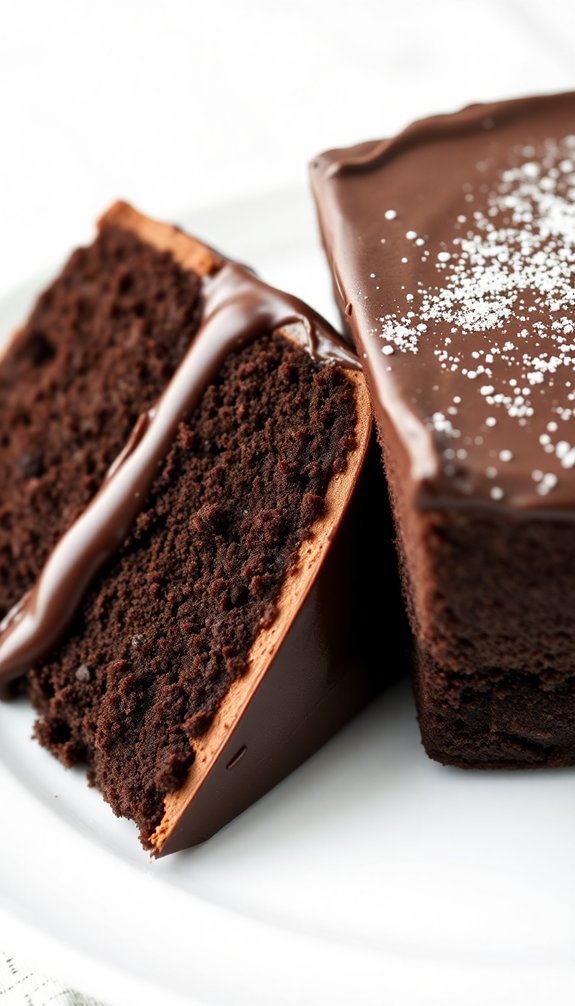
When you bite into a slice of devil’s food cake, you’ll notice its light and fluffy texture, which sets it apart from the denser, more substantial chocolate cake. The extra baking soda in devil’s food creates that airy feel, while chocolate cake’s reliance on melted chocolate gives it a rich, moist mouthfeel. The use of dark chocolate can enhance the chocolate cake’s flavor profile, making it both rich and complex. Understanding these differences in fluffiness and density can enhance your baking experience. Additionally, the almond sponge used in desserts like Gateau Opera showcases how varying ingredients can influence texture and flavor profiles in baking. The contrast between light, airy joconde layers in some cakes and denser chocolate cake contributes to a unique tasting experience.
Fluffiness Comparison
While both devil’s food cake and classic chocolate cake delight chocolate lovers, their textures differ considerably.
Devil’s food cakes are known for their impressive fluffiness, thanks to a higher amount of baking soda that creates more bubbles during the baking process. The incorporation of cocoa powder further enhances this airy texture.
In contrast, chocolate cake is denser and moister, as it typically relies on melted chocolate and butter for flavor. The baking techniques also vary; devil’s food cake often involves adding hot liquids, resulting in a lighter crumb structure, while chocolate cake batters are mixed more gently to maintain that rich density.
Because of these differences, devil’s food cakes usually require less baking time to achieve their desired fluffiness.
Density Differences
The differences in fluffiness naturally lead to a discussion about density and consistency between devil’s food and chocolate cakes. You’ll notice that:
- Devil’s Food Cake has a lighter, fluffier texture, thanks to extra baking soda creating more bubbles.
- Chocolate Cake is denser and moister due to melted chocolate and butter.
- The increased fluffiness of devil’s food cake pairs well with lighter frostings, while the density of chocolate cake supports thicker, richer frostings.
- Texture differences can affect baking times; devil’s food cake usually requires less time due to its lighter composition.
Ultimately, your choice may come down to personal preference for cake density and mouthfeel, so consider which texture appeals to you most when selecting your cake.
Flavor Profiles: Richness and Depth of Chocolate
Devil’s food cake delivers an intense chocolate experience that sets it apart from classic chocolate cake. The deep richness stems from cocoa powder, often enhanced with coffee, which elevates the chocolate flavor while reducing bitterness. This cake’s unique use of baking soda raises the pH level, resulting in a fluffy texture that complements its intense chocolate flavor. In contrast, chocolate cake typically relies on melted chocolate, yielding a denser cake with smoother, creamier characteristics. While classic chocolate cake has a richness from butter or cream, it lacks the airy quality found in devil’s food. Overall, the flavor profiles reveal that devil’s food cake offers a deeper, darker chocolate experience compared to the more subdued tones of chocolate cake. Additionally, the evolution of chocolate desserts, including modern variations, showcases the creativity in dessert-making. Traditional desserts like cassata highlight the diverse ways chocolate can be incorporated into sweet treats, much like the Sacher Torte, which combines chocolate with apricot jam for a unique flavor profile.
Baking Techniques and Tips for Each Cake

When you’re ready to bake, understanding the techniques specific to each cake type can make all the difference. Here are some essential tips for Devil’s Food Cake and chocolate cake:
- Devil’s Food Cake: Use cocoa powder with extra baking soda for a lighter texture. Enhance the chocolate flavor by adding brewed coffee or hot water. Additionally, consider using gluten-free ingredients to cater to those with dietary restrictions.
- Chocolate Cake: Melt chocolate carefully to avoid graininess, resulting in a denser, moister cake.
- Baking Times: Keep in mind that Devil’s food cake bakes faster due to its airy structure, while chocolate cake needs longer for even cooking.
- Frosting Choices: Pair Devil’s food with lighter glazes or whipped frostings, and chocolate cake with denser buttercream or ganache.
Additionally, consider using nutrient-rich flour alternatives to enhance the health benefits of your cakes without sacrificing taste.
Happy baking!
Frosting Recommendations for Devil’s Food Cake
Choosing the right frosting can elevate your Devil’s Food Cake to new heights. Lighter frostings, like whipped cream or a simple vanilla glaze, complement the cake’s airy texture without overwhelming its rich chocolate flavor.
Ganache is another fantastic option, offering a smooth, glossy finish that enhances both the cake’s appearance and its chocolate richness. If you prefer something more understated, a dusting of powdered sugar can beautifully highlight the cake’s deep color.
Traditional choices like seven-minute frosting or boiled frosting provide a light, fluffy contrast to the cake’s density. For an extra touch, consider using flavors like vanilla or coffee in your frosting to enhance the chocolate profile without overpowering it. Additionally, pairing your cake with mincemeat pie can create a delightful holiday dessert experience.
Frosting Recommendations for Chocolate Cake
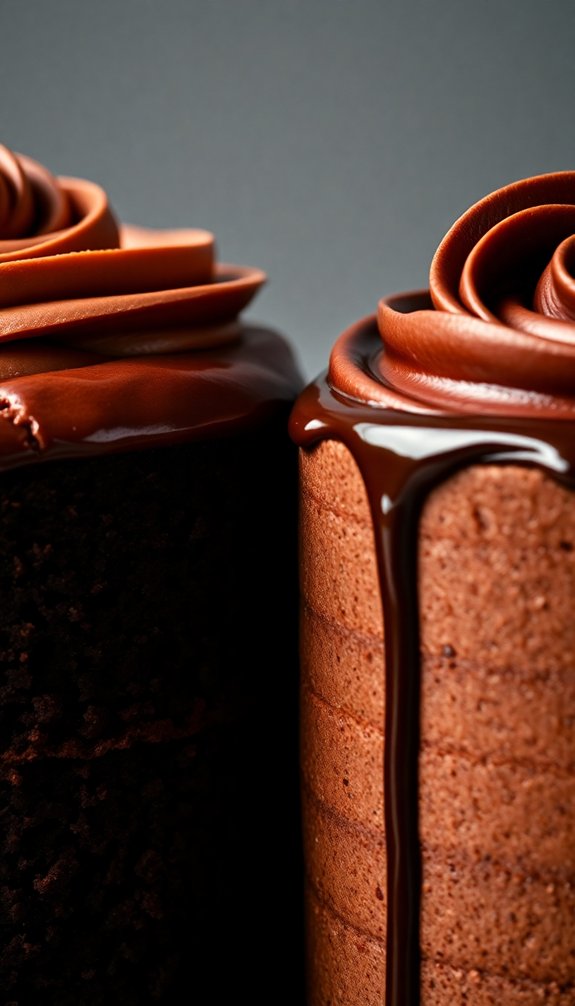
When you’re choosing frosting for chocolate cake, think about how different textures and flavors can enhance your creation.
Heavier frostings like buttercream or ganache complement the cake’s rich profile, while lighter options can provide a nice contrast.
Balancing these elements is key to achieving a delightful dessert experience.
Ideal Frosting Pairings
While selecting the perfect frosting for chocolate cake, consider how the frosting’s texture and flavor complement the cake’s rich, dense characteristics.
Here are some ideal frosting pairings for your chocolate cake:
- Buttercream Frosting: A heavier buttercream frosting pairs well, enhancing the cake’s moistness without overwhelming it.
- Ganache: Rich and smooth, this chocolate and cream blend elevates the decadence of your cake.
- Cream Cheese Frosting: The tangy contrast of cream cheese frosting balances the sweetness, adding a creamy texture.
- Whipped Cream: For a lighter touch, whipped cream allows the chocolate flavor to shine through without being too rich.
Choosing the right frosting can make your chocolate cake an unforgettable treat!
Flavor Balance Considerations
To achieve a perfect flavor balance for your chocolate cake, consider how the frosting interacts with the cake’s rich characteristics. Heavier buttercream frostings work well, as their density complements the moisture and decadent texture of the chocolate cake.
Opt for frostings that incorporate robust ingredients like cream cheese or dark chocolate to enhance flavor without overwhelming the cake. When balancing sweetness, a slightly tangy frosting can cut through the richness, creating a harmonious experience.
Thicker frostings, such as ganache or fudge, add to the moistness and richness of your cake. Avoid overly sweet options; instead, choose frostings with cocoa or coffee to maintain that delicious chocolate flavor and prevent it from getting masked, especially if you’re working with Devil’s Food Cake.
Frosting Texture Compatibility
Finding the right frosting texture is essential for elevating your chocolate cake experience. The density of your chocolate cake invites thicker frostings that enhance its moistness and flavors.
Here are some frosting recommendations:
- Heavier Buttercream: Its denser texture complements the rich moistness of chocolate cake beautifully.
- Cream Cheese Frosting: Provides a tangy contrast while maintaining a thick, satisfying texture.
- Ganache: This silky frosting not only adds richness but also pairs well with chocolate’s depth.
- Flavored Frostings: Consider options like espresso or caramel for a robust flavor profile that balances with the cake.
Choosing the right frosting will elevate both the taste and texture, creating a delightful dessert experience.
Personal Preferences: Which Cake Reigns Supreme?

When it comes to choosing between Devil’s food cake and classic chocolate cake, your personal taste can make all the difference.
If you crave a lighter, fluffier texture with an intense chocolate flavor, Devil’s food cake might be your pick. It often features cocoa powder and a hint of coffee that elevates its flavor profile.
On the other hand, classic chocolate cake offers a denser, richer experience, perfect for those who enjoy buttery notes.
Frosting compatibility can sway your decision too; lighter frostings like ganache pair beautifully with Devil’s food, while denser buttercream complements classic chocolate.
Don’t forget nostalgia—memories tied to a specific cake type can strongly influence your preference.
Ultimately, the “better” cake boils down to your personal preferences.
Conclusion
In the battle of devil’s food vs. chocolate cake, it really comes down to personal preference. Did you know that 75% of Americans prefer chocolate desserts? Whether you enjoy the rich, moist texture of devil’s food or the classic appeal of a traditional chocolate cake, both have their unique charm. So, next time you’re faced with a dessert decision, remember that each cake offers something special—it’s all about what satisfies your sweet tooth!