

When it comes to baking, Ceylon cinnamon is your best bet for sweet recipes, thanks to its mild flavor. For a bolder taste, go for Saigon cinnamon, ideal in coffee cakes or spiced cookies. If you want versatility, Korintje cinnamon strikes a nice balance for various baked goods. Remember, storage matters—keep your cinnamon in an airtight container to preserve its freshness. Stick around to discover more about how to maximize cinnamon’s potential in your kitchen!
Understanding Cinnamon: A Brief Overview
When you think of cinnamon, you might picture its warm, inviting aroma wafting through your kitchen. This beloved spice comes from the inner bark of Cinnamomum trees, with Ceylon cinnamon often deemed “true cinnamon.” It boasts a milder, sweeter flavor profile compared to cassia cinnamon, which is more common in North America. Among cassia varieties, Saigon cinnamon stands out, offering a bold flavor thanks to its high volatile oil content—perfect for baking. Additionally, incorporating low-sugar alternatives in baked goods can enhance flavor while aligning with health goals.
Fresh cinnamon is essential for maximizing flavor, so always check the country of origin and best-by dates. Its versatility shines through in both sweet and savory dishes, enhancing everything from baked goods to marinades, making it a staple in your culinary adventures. Additionally, like chocolate chip cookies, cinnamon is often associated with nostalgia and comfort in many traditional recipes. The use of classic desserts often incorporates cinnamon, further enriching the flavors and evoking cherished memories.
Types of Cinnamon: An In-Depth Look
When it comes to baking, understanding the differences between Ceylon and cassia cinnamon is essential. Ceylon, or “true cinnamon,” offers a mild flavor, while cassia packs a spicier punch, with varieties like Saigon and Korintje adding their own unique twists. Norwegian Kransekake can also benefit from the right cinnamon choice, enhancing both flavor and aroma in your creations. The gluten-free flour used in cookies can also be enhanced by the type of cinnamon selected, influencing the overall taste profile. Choosing the right type can elevate your baked goods, so let’s explore these options further.
Ceylon vs. Cassia Cinnamon
Ceylon and cassia cinnamon each bring distinct flavors and characteristics to your baking, making the choice between them essential for achieving the desired taste in your recipes.
Ceylon cinnamon, often referred to as “true cinnamon,” offers a milder, floral flavor perfect for delicate baked goods. In contrast, cassia cinnamon has a bolder, spicier profile, with varieties like Saigon providing an intense flavor and Korintje offering a milder option for everyday baking.
However, cassia contains higher levels of coumarin, posing potential health risks if consumed excessively. Understanding the flavor profiles and chemical compositions of Ceylon and cassia cinnamon allows you to tailor your baking, ensuring you select the best type for your culinary creations.
Specialty Cinnamon Varieties
Cinnamon enthusiasts know that specialty varieties can elevate your baking to new heights.
Ceylon cinnamon, with its mild and floral flavor, is perfect for delicate baked goods. On the other hand, Saigon cinnamon packs a robust flavor, making it ideal for bold recipes like Cinnamon-Streusel Coffeecake.
If you’re looking for versatility, Korintje cinnamon offers an earthy and slightly sweet taste, great for cookies and quickbreads. Each of these specialty cinnamon varieties has a distinct flavor profile that can greatly influence your final dish.
Saigon’s high volatile oil content provides an intense cinnamon kick, while Ceylon’s easy grindability guarantees smooth incorporation into any recipe.
Choosing the right type for your culinary uses can truly transform your baking experience.
Flavor Profiles: How Different Types of Cinnamon Taste

Although you might think of cinnamon as just one spice, its various types offer distinct flavor profiles that can elevate your baking.
Ceylon cinnamon, known as true cinnamon, delivers a light, floral taste, perfect for sweet dishes where subtlety shines. This type of cinnamon has a long history, similar to how cheesecake evolved over centuries to reflect cultural changes, and has roots in French culinary history that emphasize the importance of quality ingredients.
In contrast, Saigon cinnamon boasts a bold, sweet flavor and high flavor potency, making it ideal for recipes like cinnamon rolls and spiced cakes.
Korintje cinnamon strikes a balance with its mild, earthy flavor, versatile enough for cookies and quick breads.
Meanwhile, Cassia cinnamon, commonly found in U.S. markets, has a spicier, robust taste, suited for hearty, savory recipes.
Choosing the right cinnamon can enhance your baked goods and transform every bite. Additionally, incorporating nutrient-rich flours can further improve the health benefits of your baking.
The Health Benefits of Cinnamon
While you might enjoy cinnamon for its warm, comforting flavor in your baked goods, it also packs a punch when it comes to health benefits. Ceylon cinnamon, in particular, can help manage blood sugar levels, making it a great choice for those with type 2 diabetes. Its bioactive compounds offer anti-inflammatory and antioxidant properties that contribute to your overall wellness. Regular consumption of cinnamon may improve insulin sensitivity and enhance metabolic health, allowing for better control of post-prandial glucose levels. Additionally, cinnamon’s rich phytochemical profile includes coumarins, which can aid cardiovascular health. Just remember, the type of cinnamon you choose can influence the levels of coumarins and their associated risks, so opt for Ceylon when possible! Incorporating cinnamon into your gluten-free cookie recipes can enhance both flavor and health benefits, especially when combined with nutritious flours that provide a cleaner dessert option. Furthermore, using high-protein ingredients in your baking can further support energy levels and muscle recovery, making your treats both delicious and beneficial.
Cooking With Cinnamon: Tips for Optimal Use
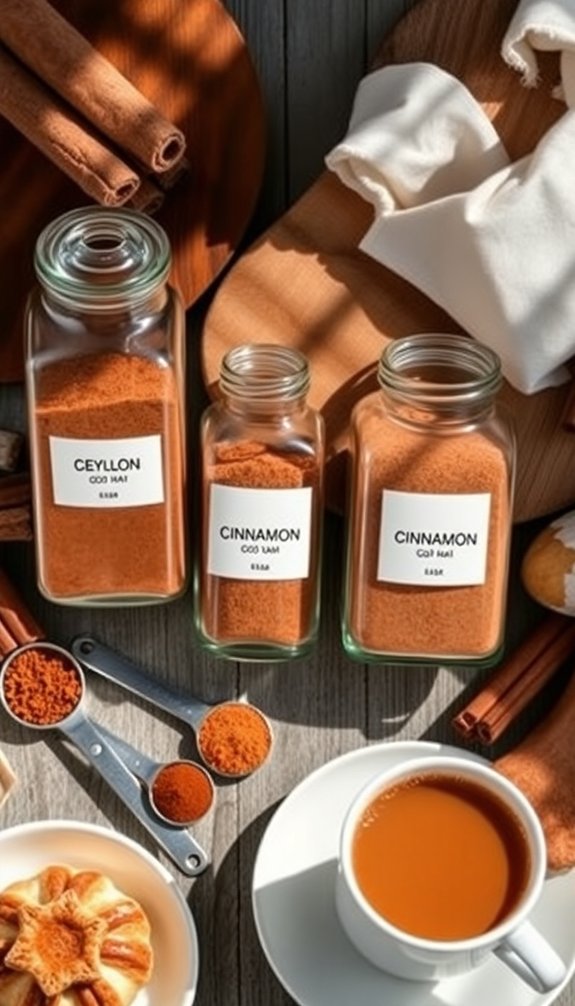
When you’re baking, using the right type of cinnamon can elevate your dishes and enhance their flavors.
Opt for Ceylon cinnamon when you want a delicate flavor in muffins and pastries. For bold flavor in coffee cakes and spiced cookies, reach for Saigon cinnamon. Additionally, consider using vibrant icing to enhance the visual appeal of your baked treats. Incorporating fresh berries in your recipes can also add a burst of flavor that complements cinnamon beautifully.
Ground cinnamon provides immediate flavor release, while cinnamon sticks are perfect for infusing liquids but need longer cooking times.
Be mindful to limit cinnamon to 1 teaspoon per 3 cups of flour in yeast doughs to avoid inhibiting yeast. Experiment by layering cinnamon at different stages, mixing it into dry ingredients or sprinkling it on top before baking, to achieve ideal flavor and exciting variations in your baked goods. Additionally, incorporating different spices can complement and enhance the overall flavor profile of your baked treats.
Storing Cinnamon: Best Practices for Freshness
To keep your cinnamon fresh and flavorful, store it in an airtight, opaque container away from light and moisture.
Make sure to place it in a cool, dark spot like your pantry, as heat can reduce its potency.
Ideal Storage Conditions
Storing cinnamon properly is crucial for preserving its vibrant flavor and aroma. To maintain ideal freshness, keep your cinnamon in an airtight container, preferably opaque, to shield it from light and moisture. This protects the quality and flavor of both ground cinnamon and cinnamon sticks.
Store it in a cool, dark place, as exposure to heat and light can diminish its potency over time. Ground cinnamon generally has a shelf life of about six months to a year, while cinnamon sticks can last two to three years if stored correctly.
When buying cinnamon, check the best-by dates and consider purchasing in small quantities to guarantee you use it within a reasonable timeframe, maximizing its flavor.
Shelf Life Tips
Maintaining the freshness of your cinnamon is essential for achieving the best flavor in your baked goods. Here are some tips to guarantee your cinnamon stays at its best:
- Store cinnamon in an airtight container: Use an opaque container to shield it from light.
- Check best-by dates: Always look for the freshest options when purchasing ground cinnamon or cinnamon sticks.
- Buy smaller quantities: For maximum freshness, opt for amounts you can use within a few months.
- Avoid exposure to moisture and heat: Keep your cinnamon in a cool, dark place to preserve flavor and extend its shelf life.
With these practices, you’ll keep your ground cinnamon and cinnamon sticks flavorful for all your baking needs!
Baking With Cinnamon: Recipe Ideas
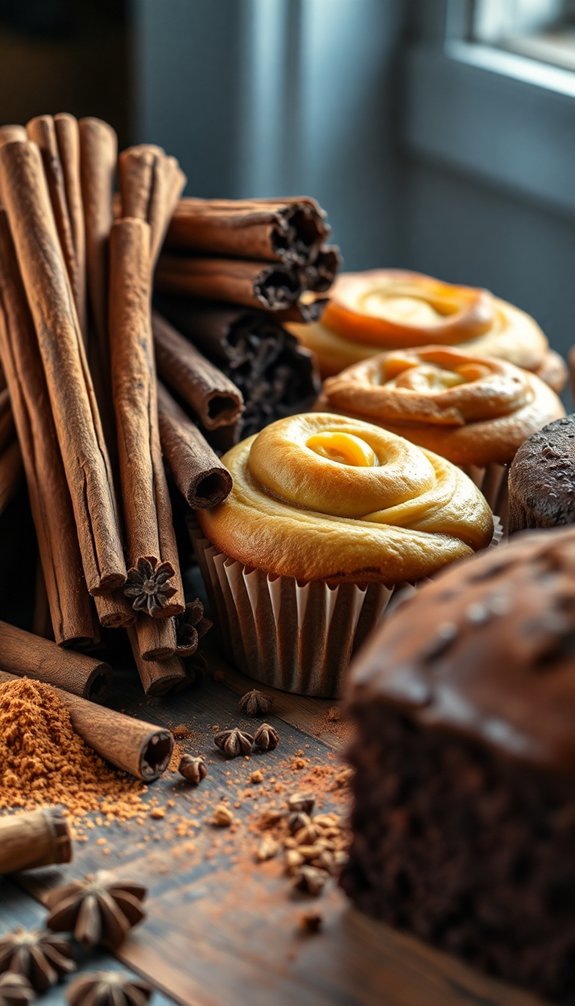
When you incorporate cinnamon into your baking, you release a world of warm, inviting flavors that can elevate any dish.
For classic cinnamon rolls, try using Ceylon cinnamon to enhance the sweet dough without overwhelming it. If you’re making a Cinnamon-Streusel Coffeecake, Saigon cinnamon’s bold flavor pairs beautifully with the cake’s richness.
For quickbreads and cookies, Korintje cinnamon offers a balanced taste that complements chocolate and nuts. Don’t forget to add ground cinnamon to your apple pie for that extra warmth and depth.
You can also experiment with cinnamon blends, mixing it with nutmeg and cloves to create delightful seasonal treats like pumpkin bread and gingerbread cookies.
Happy baking!
Common Mistakes to Avoid When Using Cinnamon
Although cinnamon can transform your baked goods, there are common mistakes that can undermine its potential. Here are four key pitfalls to avoid:
- Avoid using too much: In yeast dough, limit to 1 teaspoon per 3 cups of flour to prevent inhibiting the yeast’s rise.
- Check freshness: Dull flavors result from using stale cinnamon, so buy in small quantities and look for best-by dates.
- Consider type: Different types, like Ceylon or cassia, can affect your dish’s flavor profile—choose wisely!
- Substituting ground: When replacing cinnamon sticks with ground, use 1/2 to 1 teaspoon for each stick to guarantee proper flavor.
Lastly, remember that improper storage can lead to flavor loss, so always keep your cinnamon in an airtight, dark container.
Pairing Cinnamon With Other Ingredients
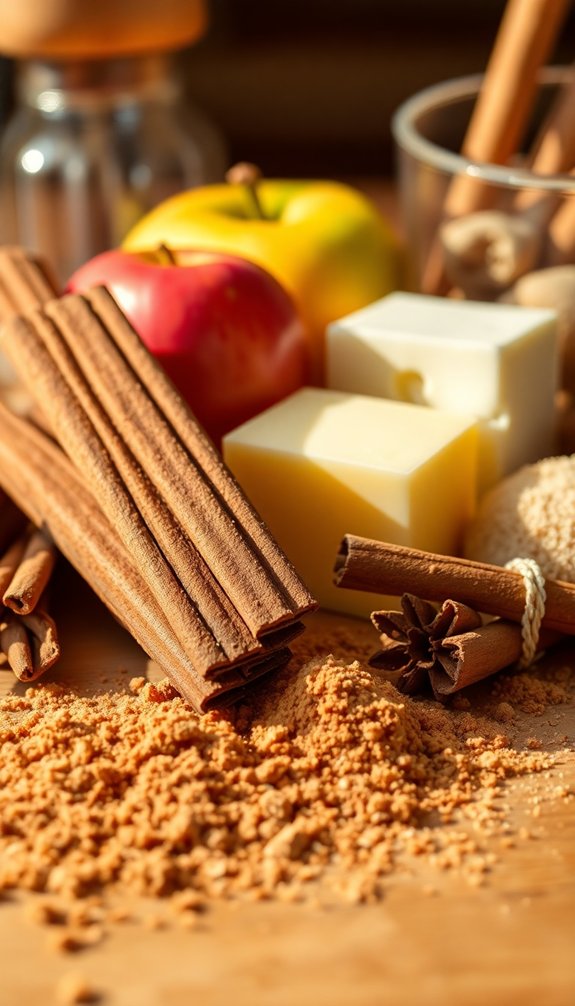
Cinnamon’s versatility makes it a fantastic ingredient to pair with a variety of flavors, enhancing both sweet and savory dishes.
For instance, cinnamon pairs well with apples, bringing out their natural sweetness in pies and crisps. When you mix it with chocolate, you’ll discover a subtle and complex flavor that elevates brownies and cakes.
In savory dishes, the spicy flavor of cinnamon complements ingredients like chiles, adding depth to Middle Eastern and Mexican cuisines.
Don’t forget its role in pumpkin spice blends; cinnamon enhances the flavor of pumpkin pie, muffins, and lattes.
Finally, if you’re a coffee lover, a dash of cinnamon sugar can transform your brew into a delightful aromatic experience.
Conclusion
To sum up, choosing the right cinnamon can make your baked goods sing with flavor! Whether you go for the warm, sweet notes of Ceylon or the bold kick of Cassia, each type has its unique charm. Remember to store it properly and experiment with different recipes to find your perfect match. With the right cinnamon, your treats will be so delicious that they’ll have everyone begging for your secret ingredient! Happy baking!