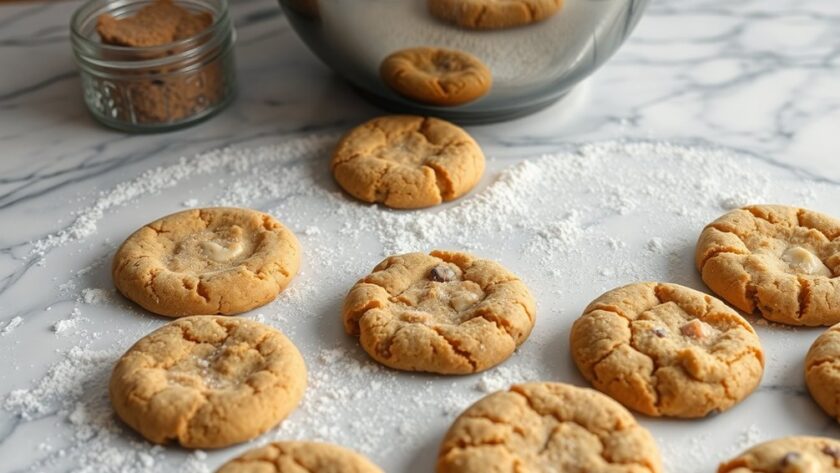
When your cookies spread, crack, or turn out tough, it’s often linked to ingredient choices and techniques. Using the wrong fat can alter texture, and mismeasuring flour leads to density issues. Temperature plays an essential role; a hot oven can make cookies spread too quickly. Overmixing develops gluten, which affects tenderness. Chilling dough can help control spread, and adjusting baking details can enhance texture. There’s more to discover about perfecting your cookie game.
Understanding Cookie Chemistry: The Role of Ingredients
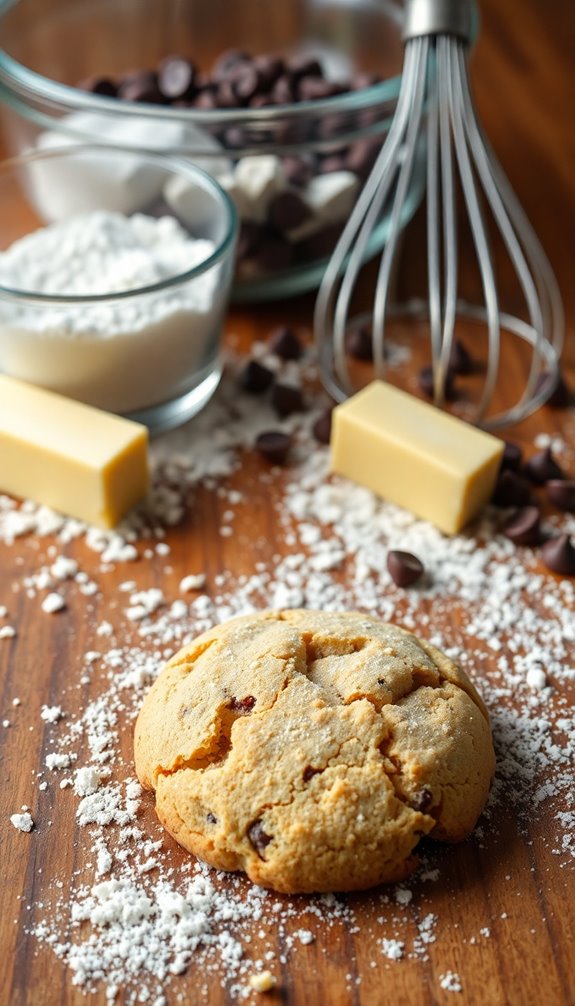
When you bake cookies, understanding the chemistry of your ingredients can make all the difference. Ingredient interactions play an essential role in determining your cookie’s texture and flavor.
For instance, the type of fat you use—such as butter, shortening, or oil—affects how cookies spread and their overall chewiness. Butter creates a rich flavor and promotes a nice spread due to its water content, while shortening can lead to a softer, cakey texture. Additionally, incorporating granulated sugar alongside butter can enhance the cookie’s crispness and color. When making gluten-free cookies, it’s important to choose the right flour to ensure the desired texture and taste.
When combined with sugars, these fats influence the development of the cookie structure. By experimenting with different fat types and observing their interactions with other ingredients, you can master your cookie game and create the perfect batch every time. Additionally, using brown sugar can enhance moisture retention, contributing to a chewier cookie texture.
How Temperature Affects Cookie Texture and Spread
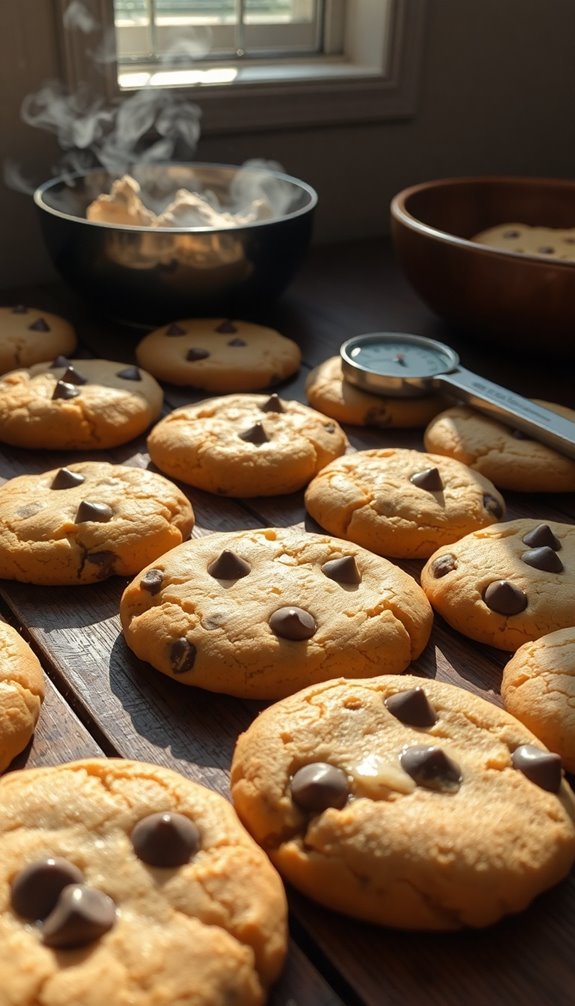
While you mightn’t think about it, temperature plays an essential role in determining your cookie’s texture and spread.
If your oven temperature is too high, your cookies can spread too quickly, resulting in thin, crispy edges. On the other hand, a lower temperature may lead to undercooked centers. Accurate oven temperature is crucial for consistent results, as slight discrepancies can lead to overbaking or underbaking, affecting moisture levels.
To achieve that perfect balance, consider dough chilling. Chilling your cookie dough for at least 30 minutes helps solidify the fats, which slows down spread during baking. This results in thicker, chewier cookies. Additionally, using low-sugar alternatives like natural sweeteners can also affect the texture and moisture of your cookies, enhancing their overall quality. Ensuring proper mixing techniques also plays a significant role in achieving a desirable cookie texture.
Mixing Methods: Why Technique Matters for Your Cookies
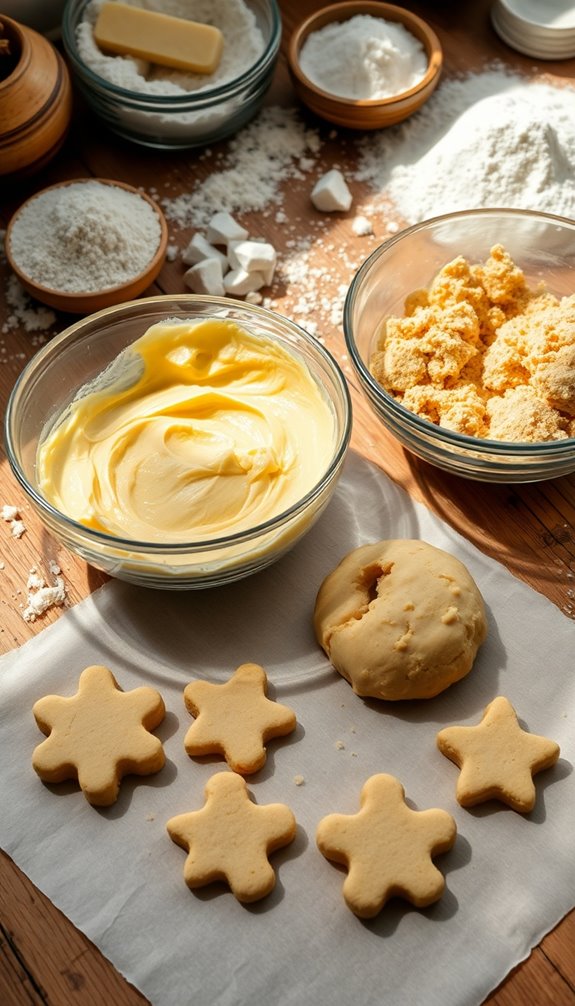
Achieving the perfect cookie isn’t just about temperature; the way you mix your ingredients greatly impacts the final product.
The key to perfect cookies lies not only in temperature but also in how you mix your ingredients.
When you use the creaming method, you’re beating butter and sugar together until light and fluffy, which incorporates air and creates a tender texture. This method is essential for cookies that rise and spread beautifully. Properly mixed dry ingredients are vital for desired texture and rise, ensuring the cookie’s success. Using browned butter in your creaming process can further enhance the nutty depth of flavor. Additionally, incorporating cream cheese frosting can add a delightful tanginess that complements sweet baked goods.
On the other hand, if you opt for the folding technique, you gently combine dry ingredients with wet ones, preserving air pockets for a denser, chewier cookie.
Knowing when to use each method can make a significant difference in your cookie’s outcome.
Common Baking Mistakes That Lead to Tough Cookies
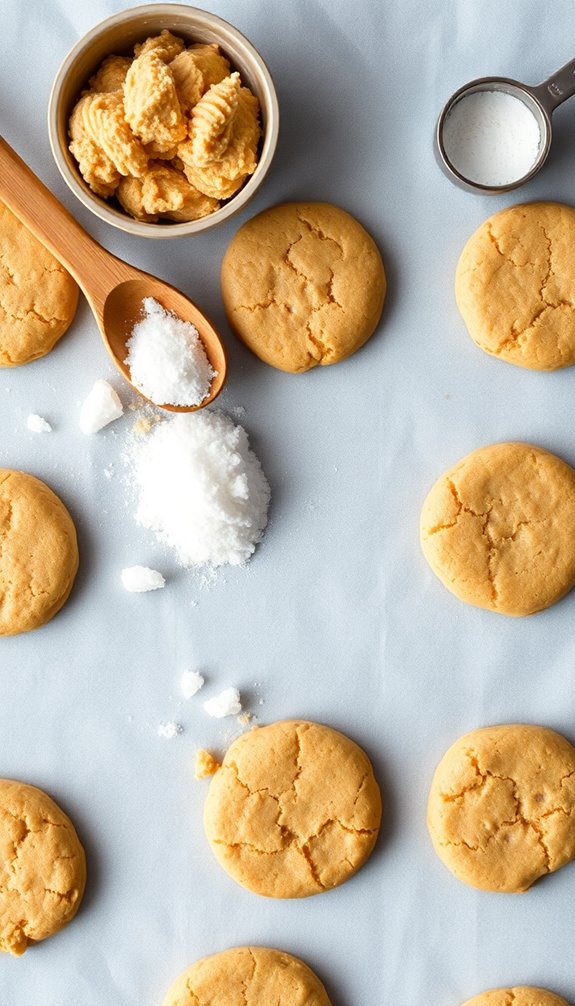
Even the most experienced bakers can stumble into pitfalls that lead to tough cookies.
Here are some common mistakes you should watch out for:
- Overmixing dough: When you mix too much, you develop gluten, making cookies chewy instead of tender.
- Improper measurements: Using the wrong amount of flour or sugar can throw off the balance, resulting in dense cookies.
- Skipping the chilling step: Not chilling your dough can cause cookies to spread too much, affecting texture.
- Choosing the wrong fat: Using margarine instead of butter can change the cookie’s structure, leading to toughness.
Additionally, using room-temperature butter can help incorporate more air into the dough, preventing excessive puffiness and improving texture.
Avoiding these mistakes will help you achieve the soft, delightful cookies you crave!
Troubleshooting Your Cookies: Solutions for Common Issues
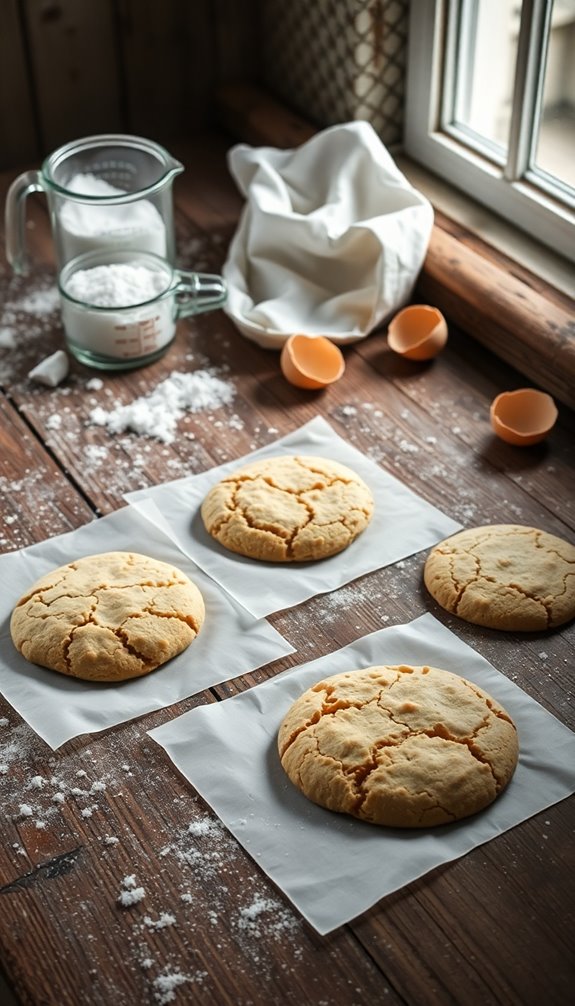
When your cookies don’t turn out as expected, it can be frustrating, but identifying the problem is the first step toward a delicious solution.
If your cookies spread too much, try chilling the dough before baking. For cookies that turn out tough, double-check your flour measurements; using too much can make them dense.
If you’ve run out of an ingredient, don’t fret—there are ingredient substitutions that can save the day. For instance, you can replace eggs with applesauce or yogurt for moisture.
Remember, adjusting your baking temperature can also help; lower it slightly for chewier cookies.
Keep these baking tips in mind, and you’ll be well on your way to perfecting your cookie game!
Conclusion
So, you’ve mastered the art of cookie baking, but they still turn out tough or flat? Isn’t it ironic that the simplest recipes can lead to the biggest headaches? With a little understanding of how ingredients, temperature, and mixing methods work together, you can finally achieve that perfect cookie. Remember, baking is as much about science as it is about joy. Embrace the process, learn from your mistakes, and soon you’ll be the cookie connoisseur you always dreamed of being!