

Crescent rolls and croissants are both tasty, but they’re quite different. Crescent rolls use bread dough and bake up quickly, while croissants are made from laminated dough, creating their signature flaky texture. You can’t really substitute one for the other because crescent rolls lack the buttery richness of croissants. Each serves its purpose in cooking—crescent rolls are perfect for quick meals, and croissants shine at brunch. There’s more to explore about their unique characteristics.
What Are Crescent Rolls?
Crescent rolls are a popular American baked good, perfect for quick meals or festive gatherings. Developed by Pillsbury in the 1960s, these rolls are made from yeast-leavened bread dough, giving them a fluffy texture that complements any dish. Each serving of crescent rolls can be a convenient source of energy for active lifestyles. Additionally, you can enhance their nutritional profile by incorporating healthier ingredients like oats or almond flour for added fiber.
They typically come pre-packaged in a convenient cardboard tube, making them easy to grab and bake at home. Whether you’re hosting holiday dinners or simply looking for a quick side, crescent rolls are a versatile choice. You can even fill them with ingredients like brie, homemade jam, or bacon for extra flavor. Unlike croissants, which require a complex lamination process, crescent rolls prioritize convenience and simplicity, making them an excellent substitute for various meals. Additionally, their flaky texture makes them a delightful accompaniment to savory or sweet dishes alike.
Enjoy their deliciousness!
What Are Croissants?
Croissants are delightful French pastries known for their flaky, airy texture and rich flavor. These treats are crafted from a laminated dough that incorporates layers of butter, which is essential for achieving that signature flakiness. The dough typically includes yeast, flour, salt, sugar, milk, and water, all contributing to the croissant’s distinctive taste. The preparation process is labor-intensive, requiring multiple rounds of folding and chilling to create the delicate layers that define this pastry. Mastery of choux pastry techniques can enhance the overall pastry experience, allowing for an exploration of various textures and flavors. Additionally, croissants can be enjoyed alongside other elegant pastries, such as Mont Blanc dessert, for a sophisticated treat.
The name “croissant” translates to “crescent” in French, reflecting its iconic crescent shape. You can enjoy croissants plain or filled with various ingredients, such as chocolate, almond paste, or savory options like ham and cheese, making them versatile and irresistible. Additionally, the laminated dough technique used in croissant-making is fundamental to many classic French pastries.
Key Differences Between Crescent Rolls and Croissants
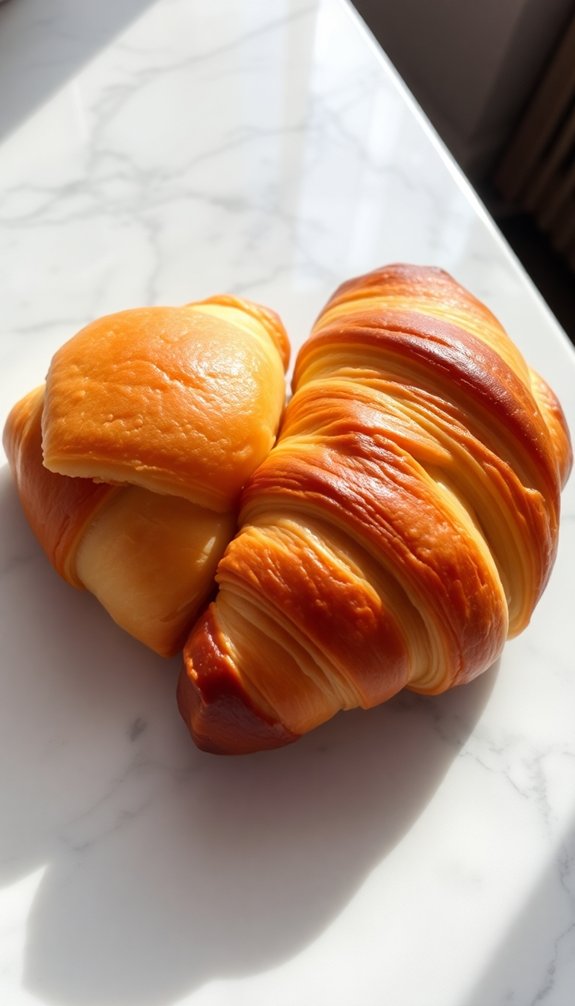
While both pastries may share a crescent shape, they differ greatly in their ingredients and preparation methods.
Crescent rolls are made from bread dough, prioritizing convenience, while croissants use laminated pastry dough, resulting in a flaky texture. Traditional pastries like croissants are often celebrated for their authentic flavors, which come from the meticulous process of lamination. The rich history of chocolate chip cookies showcases how innovative baking techniques can lead to iconic treats.
The preparation methods also vary markedly; crescent rolls can be quickly made with pre-made dough, but croissants require detailed techniques like multiple rounds of folding and chilling.
Croissants boast a rich buttery flavor and a light, airy texture due to their intricate lamination process, whereas crescent rolls have a softer, bread-like texture and milder taste. Nutritional differences are notable too, as croissants generally contain more calories, fat, and protein, reflecting their richer ingredients and elaborate preparation. Additionally, the use of butter in baking enhances the flavor and texture of croissants, contributing to their signature richness.
Can Crescent Rolls Substitute for Croissants?
When it comes to using crescent rolls as a substitute for croissants, you’ll find that they don’t quite measure up.
The differences in preparation are significant; croissants undergo a complex lamination process that creates their signature flaky texture, while crescent rolls use a simpler bread dough technique. This difference in preparation mirrors the evolution of cheesecake’s origins, which highlights how traditional methods contribute to unique textures and flavors. Additionally, croissants often incorporate high-quality butter during their preparation, enhancing their rich flavor profile.
This means that if you substitute crescent rolls for croissants, you’ll end up with a pastry that’s more bread-like in consistency and lacking that rich, buttery flavor croissants are known for.
Although both share a crescent shape, their unique characteristics serve different culinary purposes. For instance, traditional desserts like the Hungarian Dobos Torte or Cassata Siciliana showcase the importance of specific textures and flavors in pastry-making.
For the best results in baking, it’s generally best to stick with the intended pastry rather than making a swap that could compromise your dish.
When to Use Each Pastry

Choosing the right pastry for your dish can elevate your meal, so it’s important to know when to use crescent rolls or croissants.
When you’re making savory dishes like pigs in a blanket or pizza rolls, crescent rolls shine due to their convenience and pre-made dough. They’re perfect as a quick side for dinner or holiday meals, allowing you to fill them with cheeses or meats effortlessly. Plus, they can be a fun way to experiment with natural sweeteners when making dough-based desserts.
On the other hand, croissants are your go-to for breakfast or brunch. Their buttery layers of dough and flaky texture pair beautifully with coffee, jams, and cheeses.
For quick baking projects, especially with kids, reach for crescent roll dough; croissant dough requires more time and finesse to create those delightful pastries. Understanding icing consistency can help you achieve a perfect texture in various pastries.
Conclusion
In conclusion, while crescent rolls and croissants may look similar, they’re quite different in texture and flavor. Think of crescent rolls as the cozy blanket on a chilly night, while croissants are the delicate lace that adds elegance to a meal. If you’re in a pinch, you can use crescent rolls as a substitute for croissants, but keep in mind the unique qualities each pastry brings to the table. Choose wisely for your next baking adventure!