

When comparing croissants and crescent rolls, you’ll find distinct differences in origins, preparation, and flavor. Croissants hail from France and are made using a labor-intensive lamination process, resulting in a flaky, buttery texture. In contrast, crescent rolls are simpler, often pre-made, and have a softer, doughier consistency. Nutritionally, croissants are richer, while crescent rolls are easier to prepare. Each pastry caters to different occasions and tastes, and there’s so much more to explore about their unique characteristics.
Origins and History
When you explore the origins and history of croissants and crescent rolls, you’ll find a fascinating blend of cultures and innovations.
Croissants are made from a rich, buttery dough and originated in France, inspired by the Austrian kipferl, which dates back to the 13th century. Their rise in popularity in the 1800s marked a significant moment in French patisserie. An urban legend claims the crescent shape symbolizes Austria’s victory over the Ottoman Empire during the Battle of Vienna. Additionally, the evolution of chocolate chip cookies has influenced the dessert landscape, showcasing the impact of culinary creativity on everyday treats.
In contrast, crescent rolls are a modern American invention, popularized by Pillsbury in 1965. This streamlined adaptation caters to contemporary tastes, reflecting cultural influences while prioritizing convenience and ease of preparation in your kitchen.
Ingredients and Preparation
The differences in preparation methods highlight the unique qualities of croissants and crescent rolls.
Croissants use a labor-intensive lamination process, where layers of butter are folded into croissant dough made from flour, yeast, milk, sugar, and salt. This technique requires several chilling sessions, allowing the ingredients to meld and create a flaky texture.
Croissants are crafted through a meticulous lamination process, layering butter into dough for a beautifully flaky texture.
In contrast, crescent roll dough is simpler, often pre-made and sold in a cardboard tube, making for quick preparation.
While croissant dough’s yeast offers a richer flavor and lighter texture, crescent roll dough focuses on convenience with a subtle buttery taste.
Both types finish with an egg wash for a crisp outer layer, but the preparation methods lead to distinct outcomes in both products. Additionally, the evolution of culinary techniques has influenced how these pastries are made and enjoyed around the world.
Texture and Taste

When you bite into a croissant, you experience a flaky, airy texture that contrasts sharply with the denser, bread-like feel of a crescent roll. The rich, buttery flavor of a croissant stands out, while crescent rolls offer a simpler taste that’s more subtle. Let’s explore how these differences affect your overall enjoyment of each pastry. The quality of ingredients used in making each pastry can significantly influence their respective flavors and textures, enhancing your culinary experience.
Flaky vs. Bread-like
Croissants and crescent rolls each bring a distinct texture and taste to the table.
Croissants are known for their flaky texture, achieved through the meticulous lamination process that layers dough and butter. This results in a light, airy pastry with a crispy exterior that delights your senses.
On the other hand, crescent rolls have a bread-like texture, softer and doughier, lacking the intricate layering that defines croissants. While croissants showcase a rich, buttery flavor, crescent rolls offer a subtler taste, making them convenient for quick meals.
If you’re craving a pastry masterpiece, go for croissants; if you want something easy and comforting, crescent rolls are your best bet. Each has its charm, depending on your mood!
Richness of Flavor
Richness of flavor distinguishes croissants from crescent rolls, with each offering a unique taste experience.
Croissants boast a rich, buttery flavor derived from the multiple flaky layers created during the lamination process. This intricate method incorporates more butter, enhancing their overall richness compared to crescent rolls, which have a subtler butter flavor.
The inclusion of milk and sugar in croissant dough adds to this depth, while crescent rolls often rely on a simpler bread dough.
You’ll notice that croissants provide an indulgent mouthfeel due to their pronounced flaky layers, while crescent rolls present a denser, softer texture.
Ultimately, if you crave a more flavorful pastry, croissants are your best bet for richness of flavor.
Types and Fillings of Croissants
While exploring the delightful world of croissants, you’ll quickly discover a variety of types and fillings that elevate this classic pastry.
The standard Croissant Ordinaires is often made with margarine, while the Croissant au Beurre boasts a richer, flakier texture thanks to high-quality butter.
You can indulge in sweet and savory fillings, including:
- Chocolate for a sweet treat
- Almond paste for a nutty flavor
- Cinnamon for a warm, comforting taste
- Ham and cheese for a deliciously savory option
With countless innovative varieties, croissants offer something for everyone, whether you crave a traditional treat or a unique twist. Additionally, the almond sponge cake used in the famous Opera Cake demonstrates how versatile pastry techniques can enhance flavor and texture.
Enjoy the flaky goodness and explore all these delightful fillings!
Versatility and Variants of Crescent Rolls
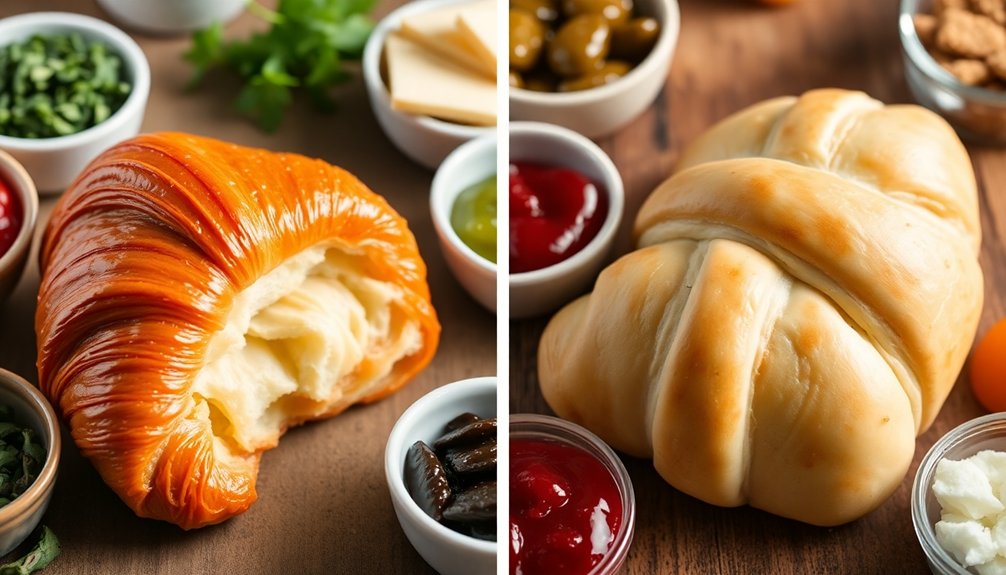
Crescent rolls offer a delightful contrast to croissants, showcasing their own unique versatility and charm. Introduced by Pillsbury in 1965, these baked goods come in twelve different types, catering to various tastes.
The dough’s adaptability shines through in countless recipes, from pigs in a blanket to pizza rolls and even desserts like Sopapilla Cheesecake. Whether you whip them up at home or use pre-packaged dough, the preparation process is straightforward, allowing you to enjoy these treats anytime.
Plus, homemade dough can be frozen for up to a month, making last-minute baking a breeze. With their ability to serve as breakfast items, side dishes, or creative snacks, crescent rolls truly are a staple in many households. Additionally, their versatility allows for the incorporation of sweet fillings, reminiscent of the traditional cassata Siciliana, adding a festive twist to any meal.
Nutritional Profile
When it comes to calories, croissants pack more of a punch than crescent rolls, with around 300 calories compared to about 200. You’ll also notice differences in macronutrients, as croissants typically have higher fat and protein levels. Understanding these nutritional profiles can help you make a more informed choice based on your dietary needs. Additionally, choosing gluten-free ingredients can provide healthier alternatives for those with dietary restrictions.
Caloric Comparison
The nutritional profiles of croissants and crescent rolls reveal significant differences, particularly in their caloric content.
When you consider the caloric comparison, croissants generally pack more calories than crescent rolls, making them a richer choice.
- A typical croissant contains about 300 calories.
- Crescent rolls come in at around 200 calories each.
- Croissants have higher fat content, with about 18 grams.
- Crescent rolls have about 10 grams of fat.
These differences highlight how croissants provide more protein and carbs as well, averaging 8 grams of protein compared to just 4 grams in crescent rolls.
Ultimately, if you’re watching your caloric intake, crescent rolls might be the better option for you.
Macronutrient Breakdown
While both croissants and crescent rolls can be delightful additions to your meal, their macronutrient profiles reveal considerable distinctions.
Croissants pack around 300 calories, markedly more than the 180 calories found in crescent rolls.
Regarding carbohydrates, croissants contain approximately 30 grams, while crescent rolls have about 20 grams.
When it comes to protein, croissants offer around 8 grams per serving, compared to crescent rolls’ 5 grams.
You’ll also notice a difference in fat content: croissants average 16 grams, whereas crescent rolls typically have about 10 grams.
Additionally, croissants have a higher cholesterol level, exceeding 30 mg, while crescent rolls keep it lower at about 15 mg.
These factors can influence your choice based on your dietary needs.
Health Considerations
Understanding the nutritional profile of croissants and crescent rolls can help you make informed choices about what to include in your diet. Here’s a quick comparison:
- Calories: Croissants contain about 300-400 calories, while crescent rolls range from 200-300 calories.
- Protein: Croissants offer more protein, making them more satiating than crescent rolls.
- Butter Content: The higher butter content in croissants contributes to their richer flavor and caloric density.
- Carbohydrates: Both are high in carbohydrates, but croissants provide a more balanced nutritional profile.
The Art of Preparation
When you immerse yourself in the art of preparing pastries, the contrast between croissants and crescent rolls becomes strikingly clear.
The process of making croissants is a labor-intensive journey involving multiple layers of dough and butter, known as lamination. This technique is essential for achieving that signature flaky texture. You’ll need to chill the dough between folds to maintain the butter’s integrity, which is key to creating those airy layers.
In contrast, crescent rolls are all about simplicity. They employ a quick-rise yeast dough, making them easier and faster to prepare.
The difference between crescent rolls and croissants lies in their preparation; while the former is quick and straightforward, croissants demand time and precision for that rich, buttery flavor. Choux pastry techniques can also enhance your pastry repertoire, allowing for creative fillings and presentations.
Main Differences
The differences between croissants and crescent rolls are distinct and cater to various tastes and occasions.
- Croissants use laminated dough, creating a flaky, airy texture, while crescent rolls use bread dough for a softer consistency.
- Preparing croissants is labor-intensive with multiple chilling sessions, unlike crescent rolls that can be made quickly from pre-made dough.
- Croissants boast a rich, buttery flavor due to high butter content, whereas crescent rolls have a subtler taste.
- Typically, croissants have a crispy exterior and are enjoyed at breakfast, while crescent rolls are often served as a side dish during dinner.
These differences in dough, flavor, and preparation make each pastry unique and suited to different culinary experiences. Additionally, the importance of keeping butter cold in croissant preparation enhances their flaky texture, making them a favorite among pastry enthusiasts.
Conclusion
In the battle of croissant vs. crescent roll, each brings its own charm to the table, like two dancers waltzing in a kitchen. Croissants, with their buttery layers, invite you to savor every flaky bite, while crescent rolls offer a warm, comforting hug. Whether you’re indulging in a café classic or grabbing a quick snack, both pastries have their unique appeal. So, why not enjoy the best of both worlds and let your taste buds decide?