
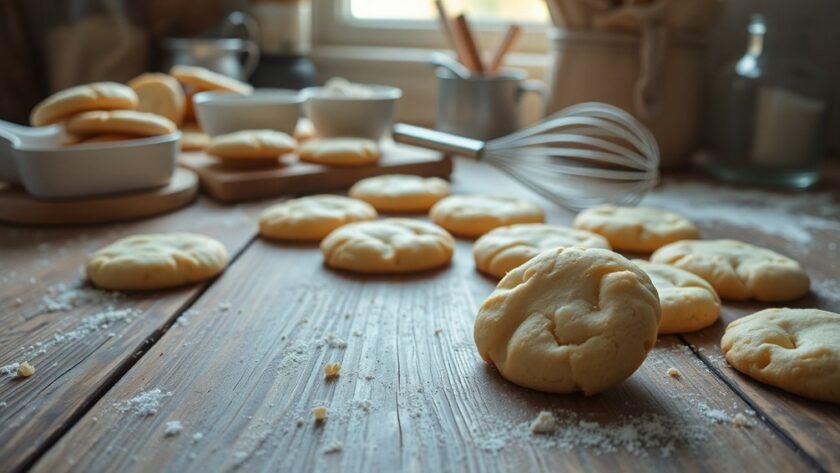
Flat cookies usually result from common baking mistakes. You might be over-creaming the butter and sugar, using too little flour, or not chilling the dough. Excess sugar can also lead to spreading. Make sure your oven’s temperature is accurate and consider how your ingredients work together. If you’ve encountered flat cookies, don’t worry—there are effective solutions to help you achieve the perfect bake. Learn more about these tips and tricks next!
Common Causes of Flat Cookies
If you’ve ever pulled a tray of cookies from the oven only to find them flat and lifeless, you’re not alone. Several common causes might lead to this cookie catastrophe.
Over-creaming butter and sugar can trap too much air, making your cookies spread during baking. If your dough lacks sufficient flour, the structure weakens, resulting in those disappointing flat cookies. Using nutrient-rich flours can help improve the structure and prevent spreading. Additionally, incorporating gluten-free flour blends can enhance the cookie’s texture and prevent it from flattening.
Additionally, using too much sugar can increase spreading, as it melts quickly in the oven. Not chilling the dough before baking allows melted butter to cause rapid spreading, making your cookies even flatter.
Finally, baking on foil instead of un-greased parchment or a silicone mat can enhance heat conductivity, contributing to the dreaded flatness. To prevent flat cookies, ensure you’re using the right amount of gluten-free flour as a base for your dough.
Effective Solutions to Prevent Flat Cookies
To guarantee your cookies rise beautifully instead of spreading out flat, start by properly creaming your butter and sugar together for about 2 to 3 minutes. This incorporates air, giving your homemade cookies a better structure. Additionally, incorporating high-protein cookies into your diet can provide a nutritious snack option while enjoying your baked treats.
Next, accurately measure the flour to the dough; using a scale helps make certain you add the right amount, preventing excess spreading. Almond flour’s nutty flavor and moisture can also contribute to a satisfying cookie experience.
Chilling the dough for at least 30 minutes slows down the melting of butter, helping your cookies maintain their shape.
When it’s time to bake, use an un-greased cookie sheet lined with parchment paper or a silicone mat.
For an extra boost, consider adding 1/2 tablespoon of Instant ClearJel to stabilize the structure and achieve thicker cookies during your cookie baking adventures. Additionally, using gluten-free ingredients like almond flour can enhance the texture and provide a healthier option for your cookies.
Importance of Oven Temperature

Oven temperature plays an essential role in achieving perfectly baked cookies, as a too-cold oven can cause them to spread excessively and flatten out. To avoid this, always preheat the oven adequately before placing your baking sheets inside. This helps create a stable environment that allows the dough to rise quickly and maintain its shape. Incorporating healthier ingredients in your cookie recipes can also help improve their structure and texture. Chilling pie dough before baking can also enhance texture and prevent spreading.
Using an oven thermometer is important for ensuring that the temperature is accurate, directly impacting cookie texture. Keep an eye on your baking time, as over-baking can lead to flat, crispy cookies instead of chewy delights. Adjusting the baking temperature based on cookie size and recipe requirements can prevent excessive spreading, ensuring your cookies turn out flat and hold their shape. Additionally, remember that keeping butter cold is crucial for achieving a flaky texture in baked goods, which can also influence the overall outcome of your cookies.
The Role of Ingredients in Cookie Texture
While baking cookies, the ingredients you choose play a significant role in determining their final texture.
Flour provides structure, so if you don’t use enough, your cookies may turn out flat and greasy. The original chocolate chip cookie recipe by Ruth Graves Wakefield highlights the importance of balanced ingredients for achieving the ideal texture.
Sugar affects how much your cookies spread; too much sugar can lead to thinner cookies as it melts.
Butter serves as an emulsifier and impacts tenderness, but using too much softened or melted butter can cause excessive spreading during baking.
Eggs contribute moisture and help bind everything together, but too many can result in a gummy, cake-like texture instead of those delightful chewy cookies you crave. Sugar substitutes can help maintain sweetness without compromising texture in sugar-free recipes.
Accurate measurements of each ingredient are essential; even slight deviations can lead to disappointing results. Additionally, using gluten-free flour can provide a unique texture and prevent flat cookies when combined properly with other ingredients.
Creative Ways to Repurpose Flat Cookies
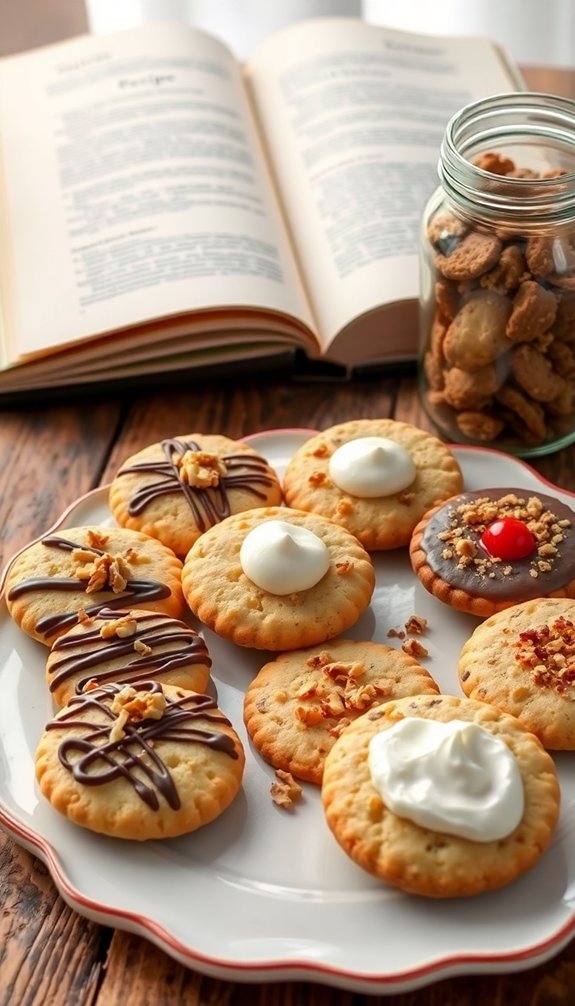
Flat cookies mightn’t have the perfect appearance you hoped for, but they can still shine in the kitchen. Transform them into delicious ice cream by crumbling the cookies into the mixture for added texture and flavor. You can also create a rich cookie butter by blending flat cookies with softened butter, sugar, a pinch of salt, and vanilla. Use them as a topping for sundaes or parfaits, offering a unique crunch that enhances your dessert. Additionally, consider adding cream cheese frosting to your cookie butter for an extra layer of flavor. To elevate your cookies further, try experimenting with high-protein ingredients to enhance their nutritional value.
For dessert bars, crumble the cookies, mix them with melted chocolate or caramel, and press the mixture into a pan to set. Finally, incorporate flat cookies into a cheesecake crust to enhance the overall flavor while putting those imperfect cookies to good use. Additionally, consider adding unique flavor combinations like matcha or peppermint to further elevate your creations.
Conclusion
So, if your cookies end up flat, don’t stress! With a few adjustments to your techniques and ingredients, you can achieve the perfect cookie texture next time. Remember, everyone has cookie mishaps—it’s all part of the baking journey. Plus, those flat cookies can still be delicious in different ways, like crumbling them over ice cream or turning them into a crust. Embrace the process, and keep experimenting; you’ll be a cookie pro before you know it!