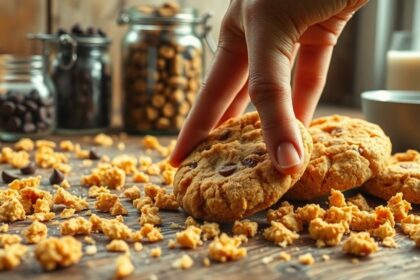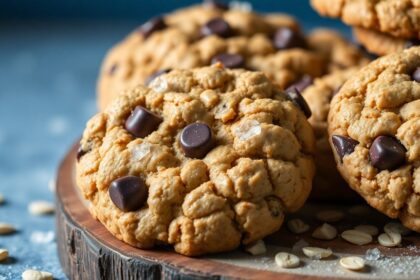
If your chocolate chip cookies are coming out puffy, it could be due to several factors. Overmixing the dough activates gluten, causing them to rise too much. Using high-protein flour or adding too many eggs can also lead to cake-like textures. Confirm your butter is at room temperature, as cold butter doesn't incorporate as much air. Check your leavening agents; too much baking powder can create puffiness. Finally, balancing your sugar types can help achieve the right consistency. Want to troubleshoot further and perfect your cookies? There are more tips to confirm you get that ideal cookie texture.
Common Causes of Puffiness
When you bake chocolate chip cookies, several factors can lead to puffiness that detracts from their chewy texture.
One common cause is overmixing the dough, which activates gluten and causes the cookies to rise instead of spread. Additionally, using low-sugar alternatives can help improve the texture and flavor of the cookies without adding excess puffiness. Ensuring that you properly measure and sift your gluten-free flour can also help maintain a consistent texture.
Your flour choice matters too; using cake flour can result in denser, puffier cookies due to its lower protein content.
Egg balance is essential as well—using too many eggs can create a gummy consistency. If you replace one egg with a tablespoon of water, you can help balance the texture.
Finally, an imbalance of leavening agents, like too much baking powder, can lead to excessive rising, resulting in those unwanted puffy cookies. Additionally, using gluten-free flour alternatives can help prevent puffiness while enhancing the nutritional profile of your cookies.
The Role of Butter
When it comes to baking, the temperature and type of butter you use can make a big difference.
If you're aiming for puffier cookies, room-temperature butter is your best bet, while melted butter will give you a denser texture. Additionally, using a high-quality butter can enhance the flavor and texture of your cookies, much like the use of gluten-free flour blends in other baking recipes affects the final product. Choosing the right butter type, like European-style with higher fat content, can also enhance richness and affect puffiness. Furthermore, incorporating nutritional benefits from ingredients like almond flour can elevate not only the flavor but also the overall health profile of your cookies. Additionally, the classic chocolate chip cookie was invented by Ruth Graves Wakefield in 1938, and her original recipe emphasizes the importance of quality ingredients in achieving the perfect cookie texture.
Butter Temperature Impact
The temperature of butter plays an essential role in determining the texture of your cookies, as it influences how much air gets incorporated during the creaming process.
Using room temperature butter helps achieve a puffier cookie by allowing more air to blend in, while cold butter can hinder this process, resulting in a denser cookie.
If your butter's too warm, your cookies might spread excessively, leading to a flatter shape instead of that desired chewy texture.
It's all about balancing the butter temperature with the flour ratio; too much butter can also contribute to softness and puffiness.
To troubleshoot, consider chilling your dough for 10-15 minutes, which can help solidify the fat and minimize spreading during baking.
Butter Type Selection
Choosing the right butter can make a noticeable difference in your cookie's texture and flavor. For better control over salt levels, opt for unsalted butter.
When you use softened butter, it incorporates air during creaming, resulting in a puffier cookie. On the other hand, melted butter creates denser, chewier cookies.
If you want a richer taste, consider European-style butters, which contain around 82% fat, compared to 80% in standard American butter. Using clarified butter can also enhance chewiness by removing water and milk solids, leading to a higher fat ratio in your dough.
Just remember, over-creaming softened butter may introduce too much air, contributing to an overly puffy texture in your baked cookies.
Flour Types and Their Effects
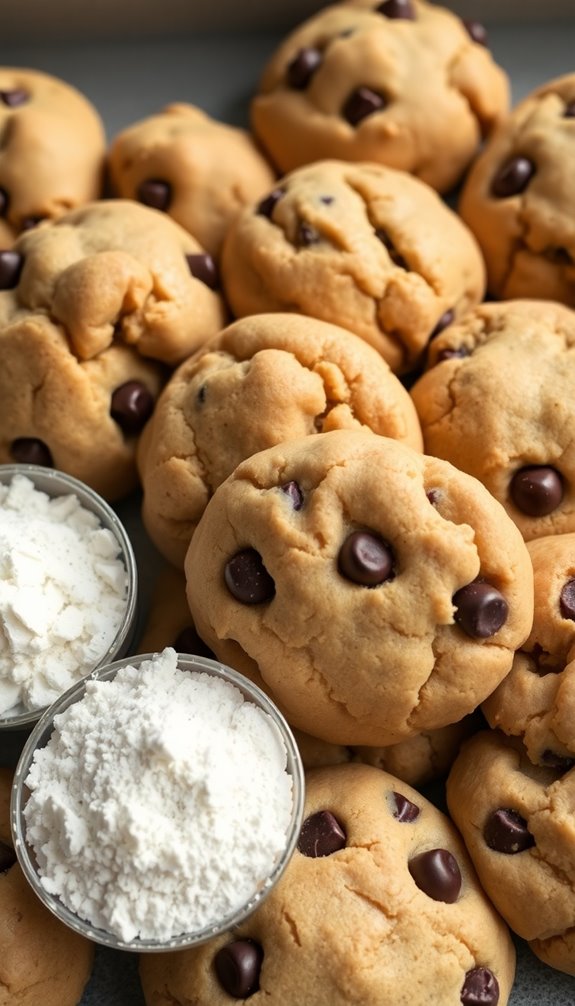
Understanding how different types of flour affect your cookie recipes is essential for achieving the desired texture and flavor. Flour types vary in protein content, impacting your cookies considerably.
For instance, cake flour, with a lower protein content of 6-8%, yields softer, cake-like cookies. On the other hand, bread flour (11.5-14% protein) creates chewier cookies due to more gluten development. Additionally, incorporating ingredients like almond extract can further enhance the flavor profile of your cookies. Using the right flour type can also affect the final cookie appearance, influencing how puffy or flat your cookies turn out.
All-purpose flour strikes a balance with its 9.5-12% protein, making it the go-to choice for chocolate chip cookies. Additionally, using too much flour can lead to dense, dry cookies, affecting dough consistency. Consider experimenting with almond flour cookies for a gluten-free alternative that offers a nutty flavor and softer texture.
Impact of Eggs on Texture
Eggs play an essential role in your baking, influencing the texture of your cookies markedly.
If you use too many, you might end up with a puffy, cake-like result instead of the chewy texture you want. To achieve a healthier option, consider using sugar-free sweeteners that can help maintain the desired texture while reducing overall sugar content. Understanding the right egg quantity and considering substitutes can help you achieve the perfect cookie every time. Additionally, using natural ingredients in your cookie recipes can enhance the overall flavor and texture while promoting health benefits. Incorporating gluten-free flour can also contribute to the desired chewiness without compromising on taste.
Egg Quantity Effects
When you adjust the number of eggs in your cookie recipe, you're directly impacting the texture of the final product.
Using too many eggs can lead to puffy cookies with a cake-like texture, as the excess moisture and binding properties create more steam during baking. Typically, one egg is enough for a standard batch, and reducing the egg quantity can yield a denser, chewier cookie.
If your recipe calls for multiple eggs, try replacing one egg with a tablespoon of water to maintain moisture without adding airiness.
For those aiming for a chewier texture, experimenting with egg substitutes like flaxseed meal or applesauce can help control puffiness while still achieving delicious results.
Binding and Moisture
Adjusting the number of eggs in your cookie recipe plays a significant role in binding and moisture, directly influencing the texture of your cookies.
Too many eggs can lead to excess liquid, resulting in puffiness and a cake-like texture. Each egg contributes to binding the ingredients, which is vital for achieving that desired chewy texture.
To maintain the right balance, consider the following:
- Use no more than two eggs for a classic chewy cookie.
- If your recipe calls for more than two, try reducing the number or replacing one with a tablespoon of water.
- Beat eggs separately to guarantee even distribution, preventing uneven puffiness.
Substitutes for Eggs
If you're looking to create delicious cookies without using eggs, several effective substitutes can help you achieve that chewy texture you love.
One option is unsweetened applesauce, which adds moisture and sweetness—use 1/4 cup per egg.
Flaxseed meal is another great choice; mix 1 tablespoon of flaxseed meal with 2.5 tablespoons of water to create a binding agent that gives your cookies a denser texture.
If you prefer a neutral flavor, silken tofu blended until smooth (1/4 cup per egg) can enhance chewiness while minimizing puffiness.
Additionally, for a quick fix, one tablespoon of water can replace an egg to maintain moisture without the fluffiness.
These substitutes for eggs will help you achieve the perfect cookie texture.
Sugar Ratios and Cookie Spread
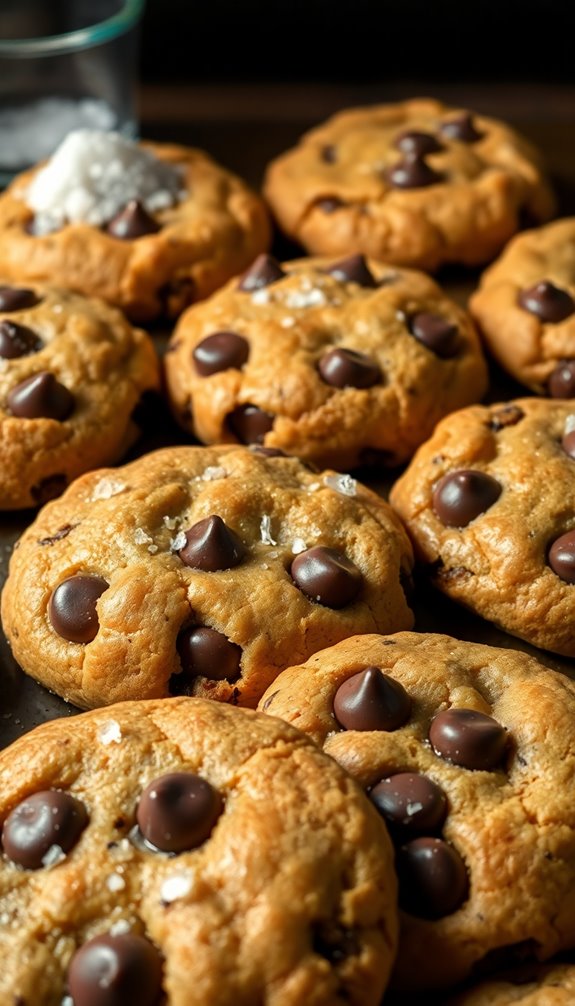
Understanding sugar ratios is essential for controlling how your cookies spread during baking. An imbalance can lead to puffiness or undesirable textures. Here are key points to remember:
- Too much granulated sugar: Causes excessive spread and thinner cookies.
- Excess brown sugar: Retains moisture, contributing to a thicker, puffier texture. Using a balanced sugar ratio can help you create unique flavor combinations that enhance the overall taste of your cookies. Additionally, using the right type of flour for your cookie recipe can significantly affect the final texture and spread.
- Balanced sugar ratios: Promote chewiness while minimizing puffiness.
To achieve the desired cookie spread, reduce white sugar and increase brown sugar for chewiness. If you prefer thinner cookies, favor granulated sugar, as it encourages better spreading. Additionally, using gluten-free flour blends can enhance cookie quality by providing a better structure in your baked goods.
Baking Powder vs. Baking Soda
While both baking powder and baking soda serve as leavening agents, they function quite differently in your cookie recipes.
Baking soda, a pure chemical compound, requires an acidic ingredient to activate its leavening properties. Without enough acid, you can end up with a pH imbalance, resulting in overly puffy or cake-like cookies instead of the chewy texture you want.
On the other hand, baking powder contains baking soda, an acid, and a moisture-absorbing agent, offering a double-action formula that produces gas bubbles during mixing and baking.
The protein content of your flour also plays a role; high-protein flours can make cookies denser if you overuse baking soda.
Balancing these leavening agents is key to achieving the perfect cookie texture.
Mixing Techniques to Avoid Puffiness
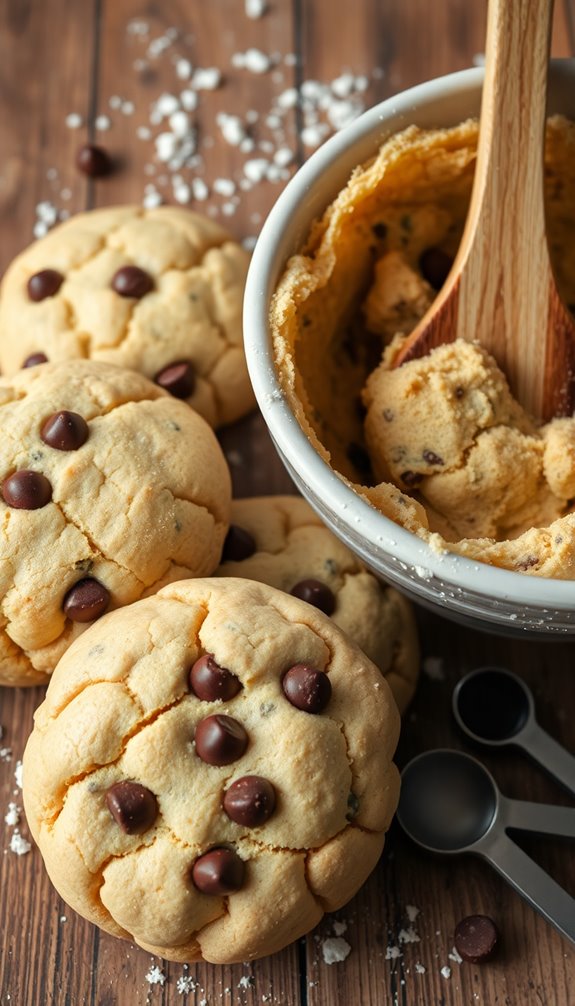
To avoid puffiness in your cookies, you need to limit the amount of air you incorporate during mixing.
Use gentle techniques and mix just until the ingredients are combined, rather than vigorously.
This approach helps maintain a chewy texture and prevents your cookies from rising too much.
Limit Air Incorporation
Limiting air incorporation is essential for achieving the perfect texture in your baked goods. To make certain your chocolate chip cookies don't turn out puffy, follow these tips:
- Mix butter and sugar for just 1-2 minutes until combined; over-creaming introduces excess air into the dough.
- Use a low-speed setting on your mixer when combining wet and dry ingredients to minimize aeration.
- Fold in dry ingredients gently with a spatula to avoid trapping air.
Additionally, avoid overmixing after adding flour—mix just until no dry flour remains.
Chilling the dough for 10-15 minutes before baking also helps limit spread and puffiness, leading to denser, more satisfying cookies.
Gentle Mixing Methods
Achieving the right texture in your cookies hinges on how you mix the ingredients. To avoid puffiness, focus on gentle mixing methods. Overmixing the dough can incorporate excess air, leading to a lighter, puffier cookie. Instead, mix just until the ingredients are combined to maintain a denser texture.
When adding dry ingredients, use a gentle folding technique to minimize air pockets. Introduce wet and dry ingredients separately and slowly to control air incorporation. Consider using softened butter instead of creaming it; this reduces air and results in a flatter cookie.
Keep a close eye on mixing times—just a few extra seconds can compromise your chewy consistency, so aim for a quick mix to perfect your cookies.
Proper Oven Temperature Settings
When it comes to baking, getting your oven temperature just right is essential; an incorrect setting can turn your cookies from delicious to disappointing in no time.
If your cookies are too puffy, it might be due to a high oven temperature. Remember to preheat your oven for at least 10 minutes to guarantee consistency. For ideal cookie spreading, aim for around 350°F.
Here are some baking tips to take into account:
- Use an oven thermometer to check accuracy—many ovens can be off by 25°F or more.
- Baking at lower temperatures can lead to puffiness, so adjust downward if needed.
- A slight temperature reduction can help achieve a flatter, chewier cookie instead of a puffy one.
Cooling and Baking Sheet Tips
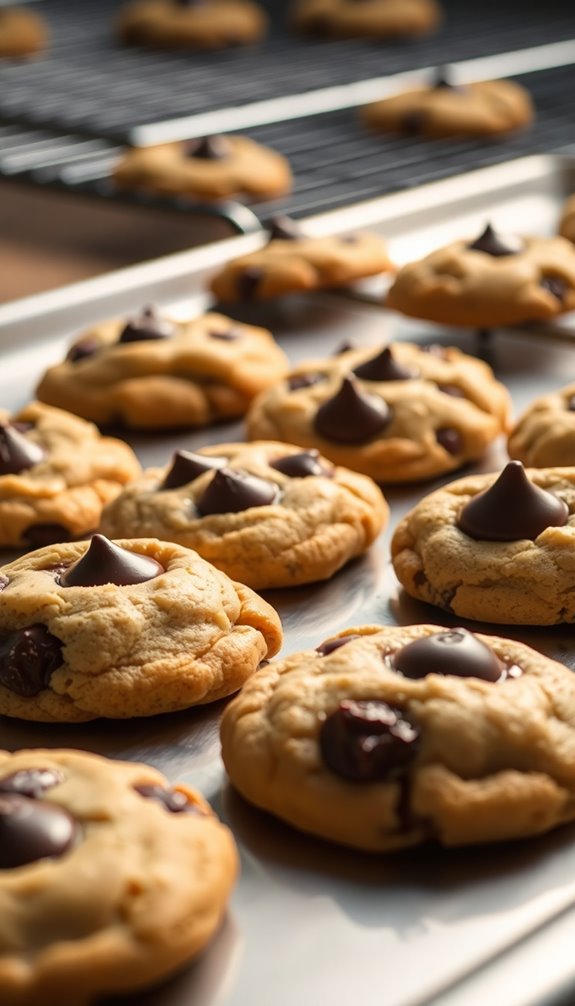
To guarantee your cookies come out perfectly every time, pay attention to your cooling and baking sheets.
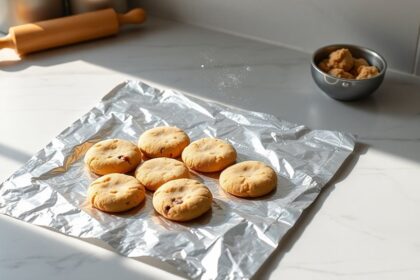
First, make sure your baking sheets are at room temperature; warm sheets can cause your cookies to spread too much, leading to unwanted puffiness. Using parchment paper or silicone baking mats helps prevent sticking and promotes even baking.
Don't forget to rotate your baking sheets halfway through the process for consistent texture. If you notice your cookies puffing excessively, try lowering the oven temperature slightly to allow them to spread more before setting.
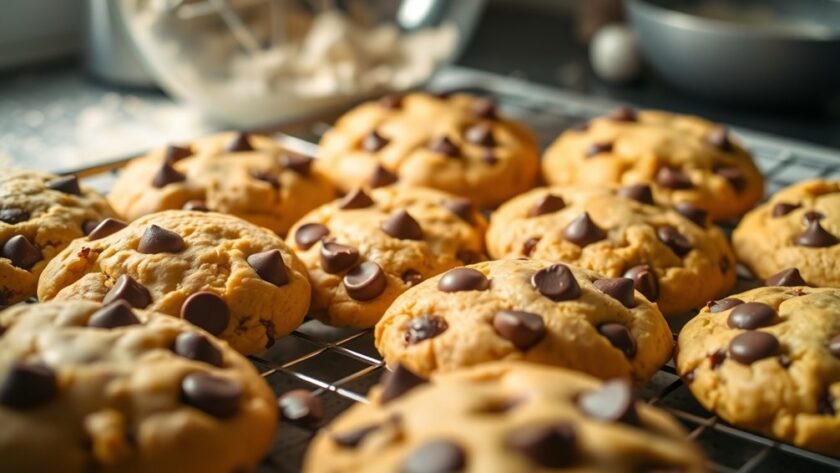
Finally, transfer your cookies to wire racks immediately after baking. This cooling method halts the cooking process, preventing them from becoming too puffy or cake-like.
Ingredient Substitutions for Chewiness
After ensuring your cookies bake evenly and cool properly, the next step to achieving that perfect chewy texture lies in ingredient substitutions.
Here are some adjustments you can make for your chocolate chip cookies:
- Replace one egg with a tablespoon of water to create a denser, chewier cookie.
- Mix in brown sugar alongside white sugar for added moisture and softness.
- Use melted butter instead of softened butter to reduce air incorporation, resulting in a richer, chewier final product.
Additionally, consider reducing the overall flour by two tablespoons to combat puffiness.
You can also incorporate more chocolate chips or a mix of chocolate types to enhance the texture and flavor, delivering a truly chewy cookie experience.
Troubleshooting Overly Dense Cookies
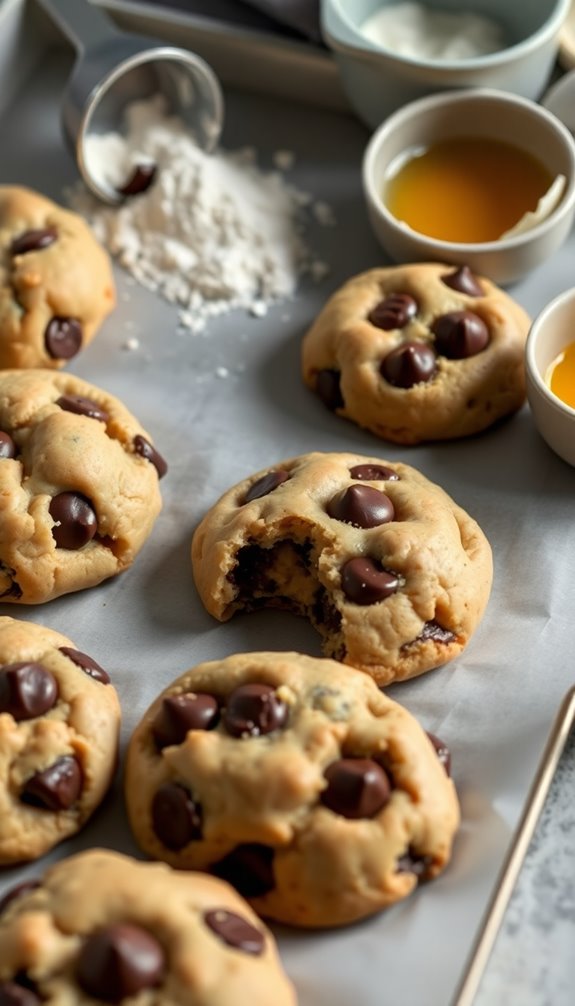
If you've ever bitten into a cookie only to find it overly dense, you might be facing a few common pitfalls in your baking process.
One major issue could be using baking powder instead of baking soda, as the latter provides the right lift and spread.
Additionally, if you've added too much flour, your cookies might resemble biscuits instead of the chewy treats you desire.
Overmixing the dough can also activate gluten, leading to a dense texture; mix just until combined.
Using high-protein flour, like bread flour, can further contribute to density, so stick with all-purpose flour.
Finally, adding too many eggs can result in a cake-like consistency, so consider reducing the egg count for better results.
Tips for Future Baking Success
Achieving the perfect cookie texture doesn't have to be a guessing game. By following a few simple tips, you can tackle common cookie issues and enjoy delicious results every time.
- Limit air incorporation when creaming your room temperature butter for a denser cookie dough.
- Use baking powder instead of baking soda sparingly; too much can lead to puffiness.
- Adjust your flour and sugar ratios—using too much flour or sugar can alter the texture.
Consider replacing one egg with a tablespoon of water if your recipe calls for too many eggs, which can create a cake-like texture.
With these strategies, you'll be well on your way to baking amazing, chewy cookies without the puffiness!
Conclusion
In baking, achieving the perfect chocolate chip cookie is like finding the right balance in a dance; every ingredient plays a vital role. By understanding the common causes of puffiness and making simple adjustments—like tweaking butter amounts or sugar ratios—you can create cookies that are just right. Remember, practice makes perfect! With these tips in mind, you'll be well on your way to baking delicious, perfectly textured cookies that'll impress everyone. Happy baking!