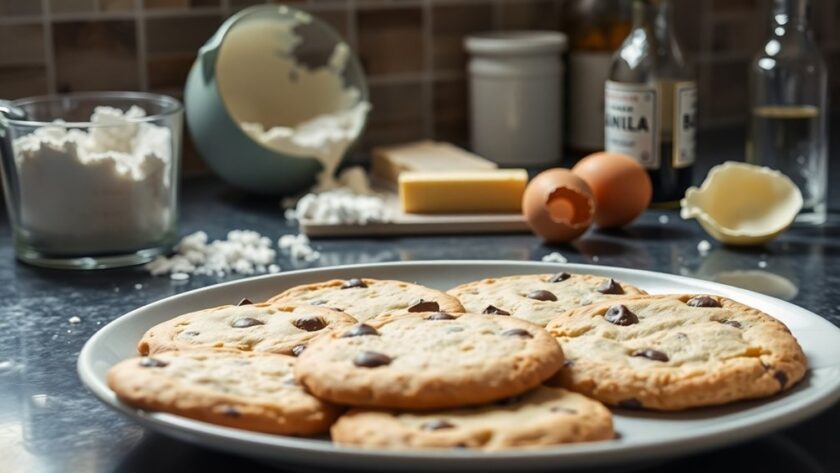
If your chocolate chip cookies are flat, it could be due to several common mistakes. First, measure your flour correctly—use the “fluff, spoon, and level” method. Next, make sure you’re using a reliable recipe with the right ingredient ratios. Also, check that your butter’s at the right temperature and your leavening agents are fresh. Finally, don’t skip the chill time; it helps maintain their shape. There’s more to learn about perfecting your cookies!
Incorrect Flour Measurement
One of the biggest pitfalls in baking is incorrect flour measurement, which can ruin your chocolate chip cookies.
To prevent flat cookies, you need to measure your flour accurately. Using the “fluff, spoon, and level” method helps avoid packing flour into your measuring cup, which can lead to excess flour and cakey cookies. Additionally, using natural sweeteners can help balance the overall texture and flavor of your cookies without excess sugar. Gluten-free options, such as almond flour, can also provide a delightful alternative while maintaining the desired cookie texture.
Remember, incorrect flour measurement accounts for about 50% of cookie spreading issues. The best way to guarantee proper measurement is to use a kitchen scale, aiming for 120 grams per cup of all-purpose flour. Additionally, using gluten-free flour specifically designed for baking can help achieve the right texture and prevent flat cookies.
Too little flour can result in thin, flat cookies that spread excessively during baking. So, take the time to weigh your flour for baking success!
Bad Recipe Selection
Choosing the right recipe can make or break your chocolate chip cookies just as much as measuring flour correctly. Bad recipe selection often leads to incorrect ingredient ratios, resulting in flat cookies and unsatisfactory cookie texture.
Familiarize yourself with basic cookie dough ratios, like the standard 3:2:1 ratio of flour, fat, and sugar, to build a solid foundation. Always reference reliable sources and reputable baking resources, such as “Ratio” by Michael Ruhlman, to guarantee recipe accuracy. For example, understanding the importance of ratios in baking can significantly enhance your cookie-making skills. Additionally, incorporating ingredients like almond flour can improve the texture and flavor of your cookies.
Before diving in, read reviews and feedback from other bakers; this can help you gauge a recipe’s reliability. Discard any recipe that seems off or has unusual instructions to avoid common baking mistakes and achieve delicious chocolate chip cookies. The partnership with Nestlé that followed the original invention helped popularize the cookie, making it essential to choose a recipe that honors this classic.
Improper Butter Temperature
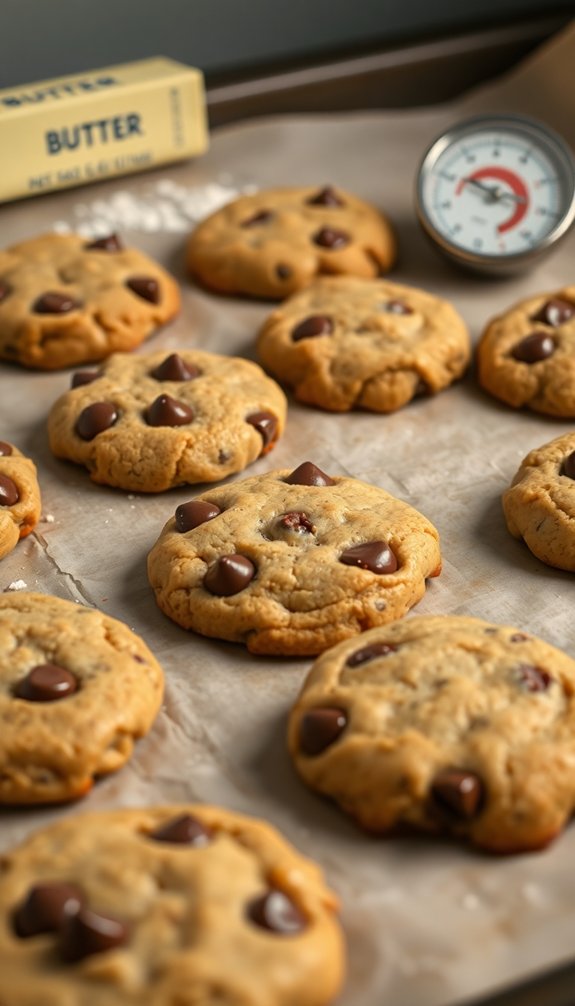
The temperature of your butter plays an important role in the success of your chocolate chip cookies. If you’re using improper butter temperature, it can lead to flat cookies. Room temperature butter should be around 66-67°F.
If your butter’s too cold, it won’t incorporate enough air, preventing those essential air pockets. Conversely, butter too warm can cause excessive spreading, as it dissolves sugar too quickly and disrupts cookie dough consistency. To achieve the right temperature, leave cold butter out for 30 minutes or cut it into small cubes. If your recipe calls for melted butter, adjust other ingredients accordingly to maintain your desired texture. Getting the butter temperature right is imperative for perfect chocolate chip cookies! Additionally, using healthier ingredient swaps can enhance the overall texture and nutritional value of your cookies. This includes substituting avocado for butter, which can help improve the nutrient profile without sacrificing taste. Gelato, with its lower fat content, allows for a more indulgent experience without the guilt, similar to how a balanced cookie can satisfy cravings without excess.
Expired or Missing Leavening Agents
When baking chocolate chip cookies, expired or missing leavening agents can derail your efforts, leaving you with flat results.
To guarantee your cookies rise perfectly, keep these tips in mind:
- Check Expiration Dates: Always verify your baking powder and baking soda for freshness. Expired baking powder loses its potency, leading to insufficient rise.
- Perform a Baking Soda Test: Mix a teaspoon of baking soda with vinegar or lemon juice. If it bubbles, it’s still good!
- Adjust Ratios Wisely: If you substitute baking soda with baking powder, use 3-4 teaspoons for the same leavening effect. Including ingredients like high-protein cookies can also enhance the nutritional profile of your treats, making them a more satisfying snack option. Maintaining the right temperature of cold butter in your dough is also crucial for achieving the desired texture in your cookies.
Using fresh leavening agents creates the chemical reactions needed for peak cookie texture and prevents those disappointing flat cookies. Additionally, incorporating ingredients like almond extract can enhance the overall flavor profile of your cookies, making them even more enjoyable.
Skipping Chill Time

Chilling your cookie dough for at least 30 minutes is essential if you want to avoid flat, spread-out cookies. Skipping chill time leads to excessive spreading, resulting in thin, flat cookies that lack the desired texture. By chilling the dough, you solidify the fat, which helps maintain the shape during baking. A minimum chill time allows the flour to fully hydrate, enhancing the dough’s consistency and leading to a better cookie structure and chewiness. Additionally, using techniques like the dip, drip, and flip technique can add a stunning finish to your cookies without compromising their shape. To make the process even more enjoyable for kids, consider incorporating simple vegan cookie recipes that they can help with while waiting for the dough to chill.
In warmer weather, consider extending the chill time to an hour or more for ideal results. Additionally, shaping cookie dough balls and chilling them on the baking sheet for 10-15 minutes can further help reduce spreading and improve the final cookie shape. This technique is especially beneficial for achieving optimal cookie consistency and preventing common baking issues.
Conclusion
To sum up, if your chocolate chip cookies keep coming out flat, don’t fret! By checking your flour measurements, choosing the right recipe, using the correct butter temperature, ensuring your leavening agents are fresh, and allowing for proper chill time, you can achieve that perfect cookie texture. Who wouldn’t want a cookie that’s thick and chewy? So, give these tips a try, and you’ll be on your way to baking delicious cookies that impress everyone!