

To recreate traditional black-and-white cookies at home, start by gathering essential ingredients like all-purpose flour, baking powder, and vanilla extract. After mixing the dough, drop it onto a baking sheet and bake until golden. For the icing, mix equal parts powdered sugar and water with cocoa for a rich chocolate flavor. Don’t forget to pipe the icing neatly! If you’re looking for tips on achieving the perfect texture and finish, there’s plenty more to explore.
The History of the Black-and-White Cookie: A New York Classic
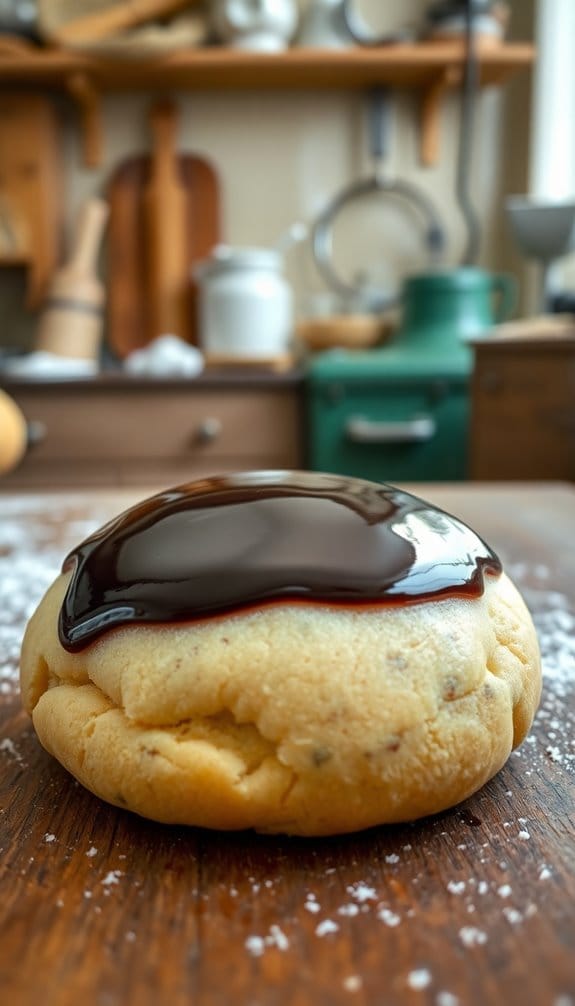
Although you might enjoy a black-and-white cookie today, its origins trace back to the bakeries of New York City in the early 20th century.
This delightful treat reflects the melting pot of cultures that defines the city. It’s believed that the cookie was inspired by the German whoopee pie, merging various baking traditions into one iconic dessert. The cultural significance of this cookie has evolved, much like the traditional Italian cassata, showcasing the diverse culinary background of New York. Additionally, the use of healthy fats in modern recipes allows for nutritious alternatives that celebrate this classic dessert’s heritage.
Over the years, the black-and-white cookie’s cultural significance has grown, symbolizing New York’s unique blend of flavors and traditions.
You’ll find these cookies in delis and bakeries, often served alongside coffee or tea, making them a beloved staple.
As you take a bite, remember you’re savoring a piece of history, connecting with generations of New Yorkers who’ve enjoyed this classic treat. Additionally, the use of low-sugar alternatives in modern recipes allows for healthier versions of this iconic cookie without sacrificing flavor.
Essential Ingredients for Perfect Black-and-White Cookies
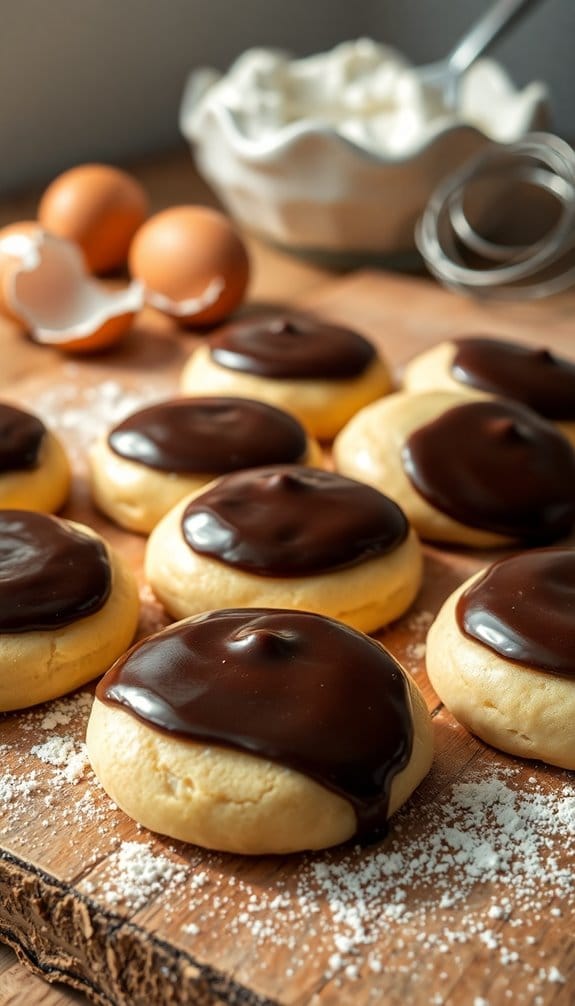
To create perfect black-and-white cookies, you’ll need a handful of essential ingredients that come together to form their signature flavor and texture.
Start with all-purpose flour, which provides the right structure, but don’t hesitate to mix in cake flour for a softer bite. You’ll also need baking powder to give them that classic rise. Using a combination of flours can enhance the texture and overall quality of your cookies. Baking powder’s role in providing lift is crucial for achieving the desired cookie height.
Begin with all-purpose flour for structure, but consider blending in cake flour for a softer texture. Don’t forget the baking powder for that perfect rise.
For sweetness, granulated sugar works best, while vanilla extract adds depth to the dough.
When it comes to the icing, achieving the right ratios is vital—equal parts powdered sugar and water for the white icing, and a bit of cocoa powder for the chocolate side. Properly mixed dry ingredients ensure the best texture and rise for your cookies.
These ingredients will guarantee your cookies are deliciously balanced and truly iconic.
Step-by-Step Guide to Baking Black-and-White Cookies
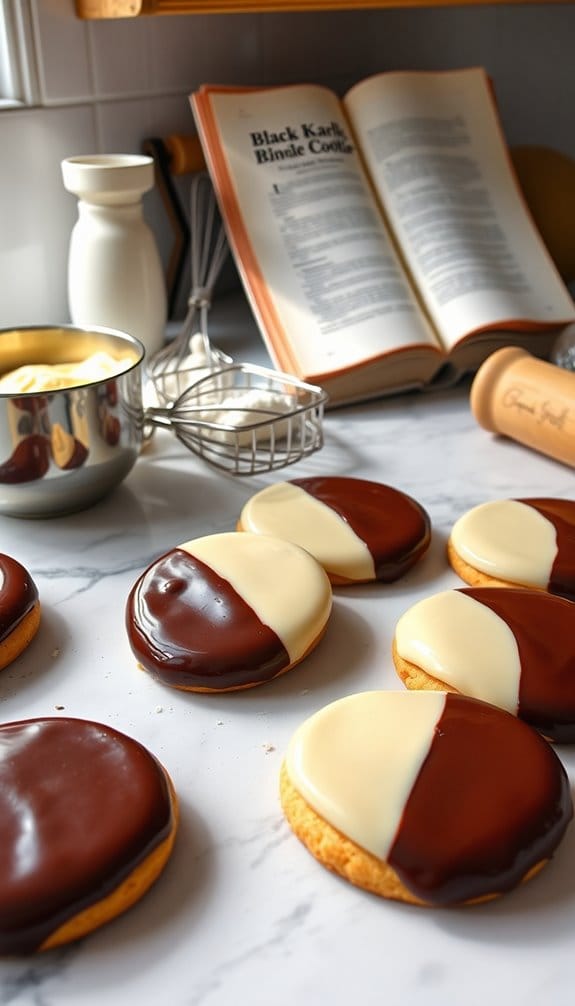
Baking black-and-white cookies is easier than you might think, and with just a few simple steps, you’ll have these iconic treats ready to enjoy.
Start by preheating your oven to 350°F (175°C). In a bowl, cream butter and sugar, then mix in eggs and vanilla. Gradually add flour, baking powder, and salt to form a dough. Accurate measurements are essential to ensure the right texture and prevent crumbliness in your cookies. Using a kitchen scale for ingredient measurement accuracy can help you avoid over-measuring flour.
Using a scoop, drop the dough onto a lined baking sheet, leaving space between each cookie. Bake for about 15 minutes until golden.
For cookie variations, consider adding chocolate chips or almond extract for a unique twist. Pumpkin pastry cream can also be used as a creative filling or topping to elevate your cookie experience.
Once cooled, you’ll be ready for the next step of decorating, but mastering these baking techniques will guarantee your cookies are a hit!
Decorating Tips for the Perfect Finish
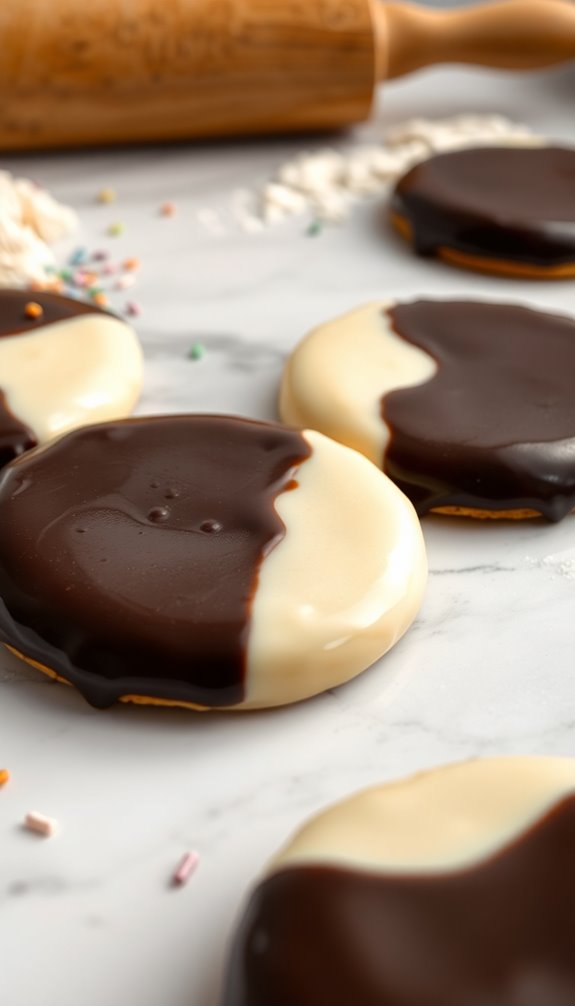
Once your cookies have cooled, it’s time to bring them to life with some creative decorating.
Start by preparing your icing; classic black-and-white cookies feature chocolate and vanilla flavors, but you can experiment with others like lemon or almond. For a polished finish, use piping techniques to apply the icing evenly.
Begin with the chocolate side—carefully pipe a line of chocolate icing down the center, then spread it out with a spatula or knife.
Repeat for the vanilla icing on the other half. If you want to get fancy, try adding a drizzle or swirl on top for extra flair. To enhance your icing’s flavor, consider adding a touch of vanilla extract for a delightful tanginess.
Let the icing set before serving, and enjoy your beautifully decorated black-and-white cookies!
Troubleshooting Common Issues When Making Black-and-White Cookies
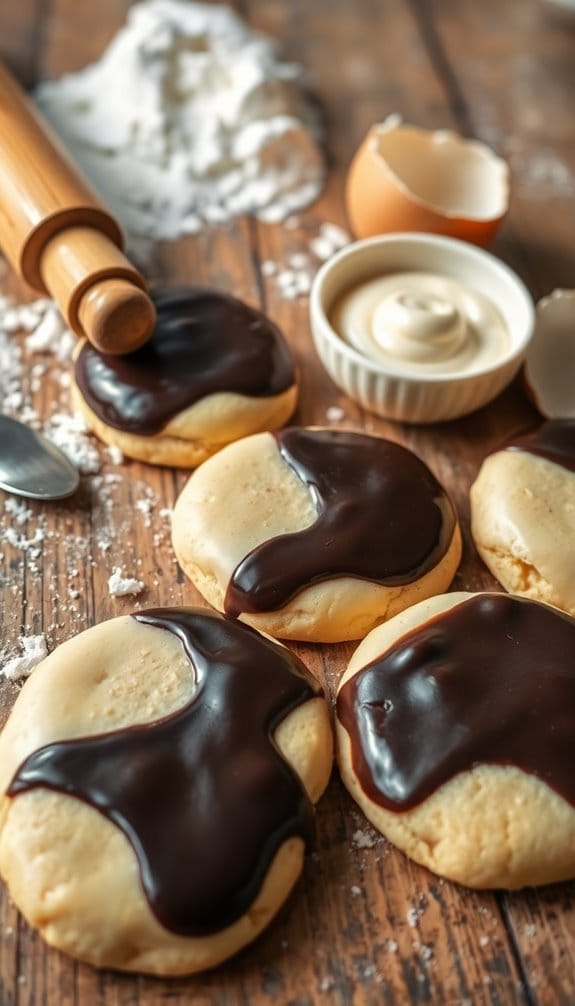
While making black-and-white cookies can be a delightful experience, you might encounter some common issues that can affect your results.
One major pitfall is overbaking cookies, which can leave them dry and crumbly instead of soft and chewy. To avoid this, keep an eye on the baking time and use a toothpick to check for doneness—remove them while they’re still slightly underbaked.
One major pitfall is overbaking, leading to dry, crumbly cookies. Watch the time and test with a toothpick for perfect softness.
Another common issue is achieving the right frosting consistency. If your frosting is too runny, add more powdered sugar to thicken it up. Conversely, if it’s too thick, a splash of milk can help.
With these tips in mind, you’ll be well on your way to perfect black-and-white cookies!
Conclusion
As you savor the last bite of your homemade black-and-white cookie, you’re not just tasting a treat; you’re indulging in a piece of New York’s rich history. Each layer, soft and sweet, whispers stories of bustling bakeries and cherished memories. You’ve brought this iconic delight into your kitchen, transforming simple ingredients into a canvas of nostalgia. Keep experimenting, because every batch you bake is a step deeper into this delicious legacy, filling your home with warmth and joy.