To create the perfect fudgy brownie, you need a higher fat-to-flour ratio and key ingredients like chocolate, sugar, and eggs. Melted butter and sugar together minimize air incorporation, which enhances chewiness and creates a shiny top crust. Baking at 350°F for about 20-25 minutes keeps the center gooey. Avoid common mistakes like over-mixing and adding too much flour. By mastering these techniques, you’ll achieve a rich, satisfying brownie—discover more secrets to elevate your baking skills!
Understanding Brownie Textures: Fudgy, Cakey, and Chewy
When you plunge into the world of brownies, you’ll quickly notice that their textures can vary considerably, depending on the ingredients and ratios used.
A fudgy brownie, for instance, typically contains a higher fat-to-flour ratio, using less flour and more chocolate and butter for that dense, moist texture you crave. Incorporating natural sweeteners can enhance the flavor while reducing sugar content. Additionally, using nutrient-rich flours can further improve the overall health benefits of your fudgy brownies.
On the other hand, a cakey brownie requires more flour and often baking powder, resulting in a lighter, airy consistency.
If you’re after a chewy brownie, you’ll want to increase the flour content and use melted butter to create that satisfying chewiness without being overly dense.
Each texture offers a unique experience, so experimenting with these ratios is key to finding your perfect brownie bliss! Additionally, incorporating gluten-free ingredients can cater to those with specific dietary needs while maintaining delicious flavors.
The Role of Key Ingredients in Brownies
When you whip up a batch of fudgy brownies, the key ingredients play a vital role in shaping their rich texture and flavor.
You’ll find that chocolate, sugar, and eggs work together to create that perfect balance of moisture and chewiness. The addition of baking powder can also enhance the brownie’s rise and texture, contributing to that desirable fudgy consistency. Incorporating natural sweeteners like honey or maple syrup can also provide a healthier twist to your brownie recipe without sacrificing sweetness.
Understanding how each ingredient contributes can help you master the art of brownie baking. The chocolate chip cookies that Ruth Graves Wakefield invented serve as a reminder of how simple ingredients can lead to extraordinary outcomes in baking.
Essential Ingredients Overview
Understanding the essential ingredients in brownies is important for achieving that perfect fudgy texture and rich flavor.
First, chocolate is key; the more you use, the denser and richer your brownies will be. Next, brown sugar plays a significant role—unlike white sugar, it adds moisture and chewiness, enhancing that fudgy quality.
Eggs are your binding agents; they not only provide structure but also create that shiny, crinkly top when beaten well. Additionally, the amount and type of flour you choose impact the final texture. Less flour leads to fudgier brownies, while more flour results in a cakey texture.
Chocolate’s Impact on Texture
Although chocolate is often thought of merely as a sweet addition, it plays an essential role in shaping the texture of your brownies. The type and amount of chocolate you use directly influence the fudginess, with more chocolate creating a richer, denser experience.
Incorporating melted chocolate with butter and sugar helps minimize air, giving your brownies a chewier texture and that coveted shiny top crust.
- The bliss of biting into a gooey chocolate chip
- The comforting warmth of freshly baked fudgy brownies
- The indulgent richness of dark chocolate melting in your mouth
- The satisfaction of achieving the perfect brownie texture
Sugar’s Role in Moisture
Sugar plays a pivotal role in ensuring your brownies remain moist and fudgy, enhancing both their flavor and texture. Not only does sugar sweeten your batter, but it also retains moisture, essential for that rich consistency.
The type of sugar you choose matters—white sugar creates a crisp top, while brown sugar adds chewiness and extra moisture. During baking, sugar attracts moisture, helping to prevent drying and promoting a dense brownie.
As sugar dissolves in the batter, it facilitates moisture migration, contributing to that coveted fudgy texture. Finding the right sugar balance is key; too little leads to dryness, while too much can overwhelm flavors and create a gummy result.
Melting Butter and Sugar: The Secret to Chewiness
When you melt butter and sugar together at the right temperature, you reduce air incorporation, leading to chewier brownies. This process not only helps dissolve sugar but also creates that shiny, crackly crust on top. Additionally, the use of almond flour in certain desserts like Kransekake demonstrates how ingredient textures can influence the final product’s chewiness. The unique texture of almond cookie rings in Kransekake exemplifies how different ingredients contribute to the overall chewiness and flavor profile of baked goods. Moreover, the addition of simple syrup can enhance moisture retention in baked goods, making them even more tender and chewy.
Temperature for Optimal Melting
To achieve the perfect chewy brownie, melting butter and sugar at a temperature between 205°F and 210°F is key. This method guarantees the granulated white sugar dissolves completely, creating that coveted shiny top as the sugar migrates to the surface during baking.
By melting the butter and sugar together, you minimize air incorporation, resulting in denser, chewier brownies rather than a fluffy texture.
- Imagine the rich, buttery aroma wafting through your kitchen.
- Picture that first bite, where the brownie melts in your mouth.
- Feel the satisfaction of a perfect chewy crust.
- Experience the joy of sharing these delicious treats with loved ones.
Master this melting technique, and you’ll elevate your brownie game!
Reduced Air Incorporation Benefits
Melting butter and sugar not only sets the stage for that shiny top but also plays a key role in minimizing air incorporation. When you melt brown butter and sugar together at 205°F to 210°F, you prevent air bubbles from forming, resulting in chewier, denser brownies.
This reduced air incorporation is vital for maintaining a rich, fudgy texture, ensuring your brownies aren’t fluffy but rather satisfyingly dense. As the sugar dissolves, it contributes to that desirable crackly crust.
Plus, if you add a pinch of baking powder or baking soda, you can enhance the chewy texture without sacrificing fudginess. In the end, every bite is more uniform, giving you that perfect mouthfeel you crave.
Shiny Crust Formation Process
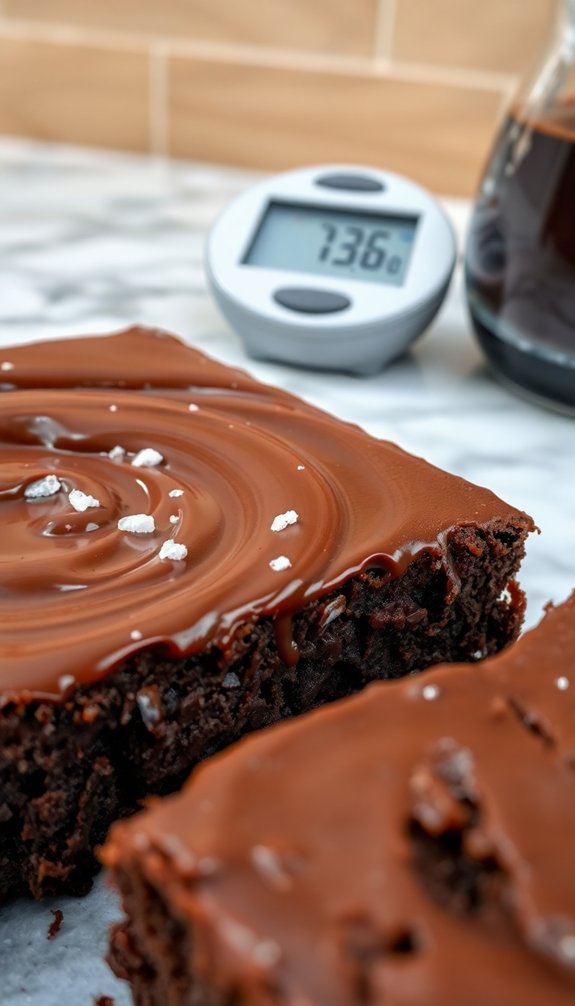
Achieving that coveted shiny crust on your brownies relies heavily on the marriage of melted butter and sugar. Melting these ingredients at 205°F to 210°F minimizes air incorporation, resulting in chewier, denser fudgy brownies.
As the butter heats, its water separates from the fat, allowing sugar to dissolve fully. This sugar then migrates to the surface during baking, creating that beautiful shiny crust as it recrystallizes.
- The allure of a glossy top
- The satisfaction of perfect texture
- The joy of sharing with loved ones
- The nostalgia of childhood treats
Using this melting technique is essential for enhancing both the appearance and texture of your brownies and blondies.
Achieving a Shiny Top Crust: The Science Behind It
A shiny top crust on your brownies can elevate their appearance and texture, making them even more irresistible. To achieve this glossy finish, start by melting butter and sugar together before mixing. This process helps dissolve the sugar, minimizing air incorporation and ensuring a smooth surface. Aim for a temperature between 205°F to 210°F, which allows for proper sugar dissolution and contributes to that chewy texture you crave. Don’t forget to add melted chocolate; it brings extra sugar that migrates to the surface during baking, enhancing the shiny top crust. Additionally, using gluten-free flour can ensure that your brownies maintain a fudgy consistency without compromising flavor. Including high protein content in your brownies can also boost their nutritional value, making them a more satisfying treat. For an extra layer of flavor, consider adding cream cheese frosting, which can complement the rich chocolate taste beautifully. Just remember, balance is key—too much water can lead to a cakey outcome instead of the fudgy delight you desire in your chocolate brownies.
Baking Chemistry: Temperature and Time Matters
Creating that glossy top crust is just the beginning of mastering fudgy brownies. The key lies in perfecting your oven’s temperature and baking time. Aim for a range of 160°C to 180°C (350°F to 375°F) to keep that rich texture intact. You’ll want to bake for about 20 to 25 minutes to achieve that gooey center.
Incorporating wholesome ingredients like oats or nuts can also enhance the texture and flavor of your baked goods. Additionally, using quality dried fruits can add a delightful sweetness and complexity to your brownies.
- The thrill of pulling out a perfectly baked brownie
- The aroma wafting through your kitchen
- That first bite melting in your mouth
- The joy of sharing with friends and family
Common Mistakes to Avoid in Brownie Preparation
While baking brownies might seem straightforward, there are several common mistakes that can ruin your efforts.
First, avoid over-mixing the batter; this develops excess gluten, leading to denser brownies instead of that fudgy texture you want. Stick to mixing just until combined.
Next, be careful with flour—using too much can dry out your brownies. A maximum of 1/2 cup keeps them moist.
Confirm your oven is preheated to 160°C (350°F) for ideal baking.
Don’t forget to let the melted butter and sugar mixture cool before adding eggs, or you risk cooking them.
Finally, always perform the toothpick test after 20-25 minutes to verify you achieve that perfect moist center without over-baking. Additionally, consider incorporating whipped cream cheese filling for a delightful twist that enhances the overall texture.
Flavor Pairing and Serving Suggestions for Brownies
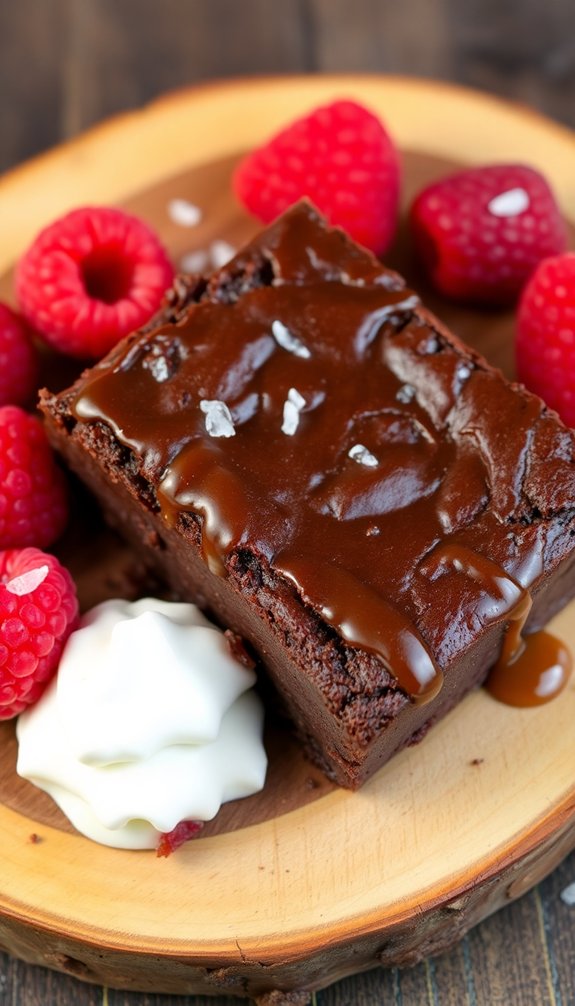
When you want to elevate your brownies beyond their already delicious state, consider pairing them with complementary flavors and textures.
These combinations can transform your brownie recipe into an unforgettable treat:
- A scoop of vanilla ice cream adds a delightful contrast in temperature and texture.
- Fresh raspberries or strawberries bring a revitalizing tartness, balancing the rich sweetness of fudgy brownies.
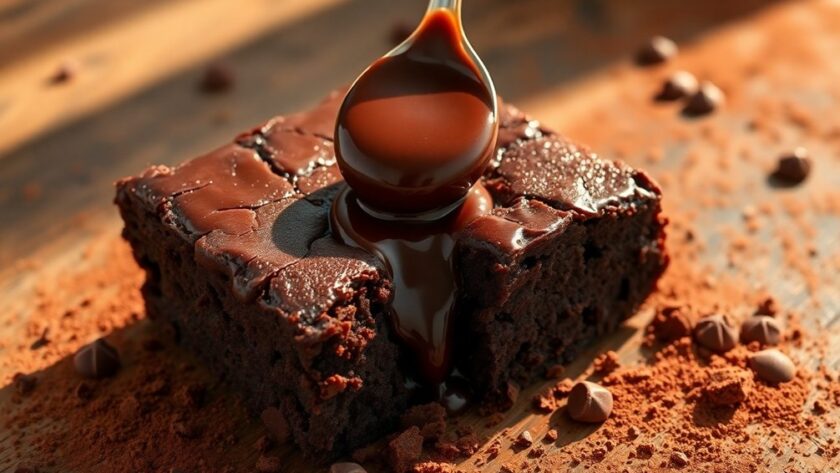
- Drizzling warm caramel or chocolate sauce enhances the chocolate flavor and indulgence.
- Nuts like walnuts or pecans add a satisfying crunch to the soft, fudgy interior.
For an even richer experience, you can incorporate spices like cinnamon or espresso powder into your brownie batter.
This adds complexity and deepens the chocolate flavor, making your brownies truly unforgettable.
Conclusion
In the end, mastering the art of the fudgy brownie is like finding the perfect balance in life—sweet yet complex. You’ve learned the importance of ingredients, technique, and patience, all essential for achieving that rich, gooey texture. So, when you indulge in your next batch, remember: each bite is a celebration of science and creativity. Embrace the journey, and let your brownies be a delicious reminder that perfection is a process, not just a destination. Enjoy!